How to Propagate Asparagus Fern? These 3 Methods Are Convenient and Easy to Use
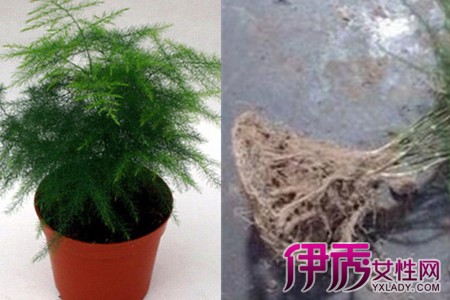
1. Division Propagation
The division method requires the plant to be as large as possible; generally, plants that have grown for two or three years are more suitable for propagation by division. Division simply means splitting one pot of asparagus fern into two or three pots to grow, depending on the size of the plant. The division method is very simple and easy to do: after taking the asparagus fern out of the pot, remove all the soil from the roots and separate the roots with your hands. This plant has a fairly high survival rate; as long as the roots are not too badly damaged, it will survive once planted in a pot.
After dividing, the asparagus fern should be given some fertilizer as a base fertilizer; you can choose about 3 pieces of sesame paste residue or horseshoe slices. When dividing, choose loose soil for planting, and place some pond mud at the bottom of the pot.
After planting, water the plant thoroughly in one go, until water seeps out from the bottom of the pot. Do not water all the time normally; only water again when you notice the surface has dried somewhat. When watering, make sure the water temperature is as close as possible to the soil temperature or the weather temperature. Do not use just any water; always use clean water.
2. Cutting Propagation
Asparagus fern cutting propagation can be done all year round, but if the temperature is low, the survival rate will be low. Generally, cutting propagation requires a temperature between 20-30°C; if the temperature is just right, you can use this method to propagate the plant.
When taking cuttings from asparagus fern, choose a branch with very lush foliage and many twigs. Use your hands to push aside the potting soil so you can see the part where the roots connect to the branch. Use a knife to make a small, moderately sized cut 0.5 cm above the part to be used for the cutting.
Leave this cut open to the air for half a day, then coat the surface with a layer of washed fresh moss. Leave it for about 10 days, keeping it moist the whole time.
After about 10 days, you will see a tumor-like node forming at the cut; at this point you can cut off the branch. You do not need to keep all the side branches on this branch; keep only two and also cut them in half for the cutting, and cut off all the remaining side branches.
Make your own cloth bag with a diameter of 6 cm and a height of 10 cm, place some loose, moist soil inside, and poke some small holes on the outside. Insert the cut branch tip used for the cutting about 2 cm into the small holes.
Wrap the cloth bags with the cuttings in cloth strips, place them in a large pot with a glass bottle in the middle. Fill it with soil and wait for them to take root.
3. Seed Propagation
When the outer skin of asparagus fern seeds turns black and soft, they are already ripe; at this point you can pick these ripe seeds one after another. First remove the soft fruit skin, then wash the seeds inside with clean water. The washed seeds must be dried before they can be stored; if not dried, they are afraid they will not keep.
Around early April of the year, plant the asparagus fern seeds in sandy soil; it is best to use a wooden or clay pot for sowing, at a spacing of about 3 cm.
Place 3 seeds in each planting hole. After sowing, cover the seeds with a layer of sandy soil, but do not cover too thickly, and do not press the soil too firmly. Generally, covering with 5 cm of soil is enough. After planting, water it heavily, then cover it with plastic wrap or a glass lid, keeping the soil inside moist and the temperature at around 25°C.
Normally you should not water heavily again; use a spray bottle to spray water on it frequently. After planting, asparagus fern will sprout in about a month; when it grows to about 5 cm it can be transplanted, and at about 10 cm it can be planted in a flower pot.
How to Grow Asparagus Fern: An Introduction to Several Flower Pots of Different Materials
As a member of indoor soft furnishing decor, asparagus fern seems rather hard to care for; it often develops yellow leaves, which may be caused by improper light, watering, or fertilizing. So how exactly do you grow asparagus fern? Below is an introduction, along with several flower pots of different materials to share with everyone, so you can see which one you like.
How to Grow Asparagus Fern?
Yellow leaves on asparagus fern not only affect its healthy growth but also affect the beautiful effect of indoor decoration, spoiling the mood of the household owner. The main causes of yellowing asparagus fern leaves are the following 6 problems, which we hope will help the many owner friends who love growing indoor flowers.
1. Strong Light Exposure
Asparagus fern prefers partial shade when grown; in summer it should not be exposed to strong direct sunlight, otherwise the branches and leaves will wither and turn yellow. The solution is to move the pot to a shady place and spray the branches and leaves more often to increase humidity.
2. Improper Watering
Although asparagus fern likes moisture, it can also become waterlogged from too much moisture, so during cultivation it is best to keep the potting soil alternating between dry and moist; generally, do not water until it is dry, and water thoroughly when you do, but do not let too much water accumulate on the pot surface when watering. If overwatering occurs, you can temporarily stop watering and instead just spray the leaves to keep the asparagus fern moist.
3. Improper Fertilizing
Fertilizing too heavily or applying unrotted fertilizer can both cause asparagus fern leaves to turn yellow and drop. And if the potting soil is too poor in nutrients, it will likewise cause the leaves to turn yellow. So when fertilizing, apply lightly, with more frequent but smaller amounts, and use rotted fertilizer. For situations that have already occurred, repotting with fresh soil can solve the problem. It is worth noting that fertilization is not suitable during the low-temperature period in winter and the high-temperature period in summer.
4. Gas Poisoning
Asparagus fern is very afraid of smoke and dust. If it is often exposed to harmful gases such as smoke and dust, it will show poisoning symptoms of yellowing branches and leaves. When this happens, promptly move the pot away from its original location and increase spraying of the leaves to remove dust.
5. Pests
Scale insects are the most common pest in asparagus fern cultivation. When you find scale insects, promptly wipe them off with a wet cloth strip; in severe cases, buy treatment from a plant care shop, and promptly change the potting soil. When changing the soil, you can cut off old and damaged roots to reduce nutrient consumption.
6. Inadequate Winter Care
Asparagus fern cultivation requires maintaining a certain temperature, especially in winter when it should be placed in a sunny spot. If asparagus fern is kept for a long time in a place lacking light, poorly ventilated, and cold, its leaves will easily wither and dry out. In winter, the growing temperature for asparagus fern should generally not be lower than 12°C, and it should be placed in a spot with good light, with watering appropriately reduced.
The main causes of yellowing asparagus fern leaves are none other than the factors above, and in daily maintenance you should take a little care in tending it, not just ignore it completely.
An Introduction to Several Flower Pots of Different Materials:
1. Fiberglass Reinforced Plastic Flower Pot
Also called FRP flower pot; the texture is formed by clay sculpture or mold opening. Styles are varied, sturdy and durable, does not deform, corrosion-resistant. Specifications are complete. The surface can be made in various color effects.
2. Sandstone Flower Pot
This pot is carved from fine sandstone, comes in many colors, and is one of the best materials among flower pots; the surface can be given effects.
3. GRC Cement Flower Pot
This flower pot is relatively heavy. In the cement, anti-corrosion, anti-freeze, and anti-rot materials are added along with fiberglass cloth; it is sturdy and durable, and the surface effect can be made into a sprayed real-stone paint effect, etc.
4. Magnesite Flower Pot
Mix magnesium oxide and brine, add a modifier, and apply the mixed slurry onto fiberglass mesh cloth to make the desired flower pot. This flower pot is low in price and varied in style. Sturdy and durable. A fine piece for indoor display.
5. Clay Pot
Also called mud pot or unglazed pot. This pot is fired from clay and comes in red and gray; it has good drainage and breathability, is low in price, and comes in complete specifications, making it most suitable for home flower growing.
6. Purple Clay Pot
Also called ceramic pot. Exquisitely made, simple and elegant, mostly purple, with complete specifications, but its water permeability and breathability are not as good as clay pots. It is used for planting moisture-loving flowers and trees, and can also be used as a decorative outer pot.
7. Porcelain Pot
Made from porcelain clay, coated with colored glaze on the outside. Exquisite craftsmanship, clean and elegant, beautiful in shape. The drawback is poor drainage and breathability. Mostly used as a decorative outer pot for clay pots, to adorn indoor or exhibition flowers.
8. Glazed Ceramic Pot
A ceramic pot coated with various colored glazes, beautiful in appearance and varied in form. Ceramic pots glazed inside and out have poor drainage and breathability, equivalent to adding a layer of glass inside and out. There is also a type of ceramic pot glazed only on the outer wall; since the inner wall is unglazed, it retains the nature of a clay pot, combining beautiful appearance with inner water drainage and breathability, making it more suitable for long-term display and planting. The Shiwan flower pots made in Foshan, China are the finest of these, elegant and beautiful while also practical.
9. Water Pot
The bottom of the pot has no drainage hole; forms are varied, used for growing hydroponic flowers such as narcissus.
10. Plastic Pot
The material is light and handy, durable, rich in color, cheap, and convenient to use. But it is not breathable and does not seep water, and is used more in soilless cultivation. If used for growing flowers, attention should be paid to the physical properties of the potting soil, making it loose and breathable to overcome the drawbacks of plastic pots. Plastic pots are most suitable for planting flowers that tolerate water and moisture, such as umbrella papyrus, Monstera deliciosa, calla lily, and Aglaonema modestum. In the seedling stage, small soft plastic pots (nutrition pots) are commonly used and are convenient to use.
11. Stone Pot
Natural stone material, brilliantly colored, with good selectivity, but relatively heavy, not suitable for placing on a table. In the market, Haiyiwei Decorative Materials Co., Ltd. is a high-tech private enterprise established in 2000 that produces GRC decorative materials, GRC components, GRC products, sandstone components, and other products. It seeks survival by quality and development by reputation. Its products surpass industry standards in quality, technology, and variety. The Roman columns, window casings, moldings, floral decorations, flower pots, sculptures, and other products it produces are sold domestically and abroad and have won unanimous recognition. The GRC products it specializes in producing are lightweight products exquisitely processed from alkali-resistant glass fiber, low-alkali cement, and other materials. Their characteristics are high strength, high toughness, long life, great plasticity of shape, and simple manufacture and installation. Components made with GRC are full of European continental flavor. Unique pavilions, generously stretching corridors, antique-style flooring, sculptures of various shapes, and exquisite railings and flower beds add a touch of nobility and elegance to all kinds of buildings. GRC products themselves are a carrier of language; following the ideas of the owner and designer, they achieve the effect of making dreams come true.
What Are the Uses of Asparagus Fern? Growing Methods for Asparagus Fern
Asparagus fern, also known as cloud pine, spiny asparagus, and cloud bamboo, Latin name: Asparagus setaceus, is a climbing plant that can reach several meters in height. The roots of asparagus fern are slightly fleshy, and the stems are soft, growing in clumps, slender and long. The stems have very many branches and are nearly smooth. The leaf-like branches are bristle-like and slightly three-angled; the scale-like leaves have a slightly spiny spur at the base or the spur is not obvious. The flowers are white with short stalks, and the flowering period is September to October. The berries are purplish-black when ripe and contain 1-3 seeds. The fruiting period is from winter to the following spring.
Native to South Africa, it is distributed in central China, northwest China, the Yangtze River basin, and various places in the south. It likes a warm, humid, semi-shaded, and ventilated environment; it is not tolerant of severe cold in winter, not tolerant of drought, and in summer it avoids direct sunlight.
Asparagus fern is a highly ornamental plant that can be placed in the living room or study; while purifying the air, it also adds a literary atmosphere. Its roots are used as medicine and can treat acute bronchitis, with the function of moistening the lungs and stopping cough. Asparagus fern has many other uses as well; below, let us look together at the uses and growing methods of asparagus fern.
An Introduction to Asparagus Fern
1. Its name is "asparagus fern."
Asparagus fern, also known as cloud pine, spiny asparagus, and cloud bamboo, is a perennial evergreen vine foliage plant and a famous ornamental plant. It is Asparagus setaceus of the Liliaceae family, Asparagus genus, grown mainly as a potted foliage plant, and is also an important cut-foliage material.
2. Its abilities are incredible: it can treat illness and also absorb harmful substances. Asparagus fern, also known as cloud pine, spiny asparagus, and cloud bamboo, is a perennial evergreen vine foliage plant and a famous ornamental plant. It is Asparagus setaceus of the Liliaceae family, Asparagus genus; its roots are used as medicine, with effects of treating acute bronchitis and stopping cough, and it has the function of moistening the lungs. It is grown mainly as a potted foliage plant and is also an important cut-foliage material. Asparagus fern can not only improve cultural refinement, but also has a certain regulating effect on those with liver disease, depression, and low mood. At night, besides absorbing harmful gases such as sulfur dioxide, nitrogen dioxide, and chlorine, asparagus fern can also secrete gases that kill bacteria, reducing the occurrence of infectious diseases such as colds, typhoid, and laryngitis, which is greatly beneficial to human health.
3. It has a graceful posture, and its charm surpasses other plants. Its branches and stems have nodes like bamboo, and its bearing is elegant and unrestrained, hence the name asparagus fern. Its leaf-like branches are delicate and beautiful, densely growing like feathers, with layers of emerald clouds; the plant shape is elegant and uniquely charming, deeply loved by people, and it is a famous indoor foliage flower. The best ornamental age for asparagus fern is years 1-3; during this period the plant has lush branches and leaves and a perfect posture. But even a small plant that has only grown for a few months, with its several staggered branches and leaves, can form a very ideal composition, and its form is also very beautiful.
4. It comes from Africa. Asparagus fern is native to South Africa and is widely cultivated in China. In Pingshan County, Yibin, Sichuan, it can be seen on large bluestone surfaces; it can generally also be seen on the relatively dry earthen banks of large bluestones in crop fields.
5. It has an elegant story behind it. Asparagus fern means "elegant bamboo." In fact, it is not bamboo; it is only because its leaves are soft and light and remain emerald green all year round. People often give asparagus fern to each other to symbolize lasting friendship and happiness after marriage.
The Effect of Asparagus Fern on the Home Environment
Asparagus fern is a relatively difficult plant to grow; therefore, families that choose to plant it are generally fewer, and those who can care for it very well are even fewer, so its value is relatively high.
1. Asparagus fern symbolizes eternity, the pure heart of friends that never changes, and in wedding flowers it is a symbol of a happy and sweet marriage and everlasting love. Living in a vulgar city, wearing a mask every day, being a person before people and a ghost before ghosts, and after tearing off the mask, not even knowing whether you are a person or a ghost -- at such a moment, looking at an asparagus fern is like meeting your own friend, listening to you speak with wholehearted attention, letting your tired heart return to comfortable nature and encounter the most beautiful side of human nature.
2. It has an antibacterial effect on people and the home. In vitro tests of the decoction showed varying degrees of inhibitory effects on Bacillus anthracis, alpha- and beta-hemolytic streptococci, Corynebacterium diphtheriae, Corynebacterium pseudodiphtheriticum, Diplococcus pneumoniae, Staphylococcus aureus, Staphylococcus citreus, Staphylococcus albus, and Bacillus subtilis.
How Asparagus Fern Pairs with Home Styles
3. It has an effect against human tumors, giving people a sense of safety. In in vitro tests, asparagus (Asparagus) has a certain inhibitory effect on the dehydrogenase of white blood cells in patients with acute lymphocytic leukemia, chronic myelogenous leukemia, and acute monocytic leukemia, and can inhibit the respiration of white blood cells in patients with acute lymphocytic leukemia. The saponins contained in plants of the same genus produced in India have an anti-oxytocin effect on the animal uterus.
4. It has an antitussive and expectorant effect, making it a little doctor in the home, giving people peace of mind just by looking at it. Animal tests have shown antitussive and expectorant effects; if a person has a cough, taking a little asparagus fern can solve the problem, convenient and quick, making quite an unexpected contribution to human health.
Asparagus fern is not merely showy; in fact, it also does the work of "bamboo," providing shelter for the home environment.
The Feng Shui Role of Asparagus Fern
Asparagus fern is an outstanding choice among home feng shui decorations. If you observe carefully, it is not hard to find that many wealthy families place an asparagus fern in their homes. Why is it so popular?
1. Placing asparagus fern in front of the door is beneficial to the owner's popularity.
Asparagus fern means "elegant bamboo." In fact, it is not bamboo; it is only because its leaves are soft and light and remain emerald green all year round, symbolizing that friendship and love stay fresh forever. People often give asparagus fern to each other to symbolize lasting friendship and happiness after marriage.
2. Placing asparagus fern beside the TV is beneficial to health. Asparagus fern, also known as cloud pine, spiny asparagus, and cloud bamboo, is a perennial evergreen vine foliage plant and a famous ornamental plant. It is Asparagus setaceus of the Liliaceae family, Asparagus genus; its roots are used as medicine, with effects of treating acute bronchitis and stopping cough, and it has the function of moistening the lungs.
3. Placing asparagus fern in every corner of the home is beneficial to the family atmosphere. Asparagus fern can not only improve cultural refinement, but also has a certain regulating effect on those with liver disease, depression, and low mood. At night, besides absorbing harmful gases such as sulfur dioxide, nitrogen dioxide, and chlorine, asparagus fern can also secrete gases that kill bacteria, reducing the occurrence of infectious diseases such as colds, typhoid, and laryngitis, which is greatly beneficial to human health.
4. Placing asparagus fern in the study is beneficial to reading and work. People who furnish the study with the four treasures of the study are generally lovers of books, and those who love feng shui layout all like this arrangement. Asparagus fern can improve cultural refinement, and also has a certain regulating effect on those with liver disease, depression, and low mood. It is best to place asparagus fern alone on a flower stand to create a place that belongs to it; this will be of some help to family members or the individual.
If you feel that things are always going badly, you might as well buy an asparagus fern to change your fortune.
The Role of Asparagus Fern in Matching Home Styles
Placing asparagus fern in different places in the home has different meanings.
1. Placed at the entrance or in the living room, it expresses the owner's friendliness, symbolizing a stream of guests and lasting friendship, and a happy marriage.
Asparagus fern means "elegant bamboo." In fact, it is not bamboo; it is only because its leaves are soft and light and remain emerald green all year round. People often give asparagus fern to each other to symbolize lasting friendship and happiness after marriage.
2. Placed beside the TV in the living room, it expresses the pursuit of health. Asparagus fern, also known as cloud pine, spiny asparagus, and cloud bamboo, is a perennial evergreen vine foliage plant and a famous ornamental plant. It is Asparagus setaceus of the Liliaceae family, Asparagus genus; its roots are used as medicine, with effects of treating acute bronchitis and stopping cough, and it has the function of moistening the lungs. It is grown mainly as a potted foliage plant and is also an important cut-foliage material. Placing a plant that can serve as medicinal material in the home represents a yearning for health.
3. Placing asparagus fern in the corners of the kitchen and living room represents a clean and fresh home style. Asparagus fern can not only improve cultural refinement, but also has a certain regulating effect on those with liver disease, depression, and low mood. At night, besides absorbing harmful gases such as sulfur dioxide, nitrogen dioxide, and chlorine, asparagus fern can also secrete gases that kill bacteria, reducing the occurrence of infectious diseases such as colds, typhoid, and laryngitis, which is greatly beneficial to human health.
4. Placed in the study, it is the pursuit of success. People who furnish the study with the four treasures of the study are generally lovers of books, and those who love feng shui layout all like this arrangement. Asparagus fern can improve cultural refinement, and also has a certain regulating effect on those with liver disease, depression, and low mood. It is best to place asparagus fern alone on a flower stand to create a place that belongs to it; this will be of some help to family members or the individual.
Asparagus fern can satisfy the different needs of its owner; buy an asparagus fern and place it at home!
The Effect of Asparagus Fern on the Home Environment
Asparagus fern is a relatively difficult plant to grow; therefore, families that choose to plant it are generally fewer, and those who can care for it very well are even fewer, so its value is relatively high.
1. Asparagus fern symbolizes eternity, the pure heart of friends that never changes, and in wedding flowers it is a symbol of a happy and sweet marriage and everlasting love. Living in a vulgar city, wearing a mask every day, being a person before people and a ghost before ghosts, and after tearing off the mask, not even knowing whether you are a person or a ghost -- at such a moment, looking at an asparagus fern is like meeting your own friend, listening to you speak with wholehearted attention, letting your tired heart return to comfortable nature and encounter the most beautiful side of human nature.
2. It has an antibacterial effect on people and the home. In vitro tests of the decoction showed varying degrees of inhibitory effects on Bacillus anthracis, alpha- and beta-hemolytic streptococci, Corynebacterium diphtheriae, Corynebacterium pseudodiphtheriticum, Diplococcus pneumoniae, Staphylococcus aureus, Staphylococcus citreus, Staphylococcus albus, and Bacillus subtilis.
Care Methods for Asparagus Fern
1. Sufficient nutrients, avoiding loss of nutrients. Sometimes it is because the potting soil is hard and compact, with poor aeration, and the root vitality declines, affecting the plant's normal growth. Besides repotting in spring with nutrient-rich potting soil, you should also often loosen the surface of the potting soil and pay attention to strengthening fertilization.
2. Water more and keep it moist. You should often keep the potting soil moist and frequently spray water on the plant; the water temperature is best the same as room temperature. Place the asparagus fern in a place with high air humidity. During the growing season, appropriately apply mixed fertilizer to make the plant robust and increase its resistance.
3. Water amount should be appropriate; too much is also bad. Move it to a shaded place or to a windowside with curtains, avoiding direct strong light, and at the same time take care not to water too much.
4. Pay attention to weather changes; when a typhoon comes, you should move the asparagus fern indoors. Its rotting is mainly caused by being hit by strong winds in the hot summer season, or by long-term water accumulation in the flower pot. So in summer, take special care to guard against thunderstorms or typhoons.
The above is an introduction to the uses and growing methods of asparagus fern; for more home plants, please stay tuned.