How to prune Amaryllis after flowering? These cultivation secrets you need to master
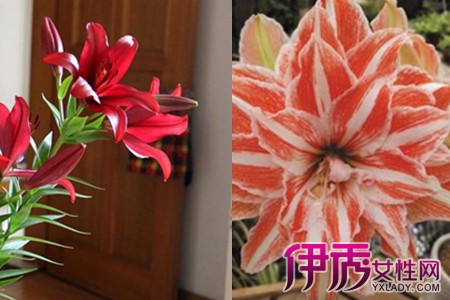
Amaryllis generally blooms from around Chinese New Year to early spring, and after flowering this flower stalk should be cut off promptly. The long leaves do not need to be cut off; leaving the leaves is beneficial for the growth of the bulb. Amaryllis leaves generally do not need pruning; after receiving sunlight the leaves carry out photosynthesis, which is very beneficial for the growth of the flower.
Amaryllis is a light-loving plant and can be placed in direct sunlight for cultivation in moderation, but the time must not be too long; after a while in direct sunlight it should be shaded.
Amaryllis usually prefers well-drained, loose sandy soil. It can be planted and grown in well-drained sandy soil. Normally it should be placed in a sunny, well-ventilated environment for cultivation. If the soil becomes dry, loosen the soil promptly.
In summer Amaryllis is in a semi-dormant state, and at this time it must not be fertilized. In autumn around September and October, when the plant resumes normal growth, some phosphorus fertilizer and potassium fertilizer can be applied to promote bud formation. In November it must no longer be fertilized.
After Amaryllis blooms, the flower stalk should be cut off. If the soil in the pot was changed only about a year ago, there is no need to change the potting soil again. If the potting soil has not been changed for several years, then the potting soil should be replaced, so as to avoid insufficient nutrients in the pot affecting the growth of the Amaryllis.
When changing to new potting soil, check the roots of the Amaryllis, and if any rotten roots are found, remove them. When placing the plant in new sandy soil, do not press down hard, to avoid damaging the roots. A newly repotted Amaryllis must not be watered immediately; leave it for one or two days before watering. In this way the soil settles by itself in the pot and damage to the flower's roots can be prevented. In winter this flower enters dormancy, and the lowest temperature must be kept at 5 degrees.
Master the cultivation methods and precautions for Amaryllis to grow the flowers more luxuriantly
Every kind of flower has requirements for its growing environment. For growing Amaryllis, the first thing is to choose suitable soil. If there is no soil nearby, you can buy it at a flower shop; a bag of about 10 jin costs only about 3 yuan. This kind of soil is soft, not as hard as loess, and is very helpful for root growth; soil that is too hard will affect root growth and may even cause root rot.
Then find a suitable flower pot. It is best to choose a relatively deeper pot, because the roots of Amaryllis are very long; if the pot is too shallow it will affect the development of the Amaryllis roots. A pot with a hole in the bottom is more suitable.
After preparing the pot and soil, you can begin planting. Put more than half of the soil into the pot, then place the prepared Amaryllis in the middle of the pot, without planting it crooked. Then fill the top with soil, and afterward press down hard a few times with your hands, so it becomes firm. If you do not press it down a few times, it will easily fall over when you water, and then you have to stand it up again and get a lot of mud on your hands, which is very troublesome.
After planting, start watering. Because the soil in the pot is dry soil, when watering you must water thoroughly, otherwise the roots cannot absorb water and the plant cannot survive. The flower will become wilted, and it is very hard for it to recover to normal. After watering, leave it on the ground for a few minutes to let it seep through, then move it indoors, because the indoor temperature is relatively stable. Just after planting, leave it indoors for half a month, and it will more or less adapt.
It should be placed in a ventilated, sunny place. When Amaryllis is growing flower buds, it easily attracts small white flying insects, and at this time be sure to remember to spray insecticide. Otherwise the flower buds may drop. After spraying the pesticide, do not expose it to strong sun, otherwise the effect of the pesticide will be affected.
Flower cultivation: Amaryllis planting techniques
Amaryllis is a bulbous flower, and during its flowering period its flowers are large and full, so it is loved by many flower enthusiasts. Amaryllis is suitable for planting in autumn, and in winter and spring you can see its gorgeous large flowers. How should such a beautiful Amaryllis be planted? In fact, the planting method of Amaryllis is also relatively simple. Let us learn about the planting techniques of Amaryllis together below.
Flower enthusiasts who have grown Amaryllis know that the bulb of Amaryllis is very large. Generally the bulbs of narcissus and tulips may be only 5-6 cm in size, while the bulb of Amaryllis is more than 10 cm in diameter.
Planting steps:
Step 1: Check the bulb: For the Amaryllis we buy back from the flower market, we must first check whether the bulb is healthy. We can first squeeze the Amaryllis bulb; at this time a certain hardness should be felt. If it feels soft when squeezed, then the bulb may already have rotted.
Step 2: Clean the dried roots of the bulb. Before planting, be sure to cut off the roots that have already decayed or dried up, and keep the remaining healthy roots. If the outside of the bulb has multiple layers of brown dried skin, part of it can be peeled off, to eliminate as much as possible the hidden danger of causing rot.
Step 3: Disinfect the bulb. Generally, soak the bulb in carbendazim mixed with water for about 30 minutes, and be careful to avoid water accumulating in the bud center. For moldy spots on the bulb, wipe them with carbendazim solution, so as to avoid mold on the bulb later as much as possible. Generally the bulb can be planted only after it has dried.
Step 4: Prepare the soil and flower pot. The soil for planting Amaryllis requires a pH value between 6-7.5 and good water permeability. The recommended medium is 80% imported coarse-fiber peat and 20% perlite; do not use bark or organic fertilizer. As for choosing a flower pot for Amaryllis, generally for growing Amaryllis you want one plant per pot; a pot with a diameter of about 20 cm is fine for one plant. The pot must have good drainage and must not be too large; it is best to choose a clay pot with good drainage, because if you use a plastic pot it easily falls over.
Step 5: Potting and planting. First, place ceramsite at the bottom of the pot to avoid water accumulating in the potting soil and rotting the roots. Then add a layer of base soil, and at this time you can pour in part of the base fertilizer. After placing the base fertilizer, be sure to remember that at this time you must add more soil before placing the bulb. When planting the Amaryllis bulb, be sure not to bury the entire bulb in the soil; expose 1/3-2/3 of the bulb, so that it sprouts easily and the bulb will not rot.
Precautions:
1. After planting is completed, water thoroughly. When watering, pour along the wall of the pot, and do not let water flow into the bulb to avoid rotting the bulb. Afterward keep the soil moist, but the soil must not accumulate water. Then place the planted bulb in a cool, ventilated place, and after 3 days move it to a place with sufficient sunlight for normal care.
2. Amaryllis bulbs of different varieties are different when planted and when they bloom. Those potted in April can bloom in June; those potted in September, kept in a warm, ventilated indoor place for care, can bloom in winter and spring.
3. After the flowers wither, the faded flowers can be cut off, and let the leaves wither naturally. After the leaves wither, remove the withered stems and leaves, finally dig up the bulb, clean off the dried leaves, and then it can be stored in a dark, cool place. When the temperature is suitable, it can be replanted.
Isn't planting Amaryllis very simple? Have all you flower enthusiasts learned it? Friends who like Amaryllis, hurry up and give it a try.