A detailed guide to growing cyclamen: welcome guests at home during the Chinese New Year with it
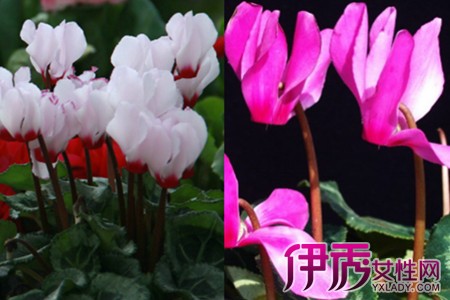
To grow cyclamen you should first understand the habits of this flower, and not blindly use the same growing method as for other flowers. Every kind of flower has its own character, and if the method is not right they are hard to grow well. Today we will share with you how to grow cyclamen so it blooms in all seasons, gorgeous and lovely.
The cyclamen we buy from the flower market usually comes in a simple pot, so after getting it home and letting it adapt to the home's temperature and humidity for a week, you need to repot it. If you don't repot it, it is hard to guarantee normal growth of the cyclamen. When repotting, choose loose, breathable soil and a pot, and when tipping it out be careful not to damage the roots.
After tipping the cyclamen out and repotting, you should put it in a shaded place. A freshly repotted cyclamen is very afraid of sunlight, and after about a week, if the leaves are no longer wilting, you can put it on the windowsill. Cyclamen likes sunlight and warmth, but too hot is also no good; if the temperature is too low or exceeds 40°C, they will stop growing.
For a flowering plant like cyclamen, you must fertilize it regularly, either with flower nutrient solution bought from the market or with bean cake fertilizer. Be sure to strictly follow the ratio required by the instructions, otherwise too high a concentration will burn the flower's roots. Cyclamen should be fertilized once every 20 days to a month; fertilizing too often will make it grow only leaves and no flowers.
The above are the growing methods for cyclamen. If you manage it according to the correct methods, cyclamen will keep blooming for half a year to a year after it starts flowering in winter. During the flowering period cyclamen easily attracts aphids, so check them often to see whether they have been attacked by pests, and if so, use flower insecticide to get rid of the pests as soon as possible.
Growing methods for cyclamen
Soil selection
For the growing medium of cyclamen you can use humus soil, as well as forest leaf mold, furnace ash and slag, etc., and add an appropriate amount of calcium carbonate and other chemical agents to prepare it. This kind of soil is relatively loose, which helps our cyclamen grow. When planting, pay attention to the size of the container, increase it gradually, and do not use a large pot to grow small seedlings.
Fertilizing method
Cyclamen likes fertile soil, but does not like concentrated fertilizer. When repotting, some base fertilizer needs to be applied. Generally you can fertilize once every 1-2 weeks, focusing on light fertilizer applied frequently. After several months of vegetative growth, apply organic fertilizer to it and water the flowers with diluted liquid; when summer comes and the temperature can no longer be controlled, stop fertilizing.
Watering method
Although cyclamen is drought-tolerant, it is still best to keep the soil moist during its growing season, and note that there must be no standing water in the pot. Water frequently but little, and do not let it get too wet. If it does not go dormant in summer, you can water it normally, and you need to keep the potting soil pleasantly moist. After the Start of Autumn, it will enter the reproductive growth period; at this time you should apply phosphorus and potassium fertilizer, control vegetative growth, promote flower bud differentiation, and encourage budding and blooming.
Temperature requirements
The suitable growing temperature for cyclamen is 10-22°C, and the daytime and nighttime temperatures should be kept at a difference of 8-10°C. If the nighttime temperature is kept at around 7-8°C it can also bloom, but the flowering period will be slightly delayed; if it is below 6°C it will not bloom normally.
Light requirements
Temperature and light have a certain influence on the growth and development of cyclamen. Throughout the process, you need to start with temperature and consider extending the flowering period. When the flowers decrease in late April, you need to move the plants out of the greenhouse and place them in a well-ventilated spot to grow. Changes in climate, suitable temperature and light will make the cyclamen grow another batch of flower stalks and continue to bloom. In the Yangtze River basin and areas to its south, the leaves gradually turn yellow after May, which reflects the rise in temperature; at this time you need to control watering well. In summer, if conditions allow, use cooling equipment to lower the ambient temperature.
How to grow cyclamen? Growing methods for cyclamen
The original names of cyclamen are rabbit ear flower and bonfire flower, and it belongs to the evergreen family of herbaceous plants. The cyclamen plant is elegant, with emerald green leaves bearing white markings on top. Its flowers in particular are small in shape and bright in color, just like a fairy from beyond the heavens lightly descending to the mortal world. So how do you grow this beautiful cyclamen? Next, the Huinong editor will give everyone a detailed introduction to cyclamen growing knowledge.
Point one: maintain suitable moisture
Although cyclamen relatively likes a moist growing environment, it is also afraid of waterlogging. Therefore, when we water cyclamen, we must control the right amount of water and avoid watering too much; usually, just keeping the soil slightly moist is enough. However, there is one thing everyone needs to note: during the flowering period, never sprinkle water on the plant, otherwise it will not only affect the overall beauty of the cyclamen, but also easily cause the leaves to rot.
Point two: use the correct fertilizing method
In view of cyclamen's characteristic of liking fertilizer, the editor adopted a method of light fertilizer applied frequently. Usually about once a week, apply 1 dose of about 800 times diluted liquid fertilizer to the cyclamen, and this can meet its growing needs. Here, the editor also reminds everyone that if you want to apply organic fertilizer to cyclamen, you must operate carefully and absolutely must not let the fertilizer fall on the leaves.
Point three: choose suitable soil
By comparison, cyclamen has relatively high requirements for soil, and it very much likes sandy soil rich in humus and on the acidic side. In view of this characteristic, the editor used leaf mold, garden soil, river sand, etc., and stirred these materials fully and evenly. In addition, to meet cyclamen's need for calcium, the editor also added a small amount of bone meal to it, and this is very suitable for its growth.
Cyclamen is very demanding about ambient temperature, not only afraid of low temperatures but also not tolerant of high temperatures. Especially in summer, if the ambient temperature exceeds 30°C, cyclamen will stop growing and enter a dormant state. When the ambient temperature reaches above 35°C, cyclamen will face the threat of rot and death. In addition, during the winter flowering period, it is best to keep the ambient temperature above 10°C, so as to ensure it overwinters safely.