Potted lemon growing methods shared, so home-grown lemons also bear multidimensional fruit
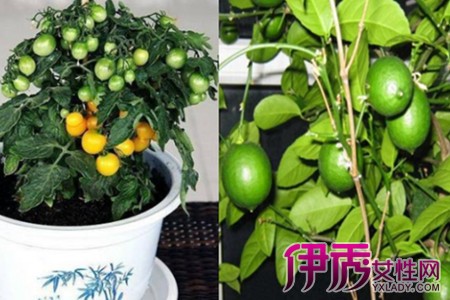
Many people think that potted lemons can be managed in the same way as other potted fruit seedlings, but in fact this is the wrong approach. Lemon care methods are indeed different from strawberries and blueberries, and correct pruning, fertilizing and watering are needed to ensure that they bear fruit on time. Today we will explain how to grow potted lemons reasonably.
The reason potted lemons easily bloom but do not bear fruit is that many people do not understand that they should be given reasonable fruit retention. Most friends who grow potted lemons will find that their lemons have opened many flowers but not a single one has set fruit. This is because too many flowers have bloomed. After the lemon blooms, some flowers should be pinched off and a portion left, so that nutrients are not dispersed and the lemon can bear fruit.
If potted lemons are to bear fruit, reasonable watering is needed. After flowering, watering should be reduced to prevent leaves and flowers from growing wildly. Spraying water in the morning and evening every day is enough to ensure the moisture they need. After flowering, a light fertilizer should be applied once every ten days, and the amount should not be too much. This can ensure a sufficient nutrient supply when fruiting. If too much fertilizer is applied, it is also easy for flowers and leaves to grow wildly without bearing fruit.
If potted lemons are not pruned, it is also difficult for them to bear fruit, because the pot itself limits the root growth of the lemon. Since the pot is small and there is little soil, if the branches above are allowed to grow freely, it will be difficult for nutrients to be distributed evenly, and lemons with unbalanced nutrients are unlikely to bear fruit. Normally, five to six healthy and thick branches should be kept, and all other weak branches should be cut off. For forks, it is enough to keep three or four on one branch, and any extra ones should be forcibly cut off.
The above are the growing methods for potted lemons. Only by cultivating them according to these methods can lemons be ensured to bear fruit smoothly. Once small lemons appear on the branches, do not fertilize them anymore, because too much fertilizer will also cause the fruit to drop.
Learn the growing methods for potted lemons and let multidimensional plants grow in your own home
If lemons can be grown in your own home, it is indeed a very beneficial thing. Lemons contain very rich vitamin C. Moreover, the fruit they bear is very beautiful, which is very good for both health and visual enjoyment. So what methods are needed to grow lemons in your own home? Today we will explain how to grow lemons in pots.
The best way to grow potted lemons is propagation by cuttings. First, healthy and thick lemon branches about one year old should be selected. After choosing the branches, do not rush to cut them off. Find a suitable flower pot and soil first. Lemons like acidic soil with good air permeability. It is best to use soil from a park that contains fallen leaves and rotted roots. Put a layer of soil four to five cm thick at the bottom, then place some white vinegar or ferrous sulfate in the middle, and cover it with soil on top.
When everything is ready, use scissors to cut off the selected branch at a slant, remove all the leaves at the base, and then plant it in the flower pot. The first watering must be thorough, and it is best to let water flow out from the bottom of the pot. Only in this way can the lemon take root. After planting the cutting, place it in a position without direct sunlight, but be sure to keep it warm.
After one week, if the leaves of the lemon cutting are no longer wilting, it proves that it has taken root and it can be placed in a sunny position. But lemons are very afraid of strong light, so a position with partial sunlight is enough. If the temperature exceeds 40°C or is below 10°C, lemon growth will stagnate. After one month, begin fertilizing the lemon. Organic fertilizer sold on the market is fine, but be sure to mix it according to the specifications in the instructions.
After potted lemons bloom, on the one hand pay attention to pest removal. Seedling insecticide can be used and sprayed on the roots and leaves. On the other hand, after lemons bloom, open the windows for ventilation to ensure normal pollination. If there are no flowering plants nearby, you can also use the stamens of your own flowering plants to pollinate the lemon by hand. After successful pollination, small lemons can be seen in another half month.
Growing methods for potted lemons
1. Repot at the right time
Every spring, between March and April, remember to change the flower pot according to the growth of the potted lemon. Sometimes the flower pot is too small, which is not good for the root growth of the potted lemon. If the flower pot is still suitable, then simply replace it with new soil, and at the same time apply some base fertilizer to the potted lemon as appropriate.
2. Prune branches
Unlike ordinary ornamental potted plants, regularly pruning branches for potted lemons is not just for appearance, but also to help them bear fruit better. Generally, we choose to prune branches in spring, and we must cut off those withered leaves, insect-damaged leaves, inner branches and leggy branches.
3. Hand pollination
If you want your potted lemon to bear more fruit, be sure to carry out hand pollination promptly after the potted lemon blooms. Around nine o'clock every morning is the best time for hand pollination.
4. Fertilize multiple times
Before the potted lemon blooms and after it bears fruit, do not forget to apply additional fertilizer multiple times. It is recommended to fertilize once a month and spray nutrient solution once every half month. In this way, the fruit will not easily drop and will be large and beautiful.
5. Water according to amount
Usually when watering potted lemons, the amount should be moderate. Never give more one day and less another day, as this will cause too many leaves to drop from the potted lemon and affect its fruiting.
6. Control temperature
In summer, the midday temperature is high. If it exceeds 30°C, the potted lemon should be shaded. In winter, the potted lemon should be placed in an environment above 5°C to overwinter.