Snake Plant Propagation Is Simple - Learn It and Your Houseplants Multiply Easily
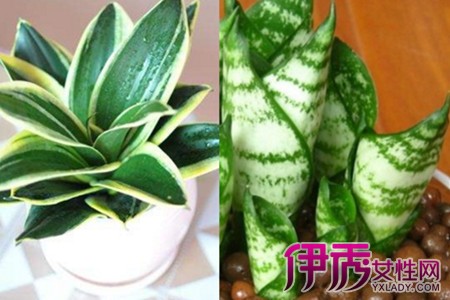
To propagate snake plant by cuttings, you must first select side shoots from a large snake plant about one year old. Once selected, prepare a flower pot and potting soil - snake plants like soft, loose soil and pots with good breathability. When everything is ready, we begin the cutting: first separate the young plant from the mother plant, then plant it into the prepared pot.
A newly planted snake plant must be placed in a spot without sunlight. During the first few days it will wilt and the leaf tips will turn yellow. Once it is no longer wilting, that proves it has successfully rooted, and at this point it can be moved to a spot with partial sunlight. Although snake plants like a little warmth, they do not like direct sunlight, so being exposed to sunlight only in the morning and evening is enough.
The roots of the snake plant can store some water, so there is no need to water them often. In summer, when there is a lot of rain, watering once every three to five days is enough; in dry climates, you can water every day. In winter, water once every two to three days. This will ensure the healthy growth of the newly planted snake plant.
Snake plants are very afraid of cold, so the indoor temperature must be kept at around 20 degrees. If the temperature is too low or too high, they will stop growing. If in winter the temperature drops suddenly and you cannot maintain the indoor temperature, you can wrap the snake plant in plastic film, and once the coldest weather has passed, remove the plastic film again.
How to Grow Snake Plant? Growing Methods and Precautions for the Potted Snake Plant
Snake plant, also known as tiger tail sansevieria, thousand-year orchid, etc., is a perennial evergreen herbaceous plant of the genus Sansevieria in the family Liliaceae. Its rhizome grows in a creeping manner, the plant can reach about 1 m in height, and the leaves grow in clusters and stand upright. It is native to western [Africa], and is cultivated throughout China. When grown at home it often does not bloom, and is mainly appreciated for its leaves. Let us take a look below at the growing methods and precautions for snake plant!
Propagation Methods for Snake Plant
1. Division: Suitable for all varieties of sansevieria, generally carried out together with repotting in spring. The method is to cut the overly dense leaf clusters into several clusters; besides each cluster keeping its leaves, apply wound-healing antiseptic film to the cut surfaces, and then immediately spray the plant with new high-fat film to keep it warm and prevent freezing. After drying slightly, it can be potted. When potting, you can sprinkle some fine sand at the base of the plant to help it survive. The potting soil should be a loose, fertile, well-draining sandy culture soil. Each division should also have a section of rhizome and a sucker, and they are potted and planted separately.
2. Cuttings: Only suitable for varieties whose leaves do not have golden-yellow margins or silver veins; otherwise the yellow and white markings on the leaves will disappear and they will become ordinary sansevieria varieties. The method is to select healthy, plump leaves, cut them into 5-6 cm lengths, insert them into sandy soil or vermiculite with half of the leaf exposed above the soil, and keep them slightly moist; they will root in about one month. After inserting, pay attention to maintaining a certain humidity; when the cutting medium dries slightly, spray water with a fine-nozzle watering can, but it should not be too wet, to avoid rot. Spraying new high-fat film can prevent infection by pathogens, enhance the intensity of photosynthesis, and raise the survival rate. Afterwards, place them in a spot with scattered light and air circulation.
Growing Methods for Snake Plant
1. Soil: Snake plant is not very strict about soil, but it is still best to choose soil with good drainage; a mix of leaf mold and some sand can be used.
2. Light: Snake plant prefers sunlight and should be placed outdoors in a spot with sunlight, but at noon in summer the sunlight is too strong, so some shading should be given. When placed indoors, it should be put near a window so it can fully receive sunlight. If it cannot get sunlight for a long time, the leaves will turn yellow and darken. However, if it has been placed indoors in a spot without sunlight for a long time and is to be moved into the sunlight, there should be a gradual process; it cannot be directly pulled into the sunlight.
3. Temperature: Snake plant likes warmth and is suitable for growing at temperatures of 16°C-30°C. In winter, certain anti-freezing measures should be taken. Generally, below 5°C, cold damage occurs, so it can be placed in sunlight to increase the plant's temperature.
4. Watering: The amount of watering depends on temperature and seasonal changes. In spring and summer, the potting soil should be kept moist, but there must be no water accumulation; in autumn and winter, water only after the potting soil has completely dried. In daily care, water can be used to clean the leaf surfaces to keep the plant attractive and help it grow better. When the winter temperature is below 10°C, do not water, to avoid cold damage. Watering should be done in the morning or evening.
5. Fertilizing: Sansevieria does not have high fertilizer requirements. A small amount of base fertilizer can be added to the soil when planting, and applying fertilizer once a month in daily care is enough; during the growing season, it can be applied one extra time. It is best to use compound fertilizer.
6. Pruning: Compared with other home-grown green plants, snake plant grows relatively fast, so when the pot becomes full, manual pruning is needed, mainly cutting away old leaves and overly dense areas to ensure sunlight and growing space.
7. Repotting: Snake plant is a perennial plant. Generally, it should be repotted once every two years. When repotting, be sure to add nutrients to the new soil so as to ensure its nutritional supply.
8. Diseases: The common diseases of snake plant are mainly leaf spot and anthracnose; at this time, 50% carbendazim can be sprayed for treatment. The common pest is damage by weevils; at this time, a 1000-fold dilution of 50% fenitrothion emulsifiable concentrate can be sprayed to kill them.
Precautions for Growing Snake Plant
1. Snake plant is not strict about soil; the potting soil can be made of leaf mold plus 1/3 river sand. In ordinary care, place it in a well-ventilated, sunny spot. Water according to the principle of "dry-wet cycle" - water when dry; especially at the seedling stage, do not water too much, otherwise it easily causes rhizome rot or even death.
2. In summer, it needs to be moved to a north-facing balcony or a spot indoors with bright scattered light, and spray clean water on the leaf surfaces 1-2 times a day to keep the air moist, so as to help the leaves stay deep green. During the peak growing season, apply a diluted liquid fertilizer combining nitrogen and phosphorus once every 2-3 weeks. If only nitrogen fertilizer is applied for a long time, the markings on the leaf surfaces will become dull.
3. In winter, place it indoors in a spot with ample sunlight and control watering, but still spray warm water on the leaf surfaces once every 5-7 days to keep the leaves clean and prevent dust from settling on them. The indoor temperature should not be lower than 12°C. Every 1-2 years in spring, repot it together with division. Because the snake plant's leaf clusters grow upright, it is advisable to choose a cylindrical pot to display the plant's compact and attractive form.
4. Snake plant leaves stand tall and straight, much like sharp swords. The markings on the leaf surface are like tiger tails and full of spirit; the leaves are thick and hard, the leaf tips are slender and pointed, and the plant form stands upright, like a green warrior. Placed in the corner of a study or hall, or arranged at the center of an oval conference table in large and medium-sized meeting rooms, it is evergreen through the four seasons, elegant and vigorous, a symbol of strength and bravery, giving people a feeling of excitement and drive.
The Benefits of Growing Sansevieria
1. Household benefits: There are many varieties of sansevieria, and different varieties present different styles. Choosing a suitable sansevieria according to your home's decor will make it look very harmonious. In addition, sansevieria can produce more negative ions than ordinary plants. Unlike most plants, sansevieria can carry out a certain amount of carbon dioxide-oxygen conversion at night, and when a new house is being decorated it absorbs harmful substances such as toluene.
2. Medicinal value: Sansevieria can actually be used as medicine, and its basic effect is clearing heat and detoxifying. Many medicines that can treat colds, coughs, and traumatic injuries contain components of sansevieria.
3. Ornamental value: Snake plant leaves are firm and upright with a resolute form, offering the pleasure of both growing and appreciating. Different varieties also have different shapes. Moreover, it is very easy to keep alive and is quite suitable for cultivation.
Four-Season Care for Snake Plant
1. Spring care: When the spring temperature stabilizes above 15°C, repot before proceeding. Snake plant is generally repotted once every 2-3 years. Snake plant is robust by nature and highly adaptable; it tolerates both sun and partial shade, and cultivation and care are relatively simple. Spring is the season for new leaves to grow, so potted plants should be placed on a windowsill with light for growing, keeping the potting soil moist, and fertilizing. Sufficient light can provide enough photosynthetic nutrients for its growth and can also make the new leaves thick and strong, with the patterns on the leaves prominent and vivid. After the new leaves of the snake plant have formed, it can be moved indoors to a bright spot for viewing.
2. Summer care: Snake plant likes high temperatures and tolerates strong light. But summer light is intense, and the leaf color of snake plant easily ages, which is not good for viewing. In summer, snake plant should be placed on a balcony in partial shade or in a bright spot indoors; water after the potting soil dries, and fertilize appropriately. When the weather is hot, spray water around it every day to increase air humidity, and pay attention to strengthening indoor ventilation.
3. Autumn care: After the autumn temperature becomes cool, gradually increase the light for the snake plant. If a snake plant that has been kept indoors for a long time is suddenly moved outdoors into strong light, the leaves are easily scorched by the sun. In autumn, it is advisable to move the snake plant outdoors to receive appropriate low-temperature training; proper cold-resistance training can increase its cold resistance, and a trained snake plant can withstand low temperatures of around 5°C. Before frost, the snake plant should be moved indoors. If the indoor temperature in winter can be kept above 10°C, there is no need to move it outdoors for cold-resistance training. But it should also be gradually moved to a windowsill with light for growing.
4. Winter care: Snake plant is not cold-resistant; keeping the winter room temperature above 5°C allows it to overwinter safely. In winter, snake plant should be placed on a windowsill with light for growing, and the potting soil should be kept on the dry side; if the potting soil is rather wet at low temperatures, it easily causes rhizome rot. If the indoor temperature can be kept above 10°C, the snake plant will still grow slowly, and it should be watered alternately dry and wet, without fertilizing.
Cultivated Varieties of Snake Plant
1. Golden-edged sansevieria: The leaves of golden-edged sansevieria are 70-80 cm long, with golden-yellow margins along the leaf edges.
2. Short-leaved sansevieria: Short-leaved sansevieria is also called small tiger orchid, tiger ear orchid. The plant height is only 10 cm; the leaves are short and wide, curled and overlapping, arranged in a rosette. The leaves are 7-10 cm long and 2.5-3 cm wide; the leaf surface is dark green with horizontal grayish-white tiger-stripe markings.
3. Golden-edged short-leaved sansevieria: The leaf margins of golden-edged short-leaved sansevieria have broad golden-yellow to milky-white edges; sometimes the entire leaf is golden-yellow or milky-white, with only a small part in the center green. Other characteristics are the same as short-leaved sansevieria.
4. Round-leaved sansevieria: Round-leaved sansevieria is also known as stick-leaved sansevieria, tube-leaved sansevieria, tube thousand-year orchid, etc. The stem is short or absent; the fleshy leaves are slender, round and rod-shaped, with slender pointed tips, hard in texture, growing upright, sometimes slightly curved. The leaves are 80-100 cm long and 3 cm in diameter; the surface is dark green with horizontal grayish-green tiger-stripe markings. The raceme bears small white or pale pink flowers.
5. Dwarf sansevieria: The dwarf sansevieria plant is radial in form; the leaves are hard in texture, broadly conical, with a grooved upper surface and a semicircular back, and yellowish-brown leaf margins. The leaf color is dark green with horizontal light green tiger-stripe markings.
What to Do If Your Snake Plant Won't Grow Tall_Secrets to Making Snake Plant Grow Tall_Snake Plant Growing Methods
Many friends find, when growing snake plant, that it will not grow tall and the leaves are too short - what should be done? This problem is mainly caused by incorrect growing methods. Let us learn together about snake plant growing methods and the secrets to making snake plant grow tall.
I. Growing Methods for Snake Plant
1. Soil:Snake plant requires loose soil and needs breathability, so when mixing soil for snake plant, be sure to use 2/3 leaf mold plus 1/3 garden soil. Remember that the soil must be loose and breathable, otherwise water will not evaporate easily, leading to rhizome rot.
2. Sunlight:Snake plant likes light, so it must be exposed to sunlight regularly. It is best to place it in a spot where it can be directly shone upon. If conditions do not allow this, then it should still be placed in a spot relatively close to sunlight. Being placed in a dark place for a long time will cause the leaves to turn yellow.
3. Temperature:Snake plant has fairly high temperature requirements. Its suitable growing temperature is 20-30°C, and in winter it should not go below 10°C at the lowest, so be sure to pay attention, especially in northern regions.
4. Watering:Snake plant also has fairly high water requirements. Generally speaking, if the soil is relatively loose, it needs to be watered twice a week, while in winter, because of climatic factors, only once is enough.
5. Pruning:Compared with other home-grown green plants, snake plant grows relatively fast, so when the pot becomes full, manual pruning is needed, mainly cutting away old leaves and overly dense areas to ensure sunlight and growing space.
6. Repotting:Snake plant is a perennial plant. Generally, it should be repotted once every two years. When repotting, be sure to add nutrients to the new soil so as to ensure its nutritional supply.
7. Propagation:Snake plant is a root-propagating plant. Generally, you only need to plant a few plants, and after one year you can harvest a full pot. When planting, first place part of the soil at the bottom of the pot, then start planting from one side of the pot, planting evenly within the pot.
8. Fertilizing:Snake plant does not have high fertilizer requirements; it only needs to be fertilized twice a month during the growing season. Note that a diluted fertilizer solution should be applied, so as to ensure lush growth.
9. Diseases and pests:The common diseases of snake plant are mainly leaf spot and anthracnose; at this time, 50% carbendazim can be sprayed for treatment. The common pest is damage by weevils; at this time, a 1000-fold dilution of 50% fenitrothion emulsifiable concentrate can be sprayed to kill them.
Reasons Why Snake Plant Won't Grow Tall
First, look at the variety. Some dwarf varieties are only 20 cm tall at most. If it is not a variety issue, then you need to look for the cause in daily care. The main ones are:
1. Temperature too low or too high. If kept below 10 degrees or above 30 degrees for a long time, it cannot grow very well, and naturally will not grow tall.
2. Root rot. This is mainly caused by improper watering. If there is too much water accumulation and the roots rot, this naturally also affects growth.
3. Unreasonable light. Some people never let their plants see the sun, which is very unfavorable to the growth of snake plant, and naturally it will not grow tall.
4. Insufficient fertilizer. This is a common problem. Without enough fertilizer it also will not do; the fertilizer should mainly be nitrogen-based.
The above isSnake Plant Growing MethodsandSecrets to Making Snake Plant Grow Tallintroduced. As long as it is not a variety issue, growing snake plant only requires suitable light, moderate watering, reasonable fertilizing, and appropriate temperature to grow very well.