How to deal with yellowing cyclamen leaves? These tips are very important
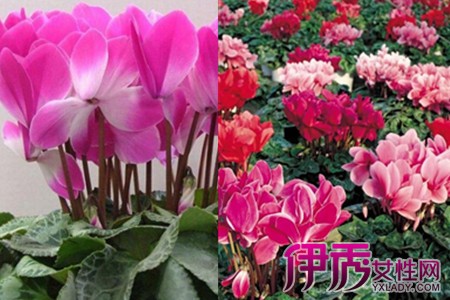
Cyclamen is an ornamental plant that relatively likes light, but it is also very afraid of direct strong light. So weak light every day is enough to meet its growth needs. If it is exposed to the sun for a long time, its leaves can easily turn yellow. If you find that its flowers are not colorful enough, it is very likely due to insufficient light or insufficient fertilizer. If your cyclamen has problems, you might as well look for the cause from the following points.
If it has not been given nitrogen fertilizer for a long time or has not been repotted for a long time, its branches and leaves will lack nutrients, causing the leaves to become thin and yellow. The solution is simply to fertilize it in time. But applying too much fertilizer is also not good. If you find that the newly grown leaves are relatively thick and plump, while the old leaves begin to fall off, then you must stop fertilizing immediately. Water more to dilute the fertilizer, or simply repot it. Usually it cannot be placed in a place with high temperature and strong sunlight; it needs to be placed in a cool place.
The soil for planting cyclamen cannot be strongly alkaline soil; acidic soil is more suitable for its growth. Usually it also cannot be placed in a place without sunlight, as this will also make its leaves turn yellow. When managing cyclamen, prune its branches in time. Otherwise, its newly grown leaves will not be able to absorb enough nutrients.
The indoor air cannot be too dry. Usually you can pay more attention to spraying water on it and pay more attention to increasing the humidity in the air. The amount of watering must be controlled well; do not water too much, as too much water will also make its roots rot. You can wait until its flowers and leaves are slightly wilted before watering.
How to grow lucky bamboo, tips for vigorous lucky bamboo propagation
Lucky bamboo is also known as Dracaena sanderiana, with aliases such as bamboo banana, evergreen bamboo, longevity bamboo, Disporum sessile, fortune bamboo, wealth tower, bamboo tower, and tower bamboo. Sometimes when it is placed in the Wenchang position at home, it is also called Wenchang bamboo. Lucky bamboo belongs to the genus Disporum in the family Liliaceae, and is a perennial evergreen herbaceous plant. Today, let us take a look together at the tips for how to grow lucky bamboo so that it propagates vigorously.
How to grow lucky bamboo: potted soil cultivation
For potted soil cultivation, it should be grown in loose, breathable, well-drained sandy soil or semi-muddy sand and alluvial clay. Because lucky bamboo likes shade, humidity, and high temperatures, is tolerant of waterlogging, has strong fertilizer tolerance, and strong cold resistance. Its best growth temperature is 20-28°C, and the minimum temperature can be 2-3°C. In summer and autumn, the temperature is high and there is more moisture. This kind of weather is very favorable for the growth of lucky bamboo, and it is also the growing season for lucky bamboo. Lucky bamboo has no special requirements for light and is more suitable for growing under bright scattered light. If the light is too strong and it is exposed to the sun, it will cause its leaves to turn yellow, lose green color, or grow slowly.
How to grow lucky bamboo: water cultivation
When lucky bamboo is grown in water, it should be placed in a bright indoor place. When the temperature is relatively low, change the water every 7-10 days. During the peak growing seasons of spring and autumn, change the water every 3-5 days. When changing the water, a complete-element compound fertilizer can be added to the water. In the high-temperature period of summer, it is best to use cooled boiled water for water cultivation, to avoid root rot or the breeding of algae. In winter, stop fertilizing. In severe cold seasons in the north, indoor water cultivation without heating facilities is prone to freezing damage, so in early October it can be planted with river sand soil. When it is cold, cover the pot with a plastic bag and place it indoors where cold wind cannot reach. In winter, it can safely overwinter at around 5°C.
Steps for water cultivation in a vase
1. When growing it in water, at the beginning you should cut off the leaves at the bottom of the lucky bamboo to prevent them from inhibiting the bamboo's own growth. The specific situation depends on the size and length of the bottle used to grow the lucky bamboo. Note that the leaves below the bottle mouth should be cut off. When growing it, you should also cut off a small section from the bottom of its roots at an angle. Note that the cut should be smooth, as this can allow the bamboo to absorb water better.
2. When placing it in the vase, control the water amount and choose the water for cultivation. Generally, the water amount should occupy about one-third to two-thirds of the bottle. During ordinary cultivation, only add water and do not change the water. After the lucky bamboo has taken root in the bottle, you can change the water and clean the bottle. After rooting, there is no need to change the water; you only need to add an appropriate amount of water to the bottle. When growing it in summer, spray more water on its leaves.
3. Because lucky bamboo is a plant that relatively prefers temperature, its growth temperature is 16-25°C, so when growing it you must master the water cultivation temperature for lucky bamboo. It is not suitable to be placed in a cold place for cultivation.
4. Every day, ensure that lucky bamboo has sufficient lighting time, so when growing it indoors, place it in a cool and ventilated place.
5. In order to keep the leaves of lucky bamboo oily green and spread out, fertilize once a month or add an appropriate amount of nutrient solution.
Summary:The above is the editor's introduction to how to grow lucky bamboo and tips for vigorous lucky bamboo propagation. After reading the editor's introduction, I believe everyone has a relatively good understanding. Lucky bamboo is a very easy-to-grow perennial evergreen foliage plant. It can be grown in water or in soil.
Related recommendations
☑ Tepuli wallpaper ☑ Potted lotus ☑ How to prune asparagus fern ☑ Podocarpus seeds ☑ Roller blind curtain pictures
☑ Hand-painted decorative painting ☑ Bedroom wallpaper ☑ How to grow Sempervivum ☑ Information on Epiphyllum ☑ Cyclamen flower language
Little knowledge for home flower growing: indoor gardening tips
● If you want to know exactly whether a plant needs watering, do the "bamboo test"! Insert a slender bamboo stick (a toothpick can be used instead) directly into the deepest part of the flowerpot, leave it there for one minute, and then pull it out. If there is soil stuck to the bamboo stick or water marks are seen, there is no need to water.
○ Arrange your plants so that you can see them and get close to them. Do not consider only aesthetics; also consider whether the watering can can reach the arranged flowerpots. The most ideal method is to place the plants one by one on shelves or low stools, and never let large flowerpots block small flowerpots.
● Beware of overwatering. When plant leaves become soft, you should immediately think of water shortage. Before watering, carefully check whether the potting soil is very dry. In fact, the symptoms that overwatered plants first show are very similar to those when plants lack water: the plant is weak, and the overly water-absorbing tissues lack rigidity. After a few days, brown spots will appear at the leaf edges or in the center of the leaves. They gradually expand, turn black, and then become necrotic. At this stage, the plant has already been attacked by fungi that cause root rot. You must immediately stop watering, keep the plant dry, and place the plant in a well-ventilated place for at least about 15 days. Then, hopefully repot it, using a loose substrate, and do not forget to put a thick, well-drained drainage layer at the bottom of the pot. Carefully check the remaining root system and cut off soft tissues or obviously brown parts. Contrary to the usual method, do not water the newly repotted plant immediately. Wait about 15 days before watering. When the diseased spots on the leaf cluster spread to the petioles and the center of the plant, it is too late to save the plant.
P.S: The following plants often encounter this problem (Dieffenbachia seguine, Serissa foetida evergreen—a variety of Dieffenbachia amoena, spotted evergreen, the larger Queen Dieffenbachia, green jade Dieffenbachia, silver king Aglaonema species)
○ By carefully observing and fully understanding plants, you can give them the most suitable amount of water at the ideal moment. To have a good reference, use Spathiphyllum. This is a sensitive plant; when dry, its leaf cluster tilts, which is very noticeable. Once Spathiphyllum lacks water, you must go check the condition of the other plants.
○ Suggestions for using fertilizer:
Application of liquid fertilizer: To avoid roots suddenly absorbing too much inorganic salt, it is often applied to moist substrate. Tests have shown that the best method (regardless of the characteristics of the fertilizer used) is to dilute one bottle cap of liquid fertilizer in a large watering can (at least 5 liters), and use this extremely low-concentration solution each time you water. The interval between each watering is 3 days or more; if the weather is very hot, 2 days. Using this method, plants will slowly absorb nutrients, will not be burned, and will grow more regularly, ultimately achieving good results. To avoid excessive dosage, in the water tank, pour the fertilizer directly into the water at half the usually recommended concentration.
Granular fertilizer: Always take the amount recommended by the manufacturer as the maximum dose, then evenly scatter the granular fertilizer on the surface of the nutrient soil. You can also use a long-handled steel claw to gently bury them.
Leaf fertilizer: Spray this fertilizer under the leaves so that it can be absorbed by the plant through the stomata. Inferior products should not be sprayed excessively. Do not use this method to fertilize plants with many hairs or that are too delicate.
● Once a plant shows a little abnormal symptom (spots, discoloration, stopped growth, insects on stems and leaves), isolate it separately in a bright, not-too-warm room. In this way, you prevent mutual infection between plants and can better observe it.
○ Spraying water on the leaf cluster at least once a month is a good way to prevent pest invasion and make the plant look refreshed. Please use a fine and strong spray so as to detach eggs and larvae. Especially spray a few more times on the undersides of the leaves. You can effectively achieve thorough treatment through preventive measures.
● Absolutely avoid water accumulation. Regularly ventilate the room or maintain good ventilation near the plants. After spraying, water droplets should evaporate after half an hour. Also pay attention to adjusting watering flexibly according to the ambient temperature. When the temperature drops below 15°C, keep the plants dry in time.
○ When a plant shows a little abnormal symptom, do not rush to spray medicine. A yellowing or fallen leaf is not serious at all. First isolate the "suspicious" plant in a bright, cool room, leave it for observation, reduce watering, and stop fertilizing.
● Insecticides are generally toxic. Do not spray directly on plants placed on beautiful furniture. If temperature permits (minimum 15°C), the plant can be moved to a balcony or garden, or sprayed in a bathtub. After finishing, rinse thoroughly with clean water.
○ As long as the basic structure of the plant (main trunk) is not damaged, pruning will not be dangerous. Therefore, at any time you can prune leggy branches or poorly positioned branches without causing a negative reaction from the plant.
● When cleaning leaf surfaces, you must use water with inorganic salts removed or add a decalcifying agent to the water. Because using ordinary urban water containing calcium will leave marks on the leaf surface, making it look even "dirtier" than dust.
○ To prevent thin rope from damaging or tightly constricting stems and branches, first tie the rope to the support, tie a double knot firmly, then bind the plant stem with the rope in a figure-eight shape, do not tighten it, and finally tie the end of the rope to the support. This is beneficial for the plant to grow freely.
● Heat a metal needle used for knitting yarn until it is white-hot, pierce a small hole in the center of a plastic cap filled with mineral water, then invert the bottle body and insert the bottle mouth into the potting soil to a depth of at least 3 cm, and fix it in place. Then pierce a small hole in the bottom of the bottle so that air can enter. In this way, water slowly seeps into the potting soil under the action of gravity.
○ Know that overwintering plants are easier to manage in a cool room than in a warm room. In an environment of 18°C during the day and 15°C at night, most indoor plants can overwinter safely. When the temperature is higher than this limit, air humidity must be increased. This is the key to successful overwintering of plants.
● Not all indoor plants can easily flower again. Once plants such as azaleas, primroses, cyclamen, cineraria, Exacum affine, Browallia, and begonias have passed their flowering period, they no longer have ornamental value and should be replaced regularly. Each time you replace them, you can try using a new main-color flowering plant. The replaced ones can be used to decorate foliage plant troughs.
○ If you need to cut cuttings or branches of different varieties from a friend's home, first wrap the cut ends with absorbent paper or wet cotton, then place them in a metal box (never use a plastic box). In this way, the cuttings can be kept for several days, but they need to be ventilated from time to time to prevent rot.
● Before sowing large seeds, soak the seeds in warm water for 24-48 hours. This can make the seeds germinate faster. For seeds with very thick seed coats, use a sharp blade to nick the seed coat so that the seeds can germinate.
○ When the plant clump is too dense, carefully loosen the tangled root system as much as possible. If necessary, place the root ball under a faucet and rinse it, removing as much soil as possible so that the condition of the root system can be seen clearly. If the old plant cannot be divided into several clumps, cut off the root suckers it produces with roots and plant them.
● Ideal cutting organs include: current-year branches that are fully developed and have not flowered; fully developed, robust leaves that have already turned fully green; a section of robust stem. If the plant has previously suffered drought or waterlogging, then you must consider whether it can be used for cuttings, otherwise what you get may be a weak new plant.
○ Tools should be washed in soapy water after each use and dried very carefully. This can keep them in perfect condition under any circumstances. The vigorous growth of plants partly depends on the characteristics of the tools used. Do not hesitate to regularly soak tools in bleach water or household disinfectant to effectively remove various microorganisms.
● Do not worry about watering plants anymore! Because the diversity of plant external structures and places of origin interferes with the frequency and total amount of watering, it is difficult to derive a foolproof mathematical formula. "When must plants be watered?" The only correct answer should be: when the plants need it! If you carefully observe these "boarders," you will notice their needs at a glance. Gradually you will become an expert in "plant psychology." Here are a few practical suggestions.
Consider the season—during the plant growth period, that is, from mid-March to the end of September, plants need more frequent and regular watering. Generally speaking, the watering frequency during the growth period is twice that during the dormant period (mid-October to the end of February of the following year), and the watering amount is 3-4 times. During the transition period, the rhythm of watering should change with the ambient temperature, but know that from 24°C onward, watering is needed almost once a day.
Watering woody plants—under normal temperature conditions (indoor temperature 18-20°C), plants with hard trunks or firm roots and thick leaves should be watered on average once a week during the growth period, and once every 10 or 15 days in winter (dormant period). People habitually water the soil surface.
Watering herbaceous plants—plants without obvious aboveground stems (stemless) in a rosette shape, or with fine soft clustered stems, as well as herbaceous plants, should be watered on average twice a week during the growth period, and once in winter. It is best to use the "immersion method" for watering.
Watering orchids—for orchids that form pseudobulbs or grow into bamboo-jointed stems, water on average once a week throughout the year, but once every 3 or 4 days during the flowering period. Orchids with slender stems or rosette shapes should be watered twice a week during the growth period and once a week in winter. Please use water without calcium, do not wet the center of the plant, and empty the water in the saucer.
Watering cacti and succulents—during the growth period, water once every 6-10 days. In winter, according to the temperature, water no more than once every 15-20 days. If the temperature is cool, do not water.
Watering bromeliads—for bromeliads, Aechmea, Guzmania, and similar plants, water on average once a week throughout the year. During the growth period, let water (without calcium) remain in the center of the rosette leaf cluster.
○ The plants you buy are cultivated in greenhouses, where all cultivation factors are carefully monitored. Professionals grow plants almost in an inert substrate, using the most precise nutrient formula to maintain the plants. Indoor conditions are very different from that. It is best to transplant newly bought plants as quickly as possible into fertile nutrient soil most suitable for indoor cultivation.
● Plants must absorb various inorganic salts provided by fertilizers, but too high a concentration of inorganic salts in the soil will burn the plants. Usually, diluting one bottle cap of liquid fertilizer with 5-10 liters of water can ensure safe fertilization.
○ The chemical fertilizers used by plants in the garden are not completely incompatible with fertilizers for indoor plants. For example, you can use fertilizer for "azaleas" or "hydrangeas" on shrub plants, and use "geranium" fertilizer on flowering plants.
● Plants with sufficient nutrition and vigorous growth can effectively resist pest and disease invasion. When treating parasites, apply fertilizer at an extremely low concentration. About 3 days after spraying insecticide, regularly apply fertilizer suitable for the plant's needs. The plant will recover faster.