How to grow orchids? Teach you the correct method for growing orchids
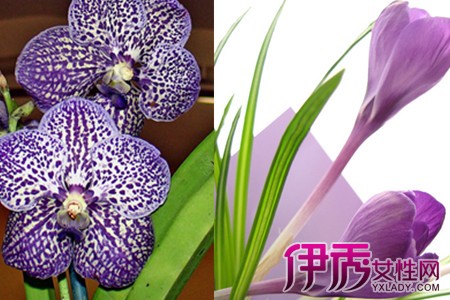
Orchids are a noble and elegantly understated flower, with a fresh fragrance that fills the air. Friends who love growing flowers all like this flower very much. But not everyone can grow this flower well, so the editor will introduce the methods for growing orchids.
Orchids relatively prefer to grow in places with plenty of sunlight. In spring, summer and autumn they can be placed outdoors to grow. If it rains, they can take a little light rain, but if it is heavy rain or a shower, some rain protection measures should be taken. In winter they should be placed indoors in a spot with plenty of sunlight to grow.
When repotting and planting orchids, do not plant them too deep. The head of the orchid should be exposed outside the pot; if the head is not exposed it is very easy for it to suffocate and rot. In addition, choose relatively loose soil for planting, and do not use sticky clumped soil. When first planting, water thoroughly, and do not water all the time in normal care.
Usually pay more attention to observing the orchid's leaves to prevent pests from harming them. If pests are found, remove them promptly; you can scrape them off with a cotton swab, or use some insecticide to kill the pests.
When fertilizing orchids, dilute the fertilizer with water. In addition, when fertilizing, do not splash it onto the leaves and stems. Otherwise the leaves and stems may be burned to death by the fertilizer. Orchids are very suited to growing in semi-dry soil, ideally soil that is 80 percent dry and 20 percent moist. Therefore, when watering normally, be careful not to water too much. You can water by observing the orchid's soil, and water once you find the surface of the soil has dried. If you water every day, the orchid's roots may rot from being soaked due to accumulated water.
In order to enhance the orchid's antiviral ability and protect the water it absorbs from being lost, you can mix 1000 ml of water with 0.5 g of aspirin powder, and water the orchid with this water once a month; the orchid's vitality will then become stronger.
Growing methods and step-by-step tutorial for cymbidium orchids
Cymbidium orchids, also called orchids, are one of the plants unique to China. Today, cymbidium orchids in other countries around the world were mostly introduced from China. It is a beautiful ornamental plant, regarded by people as the first among a hundred flowers, and it symbolizes good fortune and is a symbol of positive energy. Normally people like to grow it at home, but if you want to grow cymbidium orchids well you must have a comprehensive understanding of its growing methods, otherwise it will very easily die. Below is my specific introduction to the growing methods for cymbidium orchids; those of you who like this plant can focus on understanding it.
1. Choose the right soil for planting
When growing cymbidium orchids, you must choose the right soil. This plant likes fertile, lively soil. It is best to use black mountain mud, peat soil and garden soil mixed together to make the growing medium. Then, when planting the cymbidium orchid, you should also plant it in the very center of the flower pot. After straightening it, bury it in the soil, press the soil firm on the upper layer, and then water thoroughly. Put it in a shady environment to recover, and after half a month it will survive.
2. Sunlight and water
Sunlight and water are important conditions for growing cymbidium orchids. It is a light-loving plant, but it fears strong light, so normally it should be placed in an environment with plenty of scattered light. Especially after summer begins, if it is placed on a windowsill or balcony, shade treatment should be carried out in time. In addition, when growing cymbidium orchids you should also water moderately. In spring and summer, during its peak growing season, you can water once every 3 to 4 days, but after late autumn and winter begin, the water supply should be reduced, otherwise it will cause various diseases.
3. Fertilizer
Fertilizer and the application team are also important steps in growing cymbidium orchids. Although this plant likes fertilizer, it cannot be given concentrated fertilizer. Normally, soybean cake water and water from horse-hoof sauce residue should be the main fertilizers, used once every 10 to 15 days. Around the time it enters the flowering period, potassium dihydrogen phosphate can also be added, which can make it bloom earlier and extend the flowering period.
4. Maintenance
Many people, when growing cymbidium orchids, plant it in a flower pot and fertilize and water on time but never pay attention to pruning, and this is also wrong. During its growing process, you must prune old leaves and withered leaves in time, as only this can promote the growth of new leaves. In addition, after the cymbidium orchid develops disease, you should also cut off all the branches and leaves infected with disease, so as to avoid affecting other healthy leaves.
How to grow the succulent Christmas cactus - how to care for a Christmas cactus
Did you know? In our succulent world there is also a representative Christmas mascot. Just as we grow a pot of narcissus indoors during Spring Festival, with its fresh, faint fragrance filling the house. In Western countries, people choose to plant a pot of Christmas cactus, with eye-catching flower colors. The Christmas cactus is a beautiful holiday plant (botanically known as Schlumbergera truncata), usually blooming at Christmas, and with proper care sometimes also blooming around Easter. Below is how to grow the succulent Christmas cactus, teaching you how to care for a Christmas cactus.
Method/Steps
The Christmas cactus is a light-loving plant, but avoid direct sunlight
Place the plant in a position with plenty of light (such as near a window), away from direct sunlight (which will hinder plant growth and sunburn the leaves), radiators, heat vents, fireplaces or other sources of hot air. In summer, move the indoor plant outdoors to a shady position. It is best to keep it within a normal indoor temperature range (18.3-26.7°C).If you are in a dry environment, use a humidifying device
Place a tray of water next to the plant, and use the evaporation of the water to provide moisture. In addition, you can make a humidity tray by placing the plant pot on a waterproof saucer half filled with gravel and half with water.Water the Christmas cactus carefully
Watering this plant can be a rather tricky matter, because you need to be careful not to overwater it and not to let it lack water:Be sure not to let it lack water, because the Christmas cactus is a tropical cactus, not a desert cactus. Unlike most desert cacti, this variety cannot adapt to completely dry soil. If the soil is too dry, the buds will wither and the plant will wilt. Feel the soil with your finger; if it feels dry, it is time to water.
Overwatering will cause white rot spots to appear on the leaves, and the leaves may fall off. Evenly moist soil should be the best growing environment. The rule of thumb is that it is better to give a little less than to water too much.
When watering, water the entire plant. Before trying to water the plant again, first check whether the top few inches of soil have thoroughly dried. Mist the leaves and water the soil.
The watering frequency for the cactus depends on your environment and season. Below is a good watering method for reference:
Dry climate, outdoors: water once every two to three days, choosing a warm and sunny time.
Humid, cool or indoors: water once a week.
In autumn and winter, the frequency of watering the plant should be reduced to promote bud blooming.
Do not water the top of the plant. Find a container with many small holes in its bottom. Some cheap nursery pots will work well, or orchid pots, and plastic baskets are also fine. Pair this growing vessel with a vessel that can hold water and accommodate the basket. Place a few medium-sized stones at the bottom, so that the vessel holding the basket sits about one inch above it. The growing medium consists of three parts potting soil and one part sand. Finally, pour about two inches of room-temperature water into the outer container, with the vessel holding the basket placed inside. After about twelve hours, pour out the remaining water. Repeat this step whenever the plant needs water; this will vary according to your specific situation. Use an instrument to monitor its water needs and adjust accordingly.
Fertilize to help the plant grow
For actively growing plants, an indoor flowering-plant type fertilizer should be added. Follow the label instructions for both the amount and frequency of fertilizing. Fertilizing is important for keeping the plant in good condition; if the plant is in poor health, its joints will be very fragile and can break easily. Generally, you should fertilize 2-4 times a year, using a 20-20-20 type feed, but you should stop fertilizing about a month before buds appear (this usually means stopping at the end of October).Make it bloom during the holiday season
To get Christmas cactus flowers during the holiday season, the key is proper light, the right temperature and a measured amount of water.Because this plant is a thermo-photoperiodic species, it will sprout when day and night are nearly equal and the temperature drops to 10-15.5°C for several weeks.
Please place it in a dark bathroom overnight. During the autumn months, the Christmas cactus should be placed in a place like this: receiving indoor indirect, bright light during the day, and complete darkness at night (especially absolutely no artificial light). The Christmas cactus needs a long, uninterrupted period of darkness, about 12 hours or more each night. Begin the dark treatment around mid-October, so that the plant can bloom during the holiday season. Place the plant in a dark area for about 12 hours or more each night, for 6-8 weeks, until you see buds forming. A closet or an unused bathroom is an ideal place for the dark treatment.
From September to October, the Christmas cactus should be placed in a cool indoor spot, where the temperature will remain around 10°C, and can fluctuate a few degrees up or down. Do not let the plant be at a temperature where it can freeze. If the cold treatment is started in early November, the plant should be able to bloom during the holiday season.
Be especially careful with watering during this period. Slightly reduce watering. After the dry period, do not soak the soil; just moisten the top few inches of the surface, because if the roots are suddenly saturated with water, the plant's buds, flowers and even leaves will fall off.
About a month after flowering, prune the Christmas cactus
This will promote branching in the plant, especially after a period regarded as "rest." After the flowers fade, the cactus does not look very attractive. So some people wait until around March, when it is in a new growth period, to begin pruning the cactus.Cut off part of the stems to propagate the Christmas cactus
Each section must consist of two to three segments. After drying each section for several hours, bury them in a 3-inch pot filled with the parent plant's soil. First plant half of the first segment. Insert the cuttings the same way as for a mature plant. After about four to six weeks, the cuttings should have rooted and will enter a new growth period. They will grow quickly within about two or three weeks. You can begin fertilizing after it grows its first new segment.Tips
The most frustrating thing that happens when caring for a Christmas cactus is the buds dropping just as they are about to bloom. Bud drop can be caused by many reasons. It is usually due to overwatering, insufficient humidity or insufficient light. And when you cannot provide enough sunlight, the cactus may die from lack of sunlight exposure.
Be sure to turn the plant regularly to promote new growth. Otherwise, the plant will show the phenomenon of flower buds fully blooming on one side while the other side is completely bare.
The Christmas cactus is a beautiful plant that can bloom year after year. You will want to keep it after the holiday season. You can even pass it down from generation to generation.
The cactus will only grow within the circumference of the pot. If you want a larger plant, you need to put it in a larger-volume pot.
Use brand-new good soil when replanting or repotting. It is worth spending some extra money on this, because it will live in this soil for a very long time. Your plant, like you, is alive, and it deserves the best care.
The above advice about bud blooming applies to regions that have a cold Christmas. If you live in the Southern Hemisphere, you may find it very difficult to get this plant to bloom during the Christmas period, and more controlled conditions will be needed to achieve blooming during the holiday season. It may be easier to let them bloom in the coldest months of the year.
The best time to repot is between February and April, about once every three years. Make sure not to give it too large a pot; the Christmas cactus blooms best when the pot fits it snugly. Provide a soil environment with good drainage and aeration (for example, one part potting soil, two parts peat moss or compost, plus one part sharp sand or perlite).
Precautions
Research from the ASPCA Poison Control Center states that the Christmas cactus is non-toxic to dogs and cats.
Any sudden change in temperature, light or water will cause damage to the Christmas cactus. Dryness and extreme temperatures can make the plant's buds drop before they have a chance to open. It is recommended to try "gradual changes."
The Christmas cactus should never be placed in doorways or near outdoor areas. Likewise, keep it away from heating pipes or fireplaces and air vents.