Anthurium care: get these three things right and grow healthy flowers
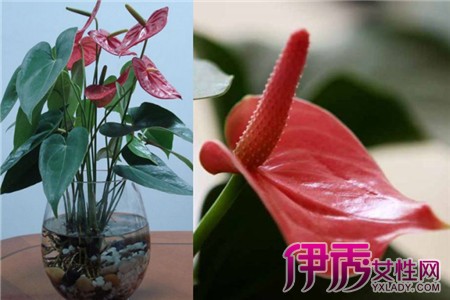
Anthurium gets its name because its spathe is fire-red. It also has other names, such as the commonly heard Anthurium andraeanum, flamingo lily, fire crane flower, and candlestick flower - all lovely names. Anthurium is a very beautiful flower, and many people want to know how to grow it. Below are the methods for planting anthurium.
Anthurium prefers a relatively humid environment, so when planting it, choose a damp spot as far as possible. The soil should be fertile, and a little organic fertilizer can be added as a base. In addition, the soil must have good permeability. The most suitable temperature for its growth is generally 16 to 24°C. The minimum must not fall below 12°C.
The second thing to pay attention to is how much water to give the anthurium. Anthurium is a plant that likes humidity, so pay attention to when you water. In autumn and spring, water once every three days. In the hot, water-scarce summer, water once every two days to make sure the plant does not dry out. In the cold winter, there is no need to water too much; watering too much instead harms the anthurium's cold resistance, so generally watering once every three to seven days is enough.
The growth of all plants is inseparable from the application of fertilizer. Likewise, for anthurium to stay healthy and grow, it must be fertilized frequently. But the leaves of the anthurium are rather special, because they have a waxy layer covering the leaf surface, which means the leaves cannot take in fertilizer directly. So you can only fertilize at the roots.
The timing and type of fertilizing also matter. For example, when the anthurium is in its growth period, apply as much nitrogen fertilizer as possible. In late autumn and early winter, add more phosphorus and potassium fertilizer. In winter, fertilize as little as possible, which helps the anthurium get through the winter. But note that after fertilizing, you must wipe off any fertilizer that sticks to the leaves, because fertilizer will burn the leaves.
How to water anthurium: three key points to grasp
Anthurium is like an open red palm, with a small golden-yellow spadix standing upright in the center of the spathe, making it especially eye-catching. So how do you grow anthurium? How do you water anthurium? After reading the article below, you will know.
1. How to water anthurium?
To grow anthurium well, watering is something you must pay attention to. Improper watering can easily cause the anthurium to wither or its roots to rot, affecting its normal growth, and in severe cases even causing the plant to die.
1. Water quality selection: Anthurium is a flower variety relatively sensitive to salt, so the pH of the growing medium should be kept between 5.2 and 6.1 as far as possible; this kind of water quality is most suitable for anthurium growth. If the pH is too low, the flower stems become shorter, which reduces its ornamental value. Tap water is suitable for planting anthurium, but it is expensive; natural rainwater is the best water source for anthurium cultivation.
2. Watering requirements: Potted anthurium has different water requirements at different stages of growth and development. At the seedling stage, the root system is weak and distributed shallowly in the growing medium, so it is not tolerant of drought. After planting, spray water 2-3 times a day, always keep the growing medium moist, encourage it to send out new roots early and abundantly, and pay attention to the dryness and moisture of the growing medium on the pot surface. At the medium and large seedling stages, the plant grows quickly and needs more water, so the water supply must be sufficient; during the flowering period, watering should be appropriately reduced and phosphorus and potassium fertilizer increased to promote flowering.
3. Water temperature control: The water temperature for watering anthurium should stay at around 15°C (including the nutrient solution used for watering), and this is especially important in severe cold and extreme heat. The moisture in the growing medium should not be too wet, because the anthurium's roots are semi-succulent and store a large amount of water themselves. Too much water in the growing medium causes a lack of oxygen in the medium, blocks root respiration, and if the roots remain too wet for a long time, it will cause root rot.
2. Anthurium care methods and precautions
1. Humidity
Normal growth of anthurium requires about 70% air humidity, which is generally hard to achieve in ordinary home cultivation. You can use a clean damp towel to wipe the leaves several times a day, or spray water around the plant regularly to increase air humidity. (But be sure not to sprinkle water on the flowers, so as not to affect their ornamental quality.)
2. Watering and fertilizing
Under normal growth conditions, water the growing soil once a week, letting it dry out somewhat between waterings. Generally follow the principle of not watering when the soil surface is dry, and watering thoroughly when you do water. In spring, autumn, and winter, the number of waterings and the amount of water can be appropriately reduced. Every half month, apply a 7-8% special nutrient solution or fertilizer water diluted 500 times along with watering.
3. Pruning
Under normal circumstances, during the anthurium's growth, the leaf stalks at the base gradually degenerate; when the stipules dry out, they can be cut off promptly. After flowering, when the flower stalk turns yellow, it must also be cut off as soon as possible, leaving a 2 cm protective stub from the base.
4. Temperature
When growing anthurium at home, keep the temperature as stable as possible. The optimum growth temperature for anthurium is 16-24°C, and the minimum temperature should be kept above 12°C. If an ordinary household has heating, this condition is easy to meet. But at the same time, you must note that the flowerpot must not be placed on top of a radiator, or too close to one. When the summer temperature exceeds 30°C, move the plant to a ventilated room positioned relatively to the north, and you can spray water around the plant to lower the temperature.
5. Light
Normal growth of anthurium requires sufficient scattered light. For home cultivation, you should generally note: in summer, avoid strong direct light on the leaves and flowers; in autumn and winter, when conditions allow, move it near a window to increase light. You also need to turn the plant regularly to ensure it receives even light and to promote a full, rounded crown shape.