How to Propagate Pothos from Cuttings? A Few Simple Steps to Teach You
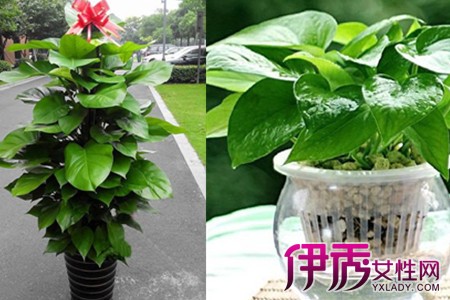
Pothos is an evergreen trailing foliage plant. Its growth capacity is enhanced by its well-developed aerial roots, and it mainly grows in the tropics. Its leaves are heart-shaped, and it grows very fast; pot after pot of lush green pothos looks like a wheat field and is utterly enchanting. It is said that besides being attractive, pothos also purifies the air, so many households, whether in a newly decorated house or an old one, like to keep a few pots of pothos to beautify and purify the home environment.
There are many kinds of pothos, including green-leaf pothos, yellow-leaf pothos, variegated pothos, silver pothos, golden pothos, and tricolor pothos; based on root length, plants are divided into short plants and long trailing plants; based on the growing method, they can also be divided into soil-cultured pothos and water-cultured pothos. Whether soil-cultured or water-cultured, cuttings are a fairly suitable way to grow pothos.
First, take a live pothos stem. Cut a stem vine from a live pothos, about 15 cm long, as the cutting; remove the leaves from the part that will be inserted into water or sandy soil, and leave just a few green leaves at the upper end.
Then, prepare a flowerpot or a vase. If growing in soil, fill the prepared flowerpot with soft sandy soil to more than half full (mix the sandy soil with an appropriate amount of fertilizer); if growing in water, fill the prepared vase with an appropriate amount of clean water.
Next, insert the prepared cutting diagonally into the sandy soil or water. If inserted into sandy soil, water it thoroughly and keep the soil moist. If water-cultured, change the clean water every 2-3 days to keep the water clean and prevent worms or a large buildup of bacteria. After about 10 days, the pothos will be more or less rooted and will begin to sprout and grow new roots and stems.
The last step is caring for the pothos. Pothos grows fairly fast, so we can trim it appropriately. At the same time, we should place the pothos in a ventilated spot with sunlight and keep the surrounding environment at around 25°C (the best growing temperature for pothos); if the temperature is too high, pothos easily burns to death, while if the temperature is too low, it will freeze to death. Pothos likes moisture, so be sure to water it appropriately.
How to Propagate Large-Leaf Pothos from Cuttings, Large-Leaf Pothos Cutting Methods, How to Propagate Cuttings for a Full Pot
How do you propagate large-leaf pothos from cuttings? What are the cutting methods for large-leaf pothos? How do you propagate large-leaf pothos cuttings for a full pot? It is understood that among the propagation methods for large-leaf pothos, cuttings are the most common; large-leaf pothos roots and survives easily, is very easy to grow, and has a fairly high survival rate, rooting in about 20 days! Let's take a look at the detailed introduction to cutting methods that can give you a full pot of large-leaf pothos!
Large-leaf pothos cutting methods:
Large-leaf pothos is very easy to grow and is fairly shade-tolerant. For potted plants, placing them in a bright spot indoors is better; they purify the air well and absorb harmful gases well. They like fertilizer and water; when watering, add a little complete-element nutrient solution, and often spray the leaves with monopotassium phosphate, and the leaves will be greener, shinier, and larger. When the potting soil dries out, water it promptly; if the soil is not dry, do not water, and it does not matter if the soil is a little dry. It likes moisture, so it is better to often spray the leaves and stems with water to increase humidity.
1. Selection:
Choose robust branches and cut them into sections about 10--15 cm long; try not to use thin, weak branches.
2. Cutting medium:
Generally, perlite is used; it is loose with good air permeability and good water permeability, so after the cuttings are inserted, the roots are not prone to rotting, and root growth is fairly fast. Secondly, sandy soil and potting soil are also fine.
3. Temperature and humidity:
After cutting, a slightly higher temperature is better, as it makes rooting easier; 25℃ is most favorable for rooting and survival. The medium needs to maintain a certain humidity; spray the medium with water often, and it must not be too dry.
Precautions for large-leaf pothos cuttings:
1. Large-leaf pothos grows fairly fast, and cultivation and management are simple. During care and management, in summer you should spray the plant with water more often, apply a foliar fertilizer once every 10 days, and keep the leaves green and fresh.
2. Large-leaf pothos is easily troubled by pests and pathogens. The main pests that affect the growth of large-leaf pothos include mealybugs, red spiders, and scale insects. Mealybugs are usually the most common, and you can use alcohol to kill them, remove them with a cotton swab, or simply take them off by hand.
That is the introduction to how to propagate large-leaf pothos from cuttings and the cutting methods for large-leaf pothos. Only by following the correct cutting methods can large-leaf pothos absorb enough nutrients, giving it more vitality and energy to grow, and your home can become livelier because of the vitality of large-leaf pothos.
Teaching You How to Propagate Pothos from Cuttings, Pothos Cutting Methods
Teaching You How to Propagate Pothos from Cuttings, Illustrated Pothos Cutting Methods
Every flower lover hopes their home can be full of greenery and full of flowers. Today, the editor will teach you a trick to fill your surroundings with greenery!
Prepare materials
Quick rooting solution, flower soil,
Scissors, washbasin, bottle, flowerpot
Cutting tips
On the pothos stem there are grayish-brown buds,
Look carefully, those are the pothos's rooting points.
Following the position of the roots, cut diagonally with scissors.
When cutting, do not damage the young roots!
Finally, soak the selected cuttings in rooting solution!
Soil cutting propagation 1
Prepare perlite, coconut brick soil, and peat soil, mix them evenly, and pour the mixture into a flowerpot.
2
Cut the branches apart section by section; leave one leaf and one bud point on each cutting. (Do not throw away the cut leafless branches; these branches can also be used for cuttings.)
3
Insert the branches vertically into the soil with the leaves sticking out, and insert them in a circle around the flowerpot, then another circle.
4
After the branches are inserted, water them thoroughly, then place them in a cool, ventilated place for care. Spray water on the leaves once every morning.
Water cutting propagation 1
Cut off a pothos branch.
2
Insert it into a bottle filled with water.
3
Add a few drops of nutrient solution to the water.
4
Wait a few days, and the pothos branch will grow white roots, until more roots grow.
5
Move it into a pot for soil planting.
6
Move it into a pot for soil planting.
Precautions
Pothos potted by cutting must not see sunlight within three days; after three days, place it in partial light and water it lightly in the morning and evening. For potted plants, try to choose flowerpots with holes in the bottom to ensure good drainage.
For water-cultured pothos, add water appropriately.
Because potted pothos is limited by the potting soil, after being cultivated for too long, the plant is prone to aging, and the leaves become smaller and fall off. Therefore, after 2 to 3 years of cultivation, it must be repotted or pruned and renewed.