How to grow bowl lotus: a few simple steps to teach you
Bowl lotus is a miniature version of the lotus. It likes plenty of sunlight, and summer is the season when they bloom in competition. The round leaves stand atop the lotus stems, like a little acrobat girl happily performing acrobatics on stage, gently swaying her slender waist with the breeze, so graceful and elegant. Bowl lotus is generally grown indoors, with fragrance drifting all around, becoming a beautiful scene in the courtyard, as if a lotus pond had been brought into the home, which is quite charming.
Like the lotus in a pond, bowl lotus has many different varieties, such as Xinghuang, Meihong Chongtai, Qinglian Guniang, Xiao Wufei, Yangcheng Bowl Lotus, Snow White, and dozens of others. Different varieties produce different flower colors and forms. Despite so many varieties, the growing methods are roughly the same.
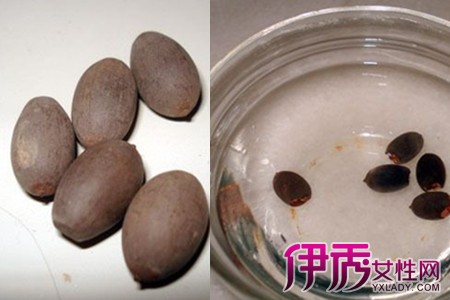
First, selecting good seeds is one of the most basic steps, because only good seeds can germinate and grow better. We can buy bowl lotus seeds on the market, one by one dark gray oval-shaped seeds. Facing so many seeds, we must choose mature, plump, glossy, and flawless seeds.
Second, because the seed shell of bowl lotus is relatively hard, it needs to be cracked and then germinated, so that the seeds can germinate better and faster. Under the packaging of the hard shell, the seeds cannot breathe easily, making it difficult for water and air to circulate within them, thus increasing the difficulty of germination. We can use scissors or other tools to clip a small opening at the top of the seed, but not too deep, so as not to damage the embryo.
Next, soak in clean water (to help the seeds germinate faster and better, the clean water can be warm water at 20°C-50°C) for one day, allowing the seeds to absorb water and become swollen and soft, then gently peel off a little of the seed coat along the small opening to facilitate the extension of the embryo bud. To promote germination, place the seeds in clean tap water and soak for about 3 days, changing the water 1-3 times a day, and wait for germination.
Then, after the seeds germinate, start raising the seedlings. Place the germinated seeds in clean water to raise the seedlings for about six days, keeping the water deep enough to submerge the seeds, and place them in a place with plenty of sunlight. During the seedling-raising process, do not change the water frequently; keep it still, and wait for the lotus leaves to quietly grow and float on the water surface. After white roots slowly grow out, they can be planted in place.
Finally, plant the bowl lotus in place. Place the bowl lotus seedlings in clarified muddy water that already contains soil and fertilizer. The seeds must be planted into the soil, the leaves float on the water surface, and the whole flowerpot should be placed in a place with plenty of sunlight.
How to grow bowl lotus? A detailed explanation of bowl lotus growing methods
Not long after Lixia, one of the 24 solar terms, passed, the hot high temperatures came wave after wave. At this time, it is also a good season for growing bowl lotus. I believe many flower lovers must have had the experience of growing bowl lotus, but after growing it for a long time, the leaves still do not grow very well, and it is basically impossible to see it bloom. Do not worry. Today, the editor of Huinong Network will teach all flower lovers how to grow bowl lotus well.
Seed treatment
The first and most critical step in growing bowl lotus is to crack the seed shell, because the fruit shell of the lotus seed is hard and dense. After the seed is fully mature and dried and shrunk, water and air are not easy to penetrate, respiration is very slow, and it is in a state of forced dormancy. Therefore, before germinating the seeds, the shell must be cracked.
One end of the lotus seed is a small pointed tip, and the other end is recessed. We need to rub the recessed end on a rough surface or use pliers to crack a small opening. When handling it, be sure to be careful to avoid pinching and injuring the embryo bud.
Soaking seeds to promote germination
Find a container of suitable size and soak the treated seeds in warm water. Pay attention to the cleanliness and temperature of the water. Too high or too low is not good for seed germination. Change the water frequently, generally 2-3 times a day, and the most suitable water temperature is controlled at about 20-30°C.
Under this growing environment, the seeds generally germinate in about 3 days. If they still have not germinated after one week, then they may be bad seeds, and the probability of germination is not high, so we can soak several more seeds.
After a few days, we can peel the outer shell of the sprouted lotus seed down to half of the lotus body, which is more conducive to the young sprout emerging. Remember not to peel off all the outer shell.
Water culture seedling raising
After the seeds send out long sprouts, they should be raised in water culture at about 25°C for about five days. During the water culture seedling process, the water layer should be kept at a depth of about 10 cm, and sufficient light should be given. At this time, there is no need to change the water constantly, and do not turn it over with your hands. Flower lovers who cannot keep their hands still should pay attention.
Wait until white, healthy root hairs grow from the base of the leaf stalk. This means the seedling raising is almost done, and the fourth step can be carried out.
Planting young seedlings into mud
This is the most critical step in growing bowl lotus. Many flower lovers think that water culture is enough for water lilies and that they do not need to grow in mud. This is wrong, and it is also an important reason why water lilies do not grow well and do not bloom.
For bowl lotus growth, we generally choose pond mud as the best option. Find a larger container, put the pond mud in it, then add water, and use a tool to break up the large pieces of pond mud. Place the lotus seeds in the container. The seeds must all be buried in the pond mud, so that the leaves can spread freely on the water surface. Bowl lotus likes light, and only by receiving sufficient light can it grow well.
At this time, overly strong light is not suitable, as it will scald the young seedlings. Do not water too much either, so as to raise the water temperature and promote growth. When watering, be sure not to pour water directly in, as this will wash the lotus seeds open. You can block with your hand and slowly pour along the wall of the container.
In the mud, the root system of the bowl lotus will grow rapidly. At this time, it is also excellent for viewing and can add a touch of greenery to the hot summer. As long as sufficient light and care are given, the bowl lotus will bloom before long.
The above is the detailed explanation of bowl lotus growing techniques compiled by the editor of Huinong Network. Have you all learned it? If you want to know more about growing techniques, please follow Huinong Academy!
How to grow bowl lotus, bowl lotus growing methods
If, when you are busy, you can see a green plant just by looking up, you will find that the plant not only brings very good decoration to your office environment or home life, but can also relieve eye fatigue. Different groups of people also have different needs for plants, so the author introduces to users a bowl lotus, a plant that can be placed on a table. As for how to grow it? The author gives users a simple introduction. Let us take a look!
Introduction to bowl lotus
Bowl lotus is a lotus that can be grown in a bowl. It is an office decoration provided for users, and its role is to beautify the environment. It not only decorates the environment but also has a very good effect on relieving eye fatigue. Bowl lotus was originally produced in Jiangsu, and the plant's flowers are small and delicate. Users only need to prune it when the branches and leaves are lush, thus presenting a different decorative effect for users.
Bowl lotus growing methods
The bowl lotus you grow not only has a very good decorative effect, but in later cultivation, you can also prune it yourself and experience a different kind of fun. If you do not know the growing methods of bowl lotus, then that is just right. The author has compiled the conditions such as container, soil, and light. Let us take a look!
1 Seed treatment: before planting, the shell must be cracked. You can open the skin at the recessed end, and it is enough to just see the dark brown embryo skin.
2 Container: containers that are too large or too small are not suitable for growing bowl lotus, so users can choose a container with a diameter of 25—35cm and a depth of 20——25cm.
3 Soil: when cultivating, fertile river pond mud is the best choice, and black mountain soil can also be used instead.
4 Light: when growing bowl lotus, be sure to ensure sufficient sunlight. If it is placed indoors for a long time without sunlight, the plant will not be able to grow healthily, so the plant's light time should be reasonably controlled.
5 Water amount: the water amount is determined quickly according to different growth stages. In the early stage, the water should not be too much. When the plant grows larger, the bowl should gradually be filled with clean water, so as to adapt to the leaves for photosynthesis.
5 Fertilizing: bowl lotus quite likes fertilizer, so during growth, pay attention to fertilizing, thereby ensuring the healthy growth of the plant.
Precautions for bowl lotus
When growing bowl lotus, note that if the branches and leaves develop to a certain extent, they should be pruned so that the plant achieves a decorative effect. Second, also pay attention to the prevention and control of pests and diseases. The more common diseases include rot disease, leaf rot disease, spot rot disease, and so on. Therefore, when caring for it, users need to adopt correct methods to ensure the healthy growth of the plant.
What to do if a clivia has arrow clamping Xifu Haitang pictures How to grow orchids Saffron pictures How to grow coleus