Wax begonia cutting methods: learn them and you are a qualified flower grower
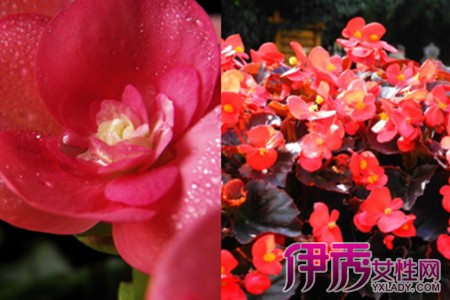
Wax begonia sounds familiar, but growing it is not so familiar. The cutting season is basically late spring, when the survival rate is much higher. Before cutting, first find a suitable flowerpot; the pot should not be too large, and after the cuttings survive you can move them to a larger pot. Find a thinner pot with holes in the bottom for cuttings.
Look for very loose soil. Soil from a vegetable plot or from under trees where leaves and branches have rotted is very suitable for the growth of flowers and plants, loose and full of nutrients. Sift the soil well, put it in the flowerpot, and water half an hour before cutting so the water can seep through, then carry out the cutting. The survival rate will increase a lot, but when watering you must water thoroughly, because wax begonia needs moisture to take root.
After watering, insert the selected branches into the pot and place them in a cool indoor spot. After about half a month they will root normally. During this period do not water too much, as root rot can easily occur, so keep it under control.
Wax begonia is afraid of direct sun exposure. At noon in summer, it is best to keep it indoors; placed outdoors it may wilt from the sun. In winter, the air in the north is very cold, basically below zero, so at such times it must be kept indoors. Only between 18-24 degrees C is it suitable for the growth of wax begonia. Placed outdoors it will certainly freeze to death.
Autumn is exactly the peak flowering period, and at this time it is also especially prone to attracting insects. When insects appear, spray insecticide as early as possible, otherwise the leaves will turn yellow. After spraying insecticide, do not water immediately, as this affects the efficacy of the medicine; water a few days later.
Is wax begonia toxic_How do you pinch out the tips of wax begonia?
Content summary: Wax begonia, also known as glass emerald, melon seed, four-season begonia, etc., although the plant is not a shrub species, it also belongs to ornamental plants and is a main choice for courtyard and garden cultivation, and the cultivation of wax begonia has gradually become popular. So, is wax begonia toxic? How do you pinch out the tips of wax begonia?
[Is wax begonia toxic]
Wax begonia has brilliant flower colors, a graceful plant posture, and large fresh flowers, with obvious ornamental value, and is a main choice for flowerbed arrangement.
▍Is wax begonia toxic
Because wax begonia carries a rich floral fragrance, it was once questioned by flower enthusiasts as containing toxins, causing most flower growers to list wax begonia as a forbidden variety for indoor plants.
But in fact, wax begonia flowers contain only trace amounts of toxins, can be suitable for planting in environments with circulating air, and are very unlikely to harm the human body. The plant is beautiful, has a long flowering period, and can also purify indoor air and decorate the home.
▍Placement location
Wax begonia is mainly cultivated in spring and autumn, can be suitable for care in a greenhouse environment, and the placement locations for the plant are quite wide, such as corridors, studies, living rooms, meeting rooms, balconies and other environments, but be sure to note that wax begonia must not be placed in sealed environments such as bedrooms.
Wax begonia flowers are medium in size and the plant shape can be pruned. Placed in any environment, it will not seem abrupt or garish; instead it gives a feeling of elegance and brightness, and can be placed in most indoor environments.
▍Can pregnant women grow wax begonia
Pregnant women are a special group, and wax begonia gives off a rich floral fragrance during flowering, so it is not recommended to keep wax begonia in closed contact with pregnant women.
Wax begonia is mainly for viewing. After being made into a bonsai, it can decorate the environment, but be sure to note that among the begonias there is a variety called iron begonia (Euphorbia milii), whose whole plant is toxic, and pregnant women must not touch it.
[How to pinch out the tips of wax begonia]
Wax begonia is mainly sown in spring and autumn, and the most commonly used propagation method is mainly cuttings. Its plant shape is graceful and its flowers are delicate and beautiful, which has also increased the planting range of wax begonia.
▍Tips for pinching out the tips of wax begonia
Wax begonia cuttings take about one week to root and about two weeks to sprout, entering normal growth.
When the wax begonia seedlings enter the growth stage, the first pinching can be carried out. When flower buds appear, directly remove the flower buds, which can promote new shoots.
After entering the flowering period, or after the flowers fade, appropriate pinching can also be done, mainly removing young shoots and flower buds. This not only controls the flowering period, but also ensures that the begonia plant is fuller and more beautiful. It is recommended that the pinching time for wax begonia be controlled to the 15th day after flowering, or within half a month after the flowers fade.
Summary: Wax begonia belongs to the ornamental varieties and is suitable for planting indoors, becoming a home decoration plant. Regarding the pinching methods for wax begonia introduced above, as well as the related content on whether it is toxic, have you mastered them yet?
Is wax begonia toxic Wax begonia cultivation methods Wax begonia pictures
✿Related reading recommendations
✿ Reed pictures
✿ Growing flowers at home
✿ Rose flowering period ✿ Luoyang peony pictures
(◕‿◕✿) For flower bonsai and plant cultivation, please follow the Meilele flower bonsai section!
.....
Wax begonia is very likely to become one of the most important flowerbed flowers in China, with advantages such as a neat plant shape, many and dense flowers, being very easy to combine with other flowerbed plants, and a long viewing period, so it is becoming more and more popular. Do you know the cultivation methods for wax begonia? Today the editor briefly introduces whether dingji haitong is toxic as well as its cultivation.
.....
What are the cultivation methods for wax begonia? Wax begonia is mainly divided into three methods: sowing, cutting, and division, and commercial cultivation all uses sowing propagation. Wax begonia seeds are tiny and short-lived; seeds that naturally fall into the pot soil often quickly germinate and grow into seedlings, but collected seeds that are not sown in time rarely emerge. Cuttings are mostly carried out in March-May or September-October, using plain sandy soil as the cutting medium, or they can be directly inserted into plastic flowerpots, with the node section inserted into the soil. Under shaded and warm conditions, they root in more than 20 days.
.....
.....
In the cultivation methods for sijia haitong, care is very important. Four-season begonia has a long flowering period and many flower colors with rich variation, and is a flower with both beautiful flowers and leaves. It is suitable for outdoor cultivation in courtyards and flowerbeds, and is also a fine choice for indoor decoration on home desks, tea tables, tabletops, and shop windows. After Qingming, potted plants can be moved outdoors under a shade shed for care.
.....
.....
In the East China region, from April to October it must be cared for under full-day shade, but in the morning and evening it is best to get a little sunlight. If the leaves are found to curl and develop scorch spots, these are symptoms of sunburn. After Frost's Descent, it must be moved indoors to prevent freezing and keep warm, otherwise, if it suffers frost, it will freeze to death. Indoor display should be placed in a sunny spot. If the room temperature stays above 15 degrees C and topdressing is applied, it can still continue to bloom.
.....
.....
Fertilizing is the key point in wax begonia cultivation. During the spring and autumn growth periods, the principle of light fertilizer applied frequently must be followed, mainly applying decomposed odorless organic dilute fertilizer water or inorganic fertilizer soaking liquid. During the seedling establishment stage, apply more nitrogen fertilizer to promote the growth of branches and leaves; during the bud appearance and flowering stage, apply more phosphorus fertilizer to promote more flower buds and more brilliant flowers. If fertilizer is lacking, the plant will wither and even die.
.....
.....
During the growth period, four-season begonia can be given once every 10-15 days with decomposed and fermented 20% soybean cake water, rapeseed cake water, chicken or pigeon manure water, or human urine liquid fertilizer. When fertilizing, the principle of "light fertilizer applied frequently" must be followed. If the fertilizer liquid is too concentrated or unfermented raw fertilizer is applied, it will cause fertilizer damage; in mild cases the leaves scorch, and in severe cases the plant dies. After fertilizing, use a watering can to spray water on the plant to prevent fertilizer liquid from sticking to the leaves and causing yellow leaves. In summer and winter, when growth is slow, apply less or stop fertilizing.
.....
.....
The editor has heard some people say wax begonia is toxic. Is wax begonia actually toxic? There have always been rumors that wax begonia is toxic and not suitable for growing at home, but in fact this is just a rumor; wax begonia is not toxic. In fact, the vast majority of plants in nature are harmless to the human body. According to relevant data, 97% of plants grown at home are beneficial to human health.
.....
Four-season begonia has a graceful plant posture, glossy green leaves, and delicate, charming flowers. Placed on a table in the cold season, the room is full of spring vitality; placed under the eaves of a balcony in spring and summer, it shows even more lively vitality. Today the editor's introduction to wax begonia cultivation methods ends here. Thank you everyone for accompanying the editor in enjoying wax begonia pictures.