Learn how to grow Clivia from seed and enjoy the flowers at home
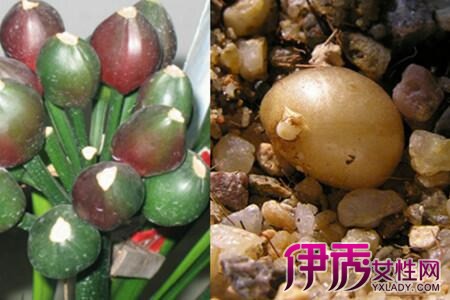
If you want to sow Clivia yourself, you should first pick healthy seeds from a healthy Clivia of the current year. After picking the seeds, do not rush to plant them. Because the seed coat of Clivia is rather hard, you must soak the seeds in warm water until they swell. Normally soaking for one to two days is enough, then take the seeds out, let them dry, and plant them.
Before planting, prepare a suitable flower pot and potting soil. The potting soil must be loose and breathable. If you plant Clivia in soil that is not breathable or is rather hard, the seeds will not germinate and will suffocate in the soil. When planting, do not bury the seeds too deep, otherwise the seeds will not germinate easily. After planting, water thoroughly and then place it in a spot with sunlight.
Clivia seeds are very afraid of being waterlogged. If they are soaked in water for a long time, they will rot, so after the first thorough watering, wait until the soil is completely dry before watering a second time. Newly planted Clivia seeds germinate rather slowly, usually taking about one month to two months before small tender sprouts grow.
When watering the small tender sprouts, it is best to use a spray bottle and spray little by little. If you pour water on them too forcefully from above, it is easy to knock the small tender sprouts over and break them, and if that happens, all your previous efforts will be wasted. About three months after the Clivia grows out, start fertilizing it. Choosing a fertilizer specially made for Clivia will give better results. Loosen the soil for the Clivia once every half month, as this allows it to grow faster.
The above are the methods for growing Clivia from seed. Clivia normally blooms in winter. Its growth process is rather slow, so it is best to start planting in spring. Growing Clivia requires enough patience. As long as you sow according to the methods above, you will see the beautiful flowers of Clivia around the Chinese New Year.
An introduction to the growing methods of Moluccella laevis
Moluccella laevis, also known as shellflower and elephant's ears, is an annual or biennial herbaceous plant of the genus Moluccella in the Lamiaceae family. The stem is four-angled and unbranched. The leaves are opposite, heart-shaped and round, with sparsely toothed edges. Doesn't it sound very interesting? Would you like to grow a few yourself? Today the editor will introduce the growing methods of Moluccella laevis.
.......
1. The petiole of Moluccella laevis is nearly as long as the leaf. The flowers are white, and the corolla is lip-shaped. The nutlets are smooth.
2. The flowering period of Moluccella laevis is June—July. The flower shape of Moluccella laevis is peculiar, the small leaves are opposite, and the flowers are white and shaped like shells.
3. Moluccella laevis is elegant and beautiful, often used as a companion flower in flower arrangements, and can also be used as dried flowers or for potted display.
4. After drying, Moluccella laevis turns white and is an excellent material for dried and fresh flowers.
5. Each pot of Moluccella laevis can absorb 150g of carbon dioxide and release 56g of oxygen each year, making it a very green and eco-friendly plant.
.......
1. Moluccella laevis is generally propagated by sowing, and can be sown in spring, summer, and autumn.
2. The suitable temperature for sowing Moluccella laevis is 15-25°C. It sprouts in about one week, and can be transplanted once it has 5-6 true leaves.
3. For growing Moluccella laevis, loam soil that is fertile, loose, and well-draining is best. The soil should not be too sticky, otherwise it will not grow vigorously and will grow slowly.
4. After Moluccella laevis is transplanted and survives, start fertilizing once every half month, and stop fertilizing after flowering. To promote branching, pinch off the growing tips.
5. It grows vigorously and rarely suffers from pests and diseases, but watch out for damage from leaf miners. For ornamental purposes, it can be sown in batches at different times.
.......
.......
1. Tools needed for growing Moluccella laevis: flower pot, sandy soil, Moluccella laevis seeds.
2. Conditions needed for growing Moluccella laevis: sufficient light, slightly moist soil.
3. Notes when growing Moluccella laevis: do not water all the time, as it easily causes root rot. During the seed germination period, water once a day to ensure the seeds absorb water; at this time they should not be exposed to light. After the seeds germinate and sprout, adjust the watering time according to soil moisture; if the soil is moist, you do not need to water. When watering, water thoroughly.
.......
1. Growing Moluccella laevis generally requires a flower pot with a diameter of 15 cm, which can usually hold ten to fifteen seeds. You can also change the diameter of the flower pot according to your actual number of seeds.
2. Growing Moluccella laevis requires some sandy soil and small stones. First spread the small stones on the very bottom, then spread the sandy soil on top.
3. Scatter the seeds into the prepared potting soil. After placing them, cover with a 5 mm layer of sandy soil and keep it moist.
4. Under suitable conditions, it takes about one week to half a month for the seedlings to emerge.
.......
.......
1. The soil should be fertile and well-draining.
2. When Moluccella laevis has 5-6 leaves, transplant it with the soil around the roots.
3. After Moluccella laevis survives, it should be fertilized and watered.
4. To promote more branching, pinch off the growing tips in the early stage.
5. Moluccella laevis is relatively easy to manage, grows robustly, and rarely suffers from diseases, but leaf miners sometimes appear, so attention should be paid to prevention and control.
.......
Conclusion: Moluccella laevis has a peculiar flower shape and is elegant and beautiful. It is a popular filler material for flower arrangements worldwide and can also be used as dried flowers or for potted display. There are now various horticultural varieties, but most have green calyxes, with white, yellow, and other types as well. That is all for today's introduction to the growing methods of Moluccella laevis. If you would like to learn about the growth habits of other plants, you can click the link below the article.
[Article source] Flowers & Potted Landscapes
✿Flowers & Potted Landscapes✿
✿ Kalanchoe ✿ Water lily ✿ Sorbaria ✿ Foxglove ✿ Red poppy ✿ Musella lasiocarpa ✿ White chrysanthemum pictures ✿ Indian rubber tree
✿ Billbergia ✿ Udumbara ✿ Sedum 'Little Beauty' ✿ Dianthus ✿ Kudzu pictures ✿ Aucuba ✿ Orange jasmine prices ✿ Lucky bamboo in water
✿ Sedum 'Chihuly' ✿ Pansy ✿ Echeveria 'Daehwa' ✿ Vanda ✿ Silk tree pictures ✿ Water lily planting ✿ Variegated shell ginger ✿ Serissa pictures
✿ Peacock flower ✿ Red spider lily ✿ Sedum 'Yachiyo' ✿ Leucaena ✿ White balsam ✿ Asparagus fern bonsai ✿ Globe amaranth pictures ✿ Blue calla lily
✿ Golden bell flower ✿ Red twig dogwood ✿ Sedum 'Otome-no-ko' ✿ Yellow narcissus ✿ Elderflower ✿ Black rose ✿ Clivia in bloom ✿ Saffron crocus pictures
✿ Red lilac ✿ Trumpet vine ✿ Edelweiss ✿ Murraya ✿ Passion fruit ✿ Potted lotus ✿ Rose varieties ✿ How to grow orchids
Flower knowledge and growing exchange
Flowers have both broad and narrow meanings. In the narrow sense, flowers refer to ornamental herbaceous plants, such as balsam, chrysanthemum, scarlet sage, cockscomb, and so on; in the broad sense, besides ornamental herbaceous plants, flowers also include herbaceous or woody groundcover plants, flowering shrubs, flowering trees, and bonsai, such as groundcover plants like Ophiopogon, Sedum, and moss phlox; trees and flowering shrubs such as plum blossom, peach blossom, Chinese rose, and camellia, and so on. In addition, tall trees and shrubs distributed in southern regions, when moved to cold northern regions, can only be grown as potted plants in greenhouses for viewing, such as white orchids, Indian rubber trees, and palm plants, which are also included among flowers in the broad sense.
Definition of flowers
Flowers have both broad and narrow meanings. In the narrow sense, flowers refer to ornamental herbaceous plants, such as balsam, chrysanthemum, scarlet sage, cockscomb, and so on; in the broad sense, besides ornamental herbaceous plants, flowers also include herbaceous or woody groundcover plants, flowering shrubs, flowering trees, and bonsai, such as groundcover plants like Ophiopogon, Sedum, and moss phlox.
Flowers in the narrow sense
The manifestation of plant maturity, producing flowers of various colors and forms, with ornamental effect.
Classification of flower plants: herbaceous: divided into perennial herbs and annual herbs.
Woody: divided into trees and shrubs.
Flowers in the broad sense
Besides ornamental herbaceous plants, herbaceous and woody groundcover plants, flowering shrubs, flowering trees, bonsai, and greenhouse ornamental plants, and so on.
Pronunciation: huāhuì
Edit this section: uses of flowers
In modern society, people often grow, buy, and wear flowers in various ways because of their pleasant appearance and fragrance. Around the world, people use flowers throughout their lives in all kinds of activities and occasions:
Used to celebrate a birth or religious baptism
Used as a corsage or boutonniere at social gatherings or festivals
Used to express love or respect
Used for wedding decoration
Used for home decoration
Used as a commemorative gift at farewell or welcome banquets, to convey remembrance
Used at funerals to express grief; used for offering or worshipping gods
Explanation
1. Flowers and plants.
2. Chinese painting with flowers and plants as the subject.
Overview of flowers
In plain terms
, “flower” is the reproductive organ of a plant, referring to ornamental plants with graceful forms, bright colors, and fragrant scents, while “hui” is a general term for grasses. By convention, ornamental shrubs and small trees that can be grown in pots are often included as well, and are collectively called “flowers.”
Classification of flowers
Overview
There are extremely many kinds of flowers and they cover a wide range. They include not only flowering plants, but also mosses and ferns. Their cultivation and application methods are also diverse. Therefore, because the bases for classification differ, there are many classification methods for flowers.
According to ecological habits
Classification based on ecological habits
This classification method is based on the life form and ecological habits of flower plants and is the most widely used.
Open-field flowers
These complete their entire growth process under natural conditions and do not need protected cultivation. Open-field flowers can be divided into three types according to their life history.
1. Annual flowers.
Plants that complete their life history within one growing season. That is, from sowing to flowering, fruiting, and dying, all are completed within one growing season. Generally they are sown in spring, grow in summer and autumn, flower and fruit, and then die, so annual flowers are also called spring-sown flowers. Such as balsam, cockscomb, zinnia, purslane, marigold, and so on.
2. Biennial flowers.
Flowers that complete their life history within two growing seasons. In the first year they only grow vegetative organs, and after overwintering they flower, fruit, and die. These flowers are generally sown in autumn and flower the following spring. Therefore, this type of flower is often called autumn-sown flowers. Such as rainbow pink, stock, ornamental kale, cineraria, and so on.
3. Perennial flowers.
Those whose individual lifespan exceeds two years and can flower and fruit many times. According to changes in the form of the underground parts, they can be divided into two types:
(1) Herbaceous perennials: those whose underground parts have a normal form and do not undergo metamorphosis. Such as peony, hosta, daylily, and so on.
(2) Bulbous flowers: those whose underground parts are metamorphosed and thickened. According to their metamorphosed shapes, they are further divided into the following five major categories:
① Bulb type: the underground stem is in the form of fish scales. Those covered on the outside by a papery skin are called tunicate bulbs, such as narcissus, tulip, and amaryllis. Those whose scales are not covered by an outer skin are called nontunicate bulbs, such as lily.
② Corm type: the underground stem is spherical or flattened spherical, with a leathery outer skin. Such as gladiolus, freesia, and so on.
③ Rhizome type: the underground stem is thickened and root-like, with obvious nodes on it, and new buds are born at the tips of branches, such as canna, lotus, water lily, hosta, and so on.
④ Tuber type: the underground stem is irregularly block-shaped or strip-shaped, such as calla lily, cyclamen, gloxinia, tuberose, and so on.
⑤ Tuberous root type: the main underground root is thickened into a block shape, and the root system grows from the end of the tuberous root, such as dahlia.
4. Aquatic flowers
Flowers that grow in water or marshy land, such as water lily, lotus, and so on.
5. Rock-garden flowers
Refers to flowers with strong drought tolerance that are suitable for cultivation in rock gardens. They are often selected for use in gardens. They are generally herbaceous perennials or subshrubs with woody bases, as well as shade- and moisture-loving flowers such as ferns. Garden flower planting and cultivation
[Cultivation measures]
For certain annual flowers, staged or staggered methods can be used to make the flowering period earlier or later. Measures such as pruning and pinching can also control the flowering period. For example, frequently cutting off the faded flower branches can make them bloom again after the branches renew; pinching before flowering can delay flowering.
[Temperature regulation]
Most flowers can bloom earlier in winter through heating. For flowering trees that bloom continuously in summer, such as jasmine, heating to promote bud sprouting in spring is often used to make them bloom earlier; timely heating before the temperature drops in late autumn can extend the flowering period. For flowering trees that are still dormant before the temperature rises in early spring, artificial low temperature (1-4°C) can prolong the plant's dormant period, thereby delaying flowering. For flowers that are about to bloom or have just begun to bloom, they can also be placed in a cold room at 2-5°C to slow plant metabolism and thereby delay the flowering period. For certain flowers that stop growing and do not bloom under extreme heat conditions, such as fuchsia, taking cooling measures during the hot season can promote continuous flowering. By using the inductive effect of low temperature on the flowering of certain plants, biennial flowers originally sown in autumn can be treated at low temperature as just-germinating seeds or seedlings, so that after vernalization they can bloom in the same year. Different flower species or vernalization treatments require different temperatures and times, and generally 1-2°C is the most effective.
[Light regulation]
This includes different methods such as supplementary lighting, shading, and reversing light and dark. To make long-day flowers bloom in autumn and winter when natural daylight is short, artificial lighting can be added for 3-4 hours after sunset, supplemented by appropriate heating; to delay flowering, for example, shading with black cloth for several hours during the day can postpone the flowering period. For short-day flowers such as poinsettia, if they are shaded for several hours in the evening or morning, flowering can be advanced; conversely, if artificial light is added for several hours, flowering can be delayed. In addition, for flowers with the habit of blooming at night, such as Epiphyllum, if after budding they are shaded during the day and given artificial light at night, they can be made to bloom during the day.
[Water and fertilizer control]
For certain bulbous flowers, under dry conditions, after dormancy differentiation is complete, the flower buds remain in the bulb and only grow and bloom when water is supplied. Therefore, the timing of flowering can be controlled by adjusting the water supply time. For certain flowering trees whose flower buds have already differentiated at the turn of spring and summer, if drought conditions are artificially created at this time to promote early leaf drop or leaf removal, and then water is supplied by spraying, they can often bloom a second time in the same year. For herbaceous flowers that bloom successively, applying fertilizer once at the end of flowering can extend the flowering period; in the early growth stage of flowers, if too much nitrogen fertilizer is applied, flowering is often delayed. After the plant's vegetative growth reaches a certain level, applying phosphorus and potassium fertilizers can advance flowering.
[Application of growth regulators]
Among the growth regulators commonly used in flowering period control, gibberellin, ethephon, and chlormequat are the most common, among which gibberellin has a relatively notable effect in promoting flowering. It is commonly used to treat the dormant buds of peony, and the flower stems of narcissus and Clivia, and so on.
In addition to the above measures, methods such as removing side flower buds to accelerate the blooming of the main flower bud, and removing the main flower bud to promote the blooming of side flower buds, can also be used.
Among the various measures for flowering period control, some play a leading role and some play a supplementary role, and they can be used simultaneously or successively. They should be selected according to differences in plant species and varieties, while also paying attention to coordination with other corresponding measures and environmental conditions.
Greenhouse flowers
Refers to flowers native to tropical, subtropical, and warm southern regions. In cold northern regions, cultivation must be carried out in greenhouses, or they need protection in greenhouses to overwinter in winter. They can be divided into the following categories:
1. Annual and biennial flowers. Such as cineraria, calceolaria, sweet pea, and so on.
2. Herbaceous perennials. Such as African daisy, Clivia, and so on.
3. Bulbous flowers. Such as cyclamen, amaryllis, gloxinia, calla lily, caladium, and so on.
4. Orchidaceae plants are further divided according to their ecological habits into:
(1) Terrestrial orchids: such as Cymbidium goeringii, Cymbidium faberi, Cymbidium ensifolium, Cymbidium kanran, Cymbidium sinense, Cymbidium tortisepalum, and so on.
(2) Epiphytic orchids: such as Dendrobium, Vanda, Paphiopedilum, and so on.
5. Succulent plants: refers to plants whose stems and leaves have well-developed water-storage tissue and are thick, fleshy, and metamorphosed. This includes plants of the Cactaceae, Crassulaceae, Euphorbiaceae, Asteraceae, Bromeliaceae, Agavaceae, and other families.
6. Ferns. According to different ornamental uses, they can be further divided into the following four categories:
(1) Ferns for garden greening. Such as Selaginella uncinata and Alsophila spinulosa. Among them, Alsophila spinulosa, also called tree fern, is the largest fern, with a height of more than 10 m. It is an ancient group and is an endangered species in China, and is a first-class protected plant in China. In addition, Salvinia natans and Azolla are good materials for water surface greening.
(2) Potted foliage ferns. Such as Lycopodium, Odontosoria chinensis, Pteris vittata, Adiantum, and so on. Among them, Lycopodium, Nephrolepis, and Woodwardia are important materials for cut-flower foliage.
(3) Hanging ferns. Such as Nephrolepis and Asplenium nidus, and so on.
(4) Rock bonsai ferns. Such as Selaginella tamariscina and Gonocormus minutus. Among them, Gonocormus minutus is the smallest in form among ferns, only a few centimeters in size.
7. Carnivorous plants. Such as Nepenthes and Sarracenia, and so on. In some cut-flower art, they are often used as artistic flower arrangement materials.
8. Bromeliaceae plants. Such as Billbergia and pineapple, and so on.
9. Palmae plants. Such as Livistona chinensis, Rhapis excelsa, and Chamaedorea elegans, and other foliage flowers.
10. Flowering trees and shrubs include poinsettia, croton, and others.
11. Aquatic flowers such as Victoria amazonica, tropical water lilies, and others.
Classification by garden use
1. Flowerbed flowers
Refers to annual and biennial outdoor flowers that can be used to arrange flowerbeds. For example, in spring, pansies and dianthus bloom; in summer, flowerbeds are often planted with impatiens and daisies; in autumn, scarlet sage, marigolds, September chrysanthemums, and others are chosen; in winter, ornamental kale and others can be appropriately arranged in flowerbeds.
2. Potted flowers
These are potted flowers used in pots to decorate interiors and gardens. Such as Chaenomeles cathayensis, hibiscus, asparagus fern, poinsettia, kumquat, and others.
3. Indoor flowers
Refers to a category of flowers that carry out the dark reaction process of photosynthesis through the C4 pathway. Generally, foliage plants can all serve as indoor ornamental flowers. Such as money tree, Brazilian wood, giant taro, pothos, five-colored corn, and others.
4. Cut flowers
(1) Perennial root types: such as African daisy, baby's breath, bird of paradise.
(2) Bulbous types: lily, tulip, calla lily, freesia, and others.
(3) Woody cut flowers: such as peach blossom, plum blossom, tree peony, Chinese rose, rose, and others.
5. Foliage flowers
Mainly determined by the ornamental part. Such as giant taro, sago palm, ferns, and others.
6. Shade shed flowers
In garden design, flowers that grow under pavilions and tree shade. Dwarf lilyturf, red clover, and ferns can all serve as shade shed flowers.
7. Sun-loving flowers
Flowers that need sufficient sunlight to bloom are called sun-loving flowers. Sun-loving flowers are suitable for growing under full light and strong light. If light is insufficient, they will grow poorly, bloom late or fail to bloom, and the flower colors will not be bright and the fragrance not strong. Sun-loving flowers, such as:
(1) Spring flowers: plum blossom, narcissus, winter jasmine, peach blossom, white magnolia, purple magnolia, viburnum, Chaenomeles speciosa, Chaenomeles cathayensis, Malus halliana, tree peony, herbaceous peony, lilac, Chinese rose, rose, redbud, weigela, forsythia, Yunnan jasmine, colutea, cyclamen, hyacinth, tulip, calla lily, periwinkle, geranium, primrose, cineraria, petunia, corn poppy, snapdragon, verbena, and others.
(2) Summer and autumn flowers: white magnolia, jasmine, Aglaia odorata, orange jessamine, night-blooming cestrum, osmanthus, southern magnolia, hibiscus, cotton rose, rose of Sharon, crape myrtle, oleander, bougainvillea, pineapple flower, serissa, dahlia, lantana, canna, sunflower, hollyhock, Gerbera, frangipani, rain lily, China aster, scarlet sage, cockscomb, impatiens, Scutellaria barbata, amaranthus tricolor, daisy, marigold, chrysanthemum, lotus, water lily, and others.
(3) Winter flowers: wintersweet, poinsettia, silver willow, sasanqua camellia, freesia, and others.
(4) Fruit trees: Mengshan papaya, ginkgo, pomegranate, kumquat, orange, grape, loquat, jujube tree, persimmon, kiwi, fig, keba, firethorn, winter cherry, and others.
(5) Vines: wisteria, Chinese trumpet creeper, rose, banksia rose, honeysuckle, Boston ivy, morning glory, cypress vine, and others.
(6) Foliage types: five-needle pine, black pine, Japanese white pine, cedar, dragon juniper, kapok, willow, tamarisk, red maple, palm, large-leaf boxwood, rubber tree, sago palm, dragon's blood tree, banana, croton, butcher's broom, coleus, and others.
(7) Succulent types: cactus, triangle cactus, ball cactus, cactus mountain, gem flower, rabbit ear cactus, and others.
Classification by economic use
1. Medicinal flowers
For example, tree peony, herbaceous peony, Platycodon grandiflorus, morning glory, dwarf lilyturf, cockscomb, impatiens, lily, fritillaria, and dendrobium are important medicinal plants. In addition, honeysuckle, chrysanthemum, lotus, and others are all common Chinese medicinal materials.
2. Fragrant flowers
Fragrant flowers are widely used in food, light industry, and other fields. For example, osmanthus can be used as a food flavoring and for brewing wine; jasmine, white magnolia, and others can be used to scent tea; chrysanthemum can be made into fine foods and dishes; white magnolia, rose, narcissus, wintersweet, and others can have their essential oils extracted. Among them, the rose oil extracted from roses is known in the international market as “liquid gold”, and its value is more expensive than gold. In the market, a single rose bud is worth 6 fen.
3. Edible flowers
The leaves or flowers of the plant are used directly for food. For example, the lily can be used both as a cut flower and as food; chrysanthemum greens and daylily can be used both as landscaping seedlings and as food.
Classification by flower place of origin
Climate types
I. China climate type
Also called the continental east coast climate type. This climate type is further divided into a warm type and a cool type according to differences in winter temperatures:
1. Warm type (low latitude regions), for example: Chinese narcissus, Chinese dianthus, camellia, rhododendron, lily, and others.
2. Cool type (high latitude regions), for example: chrysanthemum, herbaceous peony, bleeding heart, Chaenomeles speciosa.
II. European climate type
Also called the continental west coast climate type, such as: pansy, daisy, ornamental kale, stock, and others. These flowers are generally cultivated as biennials in our region, that is, sown in summer and autumn and blooming the following spring.
III. Mediterranean climate type
Because these regions have dry summers, perennial flowers often take bulbous forms. Such as: hyacinth, freesia, tulip, cyclamen, oxalis, and others.
IV. Mexican climate type, also called tropical highland climate type, found in tropical and subtropical mountain regions. Yunnan Province in China also belongs to this type. Its native flowers include: dahlia, poinsettia, marigold, Yunnan camellia, Chinese rose, and others.
V. Tropical climate type. Flowers native to the tropics need to be cultivated in greenhouses in temperate zones; annual herbaceous flowers can be cultivated outdoors during the frost-free period:
1. Famous flowers native to tropical Asia, Africa, and Oceania include: cockscomb, snake plant, coleus, croton, and others.
2. Famous flowers native to tropical Central America and South America include: anthurium, periwinkle, canna, morning glory, and others.
VI. Desert climate type
These regions are mostly barren deserts, mainly succulent plants.
1. Aloe. The varieties mainly planted in the Science and Technology Park of the Shuyang Agriculture and Forestry Bureau include Curacao, variegated, tree aloe, Yuanjiang, soap aloe, and others.
2. Cactus. There are two categories: ordinary ornamental cactus and edible cactus.
3. Bare stick tree. Also called green jade tree. Native to tropical South Africa, it can be cultivated outdoors in southwest and south China.
4. Agave. Sisal, a common landscaping tree species, is a plant of the same genus.
VII. Cold zone climate type
Mainly distributed in Alaska and the Siberia region. These regions have long and severe winters and short, cool summers. The plant growing period is only 2-3 months. Because summer in this type of climate has long days and strong winds, plants are low-growing, slow-growing, and often form cushions. The main flowers include: narrow-leaf lily, gentian, snow lotus.
Classification by natural distribution
Divided into tropical flowers, temperate flowers, cold zone flowers, alpine flowers, aquatic flowers, rock flowers, desert flowers.
“Flowers” has both narrow and broad interpretations. In the narrow sense, “flowers” refers to herbaceous plants with ornamental value, such as chrysanthemum, impatiens, and others. In the broad sense, “flowers” refers to all plants whose flowers, stems, leaves, fruits, or roots have ornamental value in form or color. Therefore, flowers in the broad sense include not only herbaceous plants, but also trees, shrubs, vines, and ground cover plants.
Classification by water requirement level
Drought-tolerant flowers: such as cactus, sedum, jade plant, houseleek, snake plant, aloe, and large-flowered purslane. These flowers adapt to dry and hot growing environments; their leaves are often modified, and some even degenerate. The flowers also have structures for storing water internally, so they can endure drought. The amount of watering must be small, and the principle of “better dry than wet” should be followed, keeping the potting soil on the dry side, otherwise it is easy to cause roots, stems, and other organs to rot, and in severe cases even lead to death.
Semi-drought-tolerant flowers: such as plum blossom, camellia, rhododendron, wintersweet, geranium, asparagus fern, and pines and cypresses. The leaves of these flowers are mostly grassy or waxy, or the branches and leaves are needle-like. When watering, the principle of “water thoroughly after drying out” should be followed, that is, water only after the surface layer of the potting soil has completely dried, and water thoroughly when watering.
Mesophytic flowers: most types of flowers belong to this category. Such as pomegranate, Chinese rose, jasmine, hibiscus, Aglaia odorata, bird of paradise, clivia, ornamental bamboo, and annual and biennial herbaceous flowers, perennial root flowers, and others. They grow and develop well in moist soil and grow poorly in overly wet or overly dry soil. Therefore, when watering, the principle of “dry-wet cycle” should be followed. The so-called “dry” means watering when the color of the surface soil in the pot becomes lighter; “wet” means each watering should just thoroughly water all the potting soil, and must not result in “half water” that is wet on top and dry below. This watering method can both satisfy the water needed for the growth and development of such flowers and ensure the oxygen needed for root respiration, which is beneficial for the vigorous growth of the flowers.
Wet-loving flowers: such as Guangdong evergreen, umbrella plant, calla lily, saxifrage, acorus, monstera, ornamental ferns, and others. They require a growing environment with plenty of water in order to grow and develop well. Therefore, when watering, the principle of “better wet than dry” should be followed, but there must not be standing water, otherwise the branches and leaves often wither and become damaged.
Aquatic flowers: such as lotus, water lily, water hyacinth, and others. Their roots or stems must be in water to survive. Therefore, conditions must be created to meet their requirements.
Classification of flowers
Classification by biological characteristics
Different flowers have different biological characteristics. Their requirements for environmental conditions such as light, temperature, and moisture are also different. By custom, based on these differences, flowers are often divided into the following four types.
1. Sun-loving and shade-tolerant flowers
(1) Sun-loving flowers, like Chinese rose, jasmine, pomegranate, and most other flowers, need sufficient sunlight. Such flowers are called sun-loving flowers. If light is insufficient, they will grow poorly, bloom late or fail to bloom, and the flower colors will not be bright and the fragrance not strong.
(2) Shade-tolerant flowers, like hosta, hydrangea, rhododendron, and others, can grow well with only weak scattered light, and are called shade-tolerant flowers. If they are placed in the sun and frequently exposed to strong sunlight, they will instead fail to grow and develop normally.
2. Cold-tolerant and warmth-loving flowers
(1) Cold-tolerant flowers, like Chinese rose, calendula, dianthus, pomegranate, and others, can generally withstand short periods of low temperatures of minus 3-5°C, and can overwinter outdoors in winter.
(2) Warmth-loving flowers, like dahlia, canna, jasmine, begonia, and others, generally need humidity conditions of 15-30°C to grow and develop normally. They are not tolerant of low temperatures and need to overwinter indoors at higher temperatures in winter.
3. Long-day, short-day, and neutral flowers
(1) Long-day flowers, like hydrangea, cineraria, and others, need more than 12 hours of sunlight per day, and are called long-day flowers. If this specific condition cannot be met, they will not form buds or bloom.
(2) Short-day flowers, like chrysanthemum, scarlet sage, and others, need 12 hours or less of sunlight per day. After a period of time, they can form buds and bloom. If the sunlight time is too long, they will not form buds or bloom.
(3) Neutral flowers, like geranium, dianthus, begonia, Chinese rose, and others, are not sensitive to the length of daily sunlight. Whether under long-day or short-day conditions, they will normally form buds and bloom, and are called neutral flowers.
Aquatic, xerophytic, and moist-soil flowers
(1) Aquatic flowers, like water lily, must live in water to grow and develop normally, and are called aquatic flowers.
However, due to the development of science and technology, hydroponic flowers have appeared and are developing in the Chinese market. Hydroponic flowers use modern bioengineering technology, employing physical, chemical, and biological engineering means to domesticate ordinary plants and flowers so that they can grow in water for a long time, forming a new generation of high-tech agricultural projects. With hydroponic flowers, the room is filled with floral fragrance above and fish swim freely below. They are hygienic, environmentally friendly, and labor-saving, so hydroponic flowers are also called “lazy person's flowers”.
(2) Xerophytic flowers, like cacti, sedums, and others, need only very little water to grow and develop normally, and are called xerophytic flowers.
(3) Moist-soil flowers, like Chinese rose, gardenia, osmanthus, dahlia, dianthus, and most other flowers, require growth in soil with relatively high moisture and good drainage, and are called moist-soil flowers. During the growing season, moist-soil flowers consume a relatively large amount of water each day, so attention must be paid to timely replenishing water in the soil to maintain a moist state.
Flower cultivation methods
Planting includes transplanting and final planting. The method is the same; final planting means the plant is no longer moved after planting, while transplanting is a cultivation measure before final planting, changing the planting distance for the plant to suit its growth needs.
1. Transplanting
Transplanting is done to enlarge the row and plant spacing of seedlings of various specifications so that the young seedlings obtain sufficient nutrients, light, and air. At the same time, when transplanting, the main root of the seedling is cut, which can cause the seedling to produce more lateral roots and form a well-developed root system, benefiting its growth.
Before transplanting, sown seedlings generally need to be thinned, removing overly dense, weak, or diseased small seedlings. The thinned seedlings can also be planted separately. Field-grown seedlings are transplanted for the first time when they have 4-5 true leaves. Seedlings sown in pots often begin transplanting when 1-2 true leaves appear. The row and plant spacing for transplanting depends on the size of the seedlings, their growth rate, and the retention period after transplanting. The preparation of the seedling bed for transplanting is basically the same as for the sowing bed. The soil at transplanting should be neither too dry nor too wet; generally transplant when the soil is dry, but if the soil is too dry, it easily causes the seedlings to wilt, so water should be applied to the bed one day before planting, and transplanting should be done after the soil particles have absorbed water and expanded and no longer stick to the hand. When the soil is wet, it is not only inconvenient to handle, but after planting the soil also compacted, which is unfavorable for seedling growth. When transplanting, do not press the soil too firmly, to avoid damaging the roots; when watering, the soil particles will settle with the water and can then closely contact the root system. Transplanting is best done on a windless cloudy day. If the weather is clear, the light strong, and it is hot, it is suitable to transplant in the evening. Before transplanting, distinguish the varieties clearly to avoid mixing. When digging up seedlings, cut the main root without injuring the fibrous roots, and transplant with as much root-protecting soil as possible. Digging up seedlings and planting should be coordinated, digging and planting as you go. If the wind is strong and evaporation is intense, cover the dug seedlings for shade. The transplanting hole should be slightly larger so that the roots can stretch out freely. The planting depth should be consistent with the original planting depth, or 1-2 cm deeper. Too shallow makes them prone to lodging; too deep leads to poor development. After planting, water thoroughly immediately, and water again once to ensure sufficient amount. In dry weather, water while planting. In summer, shade the plants in the early stage after transplanting to reduce evaporation and avoid wilting.
2. Final planting
Final planting includes planting large seedlings after transplanting, potted seedlings, stored bulbs, as well as perennial root flowers and woody flowers, in a place where they will no longer be moved. Before final planting, according to the needs of the plants, improve the soil structure, adjust the pH, and improve drainage conditions. Generally, plants all need fertile, loose, and well-drained soil. Fertilizer can be mixed in during soil preparation or applied at the bottom of the hole after digging. The plant spacing used at final planting should be determined according to the size of the flower plant when mature, or according to planting requirements. When digging up seedlings, generally root-protecting soil should be kept. If the soil is too wet or too dry, it is not suitable to dig up seedlings. How much soil to keep depends on the size of the root system. Deciduous tree species do not need to keep soil when planted during the dormant period. Evergreen flowers and trees and species that are difficult to transplant must keep a complete mud ball, and the mud ball must be tied well with straw rope. When final planting, holes should be opened. The holes should be larger and deeper than the root system or mud ball of the seedling to be planted. Lift the stem base of the seedling near the soil surface and place it upright in the hole. Then shovel soil from around the hole into the hole to about 2/3, shake the seedling so that soil particles closely contact the root system, then press the soil firmly around the outer part of the root system, and finally fill the hole flat with loose soil so that it is level with the ground and slightly concave. After planting, water immediately twice. After planting herbaceous flower seedlings, water again the next day. Bulbous flowers generally do not need watering at the initial stage of planting; if it is too dry, then water thoroughly once. When final planting large perennial root flowers and woody flowers, root pruning should be carried out at the same time; damaged roots, rotting roots, and dead roots should all be cut away. After final planting large tree seedlings, supports should also be set up, or ropes should be arranged in three diagonal directions to prevent them from falling over.
Distribution of flower-growing regions in China
China's advantages in flower cultivation are shown in several aspects, including germplasm resources, climate resources, labor resources, market advantages, and flower culture advantages. During the “Tenth Five-Year Plan” period, China's flower planting area reached 640,000 hectares, an increase of 326.7 percent over the 150,000 hectares at the end of the “Ninth Five-Year Plan”. Among them, the provinces with a planting area of more than 50,000 hectares are Henan, Jiangsu, Zhejiang, and Guangdong; those with more than 20,000 hectares are Hebei, Shandong, Hunan, Gansu, and others. China's flower area already accounts for one third of the world's total flower production area. In 2005, there were 2,586 flower markets and 64,908 enterprises nationwide, among which 8,334 were large and medium-sized enterprises with a planting area of more than 3 hectares or an annual turnover of more than 5 million yuan, with 1,251,313 flower farmer households, 4,401,095 employees, and 132,318 professional and technical personnel. By the end of the “Tenth Five-Year Plan” period, key flower-producing areas nationwide had initially taken shape, and the variety structure was further optimized. Regionalized industry formed a southern tropical and subtropical flower-producing area focusing on Yunnan, Sichuan, Jiangsu, Zhejiang, and Hainan; a southern tropical foliage plant-producing area focusing on Guangdong and Fujian; an ornamental seedling-producing area focusing on Zhejiang, Sichuan, Henan, and Hebei; a northern flower-producing area mainly based on Beijing, Shandong, and Hebei; and a northeast flower-producing area centered on Liaoning.
Flower language
Flower language refers to people using flowers to express human language and to express certain feelings and wishes. It gradually formed by convention under certain historical conditions and is a form of information exchange recognized by a certain range of people. To appreciate flowers, one must understand flower language. Flower language constitutes the core of flower culture. In flower communication, although flower language is silent, at this moment silence speaks louder than words, and the meaning and emotional expression in it are even greater than speech. One should not randomly give flowers to others before understanding flower language just because one wants to express one's feelings, as the result will only invite misunderstanding.
Flower language originated earliest in ancient Greece. At that time, not only flowers, but also leaves and fruit trees had certain meanings. In Greek mythology, there is a record of the story that the god of love created the rose at birth, and from that era the rose became synonymous with love. Flower language in the early 19th century
originated in France, then spread to Britain and the United States. It was created by some writers and was mainly used to publish gift books, especially for ladies of the upper class at that time to read in their leisure time.
Flower language truly became popular during the period of the French royal court. Nobles organized folk materials about flowers into files, which included information about flower language. Such information was perfectly embodied in the garden architecture of the later court period.
The public's acceptance of flower language came in the mid-19th century. At that time, social customs were not yet very open, and expressing love in public was embarrassing, so flowers given between lovers became the messenger of love.
With the development of the times, flowers have become a kind of gift in social interaction, and more complete flower language represents the giver's intention.