Is Amaryllis Poisonous? Essential Planting Knowledge and Precautions Explained
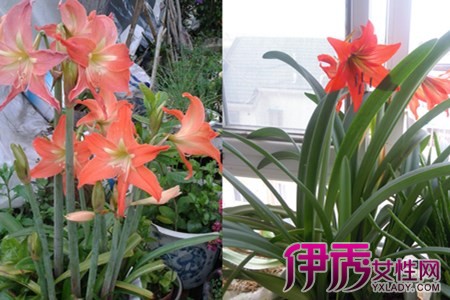
Placing rare and beautiful flowers and plants in the home has become a habit for many people who pursue a quality life. Green plants indeed give people great visual enjoyment and ornamental value, but when growing plants, one should also understand these plants' characteristics and whether they contain toxins. Anthurium, with its graceful appearance and elegant form, has won the affection of many flower growers. Besides anthurium, the abundantly blooming amaryllis has also become one of the most common household plants.
Amaryllis belongs to the Amaryllidaceae family, and this plant's bulb contains a mild toxin. When growing this plant at home, one must be careful not to accidentally eat its bulb, otherwise it will cause a poisoning reaction. If there are children at home, when growing this plant it should be placed in a high place that is difficult for children to reach.
Although this plant contains a mild toxin, it is a plant with a beautiful form that is very suitable for home growing. When growing this plant, one must be careful and cautious, and must not touch its sap, as the sap contains toxins; after accidentally touching it, one should immediately wash their hands.
Plants have certain requirements for the environment and soil. Although amaryllis is a very common indoor plant, its growing techniques are also relatively simple. When growing this plant, one should also understand its living habits. This plant likes warm and humid weather; when growing it indoors, it can be placed on a balcony, and after exposure to sunlight, this flower will bloom even more brilliantly and eye-catchingly.
This plant is generally propagated by artificial bulb division. When propagating by the bulb division method, one must strictly follow the precautions for propagation and give it careful tending. When propagating by cutting the bulb, one must water and fertilize it reasonably. In addition, one should ensure an adequate supply of sunlight for it.
What to Do After Amaryllis Blooms: Understanding This Plant's Planting Requirements
Amaryllis is also known as Huazhou lan and African lily. It is mainly distributed in Brazil and in Hainan Province of mainland China. After artificial cultivation techniques, amaryllis reproduces very well. Beautiful flowers give a pleasing feeling, and this flower is no exception. Compared with delicate and lovely miniature flowers, this flower is very large when in full bloom; this flower blooms in April each year and will bloom a second time in winter.
The propagation methods of amaryllis are mostly seed propagation, bulb division propagation, and cutting propagation. When amaryllis is in full bloom, pollinating its flowers will produce seeds. When amaryllis is in full bloom, one must be careful: if seeds are not wanted, the faded flowers should be cut off while in bloom, as this is more beneficial to the plant's growth; if the faded flowers are not cut off promptly, they will continue to absorb nutrients, which is very unfavorable to its growth.
Many people pollinate the flowers when amaryllis is in full bloom; after artificial pollination, seeds will grow. Pollinating this flower is very simple: use a cotton swab to touch the pollen onto the pistil. After pollinating amaryllis, one must cultivate it carefully; after the flowers fade, the seeds will mature. Store the mature seeds well, and they can be sown the following year.
Amaryllis likes a warm and moist climate and does not particularly like a hot climate, so when growing it, one must strictly control the temperature, as this is more beneficial to its growth. Many people like to grow this plant at home; when growing plants, one should also understand the cultivation taboos and precautions, as this is more beneficial to its growth and reproduction.
As amaryllis grows, its rhizome will become thicker and thicker; when growing it, one must be sure to repot and change the soil regularly, and after changing to a larger flower pot, it will be more beneficial to its growth. As long as it gets nutrients, amaryllis grows very rapidly; when it grows too fast, its branches and leaves will also grow very lushly. Therefore, one must regularly prune the branches and leaves of this plant and fertilize it regularly, as this is more beneficial to its growth.
Is Amaryllis Poisonous? Amaryllis Cultivation Methods and Precautions
Amaryllis is also called amaryllis orchid, hongyun dangtou, signifying wealth and honor, festivity and auspiciousness. It is quite lovable. Is amaryllis poisonous? Below, I will tell everyone about amaryllis cultivation methods and precautions.
I. Brief Introduction to Amaryllis
Amaryllis, also called belladonna lily, bai zhi lian, trumpet flower, zhu ding hong, huazhou lan, belladonna lily, dui tou lian, etc. It is a perennial herbaceous plant with bulbs in the Amaryllidaceae family, Hippeastrum genus. The bulb is nearly spherical, 7 cm in diameter, and has stolons. There are 7 leaves, emerging after flowering, bright green, strap-shaped, about 29 cm long, about 2 cm wide at the base. The flower stem is hollow, slightly flattened, about 38 cm tall, about 2 cm wide, covered with white powder; flowers 3; spathe-like involucral bracts lanceolate, about 3 cm long. The pedicel is slender, about 3.5 cm long. The perianth tube is green, cylindrical, about 2 cm long; the perianth lobes are oblong, with pointed tips, about 12 cm long, about 5 cm wide, carmine red, slightly greenish, with small scales at the throat. Stamens 6, about 8 cm long; filaments red; anthers linear-oblong, about 6 mm long, about 3 mm wide. Ovary about 1.5 cm long; style about 10 cm long; stigma 3-lobed.
Amaryllis is native to Peru and Brazil, and is now distributed in the Americas, Asia, Europe, and Africa. The flowering period is summer, and the flower shape resembles a trumpet; the flowering period is from late winter to spring, sometimes extending to early summer. The capsule is spherical, and the fruit ripens in autumn. Modern cultivated varieties are mainly hybrid large-flowered types; flower colors include white, pale red, rose red, orange red, and bright red, with various stripes, and flower diameter reaching over 25 cm.
II. Is Amaryllis Poisonous?
Because some plants possess toxins that are hard for people to accept, many friends who like amaryllis and want to grow it will have the question of whether amaryllis is poisonous, mainly because they are afraid of accidentally causing danger, or children inadvertently causing danger, etc. Actually, everyone need not worry; our amaryllis is not poisonous. It is only that the bulb of amaryllis, because it contains substances similar to lycorine found in Amaryllidaceae plants, has a certain effect; the leaves and flowers of amaryllis do not contain direct toxic substances, so friends who want to grow amaryllis can grow it with peace of mind.
III. Amaryllis Cultivation Methods
1. Soil: Amaryllis requires loose, fertile sandy loam soil for planting, with a pH of 5.5-6.5, and must absolutely avoid waterlogging. The potting soil can be mixed evenly with 2 parts decomposed manure soil, 6 parts leaf mold, and 2 parts sandy soil.
2. Watering: Amaryllis needs to keep the plant moist, and watering should be thorough. But avoid excessive water and poor drainage. Generally, indoor air humidity is sufficient.
3. Sunlight: Amaryllis likes sunlight and can take an appropriate amount of direct sunlight, but not for too long. It is best placed in front of a window with bright light, good ventilation, and no strong direct sunlight.
4. Temperature: Amaryllis likes warmth and cannot tolerate cold. In summer it prefers coolness, with the temperature preferably 18-22°C; during the winter dormant period it requires a cool and dry environment, and the temperature must not be lower than 5°C.
5. Fertilizing: Amaryllis likes fertilizer. When the leaves grow to 5-6 cm long, begin applying supplementary fertilizer; generally apply decomposed cake fertilizer water once every half month, and after flowering change to once every about 20 days, to promote bulb enlargement and the production of new bulbs.
6. Pests: To make amaryllis grow vigorously and bloom early, pest and disease control should be carried out, spraying flower medicine once a month; spraying should be done around 9 a.m. and 4 p.m. on sunny days, and it is not suitable to spray under the midday sun, to prevent chemical damage.
7. Pruning: Amaryllis grows fast, and its leaves are long and dense. When repotting and changing soil, one should also cut off withered leaves, dead roots, and pest-damaged roots and leaves, leaving vigorous leaves.
IV. Precautions for Amaryllis Cultivation
In cultivation, what needs special attention is still temperature and light. Amaryllis cannot tolerate cold and does not like high temperatures, so when cultivating it, one should pay attention to observing temperature changes; the temperature should not be lower than 5°C, humidity should be maintained, but direct sunlight should be avoided, otherwise it will harm the plant.
When amaryllis is dormant, what needs attention is that watering should be strictly controlled, that is, just enough moisture to keep it from withering; pay close attention to the temperature, because generally during dormancy plants have no resistance, so at this time the indoor temperature should be kept at 10°C; newly born small bulbs can be buried in sandy soil. The dormant state of amaryllis can end around January, at which time the flower can be given one thorough watering to awaken it from dormancy.
Common amaryllis cultivars include Red Lion, Hercules, Rilona, Flower Crown, La Paz, Minerva, and others; the flowers are mostly dark red or orange. Amaryllis cultivation requires close attention to temperature and light, because these two have an important influence on its growth.
More information