How do you grow lavender? A master gardener teaches you the correct cultivation method
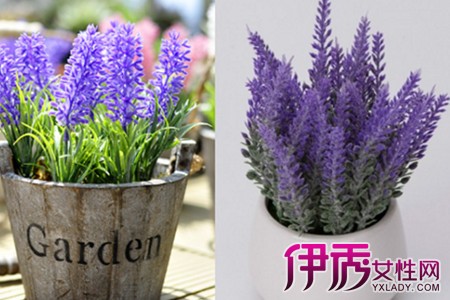
Anyone who has grown lavender will notice that the lavender we buy from the flower market becomes more and more withered after being kept for a while. The flowers it produces also get smaller and smaller, and within a year it will die. This is because lavender has a memory of its environment; whatever environment it grew up in, it will keep adapting to that environment. The ones we buy back have all grown in greenhouses for a period of time, and they find it very hard to adapt to the temperature and humidity in our homes.
If you want lavender to successfully settle into your home, you have to sow and plant it yourself. To sow lavender, you must use seeds from the current year; most of the ones bought online cannot be kept alive, so you can buy them from a proper flower market. After buying them and bringing them home, do not rush to get them to root, because lavender is very unusual in that it usually germinates in winter, so if it is not winter, you can first put it in the refrigerator to chill for five to seven days.
After taking the seeds out of the refrigerator, let them rest for one or two hours, and only then can you get them to root. The method is to spread a few layers of paper towels or toilet paper at the bottom of a small box, then add water, but not too much; just enough to submerge the seeds. In this way, lavender usually sprouts in three to five days, and during this period we can prepare the flower pots and potting soil. Lavender likes potting soil with good air permeability, so be sure not to use that kind of hard yellow soil.
Once the lavender seeds have sprouted to two to three cm, you can plant them into flower pots. Seeds that have not sprouted after five days can be thrown away directly; survival of the fittest in nature is very normal. Lavender grows very slowly when young, so you must have enough patience to wait for them to grow up. During the growing period, make sure to water every day and often clear weeds from the flower pots, so that the lavender can grow healthily.
If lavender is managed well, it can bloom after half a year. Before it blooms, you need to fertilize it; a flower nutrient solution bought from the market will do. The dilution ratio must follow the instructions when mixing with water. Too much fertilizer will make the lavender leaves grow wildly without blooming. As long as you remember these points, you can successfully grow beautiful and fragrant lavender in your own home.
How to sow lavender, the steps and method for sowing lavender seeds
Lavender can be propagated by sowing seeds, and the operation steps for sowing lavender seeds are not difficult. The method and steps for sowing lavender seeds are compiled below.
Lavender seed sowing method and sowing materialsWater, ceramic pellets, lavender seeds, cultivation soil, flower pots, sprayer, small shovel and other materials and tools.
Sowing timeLavender is generally sown from February to May in spring, which is a more suitable time for sowing.
Step 1Gardeners should prepare in advance the container and cultivation soil to be used for sowing, ceramic pellets (or small stones), and a stirring tool.
Step 2First spread a thin layer of cultivation soil (or nutrient-containing soil such as sawdust) in the container, then scatter the ceramic pellets in.
Step 3Next, use the sprayer to sprinkle water so that the cultivation soil below is thoroughly moistened.
Step 4Next, spread another layer of cultivation soil, then place the seeds evenly on top.
Step 5Finally, spread soil evenly on top and level it with a small shovel, so that the upper layer is loose.
Step 6Place it in a ventilated spot on the balcony for care, and then simply wait patiently for the lavender seeds to sprout.
How to grow lavender, the method for growing lavender seeds
Lavender has a unique fragrance and also looks very attractive. Lavender is generally planted outdoors, but in recent years many gardeners have grown lavender as indoor potted plants. Growing it indoors undoubtedly adds a certain color to the interior. The following is a compilation of how to grow lavender; I hope the lavender growing method below is helpful to gardeners.
Lavender seed growing method 1. Choosing a container for seed growingWhen sowing lavender seeds, you can choose a relatively short small flower pot, or use other containers instead. For example, yogurt cups; right now I am drinking yogurt like crazy to collect containers! I already have more than a dozen!!! Use an awl to poke a few small holes in the bottom of the cup. Disposable plastic cups also work, but because they are transparent, it is best to cover the outside with black paper or put them inside a paper cup (if the plant roots are exposed to sunlight, it will affect growth, and the soil is prone to growing green moss).
2. Preparing potting soil for seed growingLavender seeds are relatively small, and their germination rate is rather low, so the soil generally used for sowing needs to be loose, breathable, high in water retention, and thoroughly sterilized. You can use a mixed soil of vermiculite, peat, sphagnum moss, perlite, snakewood shavings, etc. If conditions permit, you can also mix it yourself.
3. Soaking lavender seeds in warm waterLavender seeds should be soaked in warm water at 40 degrees. After the water cools, continue soaking for 24 hours. This makes it easier to sprout. I have also read many friends' posts using paper towels to force germination, but I have not tried it yet, so I will not discuss it here.
4. Lavender seed sowing methodGenerally, for slightly larger seeds, you can sow 2~3 seeds per container. After germination, keep one stronger seedling depending on how the seedlings are growing. For very small seeds, you can broadcast sow. Dip your hand in some seeds and gently scatter them on the soil. After germination, thin the seedlings. Keep 1~3 seedlings as appropriate.
5. Covering the seeds with soilThe thickness of the soil covering the seeds depends on seed size. Generally it is 2~3 times the diameter of the seed. For small seeds, the soil should be thinner; lavender seeds are large, so the soil can be covered more thickly.
6. Pay attention to moisture retentionAfter sowing lavender seeds, water thoroughly. Use a fine spray bottle for watering, preferably spraying a mist. Do not use too much force, to avoid washing the lavender seeds away. I generally use the bottom-watering method, that is, fill a large basin with 2/3 basin of water and set the container in the basin. Let the water slowly seep in through the bottom holes of the container. (The water level in the large basin should not exceed the height of the soil in the container.) After sowing, cover the container with plastic wrap and poke a few small holes in the plastic wrap for ventilation. Place the container in sunlight and keep the temperature at around 20 degrees. Most seeds can germinate after one week.
Management after lavender seeds germinateAfter lavender seeds germinate, you can remove the plastic wrap. For small seeds, you can wait until the seedlings are a bit stronger before removing it.
Potting up lavenderAfter lavender seeds germinate, the seedlings can be potted up once they grow 4~6 true leaves. At first, use a small pot for potting up. After the seedlings grow larger, change to a larger pot as appropriate. When changing pots, wait until the soil is somewhat dry before changing (because after changing pots you need to water; if the soil is wet, then the moist period is too long, and the seedlings are prone to poor growth). First add more than half of a cultivation soil with a certain fertility to the small pot. In order not to damage the root system, there is no need to shake off the soil near the roots when transplanting. Move it directly into the small pot, then fill the soil up to the roots. After transplanting, be sure to water thoroughly and shade it for a few days. Then it can be placed in sunlight for care.