How to Plant Cyclamen Seeds? Four Steps to Grow a Patch of Bunny-Ear Flowers
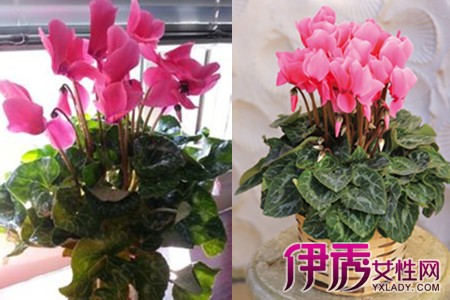
Cyclamen, whose name means "a fairy guest comes gracefully," is a famous indoor spring-welcoming flower with many varieties and a flowering period that can last several months. It suits people's auspicious wish for "blossoming prosperity" at the New Year, so it is very widely loved.
Its leaves are fuzzy and fleshy, with toothed edges, green or marked with gray and white patterns. The flowers are very beautiful, thick and textured, with petals curling back upward one by one, just like a rabbit's ears, so it is also called bunny-ear flower or rabbit flower.
Many people spot it at the flower market at first glance and take it home. As a beautiful sight in the home, how lovely it would be to grow one pot into two, and two pots into three. But many people do not know how cyclamen is propagated.
Cyclamen can be propagated from seeds. It is not difficult to grow one cyclamen into a whole patch. Below, for flower lovers who adore it, we introduce how to plant cyclamen seeds.
Cyclamen seeds have very strong vitality. If stored in a ventilated, dry and cool environment, they can retain their germination ability for three years. They can be sown in all four seasons, but germination is best at 15 to 18°C. If temperature control is not very good, you can choose to sow in autumn.
1. Select a mother plant that is robust, with good flower color and beautiful flower shape, and give it enhanced care. When the fruit is ripe, pick it with the stalk before it splits open, and dry it in a shaded, dry place to obtain the seeds.
2. Choose large, plump seeds, wash them clean, and soak them in warm water for 24 hours to promote germination.
3. For the potting soil, use well-aerated sandy soil mixed with propagation soil, sieve and level it, and water it thoroughly. Poke small holes 1-2 cm deep in the soil, put the seeds in, and cover lightly. Stretch a layer of plastic film over the pot to keep it warm and moist, then cover the pot with newspaper or other objects to block light, as the seeds need to germinate in darkness.
4. Keep the soil moist and wait patiently; germination and sprouting take about three weeks. After sprouting, place it in indirect light, and leaves will grow after three months. Cyclamen grows slowly, so flower lovers need to wait slowly and enjoy the process. When four or five leaves have grown, it needs repotting to speed up growth. With careful nurturing, you can slowly wait for the new cyclamen to bloom.
How to Plant Cyclamen Seeds, Cyclamen Seed Pictures
Cyclamen is a perennial herbaceous plant. The tuber is flattened-spherical, usually 4-5 cm in diameter, with a corky skin, brown, and slightly flattened at the top. The leaves and flower stalks emerge simultaneously from the top of the tuber. So, do you knowcyclamen seedshow to plant them? Let's take a look below.
How to Plant Cyclamen Seeds
First, disinfect the cyclamen seeds before planting. Cyclamen seeds are generally sown in autumn. Cyclamen seeds should not only be large but also plump. We first wash the cyclamen seeds clean, then soak them in sodium phosphate solution for ten minutes to disinfect, or soak them in warm water for one day as a germination treatment.
After soaking the cyclamen seeds, do not rush to plant them. It is better to leave them at room temperature for two days before planting them in loose, fertile sandy soil. After that, pay attention to keeping them moist and warm; generally, they will germinate one month after sowing. Division is usually done after cyclamen has flowered; the cool spring weather will not cause the wounds from division to rot. We first carefully take out the bulbous rhizome of the cyclamen, cut it according to the distribution of the buds, making sure each division has one bud, then apply some plant ash to the cut surfaces and transplant them into other potting soil and press firm. After division, water thoroughly, then place in a cool, shaded place.
1. Management of cyclamen seeds during the germination stage. Substrate: requires well-aerated peat and perlite mixed in a certain ratio, with a pH of 6 to 6.5, an EC value less than 0.5, and moderate moisture; avoid over-wetting.
[Temperature]: 18°C.
[Light]: The germination stage of cyclamen seeds (about 21 days) requires no light at all; complete darkness. The air humidity required for cyclamen seed germination is 95% (a germination chamber is best); cover the plug tray with plastic film.
[Covering]: After sowing, cover the cyclamen seeds with vermiculite or perlite, with a thickness just enough to cover the seeds.
2. Management of cyclamen seeds after germination
[Relative humidity]: Keep it at around 85%; misting can be used when necessary to raise the relative humidity.
[Light]: When the external light intensity exceeds 35 Klux , it is recommended to use a shade net, or cover the cyclamen seed plug tray with non-woven fabric to keep the cyclamen seeds moist.
[Fertilization]: According to the growth of the seedlings, start fertilizing from the 5th week after sowing, with an N:P:K ratio of 1:1:1. The seedling leaves should be glossy; if they turn dark red, fertilization is needed.
[Irrigation]: The water temperature should be greater than 14°C; water from above.
The optimal substrate EC value is 0.8, with a maximum not exceeding 1.2. The pH is 6 to 6.5.
[Transplanting]: Cyclamen seeds are transplanted in the 10th to 11th week after sowing; super micro and mini types can be potted directly.
1. Substrate: Use well-aerated peat mixed with a certain proportion of clay (10%) and perlite, with a pH of 6 to 6.5; adding appropriate calcium fertilizer to the substrate can achieve this. Use disposable or easily disinfected plug trays; do not use wooden plug trays.
2. Transplanting: The soil should just cover the root system, leaving the small tuber exposed; never press the seedlings and surrounding soil downward with your hands.
3. Growth conditions: Keep relative humidity between 65% and 85%; misting can be used to increase humidity.
[Light]: When the external light intensity exceeds 35 Klux , it is recommended to use a shade net.
[Fertilization]: According to the growth of the cyclamen plant, start fertilizing from the 1st week after transplanting, with N:P:K at 1:1:1, and after two weeks the N:P:K ratio is 1:1:2. Applying nitrogen fertilizer can produce a large plant type, while applying potassium fertilizer can produce a compact plant type. The irrigation water temperature should be greater than 14°C; during this period, water from above. The optimal substrate EC value is 0.8, with a maximum not exceeding 1.2. The pH is 6 to 6.5.
The above is what the editor introduces to you aboutcyclamen seedshow to plant them; we hope it can help you. For more related information about cyclamen seeds, please keep following us.
How to Plant Cyclamen Seeds, Cyclamen Seed Pictures
Cyclamen is a perennial herbaceous plant, with a flattened-spherical tuber usually 4-5 cm in diameter, a corky skin, brown, and slightly flattened at the top. Cyclamen is a highly ornamental potted plant, so many people, especially women, choose to buy cyclamen seeds and grow them themselves, but if they do not know the method for planting cyclamen seeds, they may fail to grow them. So, how should cyclamen seeds be planted? Come take a look with the editor.
How to Plant Cyclamen Seeds
First, disinfect the cyclamen seeds before planting. Cyclamen seeds are generally sown in autumn. Cyclamen seeds should not only be large but also plump. We first wash the cyclamen seeds clean, then soak them in sodium phosphate solution for ten minutes to disinfect, or soak them in warm water for one day as a germination treatment.
After soaking the cyclamen seeds, do not rush to plant them. It is better to leave them at room temperature for two days before planting them in loose, fertile sandy soil. After that, pay attention to keeping them moist and warm; generally, they will germinate one month after sowing. Division is usually done after cyclamen has flowered; the cool spring weather will not cause the wounds from division to rot. We first carefully take out the bulbous rhizome of the cyclamen, cut it according to the distribution of the buds, making sure each division has one bud, then apply some plant ash to the cut surfaces and transplant them into other potting soil and press firm. After division, water thoroughly, then place in a cool, shaded place.
Cyclamen Seed Planting Method
1. Sowing time: The best sowing period is September to October.
2. Seed selection: Choose large and plump seeds.
3. Seed treatment: Cyclamen seeds are relatively large, about 100 per gram, with a general germination rate of 85-95%, but germination is slow and uneven. To promote early and uniform germination, seeds can be soaked to promote germination before sowing. First soak the seeds in cold water for one day and night, or soak them in 30°C warm water for 2-3 hours, then wash off the sticky matter on the seed surface, wrap them in a wet cloth to promote germination, keep the temperature at around 25°C, and leave for 1-2 days; once the seeds show slight signs of sprouting, they can be taken out and sown.
4. Sowing soil: Mix equal amounts of loam, leaf mold and river sand.
5. Sowing method: Sow in spots at a spacing of 1.5-2.0 cm in a shallow pot or shallow box, with a covering soil thickness of 0.5-1.0 cm. Soak thoroughly with water using the bottom-soaking method, cover with glass, and place at 18-20°C for about 30-40 days until germination. After germination, remove the glass promptly and place in a sunny and ventilated spot.
6. Seedling separation: When the sown seedlings grow 1 true leaf, carry out the first seedling separation, moving them into a shallow pot at a spacing of 3.5 cm, with the potting soil mixed in a ratio of 5 leaf mold, 3 loam, and 2 river sand. When planting, the top of the small tuber should be level with the soil surface. After planting, soak thoroughly with water and provide appropriate shade. When the seedlings resume growth, gradually give light, strengthen ventilation, do not let the potting soil dry out, keep the temperature at 15°C-18°C, appropriately apply nitrogen fertilizer, and be careful not to let fertilizer water stain the leaf surface, so as not to cause leaf rot. After fertilizing, sprinkle clean water once to keep the leaves clean.
7. Transplanting: When the seedlings grow to 3-5 leaves, move them into 10 cm pots. At this time, the potting soil ratio can be changed to 3 leaf mold, 2 loam, and 1 river sand, with decomposed cake fertilizer and bone meal added as base fertilizer. After 3-4 months, the temperature gradually rises, the plant produces more leaves and grows more vigorously, and its demand for fertilizer and water also increases. Fertilizer and water management should be strengthened, the potting soil kept moist, and ventilation strengthened, blocking out the strong midday sun, keeping the temperature as low as possible, and preventing rain and excessive soil moisture so as to avoid tuber rot. It should be cultivated in a shaded shed outdoors equipped with rain protection.
8. Final planting: In September, plant it permanently in a 20 cm pot, with the tuber planted so that about 1/3 is exposed above the soil surface. The potting soil is 3 leaf mold, 2 loam, and 1 river sand, but additional base fertilizer is needed. Topdressing should apply more phosphorus and potassium fertilizer to promote flower bud differentiation. After flower buds appear in November, stop topdressing, give sufficient light, and flowering begins in December; by February of the following year it can reach full bloom, meaning from sowing to flowering takes about 13-15 months.
Now everyone knows how to plant cyclamen seeds and the planting method for cyclamen seeds! Cyclamen likes warmth and fears heat; it grows best in a cool environment and in fertile sandy loam rich in humus. It is relatively cold-tolerant and can withstand a low temperature of 0°C without freezing. In winter it can tolerate low temperatures, but below 5°C it grows slowly, the flower color becomes dull, and it blooms little. Supplementing carbon dioxide gas in winter can promote growth and flowering. During the growing period, it requires a humid air environment and sufficient sunlight.