Propagation methods for wax begonia: easily multiply your own flowers
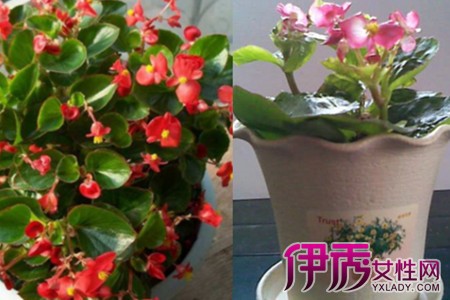
There are many ways to propagate wax begonia, and the simplest and fastest method is cuttings propagation. To take cuttings from wax begonia, you need to choose the time, container, soil and healthy branches. Although wax begonia can grow all year round, the most suitable season for cuttings is spring, and you must choose March to April for taking cuttings to ensure the survival rate.
Then let us choose a suitable flowerpot and soil. Wax begonia needs a flowerpot with good air permeability for growth, and we can choose pottery products. The flower soil is best slightly more acidic, and soil containing leaf mold and rotted roots is also acceptable. Since ordinary people do not know the pH of the soil, you can put a few drops of white vinegar at the very bottom of the flowerpot to increase the soil acidity.
Next let us choose the branch. The branch should not be too tender or too old; it is best to use a healthy stem of wax begonia about one year old. After choosing it, use scissors to cut the stem at a slant, first rinse it clean with water, and remove all the leaves at the very bottom. After inserting the branch, water the soil thoroughly in one go, as this can help the flower take root.
Finally, you can place the planted wax begonia in a cool, ventilated spot. After one week, if it can send out new shoots, that means it has taken root and can be placed in a sunny place to get some sunlight. Do not be too impatient about the second watering, and be sure to wait until the surface layer of the potting soil is dry before watering, otherwise the newly planted wax begonia is prone to root rot.
Once the wax begonia survives, you can cultivate it according to normal methods, and within just a few months you will see the newly propagated wax begonia form flower buds and bloom. This is the whole process of wax begonia cuttings propagation, and I hope it can help more flower-loving friends solve the problem of wax begonia propagation. Flowers are an indispensable adornment in our homes, and as long as they are managed properly, they will add infinite color to our homes.
Mid-Autumn Festival flowers
The origin and customs of the Mid-Autumn FestivalThere are many customs for the Mid-Autumn Festival, and their forms also vary, but they all express people's boundless love for life and longing for a better life.
Every year on the 15th day of the 8th month of the lunar calendar is our country's traditional Mid-Autumn Festival. This is the middle period of autumn in the year, so it is called Mid-Autumn. This is also our country's second-largest traditional festival after the Spring Festival.
In the Chinese lunar calendar, a year is divided into four seasons, and each season is further divided into three parts: Meng, Zhong and Ji, so Mid-Autumn is also called Zhongqiu. The moon on the 15th day of the 8th month is rounder and brighter than the full moons of other months, so it is also called Moon Evening, Autumn Festival, Mid-Autumn Festival, 8th Month Festival, 8th Month Gathering, Moon-Chasing Festival, Moon-Viewing Festival, Moon-Worshiping Festival, Daughter's Festival or Reunion Festival, and it is a traditional cultural festival popular among many ethnic groups across the country. On this night, people look up at the bright moon like jade or a plate in the sky, and naturally hope for family reunion. Travelers far from home also use this to express their longing for their hometown and relatives. Therefore, Mid-Autumn is also called the "Reunion Festival." It is said that on this night the moon is closest to the Earth, and the moon is largest and brightest, so since ancient times there has been the custom of drinking and feasting while enjoying the moon; a daughter-in-law returning to her parents' home must return to her husband's home on this day, to imply completeness and good fortune. Some places also set the Mid-Autumn Festival on the 16th day of the 8th month, such as Ningbo, Taizhou and Zhoushan. This is related to Fang Guozhen's occupation of the three prefectures of Wen, Tai and Ming, when, in order to guard against attacks by Yuan dynasty soldiers and Zhu Yuantian, he changed "the 14th day of the 1st month as Lantern Festival and the 16th day of the 8th month as Mid-Autumn." In addition, in Hong Kong, China, after Mid-Autumn the excitement is still not over, and people revel once more on the night of the 16th, called "chasing the moon."
The term "Mid-Autumn" first appears in the book Rites of Zhou, but it truly became a nationwide festival in the Tang dynasty. Our people already had the custom of "worshiping the moon at autumn dusk" in ancient times. Worshiping the moon means sacrificing to the moon god. By the Zhou dynasty, on every Mid-Autumn night, people held ceremonies to welcome the cold and sacrifice to the moon. A large incense table was set up with offerings such as mooncakes, watermelon, apples, red dates, plums and grapes, among which mooncakes and watermelon were absolutely indispensable. The watermelon also had to be cut into a lotus shape. Under the moon, the moon god image was placed in the direction of the moon, red candles were lit high, the whole family worshiped the moon in turn, and then the housewife cut the reunion mooncake. The person cutting it calculated in advance how many people were in the whole family, those at home and those away, all counted together, and it could not be cut into too many or too few pieces, and the sizes had to be the same. As for the custom of eating mooncakes during the Mid-Autumn Festival, its formation was in the Ming dynasty.
The Ming dynasty writer Tian Rucheng wrote in Xihu Youlan Zhiyu: "The 15th day of the 8th month is called Mid-Autumn, and among the people mooncakes are given to one another, taking the meaning of reunion." The Ming dynasty historian Shen Bang, in Wanshu Zaji, described the grand scene of Beijing Mid-Autumn mooncakes and wrote: "They make flour cakes and give them to one another, of unequal sizes. The cakes use fruit as filling, with ingenious names and different shapes, and there were those worth several hundred coins each." The book also introduced the production techniques of the time, which had already reached a very high level. The mooncakes used for worshiping the moon in the Beijing imperial palace were "more than a chi in diameter from bottom to top and weighed two jin." Later, with the evolution of successive dynasties, the varieties and patterns of mooncakes became richer and richer, the production techniques were renewed, and the flavors became more numerous. Eating mooncakes on the 15th day of the 8th month has become an ancient and very meaningful tradition of the Chinese nation. In the Tang dynasty, enjoying and playing under the moon during Mid-Autumn was quite popular.
In the Northern Song dynasty, on the night of the 15th day of the 8th month, in every household throughout the city, regardless of rich or poor, old or young, people had to put on adult clothing, burn incense and worship the moon, state their wishes, and pray for the blessing of the moon god. In the Southern Song dynasty, among the people mooncakes were given as gifts, taking the meaning of reunion. In some places there were also activities such as dancing with straw dragons and building treasure pagodas. Since the Ming and Qing dynasties, the customs of the Mid-Autumn Festival became even more prevalent, and many places formed special customs such as burning bucket incense, setting up Mid-Autumn decorations, lighting pagoda lanterns, releasing sky lanterns, walking under the moon and dancing with fire dragons. Today, the custom of outings under the moon is far less prevalent than in olden times. But holding banquets to enjoy the moon is still very popular. People raise their cups and ask the moon, celebrate a beautiful life, or wish relatives far away health and happiness, and share "a thousand miles of moonlight" with their families.
Mid-Autumn Festival flowers
Legends of the Mid-Autumn Festival
The legends of the Mid-Autumn Festival are very rich, and myths such as Chang'e flying to the moon, Wu Gang cutting the osmanthus, and the Jade Rabbit pounding medicine are widely circulated.
One of the Mid-Autumn legends: Chang'e flying to the moon
According to legend, in ancient times ten suns appeared in the sky at the same time, scorching the crops to death and leaving the people unable to live. A hero named Hou Yi, immensely strong, sympathized with the suffering common people, climbed to the top of Kunlun Mountain, summoned his divine power, drew his divine bow, and in one breath shot down more than nine suns, and strictly ordered the last sun to rise and set on time, bringing benefit to the people. Because of this, Hou Yi was respected and loved by the people. Hou Yi married a beautiful and kind wife named Chang'e. Apart from teaching archery and hunting, Hou Yi spent all day with his wife, and people envied this loving couple, a talented man and beautiful woman. Many aspiring men came attracted by his fame to seek apprenticeship, and the ill-intentioned Peng Meng also sneaked in. One day, Hou Yi went to Kunlun Mountain to visit friends and seek the Way, and happened to meet the Queen Mother of the West passing by, so he asked her for a package of elixir of immortality.
It is said that after taking this medicine, one could immediately ascend to heaven and become an immortal. However, Hou Yi could not bear to leave his wife, so he had to temporarily give the elixir of immortality to Chang'e for safekeeping. Chang'e hid the medicine in a treasure box on her dressing table, but unexpectedly the petty man Peng Meng saw it, and he wanted to steal and take the elixir of immortality so that he himself could become an immortal. Three days later, Hou Yi led his disciples out hunting, and the scheming Peng Meng pretended to be ill and stayed behind.
Not long after Hou Yi led everyone away, Peng Meng entered the inner courtyard and rear house with a sword in hand, and threatened Chang'e to hand over the elixir of immortality. Chang'e knew she was no match for Peng Meng, and in the critical moment she made a decisive decision, turned, opened the treasure box, took out the elixir of immortality and swallowed it in one gulp. After Chang'e swallowed the medicine, her body immediately floated off the ground, rushed out of the window, and flew toward the sky. Because Chang'e was concerned about her husband, she flew down to the moon, the closest place to the human world, and became an immortal. In the evening, Hou Yi returned home, and the maidservants tearfully told him what had happened during the day. Hou Yi was both shocked and angry, drew his sword to kill the villain, but Peng Meng had already fled. Hou Yi was so angry that he beat his chest and stamped his feet, and was overwhelmed with grief. Looking up at the night sky and calling his beloved wife's name, he was amazed to find that tonight's moon was especially bright and clear, and that there was a swaying figure very much like Chang'e. He chased desperately toward the moon, but when he chased three steps, the moon retreated three steps; when he retreated three steps, the moon advanced three steps; no matter what, he could not catch up to it. Helpless and missing his wife, Hou Yi had no choice but to send people to the back garden Chang'e loved, set up an incense table, place the honey foods and fresh fruits she usually loved most, and make a distant sacrifice to Chang'e, who longed for him in the moon palace. After the common people heard the news that Chang'e had flown to the moon and become an immortal, they one after another set up incense tables under the moon and prayed to the kind Chang'e for good fortune and peace. From then on, the custom of worshiping the moon during the Mid-Autumn Festival spread among the people.
The second Mid-Autumn legend: Wu Gang cutting the osmanthus
There is another legend about the Mid-Autumn Festival: it is said that in front of the Guanghan Palace on the moon grew a lush osmanthus tree more than five hundred zhang tall, and below it there was a man who often cut it, but every time he cut it, the cut place immediately closed up again. For thousands of years, it kept being cut and kept closing, and this osmanthus tree could never be chopped down completely. It is said that this tree-cutting man was named Wu Gang, a man from Xihe in the Han dynasty. He had once followed immortals to cultivate the Way, and when he reached the heavenly realm, he made a mistake, so the immortal banished him to the moon palace to do this futile hard labor every day as punishment. Li Bai's poetry contains the record "I want to cut the osmanthus in the moon, and hold it as firewood for the cold."
Mid-Autumn Festival flowers
The Mid-Autumn Festival and the allusion of osmanthus
"On the brightest moonlit night of the year, hearts a thousand miles apart admire it together." On every Mid-Autumn Festival, people sacrifice to the moon, worship the moon, admire the moon, play under the moon, walk under the moon and dance under the moon. Around this special celestial phenomenon, the bright Mid-Autumn moon, the Chinese people formed their own unique festival, the Mid-Autumn Festival. On this day, people reunite as a family and eat mooncakes while admiring the moon, which has become the most traditionally meaningful food custom culture among the customs, so Su Dongpo wrote in a poem: "Small cakes like chewing the moon, within them are flaky pastry and joy."
The scenery of Mid-Autumn, apart from the moon, is mainly osmanthus. The Tang dynasty poet Wang Jian wrote in "Looking at the Moon on the Night of the 15th and Sending It to Official Du": "In the courtyard the ground is white, crows perch in the trees; cold dew falls silently, wetting the osmanthus. Tonight the moon is bright and everyone gazes at it; I wonder whose home the autumn longing is in?" The myth recorded by the Tang dynasty writer Duan Chengshi in Youyang Zazu, that Wu Gang cut the osmanthus tree in the moon, added a romantic color to osmanthus. Therefore, in classical poetry, osmanthus is often related to the moon, so the moon is called "osmanthus cave" and "osmanthus hall," and osmanthus is called "moon osmanthus." For example, the Song dynasty poet Yang Wanli wrote in his poem "Moon Osmanthus": "It is not a planting of the human world, but transplanted from within the moon; a bit of Guanghan fragrance, blown so that the whole mountain blooms." During Mid-Autumn, people eat mooncakes and drink osmanthus honey wine while admiring the bright moon and the far-spreading fragrance of osmanthus, forming a special and interesting Mid-Autumn scene.
Mid-Autumn Festival flowers
Golden autumn seasonal flowers
What varieties of seasonal flowers are there in the golden autumn season? Recently I took a stroll around the flower market and took dozens of photos of more than ten main seasonal flowers such as bromeliads and Phalaenopsis. I am now uploading them here for flower-loving friends to enjoy, and by offering flowers to the Buddha, I wish my new and old friends who have followed and supported me for many years a happy Mid-Autumn and National Day, good health, family happiness, and good fortune and auspiciousness!
1. Bromeliad
Bromeliad, of the genus Billbergia, is an ornamental plant with strong value for both flowers and foliage, and is most suitable for potted viewing. Its leaves are firm and slender, with wavy edges, and the colors include creamy yellow, red or purple-red, with long stripes radiating like a crab pattern on the leaf surface. The flowers are white or light green, growing among the leaf clusters and forming a disc.
2. Dendrobium orchid
Dendrobium, one of the orchid family plants, has effects on the human body such as dispelling deficiency heat and strengthening essence and yin. With the rise of the flower industry, people discovered that it has high ornamental value, so it was classified into the category of tropical orchids and gradually stepped from the herb garden into the grand garden, becoming a very fashionable new flower today. The Dendrobium orchid plant is composed of fleshy stems, thick as a middle finger, rod-shaped and clustered, with leaves like bamboo leaves, opposite on both sides of the stem nodes. The flower scape emerges from the leaf axils, with seven or eight flowers per scape, and up to more than 20, in a raceme, each flower with 6 petals spreading in all directions, and the middle lip slightly round. Many varieties have purple petal edges and white centers, and a few varieties are yellow or orange.
3. Phalaenopsis
The genus Phalaenopsis is a famous cut flower group, with more than 50 species in the whole genus. Phalaenopsis is a monopodial epiphytic orchid, with a short stem, large leaves, and one to several arched flower stems, with large flowers, named because the flower shape resembles a butterfly. Its flower posture is graceful and its colors are gorgeous, making it a treasure among tropical orchids, and it has the reputation of "queen of orchids."
4. Rose begonia
Rose begonia is a perennial herbaceous plant, a hybrid, with fleshy and juicy stems and a fibrous root system; the stems and branches are fleshy and juicy; the single leaves are alternate, heart-shaped, mostly green, and some are brown; the flower shapes are diverse, mostly double, and the flower colors include red, orange, yellow, white and so on, with complex variations that are breathtaking.
5. Anthurium
Anthurium is a perennial epiphytic evergreen herbaceous plant. The leaves are leathery and clustered, oblong-lanceolate, with pointed tips and rounded bases. The roots are fleshy with short internodes; the leaves are evergreen, leathery, and long-elliptic heart-shaped. The spathe is upright and open, and the spadix is stalkless, cylindrical, yellow at the tip and white at the lower part, with bisexual flowers, and the small berries contain 2-4 seeds, pink, densely packed on the spadix. It is like an open red palm, with a small golden-yellow spadix standing upright on the palm, hence the name anthurium.
6. Golden treasure
Also known as Chinese evergreen, its leaves are broad and glossy and remain emerald green in all four seasons, especially in summer when the foliage gives a feeling of coolness. It is currently a relatively widely cultivated indoor potted foliage plant. Chinese evergreen is native to our country and the Southeast Asia region. At present, Chinese evergreen has become one of the important indoor decorative plants.
7. Poinsettia
Poinsettia, also known as Christmas flower and laolaijiao, is a color-changing foliage plant native to central Africa. Its cup-shaped cyathium is very small and not easily noticed. The involucre at the top of the plant is entire, green, 12-15 in number, and turns dazzling red when blooming, exceptionally gorgeous, and is the main ornamental part.
8. Croton
Croton, also known as garden croton, is a plant of the genus Codiaeum in the Euphorbiaceae family. Croton leaves vary greatly in shape and are colorful in leaf color. Among foliage plants, it has the richest variations in leaf color, leaf shape and leaf spots, and is also one of the potted plants with the greatest beauty of form and color.
9. Peace lily
Peace lily, also known as white sail and white palm, is a Spathiphyllum in the Araceae family, a perennial evergreen herbaceous foliage plant native to Colombia, growing in tropical rainforests, and one of the most popular indoor foliage plants in Europe. Because its leaves are similar to those of arrowroot and its flowers closely resemble a crane holding its head high, gracefully upright and spotlessly white, the peace lily gives people a sense of purity, calm, peace and well-being, and is regarded as a flower of innocence. Because people feel that the peace lily has an auspicious meaning, they specially gave it the elegant name peace lily according to the image of its flowers.
10. Autumn chrysanthemum
Autumn chrysanthemum is the general term for all flower varieties in the Asteraceae family. The genus Chrysanthemum has more than 30 species, 17 of which are native to China, mainly including: wild chrysanthemum, Mao Hua chrysanthemum, sweet chrysanthemum, small red chrysanthemum, purple-flowered wild chrysanthemum, and chrysanthemum greens. The single leaves are alternate, ovate to oblong, with notches and serrations on the edges. The capitulum is terminal or axillary, solitary or several clustered together. The ligulate flowers are female flowers, and the tubular flowers are bisexual flowers. The ligulate flowers are divided into four types: lower, spoon-tube, and abnormal, with rich colors including red, yellow, white, ink, purple, green, orange, pink, brown, snow blue, pale green and so on. The tubular flowers have developed into "anemone petals" with various colors, and the flower colors include red, yellow, white, purple, green, pink, compound colors, intermediate colors and other color series. Because it blooms in autumn and has a strong fragrance, it has the elegant names "late beauty" and "cold fragrance."
Mid-Autumn Festival flowers
Mid-Autumn Festival flowers become fashionable
As the Mid-Autumn Festival approaches, buying potted flowers has become a new fashion for city residents to give to relatives and friends and decorate their homes. The flower market is heating up accordingly.
In the flower market, various flowers and plants such as spider plant, narcissus, cactus and lucky bamboo are growing luxuriantly, and many city residents are choosing their favorite varieties here. Buying a pot of spider plant can absorb harmful substances in the room. Growing flowers can purify the air, relieve work pressure, and also enrich and adjust cultural life, adding joy to life.
Flowers and plants have become the new favorite of more and more city residents for decorating new homes, beautifying the face, and cultivating the mind. Buying some flowers and plants to place in the home to decorate the environment has become a habit for many people. Opening a small flower bed on one's own balcony, growing flowers should also be a low-carbon and environmentally friendly way of life.
Evergreen types and plants with longer flowering periods are much loved by people. With the festival approaching, the demand for flowers has also increased, and sales have risen by half or more than half compared with before.
Mid-Autumn Festival flowers
Mid-Autumn custom life and flowers
The Mid-Autumn Festival is also called the "Reunion Festival." It is said that on this night the moon is closest to the Earth, and the moon is largest and brightest, so since ancient times there has been the custom of family gatherings, drinking and feasting while enjoying the moon. As the Mid-Autumn Festival holiday approaches, people no matter where they are look forward to spending the festival with their families. Flowers are beautiful and fragrant and imply good fortune and happiness. They can add festive atmosphere and bring beautiful blessings, so on the day of the Mid-Autumn Festival flowers are naturally indispensable. Let us see how to keep food, housing and gifts all closely accompanied by flowers.
1. "Food" and flowers
When families reunite at Mid-Autumn, a family banquet is indispensable. Nowadays people's requirements for the dining environment are rising day by day, and they also attach increasing importance to food safety. If you can admire delicate, drippingly beautiful fresh flowers while tasting healthy, pollution-free food, I believe this Mid-Autumn reunion dinner will surely let you enjoy the view and eat comfortably.
Recommendation 1: Mid-Autumn table flowers
Recommended reason: During the Mid-Autumn Festival, the whole family, old and young, sits around together for a reunion dinner, and placing an exquisite floral arrangement on the dining table at this time will certainly bring out the festive holiday atmosphere.
Recommended flowers: You can choose high-grade cut flowers such as Phalaenopsis and anthurium to show nobility and grandeur; you can also choose seasonal herbaceous cut flowers such as hydrangea, snapdragon and lisianthus, which appear friendly and warm.
2. "Housing" and flowers
Recommendation 1: Home arrangement
If you want the Mid-Autumn Festival to have more festive atmosphere, then decorating the home with fresh flowers is a good choice. Whether it is potted flowers arranged in rooms or herbaceous flowers and saplings cultivated in the courtyard, they can add a festive color to Mid-Autumn.
Recommended reason: Placing fresh flowers and plants at home during the Mid-Autumn Festival can not only beautify the environment, but also play a certain role in purifying the air at home.
Recommended flowers: Mid-Autumn is a festival for the whole family to reunite, so it is very suitable to place brightly colored, attractive potted flowers at home. Phalaenopsis, anthurium and bromeliad are all good choices. You can also choose small potted flowers with approachable prices; placing Rieger begonia and impatiens at home also looks very good.
Recommendation 2: Courtyard arrangement
If your yard is large enough, then you must plant an osmanthus tree in the yard. During the Mid-Autumn season, it happens to be when osmanthus is in full bloom, and the fragrance filling the whole yard will certainly intoxicate you. In addition, lotus and water lily are also good ornamental plants for this season.
Recommended reason: On the 15th day of the 8th month the moon is bright, and sitting with family in your own courtyard at night tasting mooncakes and admiring the bright moon is a very good choice. If the courtyard is adorned with flowers and plants, then admiring the moon accompanied by floral fragrance has even more charm.
Recommended flowers: Various green plants and seasonal herbaceous flowers are all good choices.
3. "Gifts" and flowers
China is a land of etiquette, and giving a gift and blessing to relatives and friends on the day of the Mid-Autumn Festival has become one of our traditions. How do you choose an ingenious gift?
Recommended reason: Now, as people's living standards improve, Mid-Autumn gift-giving also increasingly stresses exquisite gift packaging. If you add preserved flower elements to the gift, it will certainly raise the grade of the gift.
Recommended flowers: Preserved flowers are fresh flowers processed through special techniques. They have the beauty of fresh flowers and will not wither, so they are very suitable for playing a finishing touch role in mooncake gift boxes or liquor gifts.
Mid-Autumn Festival flowers
The Mid-Autumn Festival and fresh flowers
Nowadays, it is popular during the Mid-Autumn Festival to give fresh flowers to relatives and friends to express warm and beautiful holiday blessings. But what flowers are suitable for the Mid-Autumn Festival? What does giving lilies during the Mid-Autumn Festival represent?
In our China, the lily is an auspicious flower, with the meanings of a hundred years of harmony, a happy family, and great love, representing deep blessings. The lily is an auspicious flower, with the meanings of a hundred years of harmony, a happy family, and great love, representing deep blessings. Specifically, the flower language of the lily is smoothness, blessing, nobility and having one's wishes come true. Therefore, giving lilies during the Mid-Autumn Festival represents deep blessings, wishing the other person a happy life and that their wishes come true. Specifically, the flower language of the lily is smoothness, blessing, nobility and having one's wishes come true.
The Mid-Autumn Festival is a festival of reunion, a day for praying for a happy, sweet and peaceful life. Lilies happen to express exactly this kind of blessing, so giving lilies is popular during the Mid-Autumn Festival. Giving lilies during the Mid-Autumn Festival represents deep blessings, wishing the other person a happy life and that their wishes come true.
Giving carnations to elders during the Mid-Autumn Festival represents charm, respect, admiration, love and gratitude.
Giving lilies symbolizes a hundred years of harmony, family happiness, health and longevity, smooth work and other beautiful blessings.
Giving carnations + lilies feels warm, representing respect and gratitude to elders, and pairing them with lilies symbolizes beautiful blessings for elders' a hundred years of harmony.
Giving carnations + roses means long-lasting love, and love for elders always remains in the deepest place.
Recommendation 1: Blessing of love
Flower materials: 2 stems of white perfume lilies + 19 stems of pink carnations + baby's breath + goldenrod
Suitable for giving to mother, leaders and teachers, expressing both blessings and gratitude and respect.
Flower language: Carnations + lilies, warm and pure, warm feelings sent by flowers. Love is concern, love is dedication, it is the pain of longing, the sweetness of memory, the reluctance to part! It is the trembling expectation of morning and dusk...
Recommendation 2: Warm greetings
Flower materials: 2 stems of white perfume lilies + 19 stems of red carnations + baby's breath + goldenrod
Suitable for giving to father as well as male leaders and teachers, expressing blessings and respect.
Flower language: Carnations + lilies, warm and pure, warm feelings sent by flowers: please carry this most sincere blessing with you, and let happiness always accompany you!
Recommendation 3: Happy heroine
Flower materials: 1 stem of multi-headed white perfume lily + 11 stems of pink roses + baby's breath
Suitable for giving to a girlfriend or a girl you like, wishing her happiness always accompanies her!
Flower language: The romantic flowers have bloomed, accompanying our happy heroine!
Recommendation 4: Sunny mood
Flower materials: 10 stems of multi-headed yellow lilies + goldenrod
Suitable for giving to anyone you wish to bless, wishing them always a sunny mood, cheerful and happy!
Flower language:
Thinking of how we once crossed the seaside together;
Thinking of how we once basked in the sun together;
Thinking of how we once rode the small train together;
Thinking of how we once walked hand in hand through the past.
At this moment, my mood is as warm as sunshine!
Mid-Autumn Festival flowers, Mid-Autumn custom life and flowers
What Flower and Bonsai Network shares with you today is an article about Mid-Autumn Festival flowers, Mid-Autumn custom life and flowers. Let us take a look together.
The origin and customs of the Mid-Autumn Festival
There are many customs for the Mid-Autumn Festival, and their forms also vary, but they all express people's boundless love for life and longing for a better life.
Every year on the 15th day of the 8th month of the lunar calendar is our country's traditional Mid-Autumn Festival. This is the middle period of autumn in the year, so it is called Mid-Autumn. This is also our country's second-largest traditional festival after the Spring Festival.
In the Chinese lunar calendar, a year is divided into four seasons, and each season is further divided into three parts: Meng, Zhong and Ji, so Mid-Autumn is also called Zhongqiu. The moon on the 15th day of the 8th month is rounder and brighter than the full moons of other months, so it is also called Moon Evening, Autumn Festival, Mid-Autumn Festival, 8th Month Festival, 8th Month Gathering, Moon-Chasing Festival, Moon-Viewing Festival, Moon-Worshiping Festival, Daughter's Festival or Reunion Festival, and it is a traditional cultural festival popular among many ethnic groups across the country. On this night, people look up at the bright moon like jade or a plate in the sky, and naturally hope for family reunion. Travelers far from home also use this to express their longing for their hometown and relatives. Therefore, Mid-Autumn is also called the "Reunion Festival." It is said that on this night the moon is closest to the Earth, and the moon is largest and brightest, so since ancient times there has been the custom of drinking and feasting while enjoying the moon; a daughter-in-law returning to her parents' home must return to her husband's home on this day, to imply completeness and good fortune. Some places also set the Mid-Autumn Festival on the 16th day of the 8th month, such as Ningbo, Taizhou and Zhoushan. This is related to Fang Guozhen's occupation of the three prefectures of Wen, Tai and Ming, when, in order to guard against attacks by Yuan dynasty soldiers and Zhu Yuantian, he changed "the 14th day of the 1st month as Lantern Festival and the 16th day of the 8th month as Mid-Autumn." In addition, in Hong Kong, China, after Mid-Autumn the excitement is still not over, and people revel once more on the night of the 16th, called "chasing the moon."
The term "Mid-Autumn" first appears in the book Rites of Zhou, but it truly became a nationwide festival in the Tang dynasty. Our people already had the custom of "worshiping the moon at autumn dusk" in ancient times. Worshiping the moon means sacrificing to the moon god. By the Zhou dynasty, on every Mid-Autumn night, people held ceremonies to welcome the cold and sacrifice to the moon. A large incense table was set up with offerings such as mooncakes, watermelon, apples, red dates, plums and grapes, among which mooncakes and watermelon were absolutely indispensable. The watermelon also had to be cut into a lotus shape. Under the moon, the moon god image was placed in the direction of the moon, red candles were lit high, the whole family worshiped the moon in turn, and then the housewife cut the reunion mooncake. The person cutting it calculated in advance how many people were in the whole family, those at home and those away, all counted together, and it could not be cut into too many or too few pieces, and the sizes had to be the same. As for the custom of eating mooncakes during the Mid-Autumn Festival, its formation was in the Ming dynasty.
The Ming dynasty writer Tian Rucheng wrote in Xihu Youlan Zhiyu: "The 15th day of the 8th month is called Mid-Autumn, and among the people mooncakes are given to one another, taking the meaning of reunion." The Ming dynasty historian Shen Bang, in Wanshu Zaji, described the grand scene of Beijing Mid-Autumn mooncakes and wrote: "They make flour cakes and give them to one another, of unequal sizes. The cakes use fruit as filling, with ingenious names and different shapes, and there were those worth several hundred coins each." The book also introduced the production techniques of the time, which had already reached a very high level. The mooncakes used for worshiping the moon in the Beijing imperial palace were "more than a chi in diameter from bottom to top and weighed two jin." Later, with the evolution of successive dynasties, the varieties and patterns of mooncakes became richer and richer, the production techniques were renewed, and the flavors became more numerous. Eating mooncakes on the 15th day of the 8th month has become an ancient and very meaningful tradition of the Chinese nation. In the Tang dynasty, enjoying and playing under the moon during Mid-Autumn was quite popular.
In the Northern Song dynasty, on the night of the 15th day of the 8th month, in every household throughout the city, regardless of rich or poor, old or young, people had to put on adult clothing, burn incense and worship the moon, state their wishes, and pray for the blessing of the moon god. In the Southern Song dynasty, among the people mooncakes were given as gifts, taking the meaning of reunion. In some places there were also activities such as dancing with straw dragons and building treasure pagodas. Since the Ming and Qing dynasties, the customs of the Mid-Autumn Festival became even more prevalent, and many places formed special customs such as burning bucket incense, setting up Mid-Autumn decorations, lighting pagoda lanterns, releasing sky lanterns, walking under the moon and dancing with fire dragons. Today, the custom of outings under the moon is far less prevalent than in olden times. But holding banquets to enjoy the moon is still very popular. People raise their cups and ask the moon, celebrate a beautiful life, or wish relatives far away health and happiness, and share "a thousand miles of moonlight" with their families.
Legends of the Mid-Autumn Festival
The legends of the Mid-Autumn Festival are very rich, and myths such as Chang'e flying to the moon, Wu Gang cutting the osmanthus, and the Jade Rabbit pounding medicine are widely circulated.
One of the Mid-Autumn legends: Chang'e flying to the moon
Legend has it that in ancient times, ten suns appeared in the sky at the same time, scorching the crops until they withered and making life impossible for the people. A hero named Hou Yi, possessed of immense strength, took pity on the suffering populace. He climbed to the summit of Kunlun Mountain, summoned his divine power, drew his magic bow, and in one breath shot down more than nine suns, sternly commanding the last sun to rise and set on schedule for the benefit of the people. Because of this, Hou Yi won the respect and affection of the people. He married a beautiful and kind wife named Chang'e. Apart from teaching archery and hunting, Hou Yi spent his days with his wife, and everyone envied this loving couple, so well matched in talent and beauty. Many aspiring young men came to study under him, and among them slipped in a man of evil intent named Peng Meng. One day, Hou Yi went to Kunlun Mountain to visit friends and seek the Way, and happened to encounter the Queen Mother of the West passing by. He asked her for a packet of elixir of immortality.
It was said that taking this medicine would allow one to ascend to heaven and become an immortal immediately. However, Hou Yi could not bear to leave his wife behind, so he temporarily gave the elixir to Chang'e for safekeeping. Chang'e hid the medicine in a jeweled box on her dressing table, but unexpectedly the petty man Peng Meng saw her do it. He wanted to steal and take the elixir so he could become an immortal himself. Three days later, Hou Yi led his followers out hunting, and the scheming Peng Meng pretended to be ill and stayed behind.
Not long after Hou Yi and the others had left, Peng Meng burst into the inner courtyard with a sword in hand, threatening Chang'e to hand over the elixir of immortality. Chang'e knew she was no match for Peng Meng. In her moment of crisis, she made a swift decision, turned, opened the jeweled box, took out the elixir, and swallowed it in one gulp. As soon as Chang'e swallowed the medicine, her body immediately floated off the ground, rushed out the window, and flew toward the sky. Because Chang'e was concerned for her husband, she flew to the moon, the closest place to the human world, and became an immortal there. In the evening, Hou Yi returned home, and the maidservants tearfully recounted what had happened during the day. Hou Yi was both shocked and enraged. He drew his sword to kill the villain, but Peng Meng had long since fled. Hou Yi was so furious that he beat his chest and stamped his feet, overcome with grief. Gazing up at the night sky, he called out his beloved wife's name. Then he was amazed to discover that the moon that night was exceptionally bright and clear, and that there was a swaying figure on it that closely resembled Chang'e. He chased after the moon with all his might, but for every three steps he advanced, the moon retreated three steps; for every three steps he retreated, the moon advanced three steps. No matter what he did, he could not reach it. Helpless and still longing for his wife, Hou Yi had people go to the back garden that Chang'e had loved, set up an incense table, and place on it the honeyed foods and fresh fruits she had most enjoyed in life, to make an offering from afar to Chang'e, who in the moon palace still yearned for him. When the people learned the news that Chang'e had flown to the moon and become an immortal, they all set up incense tables under the moon and prayed to the kind Chang'e for good fortune and peace. From then on, the custom of moon worship during the Mid-Autumn Festival spread among the common people.
Mid-Autumn Legend Two: Wu Gang Chopping the Osmanthus
There is another legend about the Mid-Autumn Festival: it is said that in front of the Guanghan Palace on the moon grew a luxuriant osmanthus tree, over five hundred zhang tall, and beneath it a man was always chopping at it, but each time he struck, the cut closed up again immediately. For thousands of years, it has been like this, cut and closing with every stroke, and this osmanthus tree can never be chopped down completely. It is said that this woodcutter was named Wu Gang, a man from Xihe in the Han Dynasty. He had once followed immortals to cultivate the Way and reached the heavenly realm, but he made a mistake, and the immortals banished him to the moon palace, where he performed this futile and unrewarding drudgery day after day as punishment. In Li Bai's poetry there is a record of "wishing to chop the osmanthus in the moon, to keep as firewood for the cold."
Mid-Autumn Festival and the Osmanthus Allusion
"On the night when the moonlight of the year is brightest, hearts across a thousand li share in the viewing." Whenever the Mid-Autumn Festival comes, people offer sacrifices to the moon, worship the moon, admire the moon, play under the moon, walk beneath the moon, and dance under the moon. Around this special celestial phenomenon of the Mid-Autumn bright moon, the Chinese people formed their own unique festival, the Mid-Autumn Festival. On this day, families reunite and eat mooncakes while admiring the moon, which has become the most traditionally meaningful part of the festival's food culture. That is why Su Dongpo wrote in a poem: "Little cakes like chewing the moon, with flaky pastry and sweetness within."
The scenery of Mid-Autumn, apart from the moon, consists mainly of osmanthus flowers. The Tang Dynasty poet Wang Jian wrote in "Looking at the Moon on the Night of the Fifteenth and Sending It to Vice Minister Du": "In the courtyard the ground is white, birds roost in the trees; cold dew falls silently, wetting the osmanthus. Tonight the bright moon is watched by all; I wonder whose home the autumn longing is in?" The Tang Dynasty writer Duan Chengshi recorded in his "Miscellaneous Morsels from Youyang" the myth of Wu Gang chopping the osmanthus tree on the moon, which added even more romantic color to the osmanthus. Therefore, in classical poetry, osmanthus is often associated with the moon, so the moon is called the "osmanthus cave" or "osmanthus hall," and osmanthus is called "moon osmanthus." For example, the Song Dynasty poet Yang Wanli wrote in his poem "Moon Osmanthus": "It is not a seed of the human world, transplanted from within the moon; a single fragrance from Guanghan, blown until the whole mountain blooms." During the Mid-Autumn season, people eat mooncakes, drink osmanthus honey wine, and admire the bright moon and the far-reaching fragrance of osmanthus, forming a special and delightful Mid-Autumn scene.
Golden Autumn Seasonal Flowers
What varieties of seasonal flowers are there in the golden autumn season? Recently I took a stroll through the flower market and took dozens of photos of more than ten main seasonal flowers such as bromeliads and Phalaenopsis orchids. I am now uploading them here for flower-loving friends to enjoy, and borrowing flowers to offer to the Buddha, I wish my new and old friends who have followed and supported me over the years a happy "Mid-Autumn" and "National Day" double festival, good health, family happiness, and good fortune and auspiciousness!
One: Bromeliad
The bromeliad, of the genus Billbergia, is a highly ornamental flowering and foliage plant, most suitable for potted display. Its leaves are firm and slender with wavy edges, and their color ranges from creamy yellow to red or purplish red, with longitudinal stripes radiating across the leaf surface like a crab's form. The flowers are white or pale green, growing among the clusters of leaves to form a disc.
Two: Dendrobium Orchid
Dendrobium, one of the orchids of the family Orchidaceae, has medicinal effects on the human body such as dispelling deficient heat and strengthening essence and yin. With the rise of the flower industry, people discovered that it has high ornamental value, and so it was classified under the category of tropical orchids, gradually crossing from the herb garden into the great flower garden and becoming a very fashionable new flower today. The dendrobium plant consists of fleshy stems, thick as a middle finger, clustered in a rod-like form, with leaves like bamboo leaves growing opposite each other on either side of the stem nodes. The flower stalk emerges from the leaf axil, with seven or eight flowers per stalk, sometimes as many as over 20, forming a raceme. Each flower has 6 petals spreading in all directions, with the central lip slightly rounded. In many varieties the petal edges are purple and the petal centers white, while a few varieties are yellow or orange.
Three: Phalaenopsis
The genus Phalaenopsis is a famous category of cut flowers, with more than 50 species in the entire genus. Phalaenopsis is a monopodial epiphytic orchid with a short stem, large leaves, and one to several arching flower stems. The flowers are large and named for their butterfly-like shape. Their flower posture is elegant and their colors splendid, making them treasures among tropical orchids, with the reputation of "queen of orchids."
Four: Rose Begonia
Rose begonia is a perennial herbaceous plant, a hybrid variety, with fleshy and juicy stems and a fibrous root system; the stems and branches are fleshy and juicy; the simple leaves are alternate, heart-shaped, mostly green in color, though some are brown; the flower forms are diverse, mostly double-petaled, with colors including red, orange, yellow, white, and more, endlessly varied and breathtaking.
Five: Anthurium
Anthurium is a perennial epiphytic evergreen herbaceous plant. Its leathery leaves grow in clumps, oblong-lanceolate, with pointed tips and rounded bases. The roots are fleshy with short internodes; the leaves are evergreen, leathery, and long-elliptical to heart-shaped. The spathe is upright and spreading, and the spadix is stalkless, cylindrical, yellow at the tip and white at the lower part. The flowers are bisexual, and the small berries contain 2-4 seeds, pink in color, densely clustered on the spadix. It resembles an open red palm, with a small golden-yellow spadix standing upright on the palm, hence the name anthurium.
Six: Golden Treasure
Also known as Chinese evergreen, its leaves are broad and glossy, emerald green in all four seasons, and especially in summer its foliage gives a feeling of coolness. It is currently a relatively widely cultivated indoor potted foliage plant. Chinese evergreen is native to China and Southeast Asia. Today, Chinese evergreen has become one of the important indoor decorative plants.
Seven: Poinsettia
Poinsettia, also known as Christmas flower and "old age beauty," is a color-changing foliage plant originally from Central Africa. Its cup-shaped cyathia are very small and not easily noticed. The involucral bracts at the top of the plant are entire, green, 12-15 in number, and turn a dazzling red when in bloom, extraordinarily gorgeous, and are the main ornamental part.
Eight: Croton
Croton, also known as garden croton, is a plant of the genus Codiaeum in the family Euphorbiaceae. Croton leaves are endlessly varied in shape and brilliantly multicolored in hue. Among foliage plants, it has the richest variation in leaf color, leaf shape, and leaf markings, and is one of the potted plants with the greatest beauty of form and color.
Nine: Peace Lily
Peace lily, also known as white sail and white palm, is a Spathiphyllum of the family Araceae, a perennial evergreen herbaceous foliage plant native to Colombia, growing in tropical rainforests, and one of the most popular indoor foliage plants in Europe. Because its leaves resemble those of the arrowroot and its flowers closely resemble a crane raising its head, standing gracefully and spotlessly white, the peace lily gives people a sense of purity, calm, peace, and well-being, and is regarded as a flower of innocence. Among the common people, because the peace lily is felt to carry an auspicious meaning, it was given the elegant name "smooth sailing" based on the appearance of its flowers.
Ten: Autumn Chrysanthemum
Autumn chrysanthemum is the general term for all flower varieties in the family Asteraceae. The genus Chrysanthemum has more than 30 species, 17 of which are native to China, mainly including: wild chrysanthemum, hairy chrysanthemum, sweet chrysanthemum, small red chrysanthemum, purple-flowered wild chrysanthemum, and garland chrysanthemum. The simple leaves are alternate, ovate to oblong, with notched and serrated edges. The flower heads are terminal or axillary, solitary or in clusters of several. The ray florets are female flowers, and the tubular florets are bisexual flowers. The ray florets are divided into four types: descending, spoon-shaped, tubular, and irregular, with rich colors including red, yellow, white, ink, purple, green, orange, pink, brown, snow blue, and pale green. The tubular florets develop into "anemone petals" of various colors, with color ranges including red, yellow, white, purple, green, pink, multicolor, and intermediate colors. Because it blooms in autumn and has a strong fragrance, it has the elegant names "late beauty" and "cold fragrance."
Mid-Autumn Festival Flowers Become Fashionable
As the Mid-Autumn Festival approaches, buying potted flowers has become a new fashion for city residents to give to relatives and friends and to decorate their homes. The flower market has heated up accordingly.
At the flower market, various flowers and plants such as spider plants, narcissus, cacti, and lucky bamboo grow luxuriantly, and many residents come here to choose their favorite varieties. Buying a pot of spider plants can absorb harmful substances in the house; growing flowers can purify the air, relieve work pressure, and also enrich and adjust cultural life, adding joy to life.
Flowers and plants have become the new favorite of more and more city residents for decorating new homes, beautifying the face, and cultivating the mind. Buying some flowers and plants to place in the home to adorn the environment has become a habit for many people. Opening a small flower bed on one's own balcony, growing flowers should also count as a low-carbon and eco-friendly lifestyle.
Evergreen types and plants with longer blooming periods are especially loved by people. With the festival approaching, the demand for flowers has also grown, and sales volume has risen by half or more than half compared with before.
Mid-Autumn Customs, Life, and Flowers
The Mid-Autumn Festival is also called the "Festival of Reunion." It is said that on this night the moon is closest to the Earth, and the moon is at its largest and brightest, so since ancient times there has been the custom of families gathering to drink and admire the moon. As the Mid-Autumn Festival holiday approaches, people wherever they are look forward to spending the festival with their families. Flowers are beautiful and fragrant and symbolize happiness and good fortune. They can add to the festive atmosphere and bring good blessings, so on Mid-Autumn Festival day flowers are naturally indispensable companions. Let's see how to keep food, home, and gifts all accompanied by flowers.
One: "Food" and Flowers
When families reunite at Mid-Autumn Festival, a family banquet is indispensable. Nowadays people's requirements for the dining environment are rising day by day, and they also pay increasing attention to food safety. If you can admire delicate, dew-fresh flowers while tasting healthy, pollution-free food, I believe this Mid-Autumn reunion dinner will surely please your eyes and comfort your stomach.
Recommendation 1: Mid-Autumn Table Flowers
Reason for recommendation: At Mid-Autumn Festival, the whole family, young and old, sits around together for a reunion dinner, and placing an exquisite floral arrangement on the dining table at this time will certainly bring out a festive holiday atmosphere.
Recommended flowers: You may choose high-end cut flowers such as Phalaenopsis and anthurium to show nobility and grandeur; you may also choose seasonal herbaceous cut flowers such as hydrangea, snapdragon, and lisianthus, which appear friendly and warm.
Two: "Home" and Flowers
Recommendation 1: Home Decoration
If you want to make Mid-Autumn more festive, decorating the home with fresh flowers is a good choice. Whether it is potted flowers placed in rooms or herbaceous flowers and saplings cultivated in the courtyard, all can add a touch of festive color to Mid-Autumn.
Reason for recommendation: Placing fresh flowers and plants in the home at Mid-Autumn Festival can not only beautify the environment but also purify the air in the home to a certain extent.
Recommended flowers: Mid-Autumn is a festival of family reunion, so it is very suitable to place brightly colored, attractive potted flowers in the home. Phalaenopsis, anthurium, and bromeliads are all good choices. You may also choose small potted flowers with approachable prices; placing Rieger begonia and impatiens in the home also looks very nice.
Recommendation 2: Courtyard Arrangement
If your yard is large enough, then you should certainly plant an osmanthus tree in it. During the Mid-Autumn season, it happens to be when osmanthus blooms, and the fragrance filling the whole yard will surely intoxicate you. In addition, lotus and water lilies are also good ornamental plants for this season.
Reason for recommendation: On the fifteenth of the eighth month the moon is bright. Sitting in your own courtyard at night with family, tasting mooncakes and admiring the bright moon is a very good choice, and if the courtyard is adorned with flowers and plants, admiring the moon accompanied by floral fragrance has even more charm.
Recommended flowers: Various green plants and seasonal herbaceous flowers are all good choices.
Three: "Gifts" and Flowers
China is a land of etiquette, and giving a gift with blessings to relatives and friends on Mid-Autumn Festival day has already become one of our traditions. How do you choose a gift that is uniquely creative?
Reason for recommendation: Now, as people's living standards rise, Mid-Autumn gift-giving increasingly emphasizes exquisite gift packaging. If you add preserved flower elements to a gift, it will certainly raise the gift's class.
Recommended flowers: Preserved flowers are fresh flowers processed through special techniques. They have the beauty of fresh flowers yet will not wither, so they are very suitable for adding a finishing touch in mooncake gift boxes or liquor gifts.
Mid-Autumn Festival and Fresh Flowers
Nowadays, it is popular at Mid-Autumn Festival to give fresh flowers to relatives and friends to express warm and beautiful holiday blessings. But what flowers are suitable for Mid-Autumn Festival? What does giving lilies at Mid-Autumn Festival represent?
In China, the lily is an auspicious flower, carrying the meaning of a harmonious union lasting a hundred years, a happy family, and great love, representing deep blessings. The lily is an auspicious flower, carrying the meaning of a harmonious union lasting a hundred years, a happy family, and great love, representing deep blessings. Specifically, the lily's flower language is smoothness, blessing, nobility, and having everything come out as one wishes. Therefore, giving lilies at Mid-Autumn Festival represents deep blessings, wishing the other person a happy life and that everything comes out as they wish. Specifically, the lily's flower language is smoothness, blessing, nobility, and having everything come out as one wishes.
Mid-Autumn Festival is a festival of reunion, a day for praying for a happy, sweet, and peaceful life. Lilies happen to express exactly this kind of blessing, so giving lilies is popular at Mid-Autumn Festival. Giving lilies at Mid-Autumn Festival represents deep blessings, wishing the other person a happy life and that everything comes out as they wish.
Giving carnations to elders at Mid-Autumn Festival represents charm, respect, admiration, affection, and gratitude.
Giving lilies symbolizes a harmonious union lasting a hundred years, family happiness, health and longevity, smooth work, and other beautiful blessings.
Giving carnations plus lilies feels warm, representing respect and gratitude toward elders, with the lilies symbolizing the beautiful blessing of a harmonious union lasting a hundred years for the elders.
Giving carnations plus roses means long-lasting love, with love for elders always in the deepest place.
Recommendation 1: Blessing of Love
Flowers: 2 stems of white Oriental lilies + 19 stems of pink carnations + baby's breath + goldenrods
Suitable for giving to mothers, leaders, and teachers, expressing both blessings and gratitude and respect.
Flower language: Carnations + lilies, warm and pure, warm feelings sent by flowers. Love is concern, love is devotion, it is the pain of longing, the sweetness of memory, the reluctance to part! It is the trembling expectation of dawn and dusk...
Recommendation 2: A Warm Greeting
Flowers: 2 stems of white Oriental lilies + 19 stems of red carnations + baby's breath + goldenrods
Suitable for giving to fathers as well as male leaders and teachers, expressing blessings and respect.
Flower language: Carnations + lilies, warm and pure, warm feelings sent by flowers: please carry this most sincere blessing with you, and let happiness always accompany you!
Recommendation 3: Happy Leading Lady
Flowers: 1 stem of multi-headed white Oriental lily + 11 stems of pink roses + baby's breath
Suitable for giving to a girlfriend or a girl you like, wishing her happiness forever!
Flower language: The romantic flowers have bloomed, accompanying our happy leading lady!
Recommendation 4: Sunny Mood
Flowers: 10 stems of multi-headed yellow lilies + goldenrods
Suitable for giving to anyone you wish to bless, wishing them always to have a sunny mood, cheerful and happy!
Flower language:
Thinking of how we once crossed the seaside together;
Thinking of how we once basked in the sun together;
Thinking of how we once rode the little train together;
Thinking of how we once walked hand in hand through what is past.
At this moment, my mood is just as warm as sunshine!