Is the four-season begonia toxic? Answering whether it is suitable for indoor cultivation
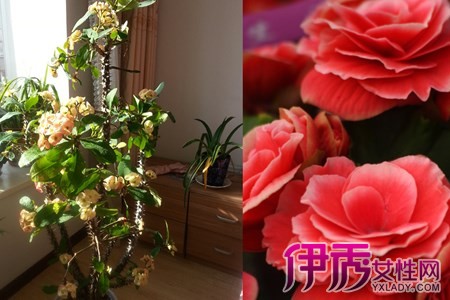
Growing pleasing green plants indoors can not only remove dust and impurities from the air, but also has a very strong ornamental effect. Many people grow green plants indoors, but when planting them, they do not understand the effects and functions of these plants, and quite a few people even fall into blind spots in indoor plant cultivation. The four-season begonia is one of the most common indoor plants.
The reason the four-season begonia is called the most suitable plant for indoor cultivation is, first, that its cultivation techniques are not too complicated; second, that it blooms in all four seasons and has great ornamental value; and third, that this flower is non-toxic and can purify the air.
The four-season begonia, with its delicate and gorgeous flowers, is a plant that many people love most. Compared with many indoor plants whose cultivation techniques are quite troublesome, it is relatively robust, and when its flowers bloom, the four-season begonia gives people a feeling of full vitality. This flower is not only suitable for indoor cultivation; placing it in meeting rooms, restaurants and other places can also give people a pleasing feeling.
Beautiful flowers must be carefully tended before they can grow more luxuriantly and become more enchanting and moving. Compared with plants whose cultivation techniques are troublesome, the cultivation techniques of the four-season begonia are very simple. When planting this plant, it is best to choose sandy soil; sandy soil is most conducive to its growth. This plant is not drought-tolerant, so in the hot summer it must be given a shaded place. In the cold winter it should be moved to a warm place; the winter climate is cold, and placing it on a windowsill is not conducive to its growth.
When growing this plant, in addition to understanding its cultivation techniques and key points, you should also understand the precautions. When fertilizing this plant, be sure to choose organic phosphorus fertilizer; the amount of fertilizer should not be too much, nor should you go a long time without fertilizing, as long-term lack of nutrients will lead to the death of the plant. When watering it, be sure to strictly control the amount of water; water in a timely manner and not too much, and keep the soil moist for a long time.
What to do when the leaves of the crown of thorns turn yellow? Is the crown of thorns toxic?
The crown of thorns is a plant with beautiful flower shapes and eye-catching flower colors. Placing it at home can beautify the room and purify the air. So is the crown of thorns toxic? What should be done when the leaves of the crown of thorns turn yellow? Today we will answer this for everyone.
Introduction to the crown of thorns:
The crown of thorns, also known as qilin ci or tiehaitang, is a vine-like plant with many spines along its edges. Although the edges of the crown of thorns have spines, this does not affect people's affection for it at all; instead, the spines on its exterior have increased many people's fondness for it. As long as the temperature is guaranteed, the crown of thorns can basically bloom all year round, and it is one of the most popular ornamental plants.
The flowers of the crown of thorns are generally dark red or yellow, relatively small, and usually grow in pairs or small clusters, carrying a unique gorgeous beauty that dazzles the heart.
Reasons the leaves of the crown of thorns turn yellow:
Reason the leaves of the crown of thorns turn yellow: 1. Too much watering
The crown of thorns has succulent stems and leaves; it is not afraid of drought, but fears waterlogging. Too much watering will damage the root system and cause the leaves to turn yellow and fall off.
Solution: Reduce watering and move it to a place with ample sunlight.
Reason the leaves of the crown of thorns turn yellow: 2. Too much fertilizing
The crown of thorns does not like fertilizer. During cultivation, if too much fertilizer is applied or unfermented raw fertilizer is applied, it will burn the root system and cause the leaves to turn yellow.
Solution: Fertilize appropriately, and before fertilizing, check and understand whether the fertilizer is suitable for the growth of the crown of thorns.
Reason the leaves of the crown of thorns turn yellow: 3. Poor air
The crown of thorns has certain requirements for the surrounding growing environment and is most suited to well-ventilated places, so it is generally planted more in courtyards and on balconies. If indoor ventilation is poor and it is relatively stuffy and hot, the leaves of the crown of thorns will turn yellow.
Solution: As much as possible, do not place the crown of thorns in a relatively stuffy, unventilated place. It is best to plant it in a courtyard; after all, the crown of thorns has a certain toxicity, and for safety it is also not suitable to place it indoors.
Reason the leaves of the crown of thorns turn yellow: 4. Chemical damage
When watering the crown of thorns, if tap water is used, it should be left to sit for a few days first; otherwise, the chloride in the water is toxic to the plant and will cause the leaves of the crown of thorns to turn yellow and fall off.
The crown of thorns is easy to cultivate, and generally rarely suffers from insect pests or diseases. Moreover, its flowers are elegant and its flowering period is long, making it one of people's favorite decorative plants. However, the crown of thorns has spines, so be careful not to get pricked.
Is the crown of thorns toxic?
The crown of thorns has spines all over its body, and after it is injured it will exude a white milky sap. This sap is toxic and has a certain irritating effect on human skin and mucous membranes. If ingested by mistake, it can cause diarrhea, vomiting, dizziness and other problems. Therefore, a crown of thorns grown in the home should be stored properly to prevent children from accidentally eating it.
In fact, although the milky sap of the crown of thorns is toxic, its flower branches and stems can be used as medicine. Its nature is cool and its taste is bitter. It has slight toxicity. It has the effects of drawing out toxins and purging fire, and cooling the blood and stopping bleeding.
In addition, according to confirmation by relevant experts, the crown of thorns is one of 52 cancer-promoting plants, and it is recommended not to plant it. Research has found that the crown of thorns carries "toxins" all over its body. The crown of thorns releases an irritating, unpleasant odor, and the soil in which such plants have been grown has been detected to contain cancer-causing viruses and activating substances of chemical carcinogens. According to experts, cancer-promoting plants such as the crown of thorns contain "Epsteln-Barr virus early antigen inducer", which can induce the transformation of lymphocytes by EB virus and can promote tumor growth caused by tumor viruses or chemical carcinogens.
More informationHow the crown of thorns matches home styles
As the saying goes: "An elegant room need not be large; the fragrance of flowers need not be abundant." Placing some flowers and plants indoors, with green leaves and abundant flowers and evergreen throughout the four seasons, makes the home appear full of spring and vitality. So how should the crown of thorns be matched with the home?
The crown of thorns is also known as tiehaitang, qilin ci, and qilin hua, and is native to the island of Madagascar in Africa. Some plants can play a role in feng shui by neutralizing evil influences. If, looking out from the balcony at home, the surrounding environment is harsh, with an angled clash nearby, a street rushing straight at the home, a street curving back like a bow, or a facing temple, hospital, or public cemetery, then plants that can neutralize evil influences should be placed. The crown of thorns has the effect of protecting the home; it is a plant that neutralizes evil influences. Plants that neutralize evil influences differ from plants that generate prosperity: their stems or flower leaves have spines, and with spines they can confront external evil influences and make them retreat. The crown of thorns has dense branches and leaves and sharp spines, is easy to grow, and is also an excellent plant for neutralizing evil influences.
The crown of thorns is a horticultural hybrid of qilin hua. Its flowers and the whole plant are toxic, and the white milky sap is strongly toxic. Accidental ingestion will cause vomiting and diarrhea. It is understood that the crown of thorns carries "toxins" all over its body. The crown of thorns releases an irritating, unpleasant odor, and the soil in which such plants have been grown has been detected to contain cancer-causing viruses and activating substances of chemical carcinogens. Therefore, it is not suitable for indoor cultivation.
The crown of thorns has certain requirements for the surrounding growing environment and is most suited to well-ventilated places, so it is generally planted more in courtyards and on balconies. If indoor ventilation is poor and it is relatively stuffy and hot, the leaves of the crown of thorns will turn yellow.