When Does Clivia Bloom? A Detailed Guide to Scientific Cultivation Methods
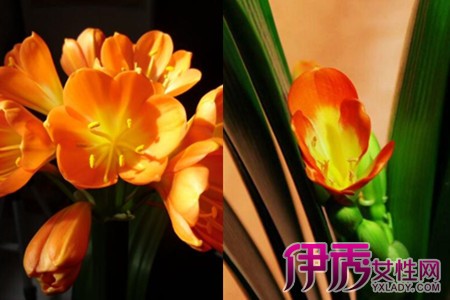
Clivia is a relatively high-end ornamental plant, and its ornamental value is very high. Do you want to know when it blooms? How should you grow it so that it blooms and the flowers look even more beautiful? Generally speaking, it can bloom all year round, but its peak blooming period is in spring and summer. For Clivia to bloom, you have to wait until its leaves grow to about 16, and only then will it bloom. It is a rather delicate plant, because it fears both heat and cold.
It is suitable for growing in a relatively humid environment, and you must never let strong sunlight shine on it. It is best to keep the temperature at 19-29°C. Once the temperature drops below 10°C or rises above 30°C, the normal growth of Clivia will be affected. Its growth requires fertile soil with good air permeability.
It is a well-known greenhouse flower, so it is generally grown indoors. Clivia's leaves are very large and thick, so they have many fine pores and hairs. They can effectively absorb harmful substances in the air.
Therefore, growing Clivia indoors is very beneficial to our health. It is a plant that is relatively suitable for growing in clay pots, because clay pots have much better air permeability than porcelain pots or plastic pots. If conditions do not allow, other flower pots can also be used instead. But in that case, you will need to be more diligent about loosening the soil for it. Normally, there is no need to fertilize Clivia too often.
If you do fertilize, you can use organic fertilizer, and a frequency of 1-2 times a year is enough. Usually, pay more attention to watering it, but do not water too much. If water accumulates, it is very likely to cause its roots to rot. In winter, when the temperature is relatively low, you must take good anti-freezing measures to prevent it from freezing to death.
Does Clivia Bloom Every Year? When Does Clivia Bloom? Are There Clivias That Do Not Bloom?
Friends who cultivate Clivia often have one worry, and that is why my Clivia does not bloom, or why did it finally bloom last year but not this year? Owners of Clivia surely want to know: does Clivia bloom every year? Or when does Clivia bloom? Also, are there Clivias that do not bloom? Do not worry, do not worry. The editor will now teach you how to make your own Clivia produce beautiful flowers.
Does Clivia Bloom Every Year?
Friends who have grown Clivia all know that Clivia is a delicate plant, and if care is even slightly inadequate, it will not bloom. But in fact, Clivia does bloom every year, and for it to bloom every year there is a necessary condition: from the seedling stage to sexual maturity, if this period is managed properly and it is given enough nutrients and other growing conditions, it will bloom. Continue to care for it carefully, and Clivia will bloom every year. If the conditions are sufficiently favorable, it will generally bloom in 1-2 years. Keep going, everyone.
When Does Clivia Bloom?
Now we know that Clivia only blooms after reaching sexual maturity, so when exactly does it bloom? It is very simple: generally, Clivia blooms after growing 20-25 leaves, and the flowering period is usually two to three months. It does not compete with the hundred flowers for splendor; its full blooming period runs from New Year's Day to the Spring Festival, mainly in spring and summer, and sometimes it also blooms in winter. If you want to extend the flowering period, you also need to care for it meticulously. Clivia must have its soil changed once a year, preferably in spring or autumn. At this time Clivia grows vigorously and will not have its growth affected by the soil change.
Are There Clivias That Do Not Bloom?
Having said so much about Clivia blooming, are there Clivias that do not bloom? Generally speaking, Clivia will bloom, so if it does not bloom, that can only mean its owner did not care for it properly. There are many reasons Clivia does not bloom. First is insufficient nutrition; different stages have different nutritional needs, and changing the soil every year is an excellent opportunity to improve its nutrition. Second is unsuitable temperature; the room temperature for cultivating Clivia is best kept at 11-17°C. Third is water imbalance; water reasonably to ensure it has sufficient nutrition and promote good plant growth. Finally, there is improper lighting. Clivia is a intermediate-day plant, and long-day conditions cannot make it bloom. It must be moved to a dark space at night; after the flower scape has emerged, it no longer matters.
Dear friends, do you now understand more about the issue of Clivia blooming?
Clivia Blooming, When Does Clivia Bloom
Clivia has an elegant posture and is enjoyable both for its flowers and its leaves, making it deeply loved by flower enthusiasts. As long as it is cared for properly, most will generally bloom. So what is the care secret to making Clivia bloom year after year?
When Does Clivia Bloom?The full blooming period runs from New Year's Day to the Spring Festival, mainly in spring and summer. It can bloom all year round, sometimes also in winter, and sometimes in summer between June and July.
Points to Make Clivia Bloom1. In summer, place the potted Clivia indoors in a cool, ventilated spot. Do not expose it to the scorching sun, do not let it get rained on, and especially do not let it get drenched by heavy rain. Otherwise, it will cause Clivia's leaves to wither, roots to rot, and flower buds to rot, which will affect growth, and Clivia will not bloom.
2. In winter, place the potted Clivia indoors in a warm, sunny spot. Take anti-freezing and warming measures. When the room temperature is 5°C, it can overwinter safely (even better if the room has air conditioning). Do not leave Clivia outdoors to suffer the cold; otherwise, the leaves will be scorched by freezing and the root system will be damaged by freezing, and it will not form buds or bloom. At the same time, the potting soil must not be too wet, and watering must not be too frequent; otherwise, it will cause Clivia's roots to rot, which will likewise affect growth and blooming.
3. In addition to the above, there is another very important point, which is the issue of soil and fertilizer. This is the key to prompting Clivia to bloom. Clivia blooms once a year and needs loose, fertile soil and plenty of nutrients. If the soil quality is poor and nutrition is insufficient, sometimes even though Clivia has grown some new leaves, it still simply will not bloom.
To solve this problem, you can buy bagged "Clivia soil" at a flower market. This kind of "bagged soil" not only has good soil quality and is rich in organic matter, which helps root aeration and drainage, but is also rich in various organic fertilizers, which can promote Clivia's leaf growth, bud formation, and blooming. After buying and using it, many Clivias grown by flower enthusiasts have bloomed one after another. It is suggested that flower enthusiasts whose Clivia has not yet bloomed can give it a try.
Clivia Blooming Pictures
Clivia Blooming Pictures
Clivia Blooming Pictures
Clivia Blooming Pictures