Bougainvillea Cutting Techniques Explained: A Step-by-Step Guide to Flower Propagation
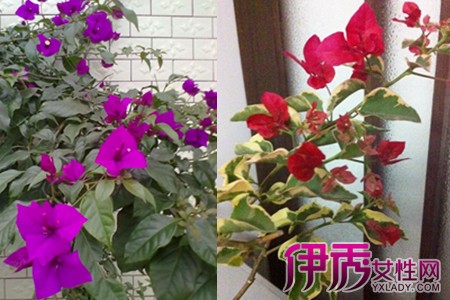
Bougainvillea is a very beautiful flower and also a relatively easy one to grow. You can generally see this flower in parks; its blooms come in a riot of colors, including purplish red, creamy white, orange yellow and bright red. There are single-petaled and double-petaled types.
Because this flower blooms very densely and beautifully, it has great ornamental value. Many people love growing this flower. This flower has three propagation methods: one is air layering, one is grafting, and one is cuttings.
Bougainvillea is a flower that roots very easily, and among its three propagation methods, cuttings are relatively simple and easy to learn. General cutting propagation requires choosing a time when survival is easy. For this flower, the period from March to June after the start of spring is very easy for survival.
When choosing stems for cutting propagation, it is best to choose branches facing the sun, and ideally the branch should have both new growth and old growth. When taking the cutting, keep a length of about 8-10 cm. Do not leave too many leaves on the cutting; three or four is enough.
For planting, you can choose a sandy loam with very good permeability, or you can choose loose-textured soil, soil containing coarse and fine sand, and so on. In addition, you can also use burned coal briquettes for rooting cuttings, or use vermiculite + perlite.
Before taking cuttings, sterilize at high temperature; sterilizing with boiling water is enough. Mix flower rooting powder according to the instructions, soak the base of the cutting in it, and then the cuttings will root a bit faster.
Insert the branch about 7-8 cm into the soil, cover it with soil, then pour on some water that has been kept in a bucket. Wrap the pot with the cuttings in plastic wrap, poke a few small ventilation holes, and place it in a spot with a little sunlight to grow.
How to Grow Roses: Rose Growing Techniques, We Teach You How to Grow Roses Step by Step
Planting a garden full of roses at home will surely make the garden romantic and sweet. Do you also want to add a garden full of roses to your beloved home? Today we bring you rose growing techniques, teaching you how to grow roses step by step.
Rose Growing Techniques
Soil Selection
Choose a site with a low groundwater table; the soil should preferably be loose, fertile, well-drained, rich in organic matter, with a deep soil layer, and neutral to slightly acidic, with an effective cultivated soil layer of 80-100 cm and a pH of 5.5-6.5. The soil must be chosen well, so that the roses that bloom will be even more delicate and alluring.
Rose Growing Techniques
Fertilizing and Watering
Roses like fertilizer. After a potted rose has settled in, apply decomposed organic liquid fertilizer once every 10 days, and during the flower bud formation stage apply some liquid fertilizer containing phosphorus and potassium. Watering should be done according to weather conditions; in hot summer, water every day, and at other times water thoroughly once the potting soil looks dry. Remember to promptly remove spent flowers after blooming.
Rose Growing Techniques
Cultivation and Management Techniques
1. Variety Selection
According to local climate conditions and market demand, choose varieties that tolerate heat in summer and autumn, tolerate low temperatures in winter and spring, and are disease-resistant and high-yielding, and reasonably arrange the proportion of flower shapes and colors. The choice of rose varieties is very important.
2. Preparation Before Planting
Soil improvement: For slightly alkaline soil, apply fully decomposed barnyard manure, compost, medicinal residue, rice husks, wood shavings and other materials combined with deep plowing to improve the soil; for slightly acidic soil, use plant ash, lime, etc. to neutralize and improve the soil; the depth of the improved soil layer should be more than 40 cm. Land preparation: make beds 1.3 m apart, with a bed surface width of 60 cm, bed height of 30-40 cm, and bed ditch width of 40 cm-50 cm; the bed surface is required to be level.
Applying base fertilizer: apply 3000 kg of fully decomposed organic fertilizer, 50 kg of superphosphate and 50 kg of compound fertilizer per mu. Soil disinfection: evenly spray 400 ml-500 ml of 40% formalin at 50 times dilution, cover with plastic film, keep sealed for 2-3 days, then uncover the plastic film and use after 2 weeks of ventilation; or spread lime powder at a dose of 30 mg/sq m-40 mg/sq m and mix thoroughly.
Seedling selection: use grafted seedlings or cutting seedlings; the seedlings should be robust and free of pathogens and pests. Cutting seedlings should preferably be replaced after 2-3 years, and grafted seedlings after 4-5 years. Planting: plant 2 rows per bed, with a plant spacing of 15 cm-25 cm and a row spacing of 40 cm. When planting, spread the plant's root system out in all directions, and the graft union should be 1 cm-2 cm above the soil surface. Planting time: it is best to plant in March-April; after planting, flowering generally begins in 6 months.
Rose Growing Techniques
Management After Planting
Summer management: prevent heatstroke and lower temperature, ventilate and remove moisture, promptly prevent drought and drain waterlogging, apply thin fertilizer frequently, strengthen pest and disease control, and prune and manage according to the non-flowering period to preserve branches and leaves. Autumn management: strengthen fertilizer and water management to promote plant growth, shift to pruning management for the flowering period, and promote the sprouting of flowering branches. Winter management: close the greenhouse to keep warm and retain moisture, so as to increase the yield and quality of cut roses; at the same time, pay attention to weather changes and ventilate in time.
Cultivation environment monitoring: place thermohygrometers at 3-5 representative points in the greenhouse, and record temperature, humidity and light intensity at regular times every day as the basis for regulating light intensity, temperature and humidity. Light intensity regulation: light should be sufficient, and the light intensity should preferably be 25000 lux-50000 lux.
Temperature and humidity regulation: the most suitable growing temperature is 24°C-26°C during the day and 14°C-16°C at night. When the temperature inside the greenhouse is higher than 28°C, promptly take cooling measures such as ventilation and shading; in winter, implement cold protection measures according to weather conditions. The most suitable relative air humidity for growth is 50%-80%.
Water management: roses are a heavy-water, heavy-fertilizer crop. Use clean water sources for irrigation, water thoroughly to settle the roots; in the first three days after planting, spray-irrigate once every day at 1-2 p.m. for 4-5 minutes each time to increase air humidity; after planting, keep the soil moist. In winter, water once every 4-6 days; in summer, water once every 2-3 days.
Nutrition management: during the stem and leaf growth period, appropriately add nitrogen fertilizer; when entering the flowering period, add phosphorus and potassium fertilizer. The ratio of nitrogen, phosphorus and potassium should be 3:1:1 during the growth period and 1:1:1 during the harvest period. Appropriately supplement trace elements, or apply more organic fertilizer with comprehensive nutrients. Apply quick-acting chemical fertilizer once every 10-15 days, and slow-release organic fertilizer once every 1.5-2 months, combining irrigation with appropriate balanced fertilization. Foliar fertilization has a good supplementary effect; during the flowering period, spray a 0.2%-0.4% potassium dihydrogen phosphate solution on the leaves.
Rose Growing Techniques
Pruning Roses
Pruning method: when pruning on branches, the cut should be flat, the cut should be above a node, the upper edge of the cut surface should be about 0.2 cm higher than the axillary bud, and the lower edge of the cut surface should be above the base of the bud, preferably at a distance of 0.5 cm-3 cm from the base of the bud.
Pruning during the non-flowering period: at any time, pay attention to cutting off dead branches, diseased and pest-infested branches, rootstock branches, crossing and densely growing branches, blind branches, spent flowers, side flower buds, etc. If the plant is in the maintenance period between the seedling stage and the flowering period, or if the plant is weak and has severe leaf drop, temporarily keep crossing and densely growing branches and blind branches to help the plant recover its vigor.
When pruning, the cut should be close to the base of the branch; do not leave a stub. For water sprouts growing from the base, depending on the differences among varieties in the sprouting ability of axillary buds, cut 0.5 cm-3 cm above a bud 30 cm-50 cm up from the base of the branch to cultivate it as a new main branch. Generally, cultivated roses have 4-7 main branches.
Conclusion:The above is the detailed rose growing technique introduced for readers. By cultivating roses according to the above methods, your garden will surely be unrealistically beautiful. As long as you carefully care for your roses, you will surely be able to let the fragrance of roses fill the whole garden. For more home improvement information, you can also visit Aiyouwo website.
Recommended Reading:
|Language of Red Roses|Formaldehyde-Removing Plants|Effects of Pothos Flowers|Efficacy and Effects of Hangzhou White Chrysanthemum|When Does the Lotus Bloom|
|Efficacy and Effects of Jasmine Tea|Pictures of the Happiness Tree|Effects of Lavender|Language of the Little Daisy|Efficacy of Kunlun Snow Chrysanthemum|
|How to Grow Guzmania|How to Grow Clivia|How to Grow Ivy|Ginkgo Tree Planting|Orchid Varieties|
|Are Carnations Easy to Grow|How to Grow Bougainvillea|Efficacy and Effects of Yellow Chrysanthemum|Language of Gesang Flowers|Is Calla Lily Poisonous|
|What Plants Absorb Formaldehyde|Pictures of Potted Flowers|Efficacy of Jasmine Tea|Efficacy and Effects of Banksia Rose|Hydroponic Lucky Bamboo|