How do you care for a pothos? Master the method and say goodbye to yellow leaves, dryness and root rot
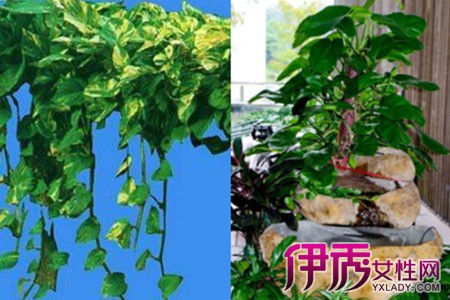
Pothos does not have very high requirements for its growing environment; as long as you master the care methods that pothos itself needs, your pothos will become very lush. First, when choosing a new flower pot, pay attention to choosing one with several holes in the bottom; pothos itself is a plant that loves water. A few more holes give good airflow, and the water sitting on the saucer can be absorbed by the pothos itself.
After finding a suitable pot, you need suitable potting soil; do not use stiff loess clay, as loess itself is very stiff and has a big impact on pothos taking root. If the roots do not grow well, the leaves will hardly be lush. The kind of soil under trees where leaves have rotted and fermented is very good, very suitable for pothos growth, and it is also loose.
After putting the soil in the flower pot, you can insert the selected pothos cuttings into the pot, inserting them in a circle. Once they grow long, you can place them in a high spot, and they look very beautiful, just like spider plants. After planting, be sure to water thoroughly; pothos leaves quickly turn yellow and dry out without water.
After watering, you can place the pothos indoors, because the cuttings have not yet grown roots at first, so do not expose them to too strong sunlight, otherwise the leaves are prone to wilting. Water about once every 1-2 days; only then can pothos grow faster. Pothos can also be grown in water, which is also a good method, but when growing it in water, be sure to pay attention to changing the water.
When growing it in water, be sure not to use rice-washing water, as it will prevent the pothos roots from growing and may even cause rot. Growing it in water also looks very beautiful on a table at home, and you can even keep two small fish in it. These are both methods for growing pothos.
What should you do if your plants' roots rot?
Actually, when houseplants die for no apparent reason,
99% of the time it is because of root rot
It is just that in the early stages of root rot, it cannot be detected
Of course, once the roots have rotted, you cannot just let them die
Let me teach you how to prevent and deal with it!
Pothos
Pothos grows well in summer, and everyone has a pot at home, but if pothos is watered too much in summer, it is also very prone to root rot. If you see the pothos leaves turning yellow and wilting, be sure to part the leaves and check the stems and roots. If you find they have gone soft, then the roots have rotted.
01
/ / /
What should you do about root rot?
Dig the pothos out of the flower pot, remove the soil, and wash the roots. Cut off all the blackened and softened roots of the pothos. If the stems of the pothos are also rotting, then cut off all the rotten stems and roots, leaving only the healthy ones.
Then soak the trimmed pothos in carbendazim or another disinfectant solution for 3-5 minutes, then take it out and let it dry for half an hour.
Replant the pothos stems into soil or a hydroponic bottle; the soil must be clean and free of pathogens. You can also cut old clothes into strips to use in the soil to help the pothos take root. For the newly planted pothos, spray the soil surface moist, do not water it completely through, and keep it in a cool, ventilated place for care.
02
/ / /
How do you care for pothos?
Do not overwater pothos in summer. Water again only when you touch the surface soil and find it dry and pale, and do not let water accumulate in the pot. Choose the right time to water; water in the morning and evening, not at noon.
When growing pothos in summer, pay attention to ventilation. Be sure to open the windows every day to let excess moisture escape, and naturally there will be less root rot. At the same time, never fertilize pothos in summer!
Clivia
Clivia can be said to be a plant that everyone loves. Its steady yet beautiful shape, its relatively easy-to-grow nature, and its evergreen appearance all make it deeply loved by plant growers.
But clivia is also very prone to root rot, especially in summer. If you find that your clivia suddenly turns yellow and its leaves become thin, it is most likely root rot. You can poke the leaves and roots to see whether they have gone soft.
01
/ / /
What should you do about root rot?
If clivia has root rot, immediately take the plant out of the pot, replace the soil that has already been infected by bacteria, and keep only the plant's roots.
Then wash the roots clean and cut off the roots that have already rotted, leaving the healthy parts.
Next, spray some disinfectant on the roots; you can use potassium permanganate or carbendazim, both of which can be bought at flower shops and pharmacies!
Then coat the wounds with charcoal powder or fine ash, and put it outdoors in the sun for about 10 minutes, using ultraviolet light to sterilize. Then replant it into healthy soil. If you act in time, clivia can most likely be saved; if you let it wither and yellow, it is done for!
02
/ / /
How do you care for clivia?
When caring for clivia, be sure not to let the temperature get too high or the ventilation be poor, as this makes root rot very likely.
When growing clivia in summer, be sure to water less; too much watering easily causes rot! When the roots are injured, root rot is also likely. When repotting, be sure to apply some charcoal or fine ash to broken wounds and let them dry.
For growing clivia, it is best to use a ceramic pot; porcelain pots and plastic pots may cause root rot because of poor airflow and drainage.
Lucky Bamboo
Many people like to grow lucky bamboo at home. It also carries the meaning of wealth and well-being, and it looks very nice. Although it has strong vitality, people often complain that they accidentally killed it.
If you find that the lucky bamboo you are growing at home has drooping leaves and yellow leaves, take it out and check whether the roots have turned black and soft. If so, then the roots have rotted, and you must treat it quickly!
01
/ / /
What should you do about root rot?
Cut off the rotting, softened and foul-smelling roots with scissors.
If all the roots have rotted,
then cut off the entire rooting area,
until the cut surface is fresh and healthy.
Then apply some carbendazim or potassium permanganate to the wounds of the lucky bamboo.
Also wipe the stems with carbendazim solution,
then place it in a cool, ventilated place to dry for half an hour.
Pour out the water from the original hydroponic bottle or the soil from the pot,
then wash the vase and flower pot clean with boiling water,
to avoid root rot happening again.
Plant it back, and the lucky bamboo will be thriving again!
02
/ / /
How do you care for lucky bamboo?
Lucky bamboo needs frequent water changes to avoid the water becoming cloudy,
breeding bacteria, and causing foul odors and root rot.
Put a little aspirin powder or salt into the hydroponic bottle;
both can sterilize and disinfect, keep the water clean,
speed up the growth of lucky bamboo, and prevent root rot.
Lucky bamboo should avoid direct sunlight to prevent the water temperature from getting too high,
which would lead to root rot. Just place it indoors normally.
Do not fertilize lucky bamboo in summer;
fertilizing once a month is enough.
Too much instead easily burns the roots and causes root rot.
Succulents
Everyone thinks succulents are easy to grow,
but summer is the season when they are most likely to die.
With one careless move, a succulent can meet its end.
Once you see succulent leaves drying out, turning yellow or black,
or dropping off, you must be very careful: could it be root rot?
01
/ / /
What should you do about root rot?
After taking the succulent out of the flower pot, shake off the soil,
then cut off the rotted roots,
dry it in the sun for half a day, then replant it into the soil.
Be sure not to water it; wait until it grows roots, then water thoroughly.
If most of the stem has turned black,
we should quickly remove those healthy leaves for cuttings.
Choose ones that have not been infected by pathogens,
plump and intact stems and leaves.
After removing them, let them dry for 2 days in a bright, ventilated place,
then lay them flat on the soil surface or insert them at a 45-degree angle.
02
/ / /
How do you care for succulents?
In summer, succulents must be watered less,
especially when the temperature exceeds 30 degrees Celsius.
Cut off water entirely. If the succulent is really too dry,
you can water a little along the edge of the pot at night.
In summer, be sure to give succulents shade.
Do not let them bake in the sun outdoors, and do not let them get rained on.
Succulents grown indoors are very prone to black rot because of poor ventilation,
so open the windows for ventilation every day.
Once a succulent rots, be sure to repot it in time;
the survival rate is as high as 90%!
Spider Plants, Snake Plants
Spider plants and snake plants both have fleshy roots,
with strong water storage capacity. Poor ventilation, overwatering,
and excessive temperature can all lead to root rot.
If the root and stem area of a spider plant turns black,
you need to check whether the roots have rotted.
01
/ / /
What should you do about root rot?
Dig out the spider plant's root system and check the extent of the rot.
If the roots are completely rotted and softened,
then there is no saving it; just throw it away.
If only part of the root system has rotted, then it can still be saved.
Cut off the rotted and softened roots,
soak them in carbendazim or potassium permanganate solution for 5-10 minutes,
then take them out and let them dry for 15-20 minutes.
Do not keep the original soil; replace it with new soil,
then replant the spider plant into the pot,
place it in a bright, ventilated place for care,
and spray the leaf surfaces with water 1-2 times a day.
02
/ / /
How do you care for spider plants?
Spider plants and snake plants both have fleshy roots like radishes,
with very strong water storage capacity, so they are also relatively drought-tolerant.
In summer, watering once every 1-2 weeks is enough.
Only water when the soil in the pot has dried completely.
If it is not dry, never water it, and do not water too much when you do.
Also, it is best to control water in time.
Plants kept at home such as spider plants and snake plants also need good ventilation.
Do not shut them up in a hot, humid little room or greenhouse,
as that easily causes root rot.
These methods for saving flowers from root rot
are actually much the same
Many flowers also have similar symptoms and methods
Take a look at the other flowers at home too!
Growers of pothos, pay attention: grow it this way for crazy growth and no yellowing
No yellow leaves
Too much light
Many people like to put pothos on a south-facing windowsill, or hang it on a balcony to let it trail down. But pothos likes a semi-shady environment, and long-term direct sunlight will make pothos wilt, turn yellow, and look listless.
Solution: Pothos is suited to a north-facing windowsill, or a spot indoors with bright light, and should not be exposed to direct sunlight for long periods.
(Author: Xiangfeideyu Source: Sina Blog)
Improper watering
Watering is a big deal for every plant grower. If the leaves of pothos are dull yellow and the new shoots are shrunken, it may be overwatering; if the leaf edges are dry and withered, with new leaves normal but old leaves turning yellow and dropping, it may be underwatering.
(Author: Yu Yongchang Source: Sina Blog)
Solution: When overwatered, place the pothos in a ventilated spot and loosen the soil without damaging the roots.
When underwatered, first give the pothos a small amount of water, and after the leaves unfurl, increase the amount of water.
Dry air
Pothos likes humidity. Indoors, especially in air-conditioned rooms, if the air stays dry for a long time, it can also cause the leaf edges of pothos to turn withered and yellow.
(Author: lumpyseven Source: Baidu Zhidao)
Solution: Wipe the leaves of the pothos often and mist around the plant.
(Source: Baidu Zhidao)
Wiping leaves with beer
Beer releases carbon dioxide as it evaporates, which can promote plant photosynthesis. Dilute beer with water at a ratio of 1:50, then wipe the leaves of the pothos, and it will keep the leaves emerald green and glossy.
Fast growth
Liquid fertilizer
If you want pothos to grow fast, the most important thing is to ensure nutrition, so you need to fertilize the pothos.
How to do it: Dilute organic liquid fertilizer with water at a ratio of 1:2000, then pour it along with water when watering to supplement nutrients for the pothos. Use it about once a month.
Granular fertilizer
Gardeners who do not have liquid fertilizer can also choose to use granular fertilizer; compound fertilizer, slow-release fertilizer, and the like all work.
How to do it: Poke a small hole in the surface of the pothos potting soil, drop in twenty-some granules of fertilizer, cover them with soil, and water.
Base fertilizer
After root trimming and repotting the pothos, you cannot fertilize it for a short time, so where do the nutrients for the pothos come from during this period? First, fertile soil; second, base fertilizer.
(Author: Guan'er de Er Source: Baidu Tieba)
How to do it: Spread a layer of organic fertilizer at the bottom of the pothos pot, cover it with soil, then pot the pothos, and be careful that the roots do not touch the base fertilizer.
(Author: Duniang Caijuan he Chufang Source: Baidu Jingyan)
Rice water
Rice water is rich in nitrogen and trace elements and can provide nutrients for pothos. It is a free homemade flower fertilizer. After many gardeners watered their plants with diluted rice water, their pothos grew like crazy.
(Author: Linju Lu Source: NetEase Blog)
How to do it: A small amount of rice water can be used directly, but a large amount of rice water needs to be fermented first. Put the rice water into a sealed bottle, add some orange peel to remove the odor, and leave it in the sun for about 1 month to ferment successfully.
(Author: chenminyang197 Source: Sichuan Zhongjiang Huayou Ba)
Tips
Covering the wall
If you want pothos to cover the wall, be sure to try fixing the stems and leaves of the pothos, using tape or other items to secure the stems and leaves to the wall, so the pothos will keep growing the way you want.
No root rot
For pothos to avoid root rot, the most important thing is loose, breathable soil; the best soil mix is leaf mold with 30% vermiculite added (perlite and other granular soils also work).
Second, place the pothos in a ventilated spot, such as a north-facing windowsill, north-facing balcony, or an open indoor area.
Clever watering
If you do not know when to water the pothos, insert a small toothpick into the potting soil, about 3 or 4 cm deep. When you want to water, take out the toothpick and check it; if the part of the toothpick that was under the soil has dried, that means it is time to water.
Gardeners, have you learned it?