How to Grow Peonies? A Plant Expert Teaches You the Correct Care Methods
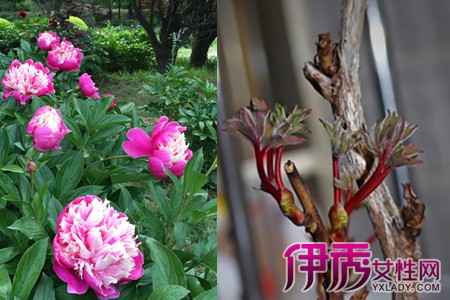
Peony is a highly ornamental garden plant. Its flowers are large and gorgeous, and when in full bloom they give a feeling of infinite vitality, making it very suitable for planting in gardens and courtyards. However, peony cultivation has certain requirements for the environment, so great care must be taken when growing them. So what exactly are the specific planting and care methods for peonies? After reading this article, go plant a few and give it a try.
Peonies are grown using the seedling cultivation method. First, the soil must be selected; only when the base soil is chosen correctly will the peony seedlings have nutrients to grow. The soil peonies need is fertile, loose humus soil or sandy soil; both types of soil are fairly rich in nutrients and have good drainage. Pour the selected soil into a flower pot about 50 cm wide. Note that before adding the soil, you should lay a few pieces of tile or sprinkle some gravel at the bottom of the pot, which helps accumulated water drain out of the pot smoothly.
Next, you need to purchase peony seedlings. Choose seedlings with many branches and stems of a certain firmness; this type of seedling can adapt to the environment more quickly after planting and is more likely to survive.
Pay attention to whether the seedling's leaves are flat and emerald green. If the leaves are soft and tend to wither, they are not suitable for planting, because such seedlings absorb nutrients too slowly and have a low survival rate. After planting the peony seedlings, be sure to replenish water in time, generally watering once every 2 weeks. The amount of water each time should not be too much; too much will cause the soil to become overly moist and rot the peony's rhizome.
Peonies are plants that greatly love fertilizer and light, so you must ensure sufficient fertilizer and sunlight. You can keep the habit of applying a compound fertilizer once a month to peonies. On sunny days, place the peony on a balcony to receive sunlight so it can fully synthesize the nutrients needed for growth. If peonies are planted directly in a courtyard, pay attention during rainstorm weather.
The Complete Guide to Peony Propagation Methods - Teaching You How to Propagate Peonies Correctly
Peony is a very famous ornamental flower variety, with large flowers and brilliant colors, very eye-catching. Many people like to display it at home to beautify the home environment. Peony is a very popular flower, so it is also cultivated and planted relatively often. Today, the editor will talk with everyone about peony propagation methods:
Click for more>> Peony flower pictures
Peony propagation methods:
Peony propagation methods: 1. Division method
The division method is the most commonly used propagation method for peonies. Seedling production in peony-producing areas basically uses this method for propagation. It has three advantages: first, it flowers earlier than the sowing method; seeded seedlings flower in 4 to 5 years, while divided seedlings can flower the following year; second, the division operation is simple and easy, saves labor in management, and is conducive to widespread application; third, it can maintain the excellent traits of the original variety. The disadvantage is that the propagation coefficient is low. A three-year-old mother plant can only be divided into 3 to 5 daughter plants, making it difficult to adapt to and meet the needs of modern large-scale production and the continuously rapidly growing domestic and international flower market. This has always been a major problem troubling peony seedling production.
Peony propagation methods: 2. Sowing method
Seeds should preferably be sown immediately after collection. As the sowing time is delayed, the seed moisture content decreases and the germination rate declines. The seeds have the characteristic of double dormancy of the epicotyl and hypocotyl. After sowing, the autumn soil temperature causes the seed's hypocotyl to break dormancy, and the radicle develops and roots. The better the rooting in the current year, the more vigorous the growth the following year; if sowing is too late, the ground temperature cannot break the hypocotyl dormancy, rooting cannot occur, and the germination rate in the following spring is greatly reduced. After sowing in autumn and rooting, undergoing a long period of low temperature in winter can break the epicotyl dormancy. When the temperature rises in the following spring and the humidity is suitable, the plumule emerges from the soil.
Peony propagation methods: 3. Cutting method
Choose a nursery site with higher terrain and good drainage as the cutting bed. After loosening the bed soil, spread a 15 cm thick layer of river sand, and the river sand should be disinfected with 0.5% potassium permanganate. The cutting substrate can also use vermiculite or perlite. Build a shade shed 1.5 m high over the bed. According to experience in Changchun and other places, taking cuttings in mid-July gives the best results. The cuttings are 10 to 15 cm long, with two nodes; keep a small amount of leaves on the upper compound leaf; cut off the lower compound leaf together with its petiole. After quickly dipping in a 500×10 to 1000×10 naphthalene acetic acid or indole acetic acid solution, insert for cuttings at a depth of about 5 cm, with spacing such that the leaves do not overlap each other. After insertion, water thoroughly, then cover with a plastic shed. According to observation, the rooting effect is best when the substrate temperature is 28 to 30°C and the humidity is 50%. Maintaining a temperature of 20 to 25°C and humidity of 80% to 90% in the cutting shed, roots can form 20 to 30 days after insertion, and dormant buds form. After rooting, reduce spraying and watering, and gradually remove the plastic shed and shade shed. Cutting seedlings grow slowly and need to be covered with soil in the bed to overwinter, then moved to open-field planting in the following spring.
Peony propagation methods: 4. Root cutting method
Use the broken roots from autumn division of peonies, cut them into 5 to 10 cm root segments, insert them into a deeply plowed and leveled trench 10 to 15 cm deep, cover with 5 to 10 cm of fine soil, and water thoroughly.
Peony propagation methods: 5. Layering method
In spring, take the young shoots that have just emerged from the soil and pass them through the drainage hole of a flower pot into a pot with a diameter of 15 to 20 cm. Gradually fill with soil as they grow, keeping the pot soil moist. By summer they will have rooted. Before winter, cut off the stem below the pot, and a potted peony is formed.
Peony propagation methods: 6. Modern tissue culture method
Plant tissue culture, namely plant aseptic culture technology, is based on the theory that plant cells have totipotency. It uses isolated organs, tissues or cells of peonies (such as roots, stems, leaves, etc.) under aseptic conditions and suitable artificial culture medium, light, temperature and other conditions to induce callus, adventitious buds and adventitious roots, and finally form a complete plant with the same hereditary characteristics as the mother plant. This technology is also called cloning technology, achieves the purpose of rapid propagation, and has wide application value.
There are mainly six propagation methods for peonies, among which the division method is the most commonly used. It can maintain the excellence of the variety and is also relatively simple. If everyone wants to propagate the peonies in their home, this method is relatively good.
Peony Planting Methods_How to Grow Peonies
Peony, also known by the aliases Jiangli and Licao, is a famous herbaceous flower of the genus Paeonia in the family Paeoniaceae. In daily life, how should this flower be planted? Below are the peony planting methods we have compiled, and we hope they are helpful to everyone!
Peony planting methods
1. Seed collection
When the follicle fruit turns yellow, it can be harvested. If too early, the seeds are not ripe; if too late, the seed coat turns black and hard, making emergence difficult. Fruits mature at different times, so harvest in batches. Once the fruit skin cracks and releases the seeds, they can be sown. Do not expose the seeds to the sun, as this hardens the seed coat and affects emergence. If they cannot be sown in time, they can be stored in sand with moisture retention, but they must be taken out and sown before the seeds root.
2. Sowing time
Peonies must be sown in time in the same year the seeds are collected. For example, in the Heze area, sowing is done from late August to late September. If later than late September, they cannot root in the current year, and the germination rate in the following spring will be greatly reduced; moreover, even if they emerge, because the seedling root system is not well developed, it is difficult for them to resist spring drought and they easily die. Therefore, several spring sowing experiments in Heze all failed.
3. Sowing method
Seed treatment: Before sowing, remove shriveled seeds and impurities from the seeds to be sown, then use water selection to remove unfilled seeds. Although the seed coat of peony is thinner than that of tree peony and absorbs water and sprouts relatively easily, if seed treatment is carried out before sowing, germination will be more uniform and the germination rate will be greatly increased, often reaching more than 80%. The method is to soak the seeds in 50°C warm water for 24 hours, then take them out and sow immediately.
Bed preparation and sowing: The land used for sowing and raising seedlings should be given sufficient base fertilizer, then deeply plowed and leveled. If the soil is relatively moist and suitable for sowing, beds can be made directly for sowing; if the soil moisture is poor, irrigate fully first, then make beds and sow. The bed width is about 50 cm, with 30 cm between beds. Sow seeds in holes with a row spacing of 6 cm and a seed spacing of 3 cm; if there are enough seeds, broadcast sowing can be used with a seed spacing of no less than 3 cm; after sowing, cover with moist soil about 2 cm thick. About 50 kg of seed is used per 666.7 sq m, or about 100 kg for broadcast sowing. After sowing, cover with plastic film and remove it after the seedlings emerge in the following spring. Drill sowing can also be used, with a row spacing of 40 cm and a seed spacing of 3 cm, covering with 5 to 6 cm of soil; or hole sowing, with a hole spacing of 20 to 30 cm, placing 4 to 5 seeds per hole, then piling 10 to 20 cm of soil after sowing to help prevent cold and preserve soil moisture. Rake level before emergence in the following spring.
Peony planting management
1. Land requirements
Choose a planting site with high, dry terrain and good drainage, requiring deep soil layers and loose, fertile sandy loam. When planting in sections with relatively heavy salinity and alkalinity, soil replacement is needed; when planting in lower-lying areas, build raised platforms, and there should be sufficient clean irrigation water sources. Peonies avoid continuous cropping. Field cultivation generally rotates once every 3 to 4 years, otherwise growth weakens and pests and diseases become severe. When rotation cannot be carried out on time due to land limitations, deep plowing should be carried out 1-2 months before planting. To a depth of 60 to 100 cm, apply 1500 to 2000 kg of decomposed manure or 200 to 250 kg of cake fertilizer per 666.7 sq m. Remember not to apply undecomposed raw fertilizer.
2. Suitable planting period
Whether for seeded seedlings or divided seedlings, planting in Heze is from late August (End of Heat) to late September (Autumn Equinox), and in Yangzhou from late September (Autumn Equinox) to early November (Start of Winter). It is generally combined with division.
3. Planting specifications
For ornamental garden cultivation, the plant and row spacing can be 1 m × 1 m, and the planting points can be arranged in a “pinwheel shape.” This kind of planting can use the land evenly and reasonably and is conducive to uniform plant growth, but field operations are sometimes inconvenient. For the convenience of field management and observation records, the horizontal and vertical row “square” arrangement is often used. The specifications of the planting hole are about 35 cm deep, with an upper opening diameter of 18 cm. When digging the hole, it should be narrower at the top and wider at the bottom. For ornamental cultivation and propagation, thick roots are not removed. For medicinal cultivation, rooted forced seedlings are used (the practice in Dongyang, Zhejiang), with the hole about 25 cm. If directly planting the rootless peony crown, the depth can be even shallower.
Peony propagation methods
1. Cutting method: Choose a nursery site with higher terrain and good drainage as the cutting bed. After loosening the bed soil, spread a 15 cm thick layer of river sand, and the river sand should be disinfected with 0.5% potassium permanganate. The cutting substrate can also use vermiculite or perlite. Build a shade shed 1.5 m high over the bed. According to experience in Changchun and other places, taking cuttings in mid-July gives the best results. The cuttings are 10 to 15 cm long, with two nodes; keep a small amount of leaves on the upper compound leaf; cut off the lower compound leaf together with its petiole. After quickly dipping in a 500×10 to 1000×10 naphthalene acetic acid or indole acetic acid solution, insert for cuttings at a depth of about 5 cm, with spacing such that the leaves do not overlap each other. After insertion, water thoroughly, then cover with a plastic shed. According to observation, the rooting effect is best when the substrate temperature is 28 to 30°C and the humidity is 50%. Maintaining a temperature of 20 to 25°C and humidity of 80% to 90% in the cutting shed, roots can form 20 to 30 days after insertion, and dormant buds form. After rooting, reduce spraying and watering, and gradually remove the plastic shed and shade shed. Cutting seedlings grow slowly and need to be covered with soil in the bed to overwinter, then moved to open-field planting in the following spring.
2. Root cutting method: Use the broken roots from autumn division of peonies, cut them into 5 to 10 cm root segments, insert them into a deeply plowed and leveled trench 10 to 15 cm deep, cover with 5 to 10 cm of fine soil, and water thoroughly.
3. Layering method: In spring, take the young shoots that have just emerged from the soil and pass them through the drainage hole of a flower pot into a pot with a diameter of 15 to 20 cm. Gradually fill with soil as they grow, keeping the pot soil moist. By summer they will have rooted. Before winter, cut off the stem below the pot, and a potted peony is formed.
4. Modern tissue culture method: Plant tissue culture, namely plant aseptic culture technology, is based on the theory that plant cells have totipotency. It uses isolated organs, tissues or cells of peonies (such as roots, stems, leaves, etc.) under aseptic conditions and suitable artificial culture medium, light, temperature and other conditions to induce callus, adventitious buds and adventitious roots, and finally form a complete plant with the same hereditary characteristics as the mother plant. This technology is also called cloning technology, achieves the purpose of rapid propagation, and has wide application value.
Pest and disease control in peony planting
1. Scarab beetles
Pest species and damage conditions: There are many kinds of scarab beetles that harm peonies, such as the black velvet chafer, the apple green chafer, the yellow-haired chafer, etc. Their adults harm peony leaves and flowers; the larvae, white grubs, have a body nearly cylindrical, curved into a “C” shape, milky white, with a yellow-brown head, 3 pairs of thoracic legs, and no abdominal legs. They feed on peony roots, and the wounds they cause create conditions for Fusarium infection, leading to root rot.
2. Scale insects
(1) Pests and damage conditions: Scale insects are also called scales. There are several kinds of scale insects that harm peonies, such as the cottony cushion scale, the Japanese wax scale, the white peach scale, the mulberry white scale, the peony round scale, the arrowhead scale, etc.
Scale insects suck the body fluids of peonies, making the plants grow weakly and the branches and leaves turn yellow.
(2) Control methods
① Strengthen quarantine and strictly prevent the introduction of insect-infested seedlings
② Protect and utilize natural enemies.
③ Seize the peak hatching period of eggs for spraying. Newly hatched insects have not yet developed a waxy layer on the surface and are easy to kill. Spray 40% omethoate 1000 to 1500 times dilution, or 50% malathion emulsion 800 to 1000 times dilution, or 50% phoxim emulsion 1000 to 2000 times dilution. Spray evenly and cover the whole plant. Spraying is ineffective after the waxy shell has formed.
④ Pour carbofuran solution at the root zone. The plant absorbs the pesticide, and the insects are poisoned after sucking the plant's body fluids.
⑤ When individual branches are found to be harmed by scale insects, they can be brushed off with a soft brush, or the infested branches can be cut off and burned.
3. Aphids
(1) Damage conditions: Aphids commonly harm peonies. After peonies sprout in spring, aphids fly in to do harm, sucking the sap of the leaves, causing the damaged leaves to curl and turn yellow. After the seedlings grow, aphids often gather on young shoots, flower stalks, and the backs of leaves, causing the stems and leaves of the flower seedlings to curl and shrink, and even the whole plant to wither and die.
(2) Occurrence pattern: Under high temperature and dry conditions, aphids reproduce quickly and cause severe damage. Aphids can reproduce several generations, even twenty or thirty generations, in 1 year. Aphids secrete honeydew, which can hinder the physiological activities of the stems and leaves of the damaged plants; at the same time, the honeydew is also a good culture medium for pathogens, often causing sooty mold and other diseases; aphids can also transmit viral diseases.
(3) Control methods
① Clear overwintering weeds.
② Protect and utilize natural enemies. The main natural enemies include the multicolored Asian lady beetle, the seven-spotted lady beetle, the yellow-spotted lady beetle, the tortoise-shell lady beetle, hoverflies and green lacewings, etc.
③ Spray 40% dimethoate emulsion 1000 to 1500 times dilution, or 80% dichlorvos 1500 to 2000 times dilution, or 50% menazon emulsion 1000 to 1500 times dilution.