How to grow Hippeastrum (Amaryllis) and the points to note - become an expert flower grower
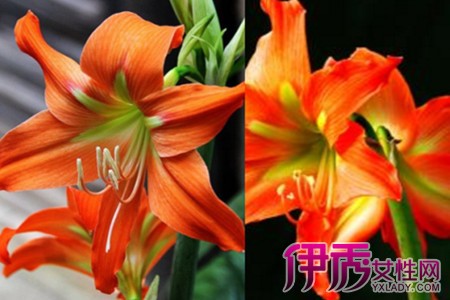
Many people really love the flowers that Hippeastrum produces, but when growing it they always say it does not grow well, with problems like root rot or yellow leaves. In fact, growing Hippeastrum is not difficult; it is just that every kind of flower and plant has its own habits, and choosing the soil is a very important step. Many people just casually put some soil into the pot and think that is enough. Actually, to grow flowers well you need to find suitable soil. Going under trees to find manure soil made of rotted branches and leaves is very good; this kind of soil is very nutritious.
After finding suitable soil, you can choose a suitable flower pot. It is better to choose a slightly larger pot so you can put in more soil, which allows the roots to grow well. Also, you must change the soil for the Hippeastrum once every year. Otherwise, the roots of the Hippeastrum will wind around the soil very tightly, and then nutrients cannot be supplied.
After pouring the soil into the pot, you can plant the Hippeastrum, then press down firmly a few times to make it more solid before you start watering. The first watering should be generous, otherwise if the soil inside is especially dry the plant will wilt.
After planting, do not put it outdoors; the large temperature difference between day and night outdoors is not suitable for the growth of a newly planted flower. You can put it in a ventilated place indoors, and after about half a month it will more or less grow normally. You can then appropriately place it in a sunny spot, but do not take it outside for direct sun exposure. If it has been indoors for a long time the flower is rather tender, and direct sun exposure will certainly burn it to death.
Once it has survived, watering about once every 3-5 days is enough. Do not water too much; if you water too much the flower easily gets yellow leaves, and it will also affect the flowering period. If you master this, the Hippeastrum can normally bloom in the second year, and when it blooms, placing it indoors means it will not fade quickly.
Master the growing methods and points to note for Hippeastrum to grow the flowers more luxuriantly
Every kind of flower has requirements for its growing environment. For growing Hippeastrum, you must first choose suitable soil. If there is no soil nearby, you can go to a place that sells flowers to buy it; a bag of about 10 jin costs only around 3 yuan. This kind of soil is soft, not as hard as loess, and is very helpful for root growth. Soil that is too hard will affect root growth and may even cause root rot.
Then find a suitable flower pot. It is better to choose a relatively deep pot, because the roots of Hippeastrum are very long; if the pot is too shallow it will affect the development of the Hippeastrum's roots. A pot with a hole in the bottom is more suitable.
After preparing the flower pot and soil, you can start planting. Put more than half of the soil into the pot, then place the prepared Hippeastrum in the middle of the pot; do not plant it crooked. Then fill it to the top, and afterward press down hard a few times with your hands so it is very firm. If you do not press it a few times, it will easily fall over when you water it, and then you have to stand it up again, getting a lot of mud on your hands, which is very troublesome.
After planting, start watering. Because the soil in the pot is dry soil, you must water thoroughly, otherwise the roots cannot absorb water and it cannot survive. The flower will become wilted, and it is very hard for it to recover to normal. After watering, place it on the ground to let it seep for a few minutes, then you can move it indoors, because the indoor temperature is relatively stable. A newly planted one should be kept indoors for half a month, and after that it will more or less have adjusted.
It should be placed in a ventilated, sunny spot. When Hippeastrum is forming buds it easily attracts small white flying insects, and at this time you must remember to spray insecticide. Otherwise the buds will drop. After spraying the pesticide, do not expose it to strong sun, otherwise it will affect the effectiveness of the pesticide.
Growing methods and points to note for Hippeastrum - the flower language of Hippeastrum
Hippeastrum flowers are large and the flower colors are gorgeous, with very high ornamental value. Today we will take you to learn about the growing methods and points to note for Hippeastrum, as well as the flower language of Hippeastrum.
Growing methods for Hippeastrum:
1. Soil: Hippeastrum requires loose, fertile sandy loam for planting, with a pH of 5.5-6.5. Absolutely avoid waterlogging. The potting soil can be made by mixing 2 parts decomposed barnyard manure soil, 6 parts leaf mold, and 2 parts sandy soil evenly.
2. Watering: Hippeastrum needs to keep the plant moist, and watering should be thorough. But avoid too much water and poor drainage. Generally, indoor air humidity is enough.
3. Sunlight: Hippeastrum likes sunlight and can take a moderate amount of direct sunlight, but not for too long. It is best placed by a window with bright light, good ventilation, and no strong direct sunlight.
4. Temperature: Hippeastrum likes warmth and is not cold-tolerant. In summer it should be cool, with a suitable temperature of 18-22°C. During the winter dormant period it requires a cool, dry environment, and the temperature must not be lower than 5°C.
5. Fertilizing: Hippeastrum likes fertilizer. When the leaves grow to 5-6 cm long, start applying top dressing. Generally apply decomposed cake fertilizer water once every half a month. After flowering, change to applying it about once every 20 days to promote bulb enlargement and the production of new bulbs.
6. Pests: To make Hippeastrum grow vigorously and bloom early, pest and disease control should be carried out, spraying flower pesticide once a month. Spraying flower pesticide should be done on clear days around 9 a.m. and 4 p.m. Do not spray under the strong midday sun, to prevent pesticide damage.
7. Pruning: Hippeastrum grows fast, and its leaves are long and dense. When repotting and changing soil, also cut off withered leaves, dead roots, and roots and leaves affected by pests and diseases, leaving vigorous leaves.
Points to note when growing Hippeastrum:
What needs special attention in growing is still temperature and light. Hippeastrum is not cold-tolerant and does not like high temperatures, so when growing it you should pay attention to observing temperature changes. The temperature requirement is that the minimum should not be lower than 5°C. Keep humidity but be careful to avoid direct sunlight, otherwise it will harm the plant.
The flower language of Hippeastrum:
The flower color of Hippeastrum is bright red, mixed with elegant green. It has both the grand feel of peony and the plain, light elegance of orchid, combining refined and popular appeal in one. The flower language of Hippeastrum is the longing to be loved and the pursuit of love, symbolizing an unyielding pursuit of love.