Four key aspects of growing Yunnan orchids: the more you care, the more beautiful they become
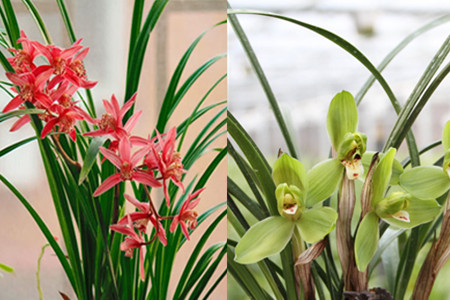
In China, there are more than one thousand recorded species of orchids, and of these, more than six hundred and eighty are native to Yunnan, China, accounting for over sixty percent of the total. This is because Yunnan's unique climate and environment are extremely suitable for orchid growth. Yunnan orchids are renowned both at home and abroad. Some rare varieties can sell for astonishing prices of several hundred thousand yuan on the market.
Orchid lovers all take pride in owning a pot of Yunnan orchids, but most of us are not professional horticultural experts; we love orchids purely out of simple passion. The reason Yunnan orchids grow so beautifully and vigorously is closely related to the local climate and the care of horticulturists. When ordinary people buy orchids and bring them home, if they are not cared for properly, not only will the dearly purchased orchids grow uglier and uglier, but they may even "fail to adapt" and "pass away."
What should be noted when growing Yunnan orchids? Below, let's discuss with fellow orchid lovers the four basic aspects to pay attention to in Yunnan orchid cultivation.
1. The soil for planting orchids.
Yunnan orchids prefer acidic soil and fear alkaline soil, so they should be planted in slightly acidic soil, not soil with high alkalinity. You can mix garden soil with rotted leaves in proportion, and use it only after it has fully fermented. There is special orchid potting mix available on the market, and those who want to save trouble can buy it directly for use.
2. The ambient temperature around the orchids.
Yunnan orchids prefer a warm climate, with an optimal growing temperature between 15-25 degrees. In the cold winter, they can tolerate low temperatures of minus 5-8 degrees, but at this point they have basically stopped growing and entered dormancy. Therefore, to prevent frost damage, maintaining 3-8 degrees can improve the safety margin for overwintering. In spring, summer and autumn, they can be placed on a balcony or in an open area, but in winter they must be promptly moved to a greenhouse to prevent the potting soil from freezing.
3. The moisture of the soil in the orchid pot.
The reason many people find orchids difficult to grow is actually the issue of watering. Many orchids are artificially "drowned." Because orchids have scaly rhizomes that can store a lot of water, they cannot tolerate soil that stays too moist for long periods. If the potting soil remains too wet and the bottom drainage is poor, and this condition exceeds the orchid's tolerance, root rot will occur, causing the orchid's leaves to turn yellow and eventually the entire plant to die.
But a small number of people know that orchids fear waterlogging, and in order to prevent them from "dying of wetness," they go a long time without watering, resulting in the orchids being "thirsted to death"!
So the key to growing orchids is maintaining soil moisture; proper alternation of dry and wet is the "secret" to growing orchids well. Both too dry and too wet are detrimental to orchid growth; moist conditions are best.
The water requirements of orchids differ at different stages of growth. Each variety needs more water during its vigorous growth period. During periods of paused growth, watering should be controlled, and it is enough to keep the soil slightly moist.
In winter, water at a temperature close to the surrounding environment should be used for spraying and watering; water that is too cold should not be poured on. During prolonged rainy seasons, orchids should be kept away from continuous rain.
4. The light level of the location where the orchid pot is placed.
Most orchids fear direct strong light; orchids prefer semi-shaded environments, so in spring, summer and autumn they need to be shaded. For household potted orchids, they can be placed on windowsills or balconies where there is no direct sunlight. If they must be placed in sunlight, then from 9 a.m. to 6 p.m. bamboo blinds or similar should be set up to shade them. After 6 p.m., let them receive sunlight.
In winter, the level of sunlight can be increased accordingly. Among shade-tolerant orchid varieties, Cymbidium sinense is the most tolerant, followed by Jianlan (Cymbidium ensifolium), Huilan (Cymbidium faberi), and Chunlan (Cymbidium goeringii).
How to grow Jianlan (Cymbidium ensifolium): cultivation methods for Jianlan
Jianlan refers to the Chinese terrestrial orchid whose main flowering form appears in midsummer and golden autumn. Its flowers are pale yellow-green and fragrant. Unlike other types of Chinese orchids, its flowering period is longer and it can bloom multiple times, hence it is also called Sijilan (Four Seasons Orchid). The botanical community named it after its main producing area, Fujian. Among the people, it is called Xialan (Summer Orchid) because some varieties bloom profusely in midsummer; it is also called Xiahui because of its many-flowered stems; and some varieties whose main flowering form appears in golden autumn are called Qiulan (Autumn Orchid) or Qiuhui. Do you want to learn about the cultivation methods of Jianlan?
1. How to grow Jianlan
For the cultivation method of Jianlan: if there are only 1-2 clusters of plants, they can be planted in the center of the pot; if multiple clusters are potted, the old plants of each cluster should face the center of the pot and the new plants should face the pot's edge, to increase the germination rate of new plants and provide space for growth and development. When planting, place the coarsest potting material into the pot up to 15% of the pot's height. After placing the orchid plants, spread the root mass evenly, being careful to prevent the orchid roots from being broken or damaged. Slowly fill in fine potting material until 95% of the pot's height, then pat and shake so that the fine potting material closely combines with the orchid roots. The fine potting material should reach about 90% of the height in the orchid pot, to facilitate watering. The base of the orchid plant (pseudobulb) should be half-exposed on the pot surface, giving it more opportunity to receive natural light and fresh air.
Jianlan grows best at an annual average temperature between 15-23°C. In summer, when the temperature is hot, use 70-80% plastic shade netting to cool it down. For high temperatures caused by excessive light, additional layers and density of shading should be added to promote cooling. In summer and autumn, when light is strong, the air is stuffy and hot, and temperatures are high, doors and windows should be opened to allow thorough air convection in the orchid growing area to promote cooling. Splashing clean water on pathways and under orchid shelves, and spraying water mist into the indoor space, can also help lower the temperature.
For Jianlan cultivation, fertilization follows the principle of "adapting to the orchid, determining fertilizer by seedling condition, preferring dilute over concentrated, and applying lightly at the right time." That is, based on the orchid species, seedling vigor, and physiological characteristics, grasp the timing. Dry fertilizers used include: cattle bone meal, plant ash, cake fertilizer and burnt soil mixed fertilizer, used alternately with compound fertilizer no fewer than 4 times per year in each pot. Liquid fertilizer uses filtered and diluted decomposed organic fertilizer, urea, potassium dihydrogen phosphate, or special flower fertilizer, applied alternately as top dressing or foliar feeding, generally once every 15 days. When applying foliar spray, spray the leaf surface with clean water once two days before and after, to wash away dust and pesticide residue.
For Jianlan cultivation, the soil should be kept moist, but do not overwater. Never allow water to accumulate at the roots. In summer, spray more water on the leaves. During the growing period, fertilize once every half month; the fertilizer solution must absolutely not stain the leaves. In midsummer with high temperatures and strong light, set up shading facilities and strictly guard against heavy rain washing. In winter, keep indoors for care to avoid frost damage to the leaves.
2. Cultivation methods for Jianlan
Soil: To suppress the occurrence of orchid diseases, in addition to properly controlling the dryness and moisture of the potting soil at ordinary times, when choosing flower pots, use clay pots as much as possible and glazed pots as little as possible.
Fertilizing: Whether to fertilize orchids depends on their growth condition. Those that grow luxuriantly and are disease-free can be fertilized; those that grow poorly should not be fertilized or only lightly fertilized. A simpler way to determine whether orchids need fertilization is to look at the depth of leaf color. Leaves that appear yellow and thin indicate a fertilizer deficiency and should be top-dressed; leaves that appear dark with scorched tips indicate over-fertilization and fertilization should be stopped.
Light: Orchids mostly belong to semi-shade plants, and most species fear direct sunlight, requiring appropriate shading. In early to mid-April, orchids can receive more sunlight to promote growth. After late April, appropriate shading is needed. Among summer orchids and autumn orchids, varieties with upright leaves are best placed in a shaded spot facing south, so they receive appropriately more sun.
Watering: The principle for watering Jianlan should be "water when dry, stop when wet, appropriately on the dry side." In summer and autumn, watering after sunset is best, so that the orchid leaf surface dries before nightfall; watering in the early morning is also acceptable. In winter and spring, watering around sunrise is best. Do not suddenly pour cold water after the sun has scorched the plant, to avoid lowering the soil temperature, affecting root water absorption, and disrupting physiological balance. The amount of water should not be too large, to help suppress disease occurrence.
Pruning: During orchid cultivation, pruning should be done continuously. When old leaves turn yellow and withered, they should be cut away promptly to improve ventilation. Some leaves with dried tips should also be trimmed. In particular, leaves damaged by pests or diseases must be removed promptly to prevent contagion.
Pest and disease control: During the growing period, Jianlan often suffers from anthracnose, black spot disease, and scale insect damage. For diseases, spray with 10% carbendazim wettable powder at 500 times dilution; for pests, spray with 40% omethoate emulsifiable concentrate at 1500 times dilution.
3. A brief introduction to Jianlan
Origin and distribution: Abroad, it is widely distributed in Southeast Asian and South Asian countries, reaching north to Japan; domestically, it is mainly distributed in Taiwan, China, Fujian, Zhejiang, Anhui, Jiangxi, Hainan, Guangdong, Guangxi, Hunan, Hubei, Sichuan, Yunnan, Guizhou and other provinces and regions.
Growing environment: It grows under sparse forests, in shrub thickets, beside valleys, or in grassy areas, and is widely cultivated throughout the country, with many varieties and types.
Morphological characteristics: A perennial herbaceous plant. Leaves 2-6 per cluster, ribbon-shaped, relatively soft, curved and drooping, 30-50 (-80) cm long, 1-1.7 cm wide, thinly leathery, slightly glossy, apex gradually pointed, margins with inconspicuous blunt teeth. The flower scape is upright, shorter than the leaves, 20-35 cm tall, usually with 4-7 flowers, up to 13 flowers at most; the floral bracts on the middle and upper part of the inflorescence axis are less than 1 cm long, the lowest one reaching 1.5 cm; flowers bloom from July to September; flowers are pale yellow-green with a fresh fragrance.
Jianlan is distributed in subtropical regions and often grows in areas with relatively abundant light such as forest edges. Therefore, it prefers a growing environment without extreme summer heat in summer and autumn, and without severe subzero cold in winter.
4. The uses of Jianlan
1. Beautifying the environment: Jianlan plants are robust and vigorous. Placed in woodlands, courtyards, or halls, with abundant flowers and lush leaves, they have great presence. Several plants can also be grown in a larger tall cylindrical pot, remaining green and strikingly upright for a long time, full of spirit. When they bloom in midsummer, the cool breeze carries the orchid fragrance, making people feel especially serene. They are excellent choices for display on balconies, in living rooms, on flower stands, and on small courtyard steps, appearing fresh and elegant.
2. Medicinal use: Jianlan not only has good ornamental value but can also be used medicinally. Jianlan roots have the effects of regulating qi, harmonizing blood, draining dampness, and reducing swelling, and are used to treat coughing with blood, intestinal wind, uterine bleeding, gonorrhea, turbid urine, leukorrhea, traumatic injuries, and carbuncles; Jianlan leaves have the effects of regulating qi, soothing the middle, and improving eyesight, and are used to treat chronic cough, chest tightness, diarrhea, and blue blindness with internal obstruction.
Finally, Jianlan has the longest cultivation history and has flourished without decline. Marshal Zhu De once praised it: "Jianlan clumps are vigorous, strong and powerful, lofty and elegant, full of heroic bearing." He called on everyone to propagate and promote it well. That concludes today's introduction to Jianlan cultivation methods. Thank you all for reading.
How to grow Jianlan: cultivation methods for Jianlan
Jianlan refers to the Chinese terrestrial orchid whose main flowering form appears in midsummer and golden autumn. Its flowers are pale yellow-green and fragrant. Unlike other types of Chinese orchids, its flowering period is longer and it can bloom multiple times, hence it is also called Sijilan (Four Seasons Orchid). The botanical community named it after its main producing area, Fujian. Among the people, it is called Xialan (Summer Orchid) because some varieties bloom profusely in midsummer; it is also called Xiahui because of its many-flowered stems; and some varieties whose main flowering form appears in golden autumn are called Qiulan (Autumn Orchid) or Qiuhui. Do you want to learn about the cultivation methods of Jianlan?
Understanding how to grow JianlanFor the cultivation method of Jianlan: if there are only 1-2 clusters of plants, they can be planted in the center of the pot; if multiple clusters are potted, the old plants of each cluster should face the center of the pot and the new plants should face the pot's edge, to increase the germination rate of new plants and provide space for growth and development. When planting, place the coarsest potting material into the pot up to 15% of the pot's height. After placing the orchid plants, spread the root mass evenly, being careful to prevent the orchid roots from being broken or damaged. Slowly fill in fine potting material until 95% of the pot's height, then pat and shake so that the fine potting material closely combines with the orchid roots. The fine potting material should reach about 90% of the height in the orchid pot, to facilitate watering. The base of the orchid plant (pseudobulb) should be half-exposed on the pot surface, giving it more opportunity to receive natural light and fresh air.
Jianlan grows best at an annual average temperature between 15-23°C. In summer, when the temperature is hot, use 70-80% plastic shade netting to cool it down. For high temperatures caused by excessive light, additional layers and density of shading should be added to promote cooling. In summer and autumn, when light is strong, the air is stuffy and hot, and temperatures are high, doors and windows should be opened to allow thorough air convection in the orchid growing area to promote cooling. Splashing clean water on pathways and under orchid shelves, and spraying water mist into the indoor space, can also help lower the temperature.
For Jianlan cultivation, fertilization follows the principle of "adapting to the orchid, determining fertilizer by seedling condition, preferring dilute over concentrated, and applying lightly at the right time." That is, based on the orchid species, seedling vigor, and physiological characteristics, grasp the timing. Dry fertilizers used include: cattle bone meal, plant ash, cake fertilizer and burnt soil mixed fertilizer, used alternately with compound fertilizer no fewer than 4 times per year in each pot. Liquid fertilizer uses filtered and diluted decomposed organic fertilizer, urea, potassium dihydrogen phosphate, or special flower fertilizer, applied alternately as top dressing or foliar feeding, generally once every 15 days. When applying foliar spray, spray the leaf surface with clean water once two days before and after, to wash away dust and pesticide residue.
For Jianlan cultivation, the soil should be kept moist, but do not overwater. Never allow water to accumulate at the roots. In summer, spray more water on the leaves. During the growing period, fertilize once every half month; the fertilizer solution must absolutely not stain the leaves. In midsummer with high temperatures and strong light, set up shading facilities and strictly guard against heavy rain washing. In winter, keep indoors for care to avoid frost damage to the leaves.
Cultivation methods for Jianlan1. Soil: To suppress the occurrence of orchid diseases, in addition to properly controlling the dryness and moisture of the potting soil at ordinary times, when choosing flower pots, use clay pots as much as possible and glazed pots as little as possible.
2. Fertilizing: Whether to fertilize orchids depends on their growth condition. Those that grow luxuriantly and are disease-free can be fertilized; those that grow poorly should not be fertilized or only lightly fertilized. A simpler way to determine whether orchids need fertilization is to look at the depth of leaf color. Leaves that appear yellow and thin indicate a fertilizer deficiency and should be top-dressed; leaves that appear dark with scorched tips indicate over-fertilization and fertilization should be stopped.
3. Light: Orchids mostly belong to semi-shade plants, and most species fear direct sunlight, requiring appropriate shading. In early to mid-April, orchids can receive more sunlight to promote growth. After late April, appropriate shading is needed. Among summer orchids and autumn orchids, varieties with upright leaves are best placed in a shaded spot facing south, so they receive appropriately more sun.
4. Watering: The principle for watering Jianlan should be "water when dry, stop when wet, appropriately on the dry side." In summer and autumn, watering after sunset is best, so that the orchid leaf surface dries before nightfall; watering in the early morning is also acceptable. In winter and spring, watering around sunrise is best. Do not suddenly pour cold water after the sun has scorched the plant, to avoid lowering the soil temperature, affecting root water absorption, and disrupting physiological balance. The amount of water should not be too large, to help suppress disease occurrence.
5. Pruning: During orchid cultivation, pruning should be done continuously. When old leaves turn yellow and withered, they should be cut away promptly to improve ventilation. Some leaves with dried tips should also be trimmed. In particular, leaves damaged by pests or diseases must be removed promptly to prevent contagion.
Pest and disease control: During the growing period, Jianlan often suffers from anthracnose, black spot disease, and scale insect damage. For diseases, spray with 10% carbendazim wettable powder at 500 times dilution; for pests, spray with 40% omethoate emulsifiable concentrate at 1500 times dilution.
A brief introduction to Jianlan1. Origin and distribution: Abroad, it is widely distributed in Southeast Asian and South Asian countries, reaching north to Japan; domestically, it is mainly distributed in Taiwan, China, Fujian, Zhejiang, Anhui, Jiangxi, Hainan, Guangdong, Guangxi, Hunan, Hubei, Sichuan, Yunnan, Guizhou and other provinces and regions.
2. Growing environment: It grows under sparse forests, in shrub thickets, beside valleys, or in grassy areas, and is widely cultivated throughout the country, with many varieties and types.
3. Morphological characteristics: A perennial herbaceous plant. Leaves 2-6 per cluster, ribbon-shaped, relatively soft, curved and drooping, 30-50 (-80) cm long, 1-1.7 cm wide, thinly leathery, slightly glossy, apex gradually pointed, margins with inconspicuous blunt teeth. The flower scape is upright, shorter than the leaves, 20-35 cm tall, usually with 4-7 flowers, up to 13 flowers at most; the floral bracts on the middle and upper part of the inflorescence axis are less than 1 cm long, the lowest one reaching 1.5 cm; flowers bloom from July to September; flowers are pale yellow-green with a fresh fragrance.
Jianlan is distributed in subtropical regions and often grows in areas with relatively abundant light such as forest edges. Therefore, it prefers a growing environment without extreme summer heat in summer and autumn, and without severe subzero cold in winter.
The value of Jianlan1. Beautifying the environment: Jianlan plants are robust and vigorous. Placed in woodlands, courtyards, or halls, with abundant flowers and lush leaves, they have great presence. Several plants can also be grown in a larger tall cylindrical pot, remaining green and strikingly upright for a long time, full of spirit. When they bloom in midsummer, the cool breeze carries the orchid fragrance, making people feel especially serene. They are excellent choices for display on balconies, in living rooms, on flower stands, and on small courtyard steps, appearing fresh and elegant.
2. Medicinal use: Jianlan not only has good ornamental value but can also be used medicinally. Jianlan roots have the effects of regulating qi, harmonizing blood, draining dampness, and reducing swelling, and are used to treat coughing with blood, intestinal wind, uterine bleeding, gonorrhea, turbid urine, leukorrhea, traumatic injuries, and carbuncles; Jianlan leaves have the effects of regulating qi, soothing the middle, and improving eyesight, and are used to treat chronic cough, chest tightness, diarrhea, and blue blindness with internal obstruction.
Finally, Jianlan has the longest cultivation history and has flourished without decline. Marshal Zhu De once praised it: "Jianlan clumps are vigorous, strong and powerful, lofty and elegant, full of heroic bearing." He called on everyone to propagate and promote it well.