How do you plant wisteria saplings? Soil choice is key
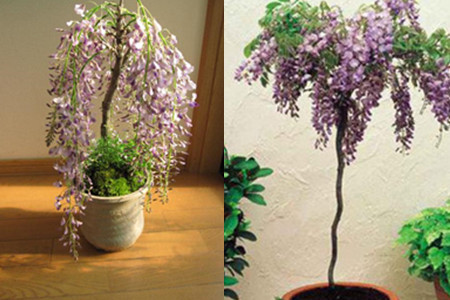
As spring arrives, people's enthusiasm for planting flowers and plants gradually rises. Many people like to plant some greenery on their balcony or in their courtyard to improve the environment, but they do not know how to start, and often the plants die after being kept for a period of time. In fact, growing flowers, plants and trees requires experience, and one must not plant blindly.
In this case, we can choose some plants that are both beautiful and easy to grow, such as the wisteria tree, which is very suitable for planting in courtyards. It also has relatively strong adaptability to the environment and soil, so many beginners can also try planting it. Below we will introduce how to plant wisteria saplings.
1. Choose a suitable environment.
1. Wisteria is relatively drought-tolerant and likes warm places, so you can choose a spot with plenty of sunlight and thick, fertile soil for planting. However, because of its growth characteristics, it also needs a wind-sheltered location.
2. After wisteria grows up, it will send out shoots, so building a trellis is also very important; you can choose sturdy wood for construction.
2. Choose saplings for cuttings.
1. Wisteria saplings usually have relatively thick main roots and few lateral roots, so when planting, it is easier to choose saplings whose roots have a soil ball, as they are easier to keep alive.
2. The length of the sapling should also be chosen well; generally around 18 cm is most suitable.
3. After planting, careful care is needed.
1. The suitable ambient temperature for the growth of wisteria saplings is around 16°C, so they can be planted in mid-to-late March, and after planting they should be watered on time. Apply appropriate fertilizer.
2. After the saplings send out shoots, tie the thick branches to the trellis, and prune the excess branches. Every year when winter begins, also regularly manage the dead branches, cutting back the new branches of that year by one third. Excess thin branches should also be cut off together, so that they grow better the following year.
When to plant wisteria flowers: a detailed explanation of the correct planting method
Wisteria flowers are a relatively large climbing plant, generally growing in courtyards or parks, and are relatively rarely grown in pots. You only need to plant them by a wall, and they can grow tender green leaves. They also have very good ornamental value, so many people like to grow this plant.
But for beginners, they do not know when it is suitable to plant wisteria flowers, or how to plant this plant so that it will not turn yellow and wither. So today the editor will answer your questions; flower lovers who want to grow this plant should not miss the useful information below.
1. When to plant wisteria flowers
In general, spring is relatively suitable for planting this plant. Every spring, this plant produces light purple flowers, and the whole plant instantly turns into a sea of pink-purple, breathtakingly beautiful.
2. Introduction to the cultivation methods of wisteria flowers
1. Potting soil preparation
If you want to successfully grow wisteria flowers, you must pay great attention to the preparation of their potting soil. This plant likes alkaline soil that is loose in texture and highly breathable, and when planting, you should also avoid doing it in a windy environment. Try to choose a fully enclosed balcony, and after preparing the potting soil, grow wisteria flowers by layering or cuttings.
2. Pay attention to temperature regulation
Although wisteria flowers are a plant with very strong vitality and good heat and cold tolerance, they grow relatively fast at around 20°C. However, when the temperature is below 5°C, growth stops, and when summer is too hot, the growth rate of this plant also becomes relatively slow. Therefore, in this high-temperature environment, cooling measures must be taken, and it must not be placed under strong light, otherwise the growth of the plant will be affected.
3. Fertilizer management
Although this plant is a plant with relatively strong drought tolerance, it also likes moist soil. Watering once a week is enough, and each time it should be watered thoroughly at once, but do not let water accumulate in the flower pot. Otherwise, it will cause root rot in wisteria flowers. Since this plant relatively likes fertile soil, fertilizer should be applied once a month, and it is best to choose a compound fertilizer with balanced nutrients; remember to water after each fertilization.
3. Methods to make wisteria flowers bloom abundantly and vividly
1. When cultivating this plant, it is recommended that you choose mature seedlings for potting, then add a small amount of crushed hoof pieces as base fertilizer. Then place the flower pot in a ventilated environment; this can make the flowers it produces more vivid.
2. This plant blooms in early March each year; at this time you should water less and fertilize more, which can effectively extend the flowering period. Any spent flowers should be cut off to avoid consuming nutrients, and this can also effectively prevent a decline in the quality and quantity of the plant's flowering the following year.
3. Promptly shorten the extending stems and tendrils to prevent them from climbing onto surrounding objects, and also to prevent the loss of nutrients, so that the flowers bloom more vividly the following year.
4. In daily care, water appropriately and control fertilizer, which can prevent excessive vegetative growth of the stems and tendrils. Potassium fertilizer and phosphorus fertilizer also need to be applied for a long time.
Through the detailed introduction above, have you all mastered the planting methods for wisteria flowers?