How to grow air plants so they grow fast? Learn to be a qualified flower grower
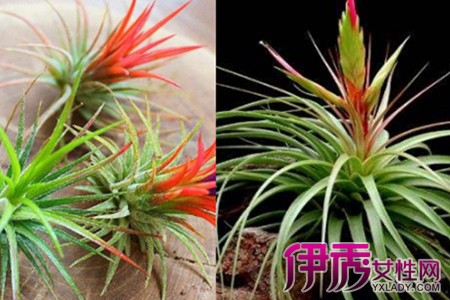
Growing air plants is actually not difficult at all. As long as you understand the habits of air plants, they are easy to grow. First, choose a good flower pot. Air plants like pots with good breathability, so the bottom must have holes. This kind of pot suits the root growth of air plants and prevents the roots from turning black.
After finding a suitable pot, choose fertile soil. The soil cannot be chosen carelessly. The kind of black soil formed from rotting leaves is very suitable for air plant growth, and this soil is very loose, with a very good effect on plant growth. Never use loess soil; loess soil has a great impact on the roots of air plants and is not good for growth.
Next is temperature. The suitable temperature for air plants is around 22 degrees. Winters in the north are very cold, so be sure not to leave air plants outside. Below 5 degrees they will get frostbitten and it will be very hard for them to survive again. It is better to keep them indoors, but not under the radiator.
Watering must be well controlled. Watering about once every 3-5 days is enough. Usually you can use a spray bottle to spray some water on the leaves, and the whole plant will look very clean. If the soil in the pot is not dry, it is fine to water 2 days later.
There is one more thing to note: air plants easily attract small flying insects in autumn. In this case, use insecticide. After spraying, do not spray water. Wait about 2 days before spraying water; spraying too early affects the effect of the pesticide. Master these growing methods and your air plant will certainly grow very fast. Placed at home, it really makes a different kind of scenery. If you don't have an air plant, buy a pot!
How to grow bromeliad flowers? Detailed explanation of protected cultivation techniques for bromeliad flowers
As people's living standards improve, more and more people's demand for flowers grows day by day. Among them, bromeliad flowers are also a relatively best-selling variety among flowers, so many flower growers have begun to cultivate bromeliad flowers. So, how to grow bromeliad flowers? Below, the editor of Huinong Network will tell you the detailed explanation of protected cultivation techniques for bromeliad flowers.
1. Cultivation
1. Temperature
The suitable temperature requirements for ornamental bromeliads are between 21~28°C during the day and around 18~21°C at night, with the maximum not higher than 35°C and the minimum not lower than 15°C.
2. Humidity
Bromeliads like high-humidity environments, and air humidity should be maintained at 75%~85%. If humidity is below 50%, the leaves will curl inward and the leaf tips will appear scorched and withered. But humidity should not be too high either; if humidity is too high, the leaf cup of the plant will rot at the core. In high-temperature and high-humidity conditions, the greenhouse should be ventilated more. To increase humidity and ensure robust plant growth, the plants need frequent foliar spraying. In spring and autumn, spray once each in the morning and afternoon; in winter, spray once at noon; in summer, spray multiple times according to the humidity conditions in the greenhouse.
3. Light
The suitable light intensity for bromeliads is 18000~20000Lux. If the light is too strong, the leaf color fades and spots appear, and in severe cases the leaves are scorched. If the light is too weak, the plants will grow leggy. Summer light is relatively strong. On sunny days, carry out the first layer of shading at around 8 a.m. with a 75% shade net, and when the temperature rises to 28~30°C, carry out the second layer of shading with a 50% shade net.
4. Fertilizer and water management
Bromeliads have relatively strict requirements for water quality; generally use deionized purified water. The EC value of the fertilizer solution should be controlled between 0.8~1.0, and the pH value between 5.5~6.5. Because the root system of bromeliads is weak, the nutrients needed for growth are mainly absorbed from the base of the leaf cup, so the leaf cup must always be kept with sufficient nutrient solution for absorption. Summer and autumn are the peak growing seasons, and evaporation is also high, so water demand increases. Water the leaf cup once every 4~5 days, and water the medium about once every 10 days, keeping the leaf cup with water and the medium moist. In winter, water the leaf cup once every 1 week; do not water if the medium is not dry, as too much moisture easily causes root rot.
For fertilizer, use P20:10:20 + magnesium sulfate and potassium nitrate + magnesium sulfate, 2 kinds of fertilizers used alternately. The method for preparing the fertilizer mother liquor is: P20:10:20 59g/L + magnesium sulfate 8g/L; potassium nitrate 59g/L + magnesium sulfate 8g/L. The working solution is mother liquor:water = 1:100. Apply fertilizer with watering, applying thin fertilizer frequently. During the growing period, the EC value should be controlled between 0.8~1.0, and the pH value between 5.5~6.5. After flower forcing and entering the reproductive growth period, the EC value can be increased to 1.2.
2. Flower forcing
When bromeliads reach 20~25 leaves in age, flower forcing can be carried out.
1. Preparation for flower forcing
Two weeks before flower forcing, stop applying any fertilizer and water only with clear water; when formally forcing flowers, pour out the water in the bromeliad leaf cup 1 day before flower forcing.
2. Flower forcing method
Flower forcing with acetylene-saturated aqueous solution. First, connect the acetylene gas conduit to the water bucket, open the main pressure gauge, then open the secondary pressure gauge so that the secondary pressure gauge stays at 0.5Pa, then set the flow meter at 0.3m3/Pa, so that the water in the bucket can churn. The aeration time can be adjusted according to the amount of water used. Generally, 50L of water aerated for 30min can reach a saturated state, and at this time the water will have a strong acetylene odor. It can then be used for irrigation, generally at 250~300mL per plant, and the amount can also be determined according to plant size. During the irrigation process, maintain the aeration state, and require the container and watering pipe, etc. to be clean and sanitary.
Flower forcing is generally repeated 4 times, with an interval of 2 days each time. The flower forcing temperature should be controlled at 15~18°C. Flower forcing is best carried out before dawn. Within 1 hour after flower forcing, it is best not to expose the plants to strong light, to avoid evaporation of acetylene gas. Within 1 week after flower forcing ends, reduce foliar spraying as much as possible; within 2 weeks, water only with clear water; from the 3rd week, begin fertilizing, with the 1st and 2nd applications, applying potassium nitrate 59g/L + magnesium sulfate 8g/L for 2 consecutive times. 40~60 days after flower forcing, the leaves in the center of the leaf cup begin to turn red.
Lavender planting methods. Take a quick look at the summary of a flower grower's cultivation experience
Lavender is a kind of flower plant we are very familiar with. It can be planted in masses for ornamental viewing, or grown in pots to decorate the home. Lavender is a very charming flower. Let's go and look at its growing methods:
Basic information about lavender:
Lavender (scientific name: lavandula pedunculata), also called perfume plant, spirit fragrant grass, fragrant grass, yellow fragrant grass, etc., belongs to the Lamiaceae family, Lavandula genus. It originated along the Mediterranean coast, various parts of Europe and the archipelagos of Oceania, and was later widely planted in the United Kingdom and Yugoslavia. Its leaf shape and flower color are graceful and elegant, and its blue-purple inflorescence is slender and beautiful. It is a new perennial cold-tolerant flower in courtyards, suitable for clump planting or strip planting along flower borders, and can also be grown in pots for ornament.
Lavender growing methods:
1. Watering:Lavender does not like water remaining around its roots for long periods. After one thorough watering, water again only when the soil is dry, aiming for the surface growing medium to be dry and the interior moist, and for the leaves to be slightly wilting.
2. Sunlight:Lavender is a full-sun plant and needs ample sunlight and a suitably moist environment. An environment with full sun is better; it can also grow with half sun, but it will bloom less. In summer, at least 50% of the sun light should be blocked, and ventilation should be increased to lower the ambient temperature. In this way, although growth weakens, the plant will not die.
3. Temperature:Lavender is semi-heat-tolerant, prefers coolness, and likes warm winters and cool summers. The suitable growing temperature is 15~25°C, and it can grow at 5~30°C. If it is above 38~40°C for a long time, the top stems and leaves turn yellow and wither. In northern winters, when it is below 0°C for a long time, it begins dormancy, and during dormancy mature plants can withstand low temperatures of -20~-25°C.
4. Fertilizing:Lavender should not be fertilized too much, otherwise the fragrance will become weaker.
5. Pruning:After flowering ends, pruning must be carried out. The plant can be pruned to 2/3 of its original size; the plant shape will be more compact and this is beneficial to growth.
Lavender is a very popular flower, beautiful in color and fragrant in scent. Placed in the home, it gives a comfortable and romantic feeling, and lavender also has a calming effect and can help with sleep. It is a very good kind of flower.