How to fertilize anthurium? Key growing points to make the plant more beautiful
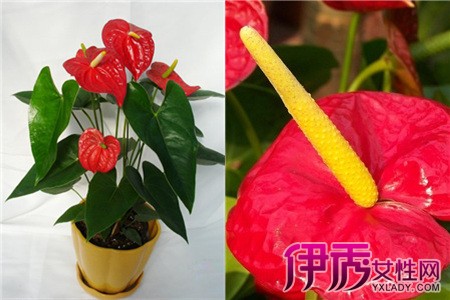
The anthurium, a highly ornamental plant, has vivid and striking colors and distinctive features, and it is precisely this quality of bringing a feeling of boldness and passion that makes it so popular among garden enthusiasts. Therefore, anthurium is often planted in gardens or yards, blooming in competition with other beautiful flowers. It can be grown not only in the garden, but also on the balcony of a small home, which is also a good choice. After all, occasionally trying something different and growing bright red flowers will bring us a different sense of accomplishment.
Below, the editor will share with you the experience of growing anthurium and how to fertilize it. First, anthurium likes a warm environment, so during the growing process we must pay great attention to the ambient temperature for growing anthurium, ensuring an appropriate temperature and enough light. Second, water is important for all plants, and anthurium is no exception, so the amount of watering must be well controlled. In addition, the pH of the water is also important; water that is too acidic will affect its growth.
Third, the choice of fertilizer is also an issue that cannot be ignored. Besides directly buying prepared fertilizer on the market, we can also mix fertilizer ourselves. The main nutrients of fertilizer are nitrogen, potassium and phosphorus. After mixing them in a certain ratio, add fertilizer appropriately according to the growth of the anthurium.
Generally speaking, the frequency of fertilization is to add fertilizer once every about five to ten days, though you can also choose to fertilize at the same frequency as watering. The best time to fertilize is in the morning or evening. Dilute liquid fertilizer with water and pour it over the soil. There are also other fertilization methods, and everyone can choose for themselves.
How to grow anthurium: key points of anthurium growing methods and precautions
Anthurium is a perennial evergreen herbaceous flowering plant. It likes a warm, hot, humid and well-drained environment, and is afraid of drought and strong direct sunlight. Its suitable daytime growing temperature is 26-32°C, and nighttime temperature is 21-32°C. The highest temperature it can tolerate is 35°C, and the low temperature it can tolerate is 14°C. The suitable light intensity is 16000-20000 lx, and the ideal relative air humidity (RH) is 70%-80%. Usually, if you do not pay attention when growing anthurium, unnecessary troubles will arise, so the basic growing methods for anthurium are introduced below.
How to grow anthurium (daily growing methods) 1. Control room temperature wellThe optimum temperature for anthurium growth is 18°C---28°C. The maximum temperature should not exceed 35°C, and the minimum temperature is 14°C. Below 10°C, there is always the possibility of cold damage. In summer, when the temperature is above 32°C, cooling measures need to be taken, such as strengthening ventilation, spraying more water, and providing appropriate shade. In winter, if the indoor temperature is below 14°C, heating is needed.
2. Maintain relatively high air humidityAnthurium growth requires relatively high air humidity, generally not lower than 50%. High temperature and high humidity will be more favorable for anthurium growth. When the temperature is below 20°C, maintaining the indoor natural environment is enough; when the temperature reaches above 28°C, spraying can be used to increase the relative humidity on the leaf surface and in the indoor air, so as to create a high-temperature and high-humidity growing environment for anthurium. However, in winter, even when the indoor temperature is relatively high, it is not advisable to cool and moisturize too much, because overly wet leaves at night will instead reduce cold resistance and easily cause cold damage.
3. Control light wellWhen light is too strong, it may cause leaf discoloration, sunburn or scorching. Whether light management succeeds or not is directly related to the quality of the potted flowers and to the number of flowers. Anthurium is a shade-loving plant, so indoors it should be placed in a bright place with a certain amount of diffused light, and you must be careful not to place the anthurium in an environment with strong direct sunlight.
4. Water and fertilizer management should be appropriateAnthurium is a flower variety relatively sensitive to salt, so the lower the salt content of the water, the better, and tap water is best. Fertilizer is often applied together with watering. Generally, a compound fertilizer with a nitrogen-phosphorus-potassium ratio of 1:1:1 is chosen. Dissolve the compound fertilizer in water and apply it as a liquid fertilizer at a concentration of one thousandth. In spring and autumn, generally apply fertilizer water once every 3 days. If the temperature is high, depending on whether the substrate in the pot is dry or wet, apply fertilizer water once every 2-3 days; in summer, apply fertilizer water once every 2 days, and when the temperature is high, add one more watering; in winter, generally apply fertilizer water once every 5-7 days. Special anthurium fertilizer can also be used directly.
5. The substrate should be loose when repottingA mixed soil made of peat soil, leaf bran and perlite in a ratio of 3:2:1 can be used.
6. Summer careIn summer, it can be placed on the shady side of a room or in a position with diffused light in the living room, or in a place outdoors not reached by direct sunlight, or in the living room, or moved outdoors during the day and placed under tree shade, under flowers, or in a cool place. In winter, it should be placed on the sunny side of a room, and at night it can be placed inside curtains, or in a position relatively close to a heat source.
Precautions for growing anthurium1. When buying anthurium, choose ones with bright colors and well-developed root systems, and select only good-quality ones
2. For growing anthurium, the planting soil is very important; use fertile soil, and some sand and peat soil can be mixed in
3. Buy ceramic or plastic flower pots;
4. Anthurium likes a cool and shady environment and needs a certain humidity maintained. In dry weather, water appropriately, and it should not be too frequent or too much,
5. Fertilize appropriately, and fertilize less in winter;
6. After a period of time, some rotten leaves will appear at the bottom, and they need to be pruned in time,
7. Anthurium likes a shady and moist environment, and the growing soil should not be too compact. Plant a layer of moss on top of the growing soil, which helps retain moisture.
Methods and care points for potted anthurium
Anthurium is a flowering plant originating from South America, and it is also a very common indoor flowering plant today. Generally, anthurium can be cultivated by potting or hydroponics. What the editor introduces to you today is the potting method and precautions for anthurium. Friends who are interested can learn about it together.
Anthurium (detailed introduction)
1. Soil substrate
The soil substrate for planting anthurium must maintain good permeability and must not hold water. For home growing, you can choose to buy prepared culture soil at a garden store and add some expanded clay pellets and dry bark mixed in (expanded clay pellets: dry bark = 2:1) as the substrate. Before planting, the substrate needs to be disinfected to prevent anthurium from suffering pest damage in the later stages of growth.
2. Temperature requirements
The most suitable growing environment temperature for anthurium should be controlled between 14-35°C. In winter, when the temperature is below 10°C, cold damage to the anthurium is likely to occur. Pay attention to keeping the anthurium warm and increasing the temperature. In summer, when the temperature is above 35°C, humidify the anthurium in time and spray water around it. If this is done, even at high temperatures, the anthurium will not easily be harmed if the humidity is high.
3. Fertilization
Compared with other foliage plants, anthurium has a higher demand for magnesium fertilizer. When fertilizing anthurium at home, it is recommended to buy Magic-Green fertilizer at a garden store and apply it together with a foliar fertilizer. Or dilute an all-water-soluble compound fertilizer such as Huaduoduo General Purpose into an 800-1000 times liquid fertilizer and apply it regularly (no less than once per week). The principle of fertilizing anthurium is to apply thick fertilizer sparingly and thin fertilizer frequently.
4. Watering cycle
Water the anthurium according to how dry the substrate in the pot is. In summer, when the temperature is relatively high, it is recommended to water once every 2 days, and at noon also use a sprinkler system to spray water on the leaves to increase indoor relative humidity. In winter, it is recommended to water once every 5-7 days. In cold seasons, watering should be done between 9 a.m. and before 4 p.m. to avoid freezing the root system. Generally, in spring and autumn, water once every 3 days. Avoid adding water when the plant is severely short of water, as this will affect the growth and development of the anthurium. During watering, be sure to alternate between dry and wet. Never water when the plant is severely short of water, as this will affect its normal growth and development.