Air Plant Propagation Methods and Growing Tips Explained in Detail
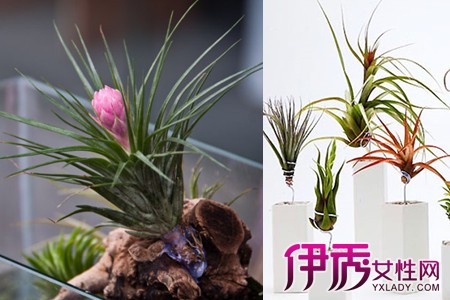
The air plant is a potted plant that has risen in popularity in recent years. Because the air plant's growth depends entirely on air, it is named the air plant, and it is a very green plant. It can not only beautify the environment but also save people time on care, and it has high ornamental value. Now please follow the editor to learn about air plant growing tips.
First, the air plant is a plant that survives on air and the moisture in the air, so air plants cannot be planted in soil or water. This is because the roots of the air plant do not absorb nutrients; it is the leaves of the air plant that absorb nutrients, and its roots are only used to hold the leaves together and anchor the plant.
Generally, wild air plants also only grow in stones or rock crevices. In high-altitude places, air plants can grow very well through the nourishment of mist, making them a very unique plant. So if you want to cultivate air plants, you only need to place stones in a flower pot to secure the roots, or you can use wire to form a circle to secure the air plant and then hang it up.
The flowers of the air plant are very beautiful, and the overall look makes people feel very comfortable. Hanging air plants look the best. Generally, spraying water two to three times a week is enough, but after spraying, be careful that there is no standing water on the leaves; you can remove the standing water by turning the plant upside down.
In terms of light, air plants need sufficient light, otherwise the leaves will lose their green color. In terms of fertilizing, the plant can absorb nutrients by being soaked in fertilizer solution. When the weather is colder, the air plant can be moved indoors for cultivation, because temperatures that are too low will cause the air plant's leaves to dry up.
Air Plant Tillandsia Air Plant Illustrated Guide: How to Grow Air Plants / How to Propagate Air Plants
Air Plant ProfileAir Plant Tillandsia
Air Plant Cultivation Methods and Precautions Air Plant Introduction
The air plant is called Air plant in English and includes nearly 550 species and 103 varieties, making it the most diverse group in the Bromeliad family and an epiphytic genus. In 1753, Tillandsia was first discovered by Linnaeus (Carolus Linnaeus, Swedish botanist) and named after the Swedish botanist TILLANDS whom he admired (some say it was named by the Finnish physician Elias Tillands).
This is the only plant on Earth that grows entirely in the air. It can grow lushly without soil and can bloom with bright flowers. They come in many varieties and forms, and can be enjoyed both for their leaves and their flowers. They have advantages such as good decorative effect and strong adaptability. Because of their high ornamental value, as well as being relatively clean and easy to care for, they are the first choice for balancing home greening and the environment in a busy, fast-paced life, so in recent years more and more flower lovers have been growing air plants.
Morphological Characteristics of Air Plants
The air plant is a perennial herbaceous plant. It has many varieties; the diameter of some varieties' clustered clumps can reach 2 m, while others are less than 10 cm. The plant is rosette-shaped, tubular, linear, or radial, and the leaves are lanceolate or linear, upright, curved, or curled at the tip. In addition to green, leaf colors include gray-white and blue-gray, and the leaves of some varieties will even turn a beautiful red under conditions of ample sunlight. The leaf surface is densely covered with white scales, but the center of the plant has no "water-holding tank."
The spike or compound spike inflorescence of the air plant emerges from the center of the leaf rosette. The flower spike has densely growing and brightly colored bracts or green to silvery-white bracts, and the small flowers grow inside the bracts, in colors such as green, purple, red, white, yellow, and blue, with 3 petals. The flowering period is mainly concentrated from August to April of the following year. After the capsule matures, it splits open automatically and releases seeds with plume-like tufts that drift with the wind and spread in all directions.
Ecological Habits of Air Plants
Air plants do not need to be planted in soil, nor do they need to be grown in water. They are a special plant that can grow as long as they are sprayed with water. The hairs on the leaf surface can absorb moisture and nitrogen compounds from the air, and they can live very well without special care, though their growth is quite slow.
Air plants grow in tropical and subtropical rainforests or arid mountainous areas at altitudes of 100 m-5000 m, attached to tree trunks, stones, or cliff crevices, with a few growing on cacti. Their biggest difference from terrestrial plants is that their roots have no function of absorbing water and nutrients; they merely serve to anchor the plant and carry out a small amount of air exchange. Nutrients and water are absorbed through the silvery-gray hairy scales on the leaf surface, and they basically cannot survive when planted in water or soil.
Most air plant varieties are native to the tropical or subtropical regions of Central and South America, growing on flat land or in high mountainous areas at altitudes of 1000 m-3000 m, where there is little rain, strong sunlight, and great temperature variation, but there is moisture from mist all year round. The unique ecological environment gives air plants their distinctive habits. In their places of origin, these plants mostly grow attached to cacti, stone walls, rotten wood, utility poles, eaves, and other places, so when planting them, flower pots and soil are not needed. They can be hung up, stuck to dead wood, walls, and other objects, or placed in other shallow containers. If potted, coarse gravel, stones, and the like can be used as the growing medium to anchor the plant.
Air plants are resistant to drought and strong light. Their root systems are very underdeveloped, and some varieties even have no roots at all. Even if they have roots, the roots can only serve to anchor the plant and cannot absorb water and nutrients. So how do air plants absorb water? If you observe carefully, you will find that there are many small white scales on the leaf surface. These scales are mostly shield-shaped and sunken, and moisture or rainwater in the air is intercepted by the stomata in the sunken areas and penetrates into the plant body through the gaps between parenchyma cells. Usually, the stomata in these scales are in a semi-closed state during the day when the temperature is higher and the air is relatively dry, to reduce water evaporation; at night when the temperature drops and the air humidity increases, they open completely to absorb moisture from the air.
Most air plant varieties grow in dry environments, while a small number prefer humid environments. Varieties that grow in rainforest climates or other relatively humid, shaded areas have broad, green leaves and produce larger flowers, but the flower colors are relatively plain. They live epiphytically on another plant or tree trunk, and over time they will gradually grow roots to anchor the plant itself. They can reproduce the next generation by seeds or offsets. Varieties from dry areas have a completely different appearance. Their plants are smaller, with needle-like or hard leaves, and usually grow as a whole clump together to reduce water evaporation. They rely on the large number of hairs on the leaf surface to absorb rainwater, dew, mist, and nutrients. Because they survive by absorbing moisture from the air through their leaf surfaces, their bodies have made many changes, including water-storage tissue, complex water-absorbing hairs, reduced leaf number, root degeneration, reduced body size, and increased seed quantity. Most of the more advanced air plants look gray-white because the leaf surface is covered with hairs, which serve to reflect light, avoid sunburn, and prevent water evaporation. The more exposed they are to sunlight, the denser their hairs are.
Cultivation Techniques for Air Plants
The air plant is a CAM-type perennial evergreen herbaceous plant in the genus Tillandsia of the Bromeliad family, and most are aerial or epiphytic.
The biggest difference between air plants and ordinary plants is that they have no root system. The water and nutrients they need are completely absorbed through the stomata on the leaf surface. If planted in soil or water, they cannot survive. Their flowers and leaves are very special, and the leaves have evolved into special forms, including water-storage tissue, leaf scales, reduced leaf number, and root degeneration. They have extremely strong adaptability to adversity and can tolerate drought, light, wind, shade, heat, and cold; they need no pot, no soil, and do not breed mosquitoes; they are plants that grow epiphytically on tree trunks, stone walls, and even cacti.
The air plant is a drought-tolerant aerial species in the genus Tillandsia of the Bromeliad family, and is a perennial epiphytic or aerial herbaceous plant.
Cultivation Methods
The cultivation containers for air plants mainly include shells, stones, dead wood, tree fern boards, rattan baskets, and so on. For securing, wire or rope can be used for tying, or all-purpose glue or hot melt glue can be used to stick them to the container, or they can be cultivated by hanging, tied with copper wire or rope and suspended in the air.
Temperature
Air plants are native to the highlands of Central and South America. They can tolerate low temperatures of 5°C, and the suitable growth temperature is 15°C-25°C. When above 25 degrees, ventilation should be strengthened and humidity increased.
Watering
Air plants can be sprayed with a spray bottle 2-3 times a week, and in dry seasons they should be sprayed once a day. When spraying, spray until the leaf surface is completely wet, and be careful not to let water accumulate in the center of the leaf rosette. If too much water is sprayed, the plant can be turned upside down to let the excess water flow out.
Air plants can be roughly divided into thick-leaved and thin-leaved types according to leaf thickness. Thick-leaved ones such as 'Xerographica' and intermedia prefer relatively dry environments and require fewer waterings; thin-leaved ones such as nana love humid environments very much and can be watered more often. Indoor air plants basically need watering only two or three times a week, while outdoor ones should be increased or decreased appropriately according to the local climate (for example, during the plum rain season in Jiangnan, you can water less or not at all).
In winter, they are generally soaked for 2 hours around noon when the weather is relatively warm. Overall, soaking works better than spraying. Complete immersion for 12-14 hours is no problem! They must be completely dry within 72 hours. This is to avoid bacterial growth and causing rot. So after soaking, please shake the plant dry in time! Air plants are not water-holding bromeliads; once water accumulates, they die within a few days. Compared with other air plants, Spanish moss is always forgotten. Soaking works relatively well; even in summer, it is soaked only once every several days, only when you remember. Just do not expose it to too much direct sun. When it rains, placing it outside works very well.
Light
Varieties with grayer leaves, more white scales, and thicker, harder leaves need stronger light; varieties with greener leaves and fewer, softer scales are more shade-tolerant. When cultivated indoors, they should be placed in a spot with bright light. If the light is insufficient, the plant will become leggy and weak.
Please absolutely do not think that air plants grow in deserts. Therefore, what they need is not strong direct light, but rather plenty of bright light. Strong light and appropriate temperature differences are the key to making our air plants show their attractive "marriage color" during their courtship season.
Fertilizing
Under artificial cultivation conditions, Hyponex or monopotassium phosphate plus urea diluted 1000 times with water can be sprayed once a week, or the plant can be soaked in a 3000-5000 times diluted fertilizer solution for 1-2 hours. Fertilizing can be stopped in winter and during the flowering period.
Growing Experience
As a genus in the Bromeliad family, air plants are mainly distributed in Central and South America and some southern states of the United States, where the local temperature generally remains between 10°C-38°C. Therefore, in most places in our country, except in winter and early spring, they can be grown outdoors. My air plants have always been kept on an enclosed balcony and an indoor windowsill, and have safely made it through two winters in Shanghai, so gardeners in the Jiangnan area do not need to worry too much about low outdoor temperatures in winter. Placing air plants on a south-facing or east-facing windowsill is a very good approach.
Air Plant Cultivation Methods Growing Key Points
Air plants absolutely must not be watered as frequently as the potted flowers we usually grow. Theoretically, it is said to spray water every two or three days. But in practice, it also depends on the environment where the air plant lives. In places with ample sunlight, you can spray water every two or three days. But you must be careful that water does not accumulate in the center of the leaf rosette, otherwise it will cause water accumulation and death. In semi-shaded environments, you can spray water once a week. If the air humidity is high, there is no need to stick to a spraying schedule. If you find they are very dry, you can give them a bath so the air plants can fully absorb water, and appropriately add some diluted liquid fertilizer. After soaking, be sure to drain the water from the leaves.
Air plants can be considered lazy-person flowers. Being too pampered is actually not good. Find something to secure them casually, place them in a shaded spot, spray a little water, and it is not too late to give them sunlight after they regain vitality. Also, do not rush to fertilize. The plant has been stifled for so long; fertilizing before it recovers is very risky. In fact, air plants have very low fertilizer requirements. A little fallen leaf matter landing on the leaves can meet their needs, and spraying a very, very dilute liquid fertilizer a few times a year is enough.
Air plants depend on the variety. For moisture-loving varieties like 'Ionantha,' 'Zebrina,' and 'Brachycaulos,' you can spray frequently during the growing season to increase humidity. There are also some like 'Caput-Medusae'; placing them outdoors in the rain is no problem. Some of the long-haired types, such as 'Paleacea,' if you spray water frequently, will turn green, and the long white hairs will gradually disappear.
When keeping air plants at home in northern regions, once the nighttime minimum temperature steadily stays at 12 degrees, they can be placed outdoors for cultivation. For outdoor cultivation, it is best to place them outside a window facing east or north, because windows facing these directions can avoid the strong midday sunlight. In spring, early summer, and late autumn when the north is relatively dry, they can be soaked twice a week. Before soaking, first rinse them with distilled water; the purpose of this is to remove dust and harmful substances from the surface of the air plant. It is also best to use distilled water for soaking (water quality in the north tends to be hard, and the minerals it contains will clog the air plant's nutrient-absorbing organs). If you do not have distilled water, cooled boiled water can be used. During the intervals between soaking, spray water once every 1-2 days depending on the weather. When the rainy season comes, you can take a break, because then the air plants will grow on their own (be careful not to let water accumulate in the center of the air plant).
Care Key Points
Temperature Control
The optimal temperature for air plant growth is 15℃~25℃, and the general growth temperature is 5℃~40℃. If the temperature is higher than 25℃, ventilation should be strengthened and relative humidity increased, so that growth will not stall due to excessive heat. Air plants can tolerate low temperatures of around 5℃ in winter, and some varieties can tolerate low temperatures of 0℃, but most varieties will suffer cold damage below 5℃, and the plant will die below 0℃.
Light Control
Air plants' sunlight requirements vary by variety. Those with harder, gray leaves need ample sunlight or relatively strong diffused light; indirect sunlight or ordinary lamp light is also acceptable, and placing them near a window is the best way to obtain indirect sunlight, with about 10 hours of light per day. Varieties with green leaves do not have such high light requirements and can grow normally in semi-shaded places or indoors. In addition, air plants like to breathe fresh air. Although they can also grow in ordinary indoor conditions, it is best to maintain air circulation.
Watering and Humidity
The so-called no-watering of air plants refers to when air humidity reaches above 90%. During the growing period, the plant should be sprayed frequently to increase air humidity and allow it to grow normally. It is recommended to use a spray-type watering can available on the market and spray mist evenly on the leaf surface. The method is to spray once a day in dry seasons and 2~3 times a week in humid seasons. Needle-leaved and sword-leaved air plants store little water, so under any conditions they should be sprayed 4~5 times a week. Broad-leaved types store relatively more water and are suitable for growing in drier environments, so the spraying frequency can be maintained at once or twice a week. When spraying, spray until the entire leaf surface is moist; do not let water accumulate in the center of the plant, to avoid causing "heart rot." Note that it is best for the leaf surface to dry within 4 to 6 hours after becoming wet, and note that some varieties easily accumulate water in the center of the leaf rosette, so they can be hung upside down to avoid stem rot.
Proper Fertilizing
In the wild, the places where air plants grow epiphytically often accumulate humus, which can provide the nutrients needed for growth for them to absorb. Under artificial cultivation conditions, nutrients can only be replenished through fertilizing for them to absorb. During vigorous growth, a 2000-times diluted solution of Hyponex, monopotassium phosphate plus a small amount of urea or other nitrogen fertilizer can be sprayed once every 20~30 days, and spraying should be stopped in winter and during the flowering period. Some flower enthusiasts have summarized the practice of using beer to care for air plants, which can keep air plants vigorous and brightly colored. The specific method is to mix clean water (distilled water is better) with beer and spray it on the leaf surface of the air plant every three to four weeks, with a ratio of 50:1, or soak the entire air plant in beer diluted with clean water for several minutes, then take it out of the water and hang it upside down to dry. This method can wash the dust off the air plant, which helps it breathe and absorb nutrients, and the nutrients contained in beer are also very beneficial to the growth of air plants.
Precautions
1. Strictly speaking, it is not necessarily required to keep the temperature above 5 degrees in winter. If the daytime light is good, even below 0 is no problem;
2. Also, I want to remind everyone: absolutely do not plant it in a tank. Air plants need a large amount of air circulation, and being stifled in a tank will make them deteriorate. If the weather is too dry, just soak the plant in water for about an hour, then shake off the water on the leaves. Also, when the leaves are wet, absolutely do not expose them to sunlight, or the leaves will be damaged by the sun. All air plants are relatively drought-tolerant, and not giving water for a few days is absolutely no problem;
3. Silver-leaf varieties are even more drought-tolerant than others, so please appropriately reduce watering frequency to avoid rot;
Most air plants do not have as high a demand for air humidity as imagined, and even in their places of origin, when there is light during the day, the air humidity will not be high. But at night, because the temperature drop causes a temperature difference, water vapor condenses on the plant to form water, which is then absorbed by the leaves.
As long as you grasp this characteristic, you can adjust the water supply according to different cultivation environments. Generally speaking, air plants only need to be given water at night. The specific amount depends on the environment and the condition of the plant, and this requires the grower to control it flexibly according to the situation.
Air plants have extremely strong resistance. When they look slightly dry, their resistance can reach its peak. Plants that look tender have very low resistance and are prone to disease and rot at the slightest disturbance. Therefore, in cultivation, it is better to let the plant be slightly dry so that it can maintain a healthy state.
Propagation Methods of Air Plants
Air plants can only be propagated by division. They grow slowly and use this to anchor the plant itself. They can reproduce the next generation by seeds or offsets. Some varieties take two to three years from seedling to entering the market, which has become the biggest obstacle to industrial development.
When nutrients are insufficient, air plants will produce some small pups from the base after flowering. Please absolutely do not impatiently pull them off, otherwise they will either die prematurely or be malnourished. When nutrients are sufficient, air plants will grow pups on their own without even flowering.
Pest and Disease Control of Air Plants
Air plants have relatively few pests and diseases, but spider mites are a rather nasty thing that suck the water from inside the leaves. However, if the environment is slightly more humid, they seem to disappear automatically.
Sunscald often occurs in environments with ample light. The cause is improper operation: water sprayed on the leaf surface does not dry in time, and the water droplets act like convex lenses and burn the leaf surface beneath them, but it will not spread. Usually, just pay attention to ventilation during care. Heart rot and root rot are often caused by excessively high temperatures and poor ventilation. In hotter summers, attention should be paid to ventilation and avoiding excessive accumulation of water. At the same time, also pay attention to avoiding water quality with high calcium and sodium. In terms of pests, common ones include scale insects, snails, and slugs. For small air plants kept at home, it is recommended to improve ventilation conditions and remove pests by hand.
Variety Classification of Air Plants
There are about 44 genera and more than 1400 species of Bromeliad family plants. Their famous ornamental genera include Aechmea, Ananas, Billbergia, Cryptanthus, Guzmania, Vriesea, Neoregelia, Tillandsia, and so on.
The Bromeliad family consists of terrestrial (epiphytic) plants, but there is ample basis for their ability to adapt well to static hydroponics. When talking about Bromeliad family plants, the first thing to note is that whether they grow on trees or on rocky ground in deserts or shrub forests, their root systems are short and small, and most of the nutrients and water the plants need are absorbed through the leaves and the "water tank" at their center. In particular, the water-storage function of the "water tank" can confirm that the plant retains aquatic vascular bundles internally.
Plant classification systems all place the Bromeliad family in the order Bromeliales. The order Bromeliales has only one family (a monotypic order), namely the Bromeliad family. Bromeliad family plants fully retain the genetic genes from aquatic plant plastids, and the ventilating tissue of vascular bundles in their roots, stems, and leaves can transport oxygen from the aboveground parts to the root system. Therefore, in static hydroponics, the oxygen lacking for the life activities of the root system of Bromeliad family plants can be fully obtained from the aboveground parts.
Main Family Names
Air plants have many varieties and great morphological differences. The main varieties include: Tillandsia recurvata, Tillandsia aeranthos, Tillandsia argentea, Tillandsia juncea, Tillandsia jalisco-monticola, Tillandsia bergeri, Tillandsia cacticola, Tillandsia curvifolia, Tillandsia usneoides, Tillandsia caput-medusae, Tillandsia bulbosa, and so on.
Because air plants were introduced to China not long ago, their Chinese naming is still very nonstandard. Their Chinese abbreviation is Kongfeng.
9 Genera Under the Family
1. Alcantarea
2. Catopsis
3. Glomeropitcairnia
4. Guzmania
5. Mezobromelia
6. Racinaea
7. Tillandsia
8. Vriesea
9. Werauhia
Distribution Range of Air Plants
Air plants are mainly distributed in the Americas, from eastern Virginia in the United States through Mexico and Central America, all the way to southern Argentina, with most varieties coming from Latin America. This vast distribution range shows their strong adaptability.
Many species live in swamp areas, tropical rainforest areas, and cloud forest areas, while some survive in arid, hot deserts, on rocks, on trees (even cacti), on utility poles, on wires in midair, on rocks, and so on, extending thousands of miles in epiphytic form, with traces of them from sea level to mountains two or three thousand meters high. A few minority native species are restricted to a single valley or mountainous area. Because of their special growing conditions, most native air plant species grow in dry environments, a few within Mexico, and the others are distributed in mountainous areas of South American countries such as Brazil and Costa Rica. A few rare varieties are also distributed on some small islands in the Bermuda area.
Uses of Air Plants Ornamental Value
Air plants can be stuck to dead wood, rocks, or placed on shells or pots; as long as water does not accumulate at the roots, they can grow. Many foreign interior design magazines feature air plants as indoor plants to accent the home, which is very fashionable. More people grow air plants in large quantities and hang them with metal wire or fishing line, creating vivid and unusual shapes. The roots of air plants mainly serve the function of attaching the plant to a fixed place, so they can survive even without roots. Broken or injured stems and branches can also survive independently for a period of time, and if the environment is suitable, they can also produce offsets to continue their life.
Air plants are best with roots, which makes it convenient to attach them to bark or driftwood for planting. However, roots have to be cut during import, so the air plants generally sold are rootless. Before roots grow, you should still pay more attention when attaching them not to obstruct root growth. In addition, apart from a very few air plants that grow in the ground, the vast majority cannot be planted in soil. Air plants of the same variety can be planted together, placed in hanging baskets or porous plastic pots, and can be made into special hanging basket plants. If planting different types of air plants, it is best not to place them on the same attachment or container, because their growth habits, water, and light requirements differ, and they cannot all grow normally. Spanish moss does not need any container; it only needs to be hung with metal wire. But note that all plants in the Tillandsia genus cannot tolerate aluminum and copper, so copper wire or aluminum alloy containers cannot be used for planting, because these metals will slowly poison the air plants. Be sure to keep this in mind.
Home Decoration
To grow air plants, you must give them a place to perch. They can be roughly divided into two types: hanging type and sticking type. If you like natural simplicity, you can use the hanging type, because its method is simpler; you only need to use wire or string to hang it in midair. First, choose some varieties with more leaves extending from the base (because this makes them easier to hook tightly), wrap the outer leaves with wire, then gently pull tight and tie a knot. In this way, the hanging process is complete.
The sticking type is more varied than the hanging type, and it is more beautiful and more suitable for giving as gifts or as small decorations for the home or office. If you think the hanging type is too monotonous, you might as well try the sticking type. But sticking-type planting can also be divided into two kinds: buying a finished product (that is, an air plant flower already stuck to an object) or buying a single air plant and accessories (such as hot melt glue, small ornaments, and objects with flat bottoms). Buying a finished product can of course save production time, but if you are interested in designing it yourself, you need to buy a single plant and accessories.
In fact, doing it yourself is also very simple. First, find a suitable place to stick the air plant, then use a lighter to melt the hot melt glue until transparent, immediately apply the melted glue to the surface of the object at the selected position, and after one or two seconds, press the air plant onto the hot melt glue on the object at the selected position for about 30 seconds, and in this way the plant can be firmly stuck to the object.
When sticking plants, you must melt hot melt glue, because it has no chemicals and therefore will not pose a threat to plant health. But other glues or adhesive strips absolutely must not be used, because most of them contain chemicals that affect plant health, and in serious cases will even cause plant death.
Cultural Background of Air Plants Name Introduction
Air plant Tillandsia is also called iron orchid. Because this plant grows in the air and has nothing to do with soil, and can purify the air, it is called the bromeliad flower in the air. Abbreviated as Kongfeng, English name Airplant.
Market Prospects
Air purification has become the biggest selling point: merchants directly import finished air plants from the United States and Japan and sell them in domestic flower markets. "Air plants not only have extremely strong survival ability, but this plant's air purification function is also very powerful. This is the biggest selling point." Yu Lusheng, vice president of Jiangsu Polytechnic College of Agriculture and Forestry, said that because air plants also have the function of purifying indoor air and absorbing harmful gases, this plant is expected to enter the indoor "soft decoration" market in the future and become a hot plant material in this field.
Research has confirmed that air plants absorb formaldehyde and benzene compounds during the day and absorb carbon dioxide at night, making them a very environmentally friendly plant. Therefore, when some producers introduced and developed air plants at the beginning, they positioned the market in the decoration, purification, and beautification of homes and office spaces. This plant, which can survive exposed to the air at will, has brought new vitality to the field of home greening, which has long received widespread attention.
The home sector may "break new ground": the home soft decoration market has always been a new field of concern for flower enterprises, but limited by plant materials, the industry's development in this market has basically been blank, and air plants are expected to become a "door-opening brick" for entering home greening. As a true "lazy person's flower," whether this plant with extremely strong survival ability can "break new ground" in the field of indoor purification and beautification is worth looking forward to.
Among the air plant products developed on the market, price differences are relatively large due to different products and regions. For ordinary single plants, prices range from several dozen yuan to two or three hundred yuan per plant. Prices for home decoration types are higher. Matching exquisite "air plant plant curio shelves," "plant decorative paintings," and "Spanish moss air plant curtains" are usually priced from 100 yuan to more than a thousand yuan, which is obviously too high for ordinary consumers. Price has become a major obstacle to their large-scale entry into the field of home beautification and purification.
A technology company in Beijing has been promoting "plant murals" to the home decoration market in recent years. They have solved the problem of continuous water supply for ordinary potted plants through technical means, but sales have always been less than ideal. Mr. Zhu, the person in charge of the company, told reporters that home plant decoration is not a daily necessity, and consumer acceptance depends on the progress of product promotion. The development of this market still requires a long process. The person in charge also said: "The home plant decoration market will be a big market. The key is to have products that make consumers' eyes light up, and this takes time."
The mid-to-high-end market is the focus of development: Yu Lusheng believes that in terms of increasing consumer awareness, compared with other indoor greening plants, air plants have their advantages. "The peculiar survival style of air plants will certainly arouse consumers' curiosity, and moreover it is a plant with relatively high ornamental value." He believes that as more enterprises participate, air plants will certainly attract more consumers. He believes that market development for air plants is not difficult; it depends on producers' market positioning and product development direction.
Yu Lusheng said that many large enterprises have already taken the initiative to contact the college where he works, expressing a desire for cooperation and hoping to vigorously develop this product. "This plant has three major market segments, and these enterprises all aim at the highest-end public place purification and beautification market when discussing cooperation." He said that in addition, the other two main market segments for air plants are the personal-interest consumer market and the home decoration market. He believes that air plants will have great prospects in the future in indoor purification and decoration markets such as homes and offices, especially in high-end fields such as shopping malls and hotels. According to reports, the small gifts they developed, "Lover's Grass," "Plant Curtains," and "Plant Murals," have already entered the market for "test runs."
Promotion progress depends on capacity improvement: relevant parties say that although there are broad market prospects, whether this rootless plant can take root in the home beautification and purification market, improving production capacity is the most critical. Although some research institutes and enterprises have begun production, enterprises that have reached scale are still few and far between. From the current situation, air plants have many problems to be solved, such as low consumer acceptance, production not reaching scale, and high prices.
Huang Jian analyzed that because air plants can only be propagated by division and grow slowly, some varieties take two to three years from seedling to entering the market, which has become the biggest obstacle to industrial development. In addition, most enterprises still rely entirely on imported finished plants. Therefore, even for varieties with relatively high market acceptance, it is difficult to rapidly increase the production scale of air plants, prices remain high, and this in turn greatly affects the progress of their market promotion.
To quickly solve the awkward situation of long-term reliance on imports, Jiangsu Polytechnic College of Agriculture and Forestry plans to achieve full domestic production of air plants within two years. "Now 50% of our seed sources still need to be imported. In the future, we must gradually increase the domestic proportion and bring down both output and cost."
Huang Jian also believes that the United States began promoting air plants to the market in the 1970s, and the market there is already very developed, with relatively widespread application. "I believe that as domestic purchasing power continues to mature and the industrialization process accelerates, air plants will form a new market of their own."
The Flower Language of Air Plants
The flower language of air plants is: not confined to one pattern.
The air plant is the only plant on Earth that grows entirely in the air. It can grow lushly without soil and can bloom with bright flowers.
Air Plant Pictures
How to Grow Air Plants? Air Plant Growing Methods and Precautions
Air plants are very attractive ornamental plants, with a unique and novel appearance, and they completely do not need soil during growth; they can grow in the air. The growing method is simple, so how do you grow them? Many people, hearing that they do not need soil, think they are very easy to grow. In fact, air plant cultivation and management are relatively complex. During the growing process, we need to understand the growth habits of air plants and do a good job in care and management.
1. Growth Habits of Air Plants
Air plants are different from other plants. If you observe air plants carefully, you will find that they rarely have roots, or their roots are very underdeveloped. This is mainly because air plants do not rely on roots for nutrient absorption; the role of the roots is only to stabilize the plant. They mainly rely on the hairs on the leaves for nutrient absorption. In addition, air plants are native to tropical or tropical desert regions, where the living environment is very harsh. They mainly survive attached to rocks and dead wood, absorbing moisture from the air. So from this point of view, air plants should be very tenacious plants. Why are they always killed by cultivation? In fact, most cases are caused by their owners being too doting.
2. Care of Air Plants
After buying air plants, absolutely do not try to plant them in water or soil. Doing so is truly forcing air plants toward death. If you really want to plant air plants, you can put some perlite, vermiculite, or similar highly breathable stones in a pot, mainly to stabilize and support the plant.
Watering
Air plants do not need watering; simply misting them is enough. The frequency of misting should be determined by the variety of air plant and the weather. If the leaves are relatively thick and hold plenty of moisture, you can reduce the frequency of misting to just once or twice a week. If the leaves are relatively thin, two to three times a week is sufficient. Be careful not to spray water into the center of the leaves, as this can easily cause the leaves of the air plant to rot.
Light
Although air plants live in desert regions, light management still needs to be tailored to the variety of air plant. If your air plant has a lot of silvery-white fuzz on it and the plant looks grayish-white, then it needs more sun exposure, and only about ten hours of light intensity per day can meet its needs. If your air plant is green, then it can be placed indoors, and it will do fine without too much light.
Fertilizing
Air plants can only be given foliar water-soluble fertilizer. For example, about once a month you can spray your air plant with some diluted compound fertilizer to promote plant growth. If your air plant is very dry, you can soak it in clean water for about ten hours, then hang the air plant upside down to dry, to avoid water accumulation damaging the leaves.
Air plants indeed do not need soil to grow, but in the care process, every step such as light, water and fertilizing is crucial. All of you who love air plants, remember to save the cultivation tips above.