How do you grow lotus? Master these five planting steps and you are all set
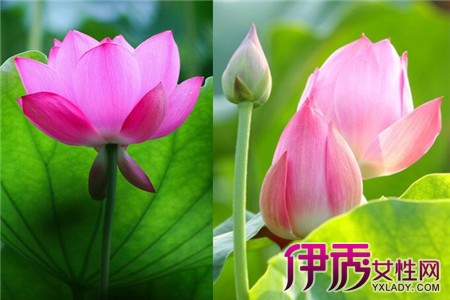
In the height of summer, the lotus can be called the most striking flower of all, with petals so beautiful and pure. The lotus is not only ornamental; its root can also be eaten, and its seeds can be collected and eaten too. Below is the process of growing lotus.
First comes the preparation work: 1. Prepare rubber gloves to avoid your hands touching the mud and coming into contact with unknown objects in the river.
2. If you are in the north, you need to prepare for cold resistance and get plastic film. If growing in a pot, prepare it according to the width of the pot; if planting in a lake, prepare it according to the width of the lake.
3. Prepare a thermometer and a notebook so you can record all the phenomena and data during the process as experience for future plantings.
Now for the planting process. First, choose good seeds. Lotus seeds have a relatively long lifespan, but if you want to plant them quickly, then start sowing when the seed coat of the lotus seed changes from green to yellow-brown.
The second step is the sowing stage. The temperature requirement for sowing lotus is around 20 degrees, and it is usually sown in April. Of course, it can also be sown in July and September, but because the temperature at those times is relatively lower, the lotus can only grow into a plant and cannot bloom.
Third is sprouting. So-called sprouting means cutting off the concave surface at the tail end of the lotus, but do not cut into the embryo bud. Then soak the seed with the exposed embryo bud in clean water for four to five days, and you will see the exposed embryo bud.
Fourth is starting to raise seedlings. Raising seedlings means preparing a suitable muddy pond for the seeds, then loosening the soil inside, and placing the seeds neatly into the muddy pond at a spacing of 15 cm apart.
Finally comes transplanting, which means moving them to the prepared planting site once they have grown three to four floating leaves. In the early stage, keep the water level low, then slowly raise the water level according to the growth rate of the plant.
One reminder: lotus is a plant that does not tolerate base fertilizer, so apply as little fertilizer as possible.
How to grow lotus in a vat: just three steps and you will never need to go out to admire it in summer again
Every year around June, many friends like to take the whole family out to see a kind of flower that grows in water, because this plant has very large blooms and colors that are pink and lovely, just like ancient beauties standing on the water. It is the lotus. But often when it blooms, the weather is extremely hot, and every trip to see the flowers leaves you drenched in sweat; some people even get heatstroke. But now friends no longer have to suffer like this, because you can grow it at home yourself.
In fact, as early as ancient times, many people already grew this plant in vats themselves. This not only makes it very convenient to admire it, but also makes the home cooler. So how can you grow this plant in a vat?
1. Prepare the container and the lotus rhizome
Friends should first go to the market for a vat that is large enough, and try to choose a deeper one. Of course, if you already have one at home, you can skip this step. Then go to a shop that specializes in selling flowers and plants and buy one or two sections of lotus rhizome, because this plant's root grows relatively fast, so there is no need to buy a lot.
2. Dig the mud
If there is a small river near your home, you can go to the riverbank and dig back two buckets of pond mud, because this kind of mud is more suitable for growing this plant; other soils will not do. If you cannot find a small river, you can also buy soil specially for growing this plant online or at the market.
3. Planting
Pour the prepared mud into the vat to a depth of about 30 cm, then place the lotus rhizome flat on top, and then cover it with a thin layer of mud and wait for it to sprout.
Overall, growing this plant is relatively easy, but items such as the container still need to be chosen carefully.
Lotus cultivation: teaching you how to grow lotus in pots
Lotus cultivation is a business of growing seedlings in water. Lotus is also known as lianhua and water hibiscus. It blooms on one side while setting seed on the other, with buds, flowers, and lotus seed heads existing together. Many people hope to grow lotus at home, but do not know how to begin. So how should lotus cultivation be done? Let me teach you below how to grow lotus in pots.Lotus cultivationPotted lotus
1. Choose excellent varieties. You should choose ornamental varieties with a small plant type, large and brightly colored flowers, and many blooms. Such as Manjianghong, Table Lotus, Little Angel, Little Fairy, and so on. If growing from seed rhizomes, choose rhizomes with complete terminal buds, no disease spots, no damage, and robust growth. If growing from lotus seeds, select large, plump, fully mature lotus seeds.
2. Container. Choose a flower pot (or vat) with a diameter of 30-60 cm and a height of no more than 50 cm. It must retain water and be durable. For courtyard or institutional planting, high-grade ceramic pots can be used; for large-scale commercial production, commodity pot lotus is used.3. Soil requirements. Lotus requires fertile soil rich in humus. The soil used is usually lake or pond mud. You can also mix 4 parts garden soil, 3 parts loess, and 3 parts sandy soil thoroughly for use. Never use chemically polluted mud or sewage sludge.
4. Plant at the right time. The latitudes in northern and southern China differ greatly. The timing of spring's return varies widely, so the planting time must be adapted to local conditions and handled flexibly. When the temperature rises to 15 degrees Celsius, the lotus terminal buds begin to sprout. In the Yangtze River basin, the period around Qingming is most suitable. In the north, it can be cultivated in late April. If growing from lotus seeds, it can also be planted from May to July.
5. Planting method. Place the seed rhizome flat or with the top end angled downward at a 20°- 50° incline, and bury it into the mud along the inner wall of the container, leaving the tail end exposed above the mud. One section per pot is enough. It should be dried slightly in the sun to fix the seed rhizome before adding water. If growing from lotus seeds, in the south it can be planted in early April, while in the north it can be postponed to May to July; it is better to plant late than early. After the temperature has risen and stabilized, break the head and soak the seeds. Grind the end with the concave point on a concrete surface until broken, or crack it with pliers, then soak the seeds in warm water at 20°C- 30°C, changing the water once a day. They will sprout within a week, and after two weeks the floating leaves will spread and roots will form. When the roots are 10 cm long, they can be transplanted and planted in the center of the pot, with water added just enough to submerge the small lotus leaves. Do not let it lack water. With a single planting, it can bloom in the same year.6. Management. In the early stage of potted lotus, the water should not be too much; keeping the water depth at 3-5 cm is enough. Shallow water can raise the temperature of the pot mud and promote lotus growth. As the temperature rises and the standing leaves emerge from the water, the water depth should be kept at 16 cm, and never let it dry out. In late autumn and early winter, the lotus enters dormancy, so there is no need to add water frequently; just keep shallow water. For potted lotus, generally no topdressing is needed, and excessive fertilizer is especially taboo. If the base fertilizer is insufficient and the standing leaves are pale yellow, a small amount of soaked plant cake fertilizer can be applied. In late October, after all the standing leaves have withered and turned yellow, it must be moved indoors or buried deeply in the soil together with the pot to overwinter.
In short, doing a good job of management is an important part of growing lotus well. Whether applying water or fertilizer, always remember not to overdo it. Although lotus is an aquatic plant and must not lack water, too much will also rot it to death; lotus is also a fertilizer-loving plant, but too much fertilizer will likewise be counterproductive.Previous: How to care for Bear's Paw (experience from an old flower-growing friend) teaching you to grow beautiful flowering potted plants Next: What aquatic plants are there for home growing? It turns out these all are