How to prune the redbud tree? Beginners need to master these cultivation techniques
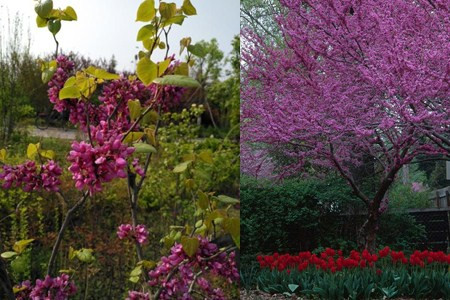
I believe many people, when they have nothing to do at home, keep pets and grow flowers and plants, using these activities to pass their free time. Among these, growing flowers and plants is deeply loved by most people, and friends who have a courtyard at home also like to plant some redbud trees in their own courtyards. Because this plant has very obvious ornamental value, it is also very popular.
However, for many beginners, they do not know how the redbud tree should be pruned, nor do they know the cultivation methods for the redbud tree. Next, the editor will introduce them to everyone in detail. If you want to plant successfully, then do not miss the content that follows!
I. How to prune the redbud tree
1. Heavy pruning of the redbud tree
Since the redbud tree is a plant with very strong vitality, after about five years of natural growth, its branches will become very dense. There will also be many old branches that have already lost their regenerative ability, so at this time they need to be heavily pruned, that is, all the old branches should be cut off. Only in this way can the growth of new branches be promoted.
2. Thinning pruning of the redbud tree
Thinning pruning is also a very common pruning method for growing redbud trees. This pruning method is generally carried out after leaf fall or before budding. Cutting off some senescent branches and crossing branches can effectively regulate the density of the plant. It can be pruned about once a year. When pruning in winter, dead branches and short branches with no ornamental value can be cut off.
II. How to grow the redbud tree
1. Cultivation conditions
Although the redbud tree has very strong adaptability and likes to grow in an environment with sufficient sunlight, and tolerates drought and summer heat, it is afraid of waterlogging, and its requirements for soil are not very high. However, it is necessary to choose loose and fertile soil with good drainage and plant it in a place with sufficient sunlight, which helps the healthy growth of the plant. If the environment is too shady, it is not suitable for planting redbud trees, nor is it conducive to their healthy growth.
2. Watering and fertilizing
Since the redbud tree likes to grow in a moist environment, it should be watered immediately after planting. In summer, it should also be watered in time, and after rain, drainage should be carried out in time to avoid root rot caused by waterlogging. After the beginning of autumn, if the temperature is not very high, watering should be appropriately controlled, and before the beginning of winter, sufficient water should be given to avoid freezing water.
During the process of growing redbud trees, fertilizer supply should also be controlled. Sufficient fertilizer can allow the plant to grow healthily and produce more beautiful flowers. If fertilizer is lacking, the plant will not be able to grow luxuriantly and will bloom fewer flowers. When it is planted, sufficient base fertilizer should be applied, which is more helpful for speeding up the growth of the plant.
3. Management
Generally, after flowering each year, the redbud tree should be given a nitrogen fertilizer once, which can promote more vigorous growth. In early autumn, a phosphorus-potassium compound fertilizer should be applied once, which helps flower bud differentiation and helps the new branches safely overwinter. In addition, during cultivation, the renewal of flowering branches should be strengthened. Practical results show that old branches over five years old will also have reduced flowering. Moreover, their flower buds will also move upward, which greatly affects the ornamental effect, so timely renewal is essential.
Through the detailed introduction above, have you mastered the cultivation methods of the redbud tree?
Redbud tree Cercis chinensis Redbud tree illustrated guide: how to grow the redbud tree / how to propagate the redbud tree
Redbud tree profileRedbud tree Cercis chinensis
Aliases: naked-branch tree, purple pearl
Classification: tree flower
Family and genus: Plantae, Angiosperms, Dicotyledoneae, Fabales, Fabales, Cercis
Full bloom period: spring
The redbud tree, also known as the naked-branch tree and purple pearl, has the Latin name Cercis chinensis. It belongs to the Fabaceae family, genus Cercis. It is distributed across most provinces of China and has excellent ornamental and practical value. It loves sunlight and has a certain degree of cold resistance. It can grow in fertile, well-drained soil. Its producing areas include Jiangsu, Shandong, Henan, Beijing, Anhui and other places.
Cultivation methods and precautions for the redbud tree Introduction to the redbud tree
The redbud tree, also known as the naked-branch tree and purple pearl, has the Latin name Cercis chinensis. It belongs to the Fabaceae family, genus Cercis. It is distributed across most provinces of China and has excellent ornamental and practical value. It loves sunlight and has a certain degree of cold resistance. It can grow in fertile, well-drained soil. Its producing areas include Jiangsu, Shandong, Henan, Beijing, Anhui and other places.
Overall description of the morphological characteristics of the redbud tree
The redbud tree belongs to the genus Cercis in the Fabaceae family. This genus consists of deciduous trees or shrubs. The flowers open before the leaves, with 4-10 flowers clustered on old branches; 2 bracteoles, broadly ovate; flowers rose red, 1.5-1.3 cm long, pedicels slender, 0.6-1.5 cm long. The pod is narrowly lanceolate, flat, 5-14 cm long, 1.3-1.5 cm wide, with a narrow wing along the ventral suture and indehiscent; 2-8 seeds, flat and round, nearly black.
Leaves
The redbud tree has regular green leaves, simple leaves alternate, entire, with palmate veins, petioles present, stipules small and falling early. Small purple legume flowers are clustered on old trunks, forming racemes, opening before the leaves or at the same time as the leaves.
Flowers
The calyx of the redbud tree is broadly campanulate; with 5 teeth, the tips of the curved teeth blunt or rounded; flowers zygomorphic, the upper 3 petals smaller; stamens 10, free; ovary stalked.
The flowering period of the redbud tree is April-May.
Fruit
The pod of the redbud tree is flat, narrowly oblong, with a narrow wing along the ventral suture; seeds flat, several. The redbud is a deciduous tree, often becoming shrub-like after cultivation.
The fruiting period of the redbud tree is May-July.
Ecological habits of the redbud tree
The redbud tree grows at an altitude of 150-1400 m. Bauhinia variegata likes light. It is not very cold tolerant, likes rich, moist soil, and avoids waterlogging. It has strong sprouting ability and tolerates pruning.
The redbud tree likes light by nature and has a certain degree of cold resistance. It likes fertile, well-drained soil and is not tolerant of flooding.
Cultivation techniques for the redbud tree
The redbud tree can be propagated by sowing, division, cuttings, layering and other methods. It is mainly propagated by sowing.
Propagation by sowing
Sowing is mostly done in spring. Before sowing, stratify the seeds at low temperature for more than 2 months. After sowing, they can germinate in 30 days. If the seeds are soaked in warm water for 1 day before sowing, the germination effect is even better.
Propagation by division
Division is mostly carried out before sprouting in spring and is relatively easy to survive. However, when dividing, its roots are thick and difficult to dig out, so attention should be paid to trimming the roots and branches after digging, and applying decomposed base fertilizer in the planting pit, and watering thoroughly after planting.
Propagation by layering
Propagation by layering can be carried out throughout the entire growing season, but roots will only form the following year. In summer and autumn, slug moths often cause damage, so timely prevention and control should be noted.
Transplanting techniques
The redbud tree can be transplanted after leaf fall each winter in November-December or before budding the following year from February-April. Large plants should be transplanted with a soil ball to help survival. Because its root system is very tough and not easy to break by digging, a sharp iron shovel can be used to cut off part of the root system, and some longer branches should also be appropriately shortened to facilitate carrying and transportation. If transplanting during the flowering period, some flowers should also be removed to avoid consuming too many nutrients and affecting survival. When planting, each hole should be applied with decomposed compost.
How to prune
The redbud tree tolerates pruning. From after leaf fall in winter to before sprouting in spring, diseased and insect-damaged branches, crossing branches and overlapping branches can be cut off to maintain a beautiful tree shape. Since the plant can also bloom on old branches, do not cut too many old branches when pruning, otherwise the amount of flowering will inevitably be affected. The redbud has strong sprouting ability, especially at the base where tiller buds are particularly easy to sprout. These sprouts should be cut off in time to maintain a beautiful tree shape and avoid consuming too many nutrients. After flowering, if seeds are not to be kept, pay attention to removing the pods to avoid consuming too many nutrients, which is unfavorable for growth.
Disease control of the redbud tree Angular leaf spot
Symptoms
It mainly occurs on leaves. The lesions are polygonal, yellow-brown to dark red-brown, and in the later stage small dark brown moldy spots appear. In severe cases, the leaves are covered with lesions, often joining into patches, causing the leaves to wither and fall off.
Occurrence pattern
It is a fungal disease, and the pathogens are two species, Cercospora and Cercospora robusta. This disease generally occurs from July to September. It often infects the lower leaves first and gradually spreads upward. When the plant grows poorly, the disease is severe in rainy seasons, and the pathogen overwinters on diseased leaves and residues.
Control methods
In autumn, remove diseased fallen leaves and burn them in a centralized manner to reduce the source of infection. When the disease occurs, spray 50% carbendazim wettable powder 700-1000 times solution, or 70% mancozeb wettable powder 800-1000 times solution, or 80% zineb 500 times solution. Spraying once every 10 days for 3-4 consecutive times has a good control effect.
Fusarium wilt
Symptoms
Leaves often begin to turn yellow and fall from the top of diseased branches. Generally, individual branches are affected first, and then gradually develop until the entire clump dies. Peeling off the bark, yellow-brown longitudinal streaks can be seen in the xylem, and yellow-brown concentric ring-shaped necrotic spots can be seen in the cross section.
Occurrence pattern
This disease invades the plant roots through underground wounds, destroys the plant's vascular bundle tissue, and causes the plant to wilt and die. This disease is caused by infection by Fusarium fungi. The pathogen can overwinter in the soil or on diseased plant residues and survives for a long time. It is mainly spread through soil, underground pests and irrigation water. It generally occurs more severely from June to July.
Control methods
Strengthen maintenance and management, enhance tree vigor, and improve the plant's disease resistance. In nursery land, pay attention to crop rotation, avoid continuous cropping, or apply 70% quintozene powder 3-5 jin/mu in furrows before sowing. Promptly cut off dead diseased branches and diseased plants, burn them in a centralized manner, and disinfect with 70% quintozene or 3% ferrous sulfate. A root drench can be made with 50% thiram wettable powder 200 times, or 50% carbendazim wettable powder 400 times, or antimycin 120 aqueous solution 100 ppm.
Leaf blight
Symptoms
It mainly harms leaves. The initial lesions are red-brown and round, mostly at the leaf margins, joining together and expanding into irregular large spots, until most or the entire leaf dies in a red-brown color. In the later stage, black small dots are produced in the diseased area.
Occurrence pattern
It is a fungal disease. The pathogen overwinters on diseased leaves as mycelium or pycnidia. When plants are too dense, this disease is prone to occur. It generally begins to occur in June.
Control methods
In autumn, remove fallen diseased leaves and burn them in a centralized manner. After leaf expansion, spray 50% carbendazim 800-1000 times, or 50% thiophanate-methyl 500-1000 times, once every 10-15 days, for 2-3 consecutive sprays.
Pests Greater bagworm
Control methods
In autumn and winter, remove the overwintering bags on branches. From late June to July, in the early stage of larval hatching and damage, spray trichlorfon 800-1200 times. Protect natural enemies such as parasitic wasps and parasitic flies.
Brown-edged green slug moth
Control methods
In autumn and winter, in combination with watering the freezing water, dig and kill overwintering cocoons in the shallow soil layer around the plants. When a small amount occurs, promptly cut off the insect-infested leaves. In the early stage of larval occurrence, spray with dichlorvos, trichlorfon, fenitrothion, methamidophos and other insecticides at 1000 times.
Aphids
Control methods
Spray with 40% dimethoate emulsifiable concentrate 1000 times.
Variety classification of the redbud tree Purple-leaf Canadian redbud
The purple-leaf Canadian redbud is also called the purple-leaf Canadian redbud and the red-leaf Canadian redbud (a new high-grade colored-leaf nursery stock). Adult plants are 7 to 15 m tall. In early spring it blooms before the leaves, with a flat, round corolla, red-purple, clustered or in racemes, and the flower clusters are lush and eye-catching. The purple-leaf Canadian redbud can be enjoyed both for its flowers and its leaves, and for three seasons of the year it has purple-red heart-shaped leaves. Chang'an Colored Leaves is the largest base in China. The purple-leaf Canadian redbud belongs to the same genus as the Chinese redbud, a small tree. It is native to the United States and belongs to the genus Cercis in the Fabaceae family. The tree is 6-9 m tall, with a crown width of 8-11 m. The leaves are brown to purple-red, turning yellow in autumn, heart-shaped, broadly ovate, with a cuneate base. The pear-shaped rose-red flowers are monoecious, and the flowering period is from March to May. It is cold resistant, tolerant of alkaline salts, likes deep soil with good drainage, and can withstand low temperatures of -23 to -34 degrees. It is suitable for planting in China. It is an indispensable colored-leaf nursery stock variety for landscape engineering. It is a new colored-leaf nursery stock variety that has been very popular in recent years.
In terms of ecological habits
The purple-leaf Canadian redbud has strong adaptability. It likes an environment with sufficient sunlight, tolerates summer heat, also tolerates cold, and tolerates drought, but is afraid of waterlogging. It has no strict requirements for soil and can grow in poor soil, but grows better in loose, fertile, well-drained sandy soil. It is suitable for planting in high, dry places with sufficient sunlight. Low-lying waterlogged places and overly shady places are not suitable for planting. It can withstand a low temperature of -28°C and is suitable for planting in most parts of the country. It is an excellent colored-leaf ornamental tree species, combining leaf viewing and flower viewing in one, and can show good landscape effects whether planted in groups, as a solitary plant, or in courtyards.
In terms of ornamental value and garden use: in Europe, Asia and other regions, the purple-leaf Canadian redbud has been widely used in parks, high-end residential communities, garden clubs and other places because of its many advantages such as wide adaptability, tolerance of extensive management, bright colors, and very few pests and diseases. Therefore, it is the preferred variety for urban parks and courtyard greening. It is an indispensable new colored-leaf nursery stock variety for landscape engineering, and its market prospects are extremely strong.
Lingnan Bauhinia variegata tree
The Hong Kong, China Special Administrative Region regional flower Bauhinia variegata, also known as bauhinia flower, is very different from the northern redbud species.
In terms of ecological habits
It belongs to the subfamily Caesalpinioideae, genus Bauhinia, an evergreen medium-sized tree. The Bauhinia variegata tree is about seven m tall and can generally grow for forty years. The plant takes root and grows very easily. The leaves of Bauhinia variegata are mostly heart-shaped, split in two at the leaf tip, resembling a sheep's hoof, hence the name. The flowering period is between winter and spring, with flowers as large as a palm. They spread freely and bloom brilliantly among the branches and leaves of the tall trunk, with a slight fragrance. The five narrow petals extend at right angles to the calyx, forming a huge trumpet shape. Bright red or pink, very beautiful. After a heavy rain or strong wind, in places where Bauhinia variegata trees are planted, the ground is a stretch of purple-pink - palm-sized red and purple-red petals fall all over the ground, the kind of wonderful southern scene of falling petals in profusion
Westerners initially compared Bauhinia variegata to the "poor man's orchid." The branches and leaves of Bauhinia variegata are evergreen all year round, luxuriant and quite tolerant of smoke and dust. It is especially suitable as a street tree; the bark contains tannins and can be used as tanning material and dye; the roots, bark and flowers can also be used as medicine.
In terms of hybrid propagation: in 2004, Carol P. Y. Lau, Lawrence Ramsden and Richard M. K. Saunders of the University of Hong Kong published a research article in the Botanical Society of America's academic botanical journal American Journal of Botany, comparing and analyzing Bauhinia variegata's external morphology, flower and seed morphology, as well as its reproductive capacity and gene sequences, with Bauhinia purpurea and Bauhinia variegata, confirming that Bauhinia variegata is not an independent species, but only a hybrid formed by crossing the two species Bauhinia purpurea and Bauhinia variegata. They proposed correcting the scientific name of Bauhinia variegata to "Bauhinia purpurea x variegata 'Blakeana', cv. nov." (cv. (cultivarietas) refers to a cultivated variety, nov. (nova) indicates that this is a new name. Since hybrid plants cannot reproduce on their own, this also means that all current Bauhinia variegata in Hong Kong, China are copies of the one first discovered in the wild in 1880 (and the only time it was discovered in the wild). The gene pool of Bauhinia variegata is therefore limited, and its resistance to pathogens is correspondingly weaker.
Distribution areas of the redbud tree
The redbud tree is distributed in China's Hubei, Liaoning, Hebei, Shaanxi, Henan, Gansu, Guangdong, Yunnan, Sichuan, Guangxi, Shandong, Jiangsu, Zhejiang and other places. The redbud tree is native to China and is distributed in western Hubei, southern Liaoning, Hebei, Shaanxi, Henan, Gansu, Guangdong, Yunnan, Sichuan and other provinces.
Medicinal or edible value of the redbud tree
The medical information and health food therapy information on Hugarden Network is for reference only and cannot be used as a basis for diagnosis or medical treatment. Any health problems should be consulted with professional medical staff, and treatment for any disease should follow a doctor's advice.
Ultimate flower-protecting mission: love yourself, start from reality, and strictly follow a doctor's advice. For illness, do not be careless, do not delay, do not give up hope, face it bravely, use love to warm the silent world, and use your heart to care for the flower field within.
Medicinal value
The bark and pedicels of the redbud tree can also be used as medicine, with the effects of detoxifying and reducing swelling; the seeds can be made into pesticides, with the effect of killing pests.
Garden uses of the redbud tree
The redbud blooms first and then leafs out, and its flower color is gorgeous and lovely. It is often planted in courtyards, in front of buildings and at the edges of lawns in clusters for viewing. It opens before the leaves in early spring, and whether on branches or trunks, it is covered with purple flowers, gorgeous and lovely. The leaves are heart-shaped, neat and glossy, and the interplay of light and shadow is quite moving. It is suitable for clustered planting in courtyards, in front of buildings and at the edges of lawns, and it has a certain resistance to harmful gases in the air. Because the leaves have not yet emerged when it blooms, it is suitable to pair it with evergreen pines and cypresses as a foreground or plant it in front of light-colored objects, such as in front of a white powdered wall or beside rocks.
Functions and uses of the redbud tree
The wood of the redbud tree has straight grain and fine structure and can be used for furniture, construction and so on.
Cultural background of the redbud tree Documentary records
[Redbud tree] See the kinship category, relatives section "Three redbuds." Tang Dynasty Du Fu, "Getting News of My Younger Brother": "The wind blows the redbud tree, its color with the spring of the evening courtyard."
Jin Dynasty Lu Ji, "Yu Zhang Xing": "Three redbuds rejoice in the same trunk, four birds grieve in different forests." [Three redbuds] Southern Dynasties Liang, Wu Jun, "Xu Qi Xie Ji": "The three brothers Tian Zhen of Jingzhao discussed dividing their property and livelihood, all equally, except for one redbud tree in front of the hall, which they all agreed to split into three pieces. The next day, when they went to cut it, the tree immediately withered and died, as if burned by fire. When Zhen went to see it, he was greatly shocked and said to his younger brothers: 'The tree was originally one trunk, and when it heard it was to be split and cut, it therefore languished. This shows that people are not as good as trees.' He then could not overcome his grief and no longer divided the tree, and the tree revived and flourished at the sound. The brothers were moved, combined their wealth, and thus became a family of filial piety. Zhen served as an official up to Grand Master of the Palace." It is a metaphor for the brotherly bond.
See also the plant section, woody plants, "redbud tree." The leaves are relatively large, the flowers are peach-red, and the flowering seasons are autumn and winter.
Redbud tree pictures
Introduction to cultivation methods of the redbud tree
The redbud tree usually grows at an altitude of 150-1400 m. Bauhinia variegata likes light. It is not very cold tolerant, likes rich, moist soil, and avoids waterlogging. It has strong sprouting ability and tolerates pruning. It likes light by nature and has a certain degree of cold resistance. Do you know much about it? Today we will learn about its cultivation methods.
.....
The redbud tree belongs to the genus Cercis in the Fabaceae family. This genus consists of deciduous trees or shrubs. The flowers open before the leaves. Seeds 2—8, flat and round, nearly black, flowering period April—May.
Leaves
The redbud tree has simple leaves alternate, entire, with palmate veins, petioles present, stipules small and falling early. Small purple legume flowers are clustered on old trunks, forming racemes, opening before the leaves or at the same time as the leaves.
Flowers
The calyx of the redbud tree is broadly campanulate, the tips of the curved teeth blunt or rounded, flowers zygomorphic, the upper 3 petals smaller, stamens 10, free, ovary stalked.
Fruit
The pod of the redbud tree is flat, narrowly oblong, with a narrow wing along the ventral suture, seeds flat, several. The redbud is a deciduous tree, often becoming shrub-like after cultivation.
.....
.....
The redbud tree has strong adaptability. It likes an environment with sufficient sunlight, tolerates summer heat, also tolerates cold, and tolerates drought, but is afraid of waterlogging. It has no strict requirements for soil and can grow in poor soil, but grows better in loose, fertile, well-drained sandy soil. It is suitable for planting in high, dry places with sufficient sunlight. Low-lying waterlogged places and overly shady places are not suitable for planting. It is suitable for planting in most parts of the country and is an excellent colored-leaf ornamental tree species, combining leaf viewing and flower viewing in one.
.....
.....
The redbud (Cercis chinensis) prefers a humid environment. Right after planting, water it thoroughly at once; water promptly in summer and you may also mist the leaves; drain promptly after rain to prevent waterlogging and root rot. After autumn begins, if the temperature is not high, watering should be controlled to prevent autumn growth. Before winter sets in, water generously with anti-freezing water. With sufficient fertilizer it grows lush branches and leaves with many brightly colored flowers; with a lack of fertilizer the branches are sparse and the leaves thin, with few and pale flowers. At planting time, apply sufficient base fertilizer, preferably leaf mold, barnyard manure or dried chicken manure, mixed thoroughly with the planting soil before use, otherwise the roots will be burned.
.....
.....
Under normal management, the redbud tree is given one application of nitrogen fertilizer after flowering each year to promote vigorous growth, and one application of phosphorus-potassium compound fertilizer in early autumn to help flower bud differentiation and the safe overwintering of new shoots after they lignify. In early winter, combined with watering for freezing protection, apply cow and horse manure. During cultivation, the renewal of flowering branches should be strengthened. Practice has shown that old branches over 5 years old bear fewer flowers, and the flower buds move upward, affecting the ornamental effect, so they should be renewed in time.
.....
.....
The redbud tree blooms before it leafs out, and its flower color is gorgeous and lovely, so it is often planted in courtyards, in front of buildings and at the edges of lawns for group planting as an ornament. It is suitable for group planting in courtyards, in front of buildings and at the edges of lawns, and it has a certain resistance to harmful gases in the air. Because the leaves have not yet emerged when it blooms, it is best paired with evergreen pines and cypresses as a foreground plant, or planted in front of light-colored objects, such as before a whitewashed wall or beside rocks. In addition, its bark and flower stalks can also be used as medicine, with the effect of detoxifying and reducing swelling, and its seeds can be made into pesticide, with the effect of killing insect pests.
.....
The flowers of the redbud tree open in early spring before the leaves, and whether on branches or trunk they are covered with purple blossoms, gorgeous and lovely. The leaves are heart-shaped, round and neat with a luster, and the interplay of light and shadow is quite striking. Does such a beautiful redbud tree make your heart flutter the more you look at it? Then try growing a few redbud trees yourself.