How to care for violet spider plant? These precautions must be remembered
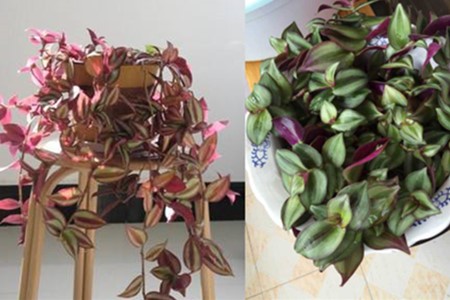
I. Growing environment of violet spider plant
If you want to grow it, of course you first need to understand its growth habits.
1. It is a plant that prefers warmth and tolerates drought, so it can survive even when the weather is very dry.
2. Although it likes warmth, it cannot be exposed to direct sunlight, so it generally grows in shaded places.
3. Everyone knows that spider plants prefer water and humus-rich soil, so they are generally found in moist and fertile places.
4. It is relatively afraid of cold, so it cannot grow in places where the temperature is too low.
II. How to grow violet spider plant
1. First, prepare a flowerpot for growing the spider plant.
2. Then find some relatively fertile and moist soil. Black soil is more suitable for growing spider plants.
3. Then you can plant it in.
4. Place the potted plant in a relatively shady place, but maintain a certain temperature and avoid direct sunlight.
5. Fertilize and control pests regularly so that it can grow healthily.
6. Water it on time. Its roots are relatively developed, so sufficient moisture must be maintained.
III. Appearance characteristics of violet spider plant
1. Its leaves are purple and never dry out, so it is very suitable for growing as a potted plant.
2. It has relatively long vines, and its flowers come in many colors, looking very beautiful.
3. The purple leaves and purple flowers are hard to tell apart when paired together, but they have a quiet kind of beauty.
4. Its flowers are abundant, the flower colors are gorgeous, and the floral fragrance is refreshing, giving people a feeling of vitality and letting people see hope, so it is loved by many people.
After this introduction, you must have some understanding of growing violet spider plant. Don't you also want to own such a beautiful potted plant?
What is the cultivation method for stock (Matthiola incana)?
Basic information about stock
Stock (Latin scientific name: Matthiola incana), also called stock gillyflower, ten-week stock, and grass stock, is native to the Mediterranean coast. At present, it is widely cultivated in southern China and is the collective name for plants of various species under the genus Matthiola in the Brassicaceae family. It is a perennial herbaceous plant, with oblong or oblanceolate leaves and purple-red flowers, as well as pale red, pale yellow, or white ones, fragrant, with slender fruit.
Growth habits of stock
Stock likes cool and well-ventilated environments and avoids dry heat. The suitable growth temperature for stock is 15-20°C during the day and around 10°C at night. Stock has no strict requirements for soil, but grows better in well-drained, neutral to slightly alkaline soil, and avoids acidic soil.
Stock is cold-tolerant and not shade-tolerant, fears waterlogging, and is suitable for growing in environments with a relatively high position, exposure to sunlight, and good ventilation and drainage. Avoid muggy heat; in moldy rainy weather that is hot and poorly ventilated, it is prone to damage from pests and diseases.
How to grow stock
Once you understand the growth habits of stock, it becomes easy to master how to grow it. Stock should not be planted too densely, otherwise poor ventilation will cause pests and diseases. Stock is suitable for planting in fertile soil with good drainage. For potted stock, a potting soil mixed from 2 parts humus soil, 2 parts garden soil, and 1 part river sand can be used.
During the growing season, fertilize stock once every 10 days. Phosphate fertilizer and potassium fertilizer can be applied, and nitrogen fertilizer should not be excessive. Stock should not be fertilized during the flowering period and in winter. Watering stock generally follows the principle of "water when wet, water when dry." In winter, stock likes a warm climate and should be moved indoors, but it can also tolerate a brief low temperature of -5°C.
Cultivation methods for stock
Potting: Stock is a taproot plant and does not tolerate transplanting, so direct sowing is preferable. If seedlings are to be transplanted, it should be done early and with as much original soil as possible, while trying not to damage the root system. For potted stock, choose a flowerpot corresponding to the size of the plant. The soil requirement for potted stock is loose, fertile, well-drained, neutral to slightly acidic culture soil.
Watering: During the growth period, stock should be watered sufficiently to keep the potting soil moist. When it is too dry, the stems and leaves of stock will become smaller and hardened, growth will be uneven, and the flowering period will be delayed. In winter and early spring, when temperatures are low, watering should not be too frequent; water only after the potting soil has dried. When watering stock, prevent the leaves from getting wet, otherwise the leaves will develop spots and rot.
Fertilizing: During the growing season, apply a dilute, fully decomposed cake fertilizer water or liquid fertilizer once every 2 weeks to stock, but note that nitrogen fertilizer should not be excessive. After flower buds appear on stock, apply 0.5% superphosphate 1-2 times to make the flower colors more vivid. Because stock is covered with fine hairs all over, when fertilizing, use your hand to gently lift the leaves so that the fertilizer water does not stain the leaves; otherwise, the leaves will develop spots and rot, and the plant may even die.
Temperature: The most suitable temperature for stock growth is 10-2°C. In summer, the temperature for growing stock cannot exceed 30°C, so shading, cooling, and humidity-increasing measures should be taken. Stock cannot be exposed to strong direct light, but it also cannot be placed in a dark place for a long time, otherwise it will lead to fewer flowers, pale flower colors, or even no flowering. For home flower growing, it can be placed in a bright, scattered-light, ventilated place. In winter, the temperature cannot be lower than 10°C.
Light: Stock likes sufficient sunlight. Receiving 3-4 hours of sunlight per day can make the flowers more vivid and extend the flowering period. Stock is a long-day flower. If the light duration is extended by 4-5 hours per day, stock can bloom earlier. But in midsummer, stock needs appropriate shading to prevent leaf scorch.
Pest and disease control: Stock is prone to root rot, crown rot, powdery mildew, aphids, mites, thrips, nematodes, and other damage. Attention should be paid to ventilation and disinfection of the cultivation substrate before use. When the above pests and diseases are found, relevant pesticides should be sprayed promptly for control.
Stock is a flower that people like very much. It gives a feeling of elegance and grandeur with a sense of mystery, and is a very good embellishment for home beautification.
Related articles
Which plants are suitable for placing in the living room? What feng shui taboos should be noted in living room plant decoration?
What plants are good to put on the boss's office desk
How to grow fuchsia plants well and what to note in fuchsia cultivation
What feng shui considerations are there for placing plants at home
Which plants are suitable for planting in the office? Which plants planted in the office bring good feng shui and good fortune
Which plants placed in the bathroom are good for feng shui? Methods for resolving sha qi through bathroom plant placement
How to use plants to improve home feng shui and bring good luck to the home
What kind of plant is pothos spider plant? Key points for growing pothos spider plant
Don't only grow pothos and spider plants. These flowers are beautiful beyond the sky. Won't you give them a try
Freesia
(Author: Shangwang Gou Tu Source: Nipic)
Reasons:
Many colors, light fragrance, refreshing and charming.
Care:
Light: Likes light. Only with sufficient light can it grow well.
Watering: Likes moisture. Water when dry and water when wet is enough. After budding, reduce watering and keep the soil surface dry.
Fertilizing: Apply base fertilizer before planting. The base fertilizer is best organic fertilizer fermented from kitchen waste such as leftovers, and compound fertilizer can also be used.
Temperature: Suitable growth temperature 15-20°C, not lower than 3°C in winter.
(Author: Lao Ge Hua Source: Photography Tribe)
Gloxinia
(Author: Ouyang Kongjing Source: Nipic)
Reasons:
Gloxinia is also called falling snow mud. Its flowers are gorgeous and its flower forms are numerous, which can give flower lovers many choices~
Care:
Light: Likes light, but cannot be exposed to harsh sunlight. Full sun is acceptable in winter, and shading is necessary in summer.
Watering: Afraid of waterlogging. Water when dry and water when wet. Do not pour water onto the leaves; if it splashes on accidentally, absorb it dry with a paper towel.
Fertilizing: Likes fertilizer. Before flowering, apply dilute fully decomposed organic liquid fertilizer once a week. After flower buds appear, increase the application of phosphorus and potassium fertilizer. Fertilizer must not drip onto the leaf surface.
Temperature: Suitable growth temperature 10-25°C, not lower than 8°C in winter.
(Author: ﹎ㄝ Source: Hua Ba)
Lewisia
(Author: Xiao Bu Ding Source: Sina Blog)
Reasons:
Lewisia, also called Liuwei grass, is also a potted plant that has become popular in recent years. The edges of the petals look as if they are wrapped with a layer of colored ribbon.
Care:
Light: Likes light. Full sun is best.
Watering: Tolerates drought and fears waterlogging. Usually water when dry and water when wet.
Fertilizing: During the growing period, fertilize once every 2-3 weeks, and the fertilizer should combine nitrogen and phosphorus. After flowering, apply additional fertilizer 1-2 times within 1 month, mainly phosphorus fertilizer.
Temperature: Suitable growth temperature around 25°C, not lower than 10°C in winter.
(Author: Etiquette trainer Wang Min Source: Sina Blog)
Miniature Sinningia
Reasons:
Miniature Sinningia, its flowers look very much like morning glory, but in fact the two are not the same kind of plant!
Care:
Light: Likes light. Full sun is best.
Watering: Likes moisture. In addition to watering when dry and watering when wet, spray water and mist around the miniature Sinningia every day to increase air humidity. Control water in winter.
Temperature: Suitable growth temperature around 24°C, not lower than 10°C in winter.
Propagation: Some miniature Sinningia are easily self-pollinating, maturing in about 1 month. The seeds can be allowed to fall naturally and germinate, and then young plants near the mother plant can be dug out for cultivation.
(Author: Mi Yan 8 Source: Hua Ba)
African violet
Reasons:
African violet is also called African stock. Not only are its flowers gorgeous, but its leaves are also furry, looking cute and beautiful~
Care:
Light: Likes semi-shade. It is best to grow it indoors in a transparent, bright place. Shading is essential in summer.
Watering: Likes a moist environment. Just keep the soil slightly moist. Usually sprinkle water and mist around it to increase air humidity.
Temperature: Suitable growth temperature around 16-24°C, not lower than 10°C in winter.
Fertilizing: Apply dilute fully decomposed liquid fertilizer once every 7-10 days. Compound fertilizer can be used, and attention should be paid to balanced nitrogen, phosphorus, and potassium.
(Author: nuofei Source: Hudong Baike)
Diascia
(Source: Duitang)
Reasons:
African violet is also called African stock. Not only are its flowers gorgeous, but its leaves are also furry, looking cute and beautiful~
Care:
Light: Likes light. Full sun or half sun is acceptable, but avoid harsh sun exposure.
Watering: Water when dry and water when wet is enough. Avoid waterlogging.
Temperature: Suitable growth temperature around 15-21°C, not lower than 10°C in winter.
Fertilizing: Apply sufficient base fertilizer when planting, then liquid fertilizer once a month is enough. Compound fertilizer can be chosen.
(Author: looksee Source: Xiamen Xiaoyu Network)
How is it?
Aren't they easy to grow and prettier than pothos and spider plants~