How to care for a purple baby's breath potted plant? Three key points to keep the plant healthier
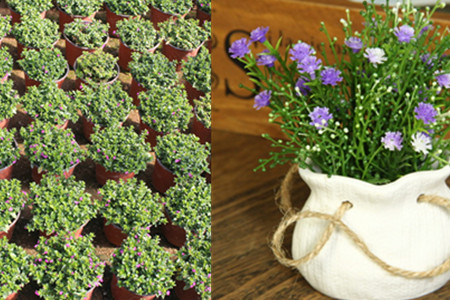
For us, baby's breath should count as a fairly common plant; it can be seen in almost every flower shop. The flowers of this plant are very small, but the number of flowers is extremely large, which is why it got the name "baby's breath" - meaning that when it blooms it resembles stars in the night sky. Moreover, the flower colors of this plant also come in many varieties, among which the more common ones are white and purple, especially the purple kind, which is very much loved and welcomed by people.
So, how should this purple flower be grown?
1. Temperature must be well controlled
This plant very much likes warm environments; only in such an environment can it grow well. So, friends should always keep the temperature around the potted plant well controlled. If winter comes, move the potted plant indoors and place it beside a window.
2. Water supply
This plant has another preference, and that is plenty of water. Many people think that too much water will affect the plant's root system and easily cause root rot, but this is not the case for this plant. This plant very much likes to grow in a water-rich environment, so friends should usually increase the water supply to the potted plant.
3. The issue of sunlight
Besides the two points above, if friends want the potted plant to grow better, they also need to pay attention to the issue of sunlight. This plant very much likes sunlight. If it stays in a dark place for a long time, its plant body will become thin and weak, and some plants may even fail to bloom.
Regarding the cultivation of this plant, it is basically the points above. If friends follow these points for care, then there is no need to worry about the plant's health problems.
Baby's Breath Gypsophila Baby's Breath Illustrated Guide: How to grow baby's breath / How to propagate baby's breath
Baby's Breath ProfileBaby's Breath Gypsophila
Aliases: Gypsophila, double-petaled Gypsophila, Gypsophila, Xia grass
Classification: perennial herbaceous flower
Family and genus: Plantae, Angiosperms, Dicotyledons, Caryophyllales, Caryophyllaceae, Gypsophila
Full bloom period: summer
Baby's breath, originally named double-petaled Gypsophila, is native to the Mediterranean coast. It belongs to the Caryophyllaceae family as a perennial herbaceous flower. It is an evergreen dwarf small shrub, with a plant height of about 65-70 cm, thin and smooth stems, and very many branches. The leaves are narrow and long, sessile, opposite, and pinkish-green in color. It likes warm, humid, and sunny environments, is suitable for planting in flower beds, roadsides, and flower hedges, and is also very suitable for potted ornamental viewing and bonsai making. It blooms in early summer, with flowers like beans, each with 5 petals, and a slight fragrance. Also known as "po tong qian," it can be used as a medicinal plant and can also be used as a companion for roses for lovers.
Baby's Breath Cultivation Methods and Precautions Baby's Breath Introduction
Baby's breath, originally named double-petaled Gypsophila, is native to the Mediterranean coast. It belongs to the Caryophyllaceae family as a perennial herbaceous flower. It is an evergreen dwarf small shrub, with a plant height of about 65-70 cm, thin and smooth stems, and very many branches. The leaves are narrow and long, sessile, opposite, and pinkish-green in color. It likes warm, humid, and sunny environments, is suitable for planting in flower beds, roadsides, and flower hedges, and is also very suitable for potted ornamental viewing and bonsai making. It blooms in early summer, with flowers like beans, each with 5 petals, and a slight fragrance. Also known as "po tong qian," it can be used as a medicinal plant and can also be used as a companion for roses for lovers.
Morphological Characteristics of Baby's Breath Morphological Characteristics
Perennial herb, 30-80 cm tall. Root thick and strong. Stems solitary, rarely several clustered, erect, much branched, hairless or lower part glandular-hairy. Leaves lanceolate or linear-lanceolate, 2-5 cm long, 2.5-7 mm wide, apex acuminate, midvein prominent. Paniculate cyme much branched, loose, flowers small and numerous; pedicels slender, 2-6 mm long, hairless; bracts triangular, acute; calyx broad. Teeth bell-shaped, 1.5-2 mm long, with purple broad veins, calyx ovate, rounded-obtuse, margin white, membranous; petals white or pale red, spatulate, about 3 mm long, about 1 mm wide, apex truncate or rounded-obtuse; filaments flat and linear, nearly equal to petals in length, anthers round in arrangement; ovary ovoid, about 1 mm in diameter, style slender. Capsule spherical, slightly longer than persistent calyx, 4-valved; seeds small, round, about 1 mm in diameter, reddish-brown, with neat obtuse wart-like protrusions. Flowering period June-August, fruiting period August-September. Flowers terminal on branch tips, arranged in compound corymb. Light snow-white, thousands evenly scattered, clear and elegant, cut flowers are top-grade flower material for flower arranging, and after drying in the shade they become natural added dried flowers. Varieties include semi-double or double-petaled types; double-petaled types bloom more and densely. It can bloom all year round, but due to weak heat tolerance, in flatland summer high temperatures, it must be cultivated in a greenhouse.
Texture hard, not easy to break, cross-section shows anomalous vascular bundles in 2-3 rings, perennial dwarf, with a strong bitter taste, often mixed into silver thoroughwax for medicinal use. Stems slender and creeping, spreading flat on the ground in patches, leaves alternate, round or kidney-shaped, 0.5-3.5 cm in diameter, not divided or 5-7 deeply lobed to the middle, margins with obtuse serrations, upper surface green, smooth or with sparse hairs, lower surface usually pubescent; petioles slender, 0.5-9 cm long. Simple umbel opposite to leaves, growing on nodes, umbel rays 0.5-3 cm long; involucral bracts 4-10, oblanceolate, about 2 mm long; each umbel has 10-15 flowers, flowers sessile or with short stalks; no calyx teeth, petals ovate. Schizocarp slightly heart-shaped, laterally flattened, smooth or spotted, median ribs slightly sharp. Flowering period is over one month.
Shape
Baby's breath is an evergreen dwarf small shrub. Every early summer, countless flower buds gather at the branch tips, flowers fine as beans, each with 5 petals, white as clouds,
with a slight fragrance, like ten thousand stars shining, hanging all over the horizon. If viewed from afar, it seems like morning mist and evening rosy clouds, hence the alias "Xia grass" (rosy-cloud grass).
Stems and Leaves
The main root is thick and strong, stems clustered and much branched. Leaves oblong-lanceolate to narrowly lanceolate, 4-8 cm long, 5-12 mm wide, apex pointed, base slightly narrow, slightly stem-clasping, cyme terminal or axillary, arranged in a conical round shape.
Flowers
Flowers relatively small, dense. Bracts ovate, membranous, apex acute. Pedicels 2-4 mm long. Calyx bell-shaped, 2-2.5 mm long, calyx teeth 5, ovate-triangular, margin membranous, with cilia; petals 5 cm, pink or white, obovate, 4-5.5 mm long; stamens 10, longer than petals; ovary elliptical, style 2 cm exceeding petals. Capsule ovoid-spherical, longer than calyx, apex 4-lobed. Flowering period May-July.
Seeds
Seeds nearly kidney-shaped, about 1.2-1.5 mm long, light gray.
Ecological Habits of Baby's Breath Growth Environment
Native to the Mediterranean coast. Likes warm, humid, and sunny environments to grow in, and has the characteristics of being relatively shade-tolerant, cold-tolerant, and drought-tolerant. Suitable for growing in well-drained, fertile, and loose loam soil. The best cultivation soil is slightly alkaline calcareous loam, with good drainage and sunlight. When the plant height is already above 20 cm, the irrigation amount should be reduced as appropriate; slight drought can promote flowering. Especially after flowering, poor drainage or prolonged rain will easily cause root rot. It likes warmth and avoids high temperature and excessive moisture. The suitable growth temperature is 10-25°C, and propagation is mainly by sowing.
Habits
Perennial Gypsophila is a long-day plant, with a flowering period of June-August. Flower bud differentiation requires more than 13 hours of sunlight. As day length increases, flower bud differentiation speeds up. Different types of perennial Gypsophila have different critical day lengths; generally, large-flowered varieties are more sensitive to long days than small-flowered varieties. Under natural growth conditions, it is generally planted in autumn and blooms in May-June of the following year. With an unheated greenhouse, it can be marketed in April-May. In recent years, there has been cultivation for market in March-May, October-November, or January-February of the following year, for year-round production. Baby's breath is native to the summer dry zones of Europe, northern Africa, and central and western Asia. It likes coolness and grows best under conditions of sufficient sunlight and air circulation. The suitable growth temperature is 15-25°C. Above 30°C or below 10°C, with insufficient water content, it easily causes rosette-like clustering, growing only roots and stems without flowering. The soil should be loose, rich in organic matter, with moderate water content, and a pH of about 7.
Suitable Environment
Likes warm, humid, and sunny environments, is relatively shade-tolerant, cold-tolerant, and suitable for growing in well-drained, fertile, and loose loam soil. The best cultivation soil is slightly alkaline calcareous loam, with good drainage and sunlight. The roots easily rot. It likes warmth and avoids high temperature and excessive moisture. The suitable temperature for potted baby's breath growth is 10-25°C.
Growth Environment
Baby's breath is native to the Caucasus of the former Soviet Union (Europe, northern Africa, and central and western Asia). Cold-tolerant, avoids heat and rain. It is suitable for growing in sunny environments and loose, fertile, well-drained slightly alkaline sandy loam. The suitable growth temperature is 15-25°C. Above 30°C or below 10°C, it easily causes rosette-like clustering, growing only stems without flowering. The soil should be loose, rich in organic matter, with moderate water content, and a pH of about 7. In most of southern China, it is planted in autumn, with about 2000 plants per mu. After pinching, each plant retains 4-6 branches, and ultimately more than 5 flower stems can be produced. If cultivated in a greenhouse, the flowering period can be better regulated, striving for market before the Spring Festival. Because its price per stem is several times higher than other cut flowers, most flower vendors divide large branches into thin branches and sell them by quality, and sometimes demand exceeds supply. For commercial cut flower production of baby's breath, seedling propagation is mainly by tissue culture, and cutting propagation can also be used; some single-petaled varieties can be propagated by seeds.
Cultivation Techniques of Baby's Breath Cultivation Management
Baby's breath can be used in landscaping in most cities and can maintain a flowering period of more than 300 days, which other varieties cannot compare with. It is also an indispensable cut flower variety with broad market prospects. The specific cultivation techniques are as follows.
1. Land preparation
Before planting, the soil should be deep-plowed 40-50 cm, sufficient organic fertilizer should be applied, and some phosphorus and potassium fertilizer should be appropriately added. Acidic or neutral soil should be appropriately treated with some lime to adjust the soil pH. Make high beds, with the bed surface 30-40 cm high.
2. Planting
Plant 2000-2500 plants per mu (1 mu = 667 sq m), using double-row planting, with row spacing of 50 cm and plant spacing of 35-50 cm. Before planting, irrigate fully, then choose a cloudy day for planting, and water thoroughly after planting. Planting time: for cut flower cultivation, if produced in a greenhouse, it can be planted in summer, autumn, or even early spring. In this way, flowers can be harvested from early autumn until early summer. After harvesting flowers, the plants should be dug up in June-July, then cold-stored until August-September, and replanted.
3. Fertilizer and water management
Like other herbaceous flowers, baby's breath has relatively high fertilizer and water requirements, but it is most afraid of random fertilization, concentrated fertilizer, and one-sided application of nitrogen, phosphorus, and potassium fertilizers. It requires following the two fertilization (water) principles of "light fertilizer applied frequently, small amounts with more applications, complete nutrition" and "alternate dry and wet, dry must be thoroughly dry, do not water if not dry, water thoroughly if watering." Also, after fertilizing, keep leaves and flowers dry at night. After planting, topdress in stages; in the early stage, mainly nitrogen fertilizer, and in the later stage, mainly phosphorus and potassium fertilizer. Water management must be strictly controlled; if too wet, growth becomes weak, and water accumulation will cause root rot and death. When the plant grows to 30 cm, watering should be controlled, especially carefully during the bud stage, and it should also be drier during the flowering period. In rainy areas, a shed should be built to avoid rain during cultivation.
Spring
After the temperature rises, growth recovers rapidly and gradually enters the flower bud differentiation stage and flowering stage, with high fertilizer and water requirements. Fertilizer and water management follows the cycle of "Hua Bao" - clear water - "Hua Bao" - clear water, with an interval of about 2-4 days. After entering the seed-setting stage, stop fertilizer supply.
Autumn
After the sown seedlings are potted and recover for a period, fertilizer and water management should be quickly stepped up. Fertilizer and water management follows the cycle of "Hua Bao" - "Hua Bao" - clear water - "Hua Bao" - "Hua Bao" - clear water, with an interval of about 1-3 days. On sunny days or during high temperatures, the interval is shorter; on cloudy and rainy days or during low temperatures, the interval is longer or no watering is done.
Winter
Although it continues to grow, the relatively low temperature will slow its growth speed, and it has low fertilizer and water requirements, and may even need controlled fertilizer and water. Fertilizer and water management follows the cycle of "Hua Bao" - clear water - clear water - "Hua Bao" - clear water - clear water, with an interval of about 4-7 days. Watering time should be arranged as much as possible at noon on sunny days when the temperature is relatively high.
Maintenance Methods
The best cultivation soil is slightly alkaline calcareous loam; the roots easily rot. During the flowering process, cutting off spent flowers with three leaves can prolong the flowering period.
It likes warmth and avoids high temperature and excessive moisture. The suitable growth temperature is 10-25°C. Gypsophila can bloom year-round.
Flowering Period Regulation
The growth and flowering characteristics of perennial Gypsophila are its growth and development characteristics. Besides the two self-deceiving characteristics of flowering under long days and the rapid elongation of flower stems after flower bud formation, there are also three points: plants that have already become rosetted in autumn, after receiving low temperature, break the rosette and increase growth activity. After activity increases, even under relatively low temperature conditions in early spring, it grows slowly. After growth reaches a certain degree, if the temperature rises, flower buds form under long days, and at the same time, the flower stems rapidly elongate and bloom. If it encounters summer high temperatures, growth activity decreases, and under autumn coolness and short-day conditions, it welcomes winter in a rosette state. If a rosette state forms, the growth activity of perennial Gypsophila in autumn and winter is extremely low, and it is in a state difficult to flower. High temperature and long-day treatment can be used to prevent rosette formation.
Specific method: Cultivate at a temperature of 15-25°C and more than 16 hours of sunlight (preferably lighting late at night), and cut flowers can be obtained in autumn, winter, or early spring; or, starting from mid-July, cold-store the plants at 2-3°C until mid-September for planting, then cultivate under long-day conditions at a temperature above 8°C, and they will bloom in December; rosetting can also be prevented with hormones. When a rosette is about to form, spray with aminopurine (300×10-6), or spray with gibberellin (300×10-6), both of which can significantly promote the elongation and flowering of perennial Gypsophila.
Cultivation Tips
Suitable germination temperature: 15-20°C. Sowing period: early autumn-early spring. After the seedlings are planted and survive, pinch once to promote more branching. When the plant height is above 20 cm, reduce the irrigation amount as appropriate; slight drought can promote flowering, and it generally blooms in mid-to-late May. In cold regions, spring sowing is suitable; in areas where the soil does not freeze, autumn sowing can be used. The most suitable germination temperature is 21-22°C. Seedlings emerge in 7-10 days. After planting, pinch when about 8 nodes are grown, and when side buds grow to 5-10 cm, remove buds, removing the weak and keeping the strong. Water frequently in the early planting stage, and control water appropriately when flower buds begin to form.
Planting Conditions Suitable Growth Temperature
Growth is best at a day temperature of 25°C. If it exceeds 30°C, and the time or number of days is too long, the probability of malformed flowers easily increases. The best night temperature is 10-15°C. If below 10°C, and combined with short days in autumn and winter, it easily causes a dormant state or clustering.
Demand for Sunlight
For most commercial varieties, the critical photoperiod for flowering is about between 12-18 hours. Long-day treatment itself only effectively induces flower spike differentiation, while more long-day treatment can obtain more flowers. And a longer photoperiod can not only promote earlier flowering, but also make the flowers larger. Bristol Fairy's demand for long light is not as sensitive as other varieties such as Perfecta diamuna; it can bloom with 12 hours of light, which is one of the reasons this variety became the main variety for professional production in Taiwan, China.
Light Intensity Requirements
Light has an extremely profound effect on whether baby's breath blooms, especially more obvious in winter. If summer baby's breath is given 80-24 Klux illuminance, all plants can bloom. The difference is that the less illuminance the plant receives, the relatively fewer flowers it sets. In winter, those irradiated with 58 Klux can all bloom; while those irradiated with 24 Klux cannot bloom even if continuously given a 24-hour full light period.
Soil Requirements
Generally, well-drained slightly alkaline calcareous soil or gravelly loam is best.
Water Requirements
During the seedling stage, the water requirement is relatively high. After pinching, sufficient water and nutrients are still needed so that the plant can gradually transition from the vegetative growth stage to the reproductive growth stage, that is, enter the bolting stage (flowering stage). Until the small flower spikes emerge and the petals grow out, water should be slightly reduced to prevent a decrease in cut flower quality and stem-pulling ability, and also to promote neat blooming of all flowers. Especially in the hot and humid summer season, whether water is controlled properly is often the main factor determining the success of baby's breath cultivation.
Cultivation Techniques Planting
First, from the perspective of cultivation techniques, the planting field should use a good drainage system. In addition, weeds in the field need to be cleared away, and the soil should be turned twice. For fields that are not very fertile, fertilizer should be applied in advance. It is best to use box-style cultivation with a width of 2.5-3 m and unlimited length, and break up soil clods and level the soil surface for easy management. Select seedlings about 15 cm tall for the seedbed, 2-3 plants as a clump, and transplant at a spacing of 20 cm × 30 cm. Plant about 8000-10000 plants per mu. Planting slightly deeper helps increase roots. Choose cloudy and rainy days or sunny afternoons for transplanting. After planting, water to keep moist, and generally new roots will regrow in 3-5 days. Afterwards, according to weather conditions, apply 1%-2% urea or compound fertilizer solution together with watering, which is beneficial for rapid growth. Prune according to tree shape and growth height to increase crown diameter. Generally in 6-8 months, it can grow into large seedlings about 30 cm tall, which can be used for landscaping projects. The larger the plant type and crown diameter, the higher the price.
Cultivation Tips
Baby's breath likes coolness. It grows best under conditions of sufficient sunlight and air circulation. The suitable growth temperature is 15-25°C. Above 30°C or below 10°C, it easily causes rosette-like clustering, growing only stems without flowering. The soil should be loose, rich in organic matter, with moderate water content, and a pH of about 7.
Cutting Propagation
March to May
After rooting powder or 500 mg/kg naphthaleneacetic acid treatment, insert cuttings into a seedbed with a 1:1 medium of perlite and rice husk ash, keep warm and moist, and roots will form in about 25-30 days. Because cuttings are relatively difficult to root, tissue-cultured seedlings are now mostly used.
Choose loose soil with good drainage, apply sufficient base fertilizer; use 10 kg nitrogen, 7 kg phosphorus, and 14 kg potassium per 100 sq m. The base fertilizer amount should account for 60%-70% of the total fertilizer amount. Planting should be shallow, and soil should be gradually banked up later. Planting spacing should be about 50 cm.
Side branches. When the side branch leaves unfold, keep 3-4 side branches and remove the rest. During the seedling stage, more watering is needed to keep the soil moist, and combined with watering, apply a thin fertilizer about every 10 days, mainly nitrogen fertilizer. During the seedling stage, the soil should also be loosened and banked frequently to ensure the soil is loose and breathable and the root system develops well. At the same time, pay attention to timely weeding.
Moss Stage Management
June to August
Bolting stage. During this period, fertilizer and water should be applied heavily, the proportion of nitrogen fertilizer should be reduced, the amount of phosphorus and potassium fertilizer should be increased, and some quick-acting fertilizers such as calcium nitrate and plant ash should also be applied. 45 days before flowering (late bolting stage), nitrogen fertilizer should be stopped and water controlled. Use 0.2% potassium dihydrogen phosphate for foliar topdressing once a week. Baby's breath requires strict rain avoidance during cultivation, and watering should preferably be dry rather than wet; it especially fears waterlogging, and in the rainy season more attention should be paid to smooth drainage inside and outside the shed.
During the flowering period, to prevent branches from becoming weak, water must be strictly controlled and fertilizer also controlled, and foliar topdressing may be appropriately carried out. In the plum rain season, prevent the occurrence of Phytophthora disease. After summer rain, promptly spray with 500 times chlorothalonil to prevent common Phytophthora and gray mold of baby's breath. In hot and dry seasons, baby's breath is susceptible to red spider mite damage.
September to December
After September, artificial electric lighting supplementation is needed to meet the long-day conditions for winter flower production, in order to induce flower bud differentiation and shift vegetative growth to reproductive growth. The method of all-night lighting or late-night (22:00 to 2:00) lighting is often used, and the light intensity should be ensured at 50-100 lux. Winter flower production also needs to maintain a temperature requirement above 15°C. Low temperatures below 10°C easily produce rosette-like leaf clusters and cannot bolt normally.
Cut Flowers and Marketing
There is no fixed standard for cutting baby's breath flowers. The international market mostly uses weight as the standard, generally requiring a single stem to be no less than 10 grams; some cut at the base of the stem, using the entire reproductive stem as a unit. The domestic market generally requires each stem to have three forks. The suitable time for cutting fresh flowers is when 75% of the flowers have opened. If the transport distance is relatively long, it may be appropriately earlier.
Wild baby's breath has small single-petaled flowers and reproduces by seeds. It is a typical long-day plant; autumn sowing and spring flowering is a typical characteristic of long-day plants. Wild species of baby's breath have small flowers and single petals, with relatively low commercial value. They are mostly used as breeding materials and are rarely cultivated commercially.
Propagation Methods of Baby's Breath
Baby's breath is mainly propagated by sowing.
Composition: contains flavonoids, phenols, amino acids, volatile oil, coumarin
Suitable germination temperature: 15-20°C. Sowing period: autumn-early spring. Suitable growth temperature: 10-25°C. Flowering period: May-July. Seedling raising: choose loose soil to make a bed, sow in September, cover with a little fine soil, germinate in about 10 days, and move to a cold frame before winter to overwinter. Cultivation: transplant with soil to open ground in the following spring. After the seedlings are planted and survive, pinch once to promote more branching. When the plant height is above 25 cm, reduce the irrigation amount as appropriate; slight drought can promote flowering. It blooms in mid-to-late May. This species can also be directly sown in open ground before freezing in November or sown in early spring. Cutting propagation is mainly used. In spring, hardwood cuttings are made by cutting mature branches from the previous year 10-15 cm long and inserting them into a sand bed; roots generally form in about 30 days. In the plum rain season, softwood cuttings can be used, selecting the current year's terminal young shoots for cuttings; roots form in 2-3 weeks after insertion. When repotting each spring, add fresh fertile soil. During the growth period, keep the pot soil moist, and fertilize once every 2 weeks to promote more branches and leaves and lush flowering. In autumn, pay attention to pruning the whole plant to maintain a good plant shape.
Propagation Method Tissue Culture
Using shoot tip culture, the propagation coefficient is high, the root growth condition is good, and the seedling quality is good. Using tissue-cultured seedlings to produce cut flowers, the flower stems are straight, the color is pure, and the cut flower quality is high.
Cuttings
The rooting rate is not very high. It is advisable to select cuttings with 4-5 pairs of leaves, treat them with rooting powder or other auxin, and insert them into a cutting bed with perlite as the substrate. It is not restricted by season, but the best periods are mid-to-late March to early July and late September to early November. When the temperature is above 15°C, roots generally form in 20 days.
It can be sprayed with 600 times 65% zineb wettable powder. Pests include aphids and red spider mites, which can be killed by spraying with 1000 times 40% omethoate emulsifiable concentrate.
Disease and Pest Control of Baby's Breath
Because this variety grows fast, the cultivation time is greatly shortened. There are few diseases and pests in the growing season. If aphids are found harming leaves during the seedling stage, they can be killed with ordinary 800 times dichlorvos solution. This variety is suitable for cultivation in all four seasons, generally mainly spring, autumn, and winter. In summer rainy days, transplanting with soil generally will not kill seedlings, and the survival rate is high.
Baby's breath mainly suffers from leaf spot disease, which can be sprayed with 600 times 65% zineb wettable powder. Stem rot and stunting disease are fatal diseases of baby's breath; before planting, the soil should be disinfected with formaldehyde solution. Pests include aphids, mites, and red spider mites, which can be killed by spraying with 1000 times 40% omethoate emulsifiable concentrate, or with 1000 times dicofol and 1500 times fenvalerate.
Variety Classification of Baby's Breath Varieties
At present, the following 6 varieties perform relatively well: native to the Eurasian continent. Gypsophila muralis is up to 50 cm (20 in) tall, much branched, with narrow, blue-green leaves, widely cultivated. Common varieties include "Carminea" (deep rose-red flowers), "Grandiflora Alba" (large white flowers), and "Rosea" (pale rose flowers). Baby's breath is up to 1 m (40 in) tall, resembling Gypsophila muralis in appearance, but with thicker rhizomes, flowers white to pale pink. A common variety is "Compacta." In recent years, various open coastal cities in China have successively introduced baby's breath, especially Shanghai, which has introduced more and better ones. Yunnan and Guangdong also have many flower farms gradually putting it into production. There are many horticultural varieties. At present, the world cut flower market and China's introduced cultivation mainly include 5 varieties.
Fairy
The most widely used in cut flower production, accounting for about 80%, small-flowered type. Flowers white, highly adaptable, able to withstand summer high temperatures and winter low temperatures, relatively easy to cultivate, and also easy for year-round production. It can also be cultivated in summer, can bloom year-round, and the flower color is pure white.
Perfect
Large flowers, short internodes, thick and upright stems, relatively large flowers, crystal-clear white, suitable for making corsages and dried flowers. In high temperature periods, it easily produces rosette-like clustering; at low temperatures, flowering stops. Cultivation is difficult, but the price is high.
Flamingo
A large-flowered variety selected and bred from Fairy, with short internodes and delayed flowering at low temperatures. Year-round production is relatively difficult. The plant is relatively short, coarse-growing and easy to grow, blooms in autumn, and the flower color is pure white.
Hamingo
Flowers pale pink, flowers small, stems slender, blooms in spring.
RedSea
Flowers deep peach-red, flowers large, stems thick and strong. In high-cold zones, planted in spring and sold in autumn; the flower color is very bright and not easy to fade. In warm regions, it can bloom from autumn to spring. It is a newly selected and bred variety.
Better Varieties
(1) "Fairy." It can also be cultivated in summer, can bloom year-round, and the flower color is pure white.
(2) "Perfect." Not tolerant of low-temperature weather, flowers relatively large, crystal-clear white, suitable for making corsages and dried flowers.
(3) "Diamond." The plant is relatively short, coarse-growing and easy to grow, blooms in autumn, and the flower color is pure white.
(4) "Flamingo," stems and branches slender, blooms in spring, flower color pale red.
(5) "Red Sea." The stems are thick and sturdy, blooming from spring to autumn with peach-pink flowers. Among the varieties above in the international market, "Fairy" has the largest sales volume, accounting for about 70%-80% of total baby's breath sales.
Distribution Areas and Places of Origin of Baby's Breath
Produced in the **Altai Mountains and Tashkurgan. Grows at altitudes of 1100-1500 m in riverbanks, grasslands, fixed sand dunes, stony slopes and farmland. Also found in Kazakhstan, Russia (Siberia), Mongolia (western), Europe (western, central and eastern), and North America. The type specimen was collected from Siberia, Russia. Baby's breath has a gregarious nature; wild baby's breath can often be seen in groups by fields, ditches and canals, especially when midsummer arrives, sending up long stalks one after another, dotted with small white petal-like flowers. Baby's breath is not a native plant but comes from South America, and only arrived in China after World War II. Gypsophila paniculata, also called baby's breath, xia cao, or si shi zhu, is an annual or biennial herb of the Caryophyllaceae family, native to Asia Minor through the Caucasus region, and prefers a cool climate.
Medicinal and Dietary Value of Baby's Breath
The medical information and health dietary information on Huhua Network is for reference only and cannot be used as a basis for diagnosis or medical treatment. Any health problems should be consulted with professional medical personnel, and the treatment of any disease should follow a doctor's advice.
Ultimate flower-care mission: love yourself, start from reality, and follow your doctor's advice. For illness, do not be careless, do not delay, do not give up hope, face it bravely, warm the silent world with love, and care for the flower field within your heart.
The medical content on Huhua Network is for reference only and cannot be regarded as professional advice. Any health problems should be consulted with professional medical personnel. Medicinal Value
Hydrocotyle
Hydrocotyle sibthorpioides, Hydrocotyle sibthorpioides var. batrachium, Hydrocotyle sibthorpioides 'Pudu', Xingzi Cao
[Name] Latin scientific name: Herba Hydrocotylis
[English name] Lawn Pennywort Herb
[Chinese scientific name] Hydrocotyle sibthorpioides, Hydrocotyle sibthorpioides var. batrachium, Hydrocotyle sibthorpioides 'Pudu'.
[Chinese aliases] Po Tong Qian, Luo De Da, Xingzi Cao.
[Collection and processing] Harvested in summer and autumn when flowers and leaves are lush, washed clean, dried in the shade or used fresh.
[Chemical composition] Contains flavonoids, phenols, amino acids, volatile oils, coumarins, etc.
[Nature and flavor] Neutral in nature, bitter in taste.
[Dosage and usage] 15-25 g; for external use, an appropriate amount, crush fresh material and apply to the affected area.
[Notes] (1) This product has the effect of dispelling wind and clearing heat. For wind-fire red eyes, it can be used together with mulberry leaves, Androsace umbellata and other medicines; for sore and swollen throat, it can be used together with Achyranthes bidentata, white-haired Prunella vulgaris and the like; for snake-like sores, fresh whole plant can be crushed, soaked in alcohol for half a day, and then applied to the affected area with a cotton ball.
[Excerpt] "Compilation of National Chinese Herbal Medicines"
Medicinal Uses
Medicinal plant -- Hydrocotyle
Hydrocotyle sibthorpioides, Hydrocotyle sibthorpioides var. batrachium, Hydrocotyle sibthorpioides 'Pudu'
[Name]
Latin scientific name: Herba Hydrocotylis
English name: Lawn Pennywort Herb
Chinese scientific name: Hydrocotyle sibthorpioides, Hydrocotyle sibthorpioides var. batrachium, Hydrocotyle sibthorpioides 'Pudu'
Chinese aliases: Baby's breath, Po Tong Qian, Luo De Da
[Plant morphology] Hydrocotyle sibthorpioides is a perennial low-growing herb with an odor. Stems slender and creeping, spreading flat on the ground in patches. Leaves alternate, round or kidney-shaped; a single umbel opposite the leaves, borne on the nodes, with the umbel stalk 0.5-3 cm long; involucral bracts 4-10, oblanceolate, about 2 mm long; each umbel has 10-15 flowers, flowers sessile or with short stalks; no calyx teeth, petals ovate, greenish-white. Schizocarp slightly heart-shaped, flattened laterally, smooth or spotted, with the central ridge slightly sharp. Flowering period May.
Grows by moist roadsides, grasslands, hillsides, wall bases, riverbanks and streamsides. Distributed in Jiangsu, Anhui, Zhejiang, Jiangxi, Hubei, Shaanxi, Guangdong, Guangxi, Guizhou, Sichuan and Yunnan.
[Collection and processing] Harvested in summer and autumn when flowers and leaves are lush, washed clean, dried in the shade or used fresh.
[Chemical composition] Contains flavonoids, phenols, amino acids, volatile oils, coumarins.
[Nature and flavor] Neutral in nature, pungent in taste.
[Functions and indications] Clears heat and promotes diuresis, resolves phlegm and stops coughing. Used for acute icteric hepatitis, acute nephritis, whooping cough, urinary tract stones, athlete's foot, herpes zoster, conjunctivitis, erysipelas.
Garden Uses of Baby's Breath
Baby's breath has abundant branching and a rich sense of dimension, and is used as a filler flower in floral art, with very good application prospects. Besides being used as pot-surface decoration, baby's breath can also be grown alone in pots as an ornamental plant to beautify balconies and rooms. It can also be used as a groundcover plant, planted on lawns or in open ground.
Comparison of the Uses and Functions of Baby's Breath
According to aesthetic principles, red and green are strongly contrasting colors, especially red, which is a stimulating tone, while white is a transitional color and belongs to the coordinating tones. Using baby's breath as a filler material in flower arrangements can handle the relationships of weight, density, depth, concealment and exposure, pitch, height and distance in the arrangement, making the work more layered and profound, fully displaying a sense of three-dimensionality, haziness and fluffiness. For example, simply arranging a few rose branches can certainly express their beauty, but if a bunch of baby's breath is added, it can play an even stronger enhancing role, making the theme and the accompanying elements blend harmoniously and fully, with a perfect mood. This is just like the folk saying, "However good the peony is, it still needs the support of green leaves." It can be seen that the fondness of people with artistic cultivation for baby's breath is not accidental. Baby's breath paired with roses in a bouquet given to a lover means that a beautiful love story can be created, with the stars in the sky as witness!
According to the generally recognized flower language in the United States: red roses paired with baby's breath express "single-hearted devotion"; carnations paired with baby's breath express "kindness and warmth"; gladiolus paired with baby's breath expresses "wishing you great prospects"; forget-me-nots paired with baby's breath express "friendship forever"... These conventions are not necessarily all suitable for Chinese customs and are only for reference. For fresh flower harvesting, the flower branches can be harvested when 40%-60% of the small flowers have opened. Use pruning shears to harvest mature flower branches with a branch length of 60-80 cm. After harvesting, place them in clean water to absorb water and keep them fresh. After returning to the packing room, it is best to insert the base into a preservative solution for 8-12 hours. In order to obtain high-quality fresh flowers, light and flower-forcing solutions can also be used for 12-24 hours of flower-forcing treatment.
Uses
In early summer, baby's breath produces continuous small white flowers, with blooms lush and delicate and evenly distributed. Like a sky full of stars, hazy and charming, and also like snow covering a whole tree, clear and lovely, it is suitable for planting in flower beds, roadsides and flower hedges, and is also very suitable for potted ornamental display and bonsai making. Baby's breath is likewise an indispensable filler material in flower arrangements; inserting a few branches of baby's breath into a bouquet adds a touch of charm. Baby's breath is a flower loved by people of refined taste, always carrying the meaning of "purity, loftiness, romance, love." Hundreds of exquisite, delicate, spotlessly white little flowers, when a breeze passes, send forth a light fragrance, appearing even more warm and cozy.
Selection Method
Material characteristics: The snow-white, fluffy baby's breath flowers are extremely small and light, and in floral art they are often used as a supporting role, paired with roses, lisianthus and the like as a typical bouquet of love. In fact, appreciating baby's breath alone is also very distinctive; tying it into a bundle and using it as the main flower in a vase immediately conveys a relaxed and lively atmosphere. After natural air-drying, it can also be made into dried flowers; the whole plant can be dyed and pressed, offering even more variations in use.
Key points for purchase: Choose plants with snow-white flower color, buds that are not dry or yellow-brown, and flower stems that are fresh green and firm.
Overview of Other Information on Baby's Breath
Gypsophila 'Jishi': formerly called double-petaled Gypsophila, with small white double petals. Often used for bouquet decoration. It is also sometimes planted in schools.
Describes the dizzy feeling of seeing stars. Yuan dynasty, Zhu Kai, "Haotian Tower," Act Four: "First I'll throw you a sky full of stars; do not blame us monastics for lacking this compassionate nature." "Amazing Tales First Series" Volume Thirteen: "Lord Yan rushed over and grabbed him tightly without letting go; he twisted his body around and aimed just one punch at Lord Yan's face, striking him into a sky full of stars, and he fainted and fell." Let this book be more readable!
Name for fireworks. "Dream of the Red Chamber," Chapter 54: "As they were speaking, outside all kinds of fireworks were set off again and again. There were also many scattered small firecrackers such as 'Nine Dragons Enter the Clouds,' 'A Thunderclap on Flat Ground,' and 'Ten Flying Explosions.'"
Describes something dense or spread irregularly everywhere. Liu Qing, "History of Entrepreneurship," Part One, Chapter Twenty: "Like that 'sky full of stars' seedling field, there was simply no place for anyone to set foot."
Chemical Composition
Contains flavonoids, phenols, amino acids, volatile oils, coumarins, etc. Flavonoid compounds include: diosmetin, luteolin, quercetin, luteolin 7-O-beta-D-glucoside, acacetin 5-hydroxy-3',4',6,7-tetramethoxyflavone, acacetin, hesperidin, robinin, acacetin 7-O-beta-D-galactoside.
Scientific Name
Hydrocotyle sibthorpioides, Hydrocotyle sibthorpioides var. batrachium, Hydrocotyle sibthorpioides 'Pudu'.
Gypsophila oldhamianaMiq
Classification
Caryophyllales, Caryophyllaceae, Gypsophila
Baby's breath, scientific name double-petaled Gypsophila. Belongs to the Caryophyllaceae family as a perennial herbaceous plant. Native to the Mediterranean coast. In early summer, baby's breath blooms with continuous small white flower clusters, with blooms lush and delicate and evenly distributed, like a sky full of stars, hazy and charming, clear and lovely, and also resembling morning mist or evening haze, hence the alias "Xia Cao" (haze grass).
Baby's breath, Po Tong Qian, Luo De Da, Gypsophila, perennial grass.
In early summer, baby's breath blooms with small white flowers in continuous clusters. The blooms are lush and delicate and evenly distributed, like a sky full of stars, hazy and charming, clear and lovely, and also resembling morning mist or evening haze, hence also called "Xia Cao." Baby's breath is petite and exquisite, with a plain snow-white color, and its unique texture is light, refreshing and delicate.
Also known as
Gypsophila elegans, Gypsophila oldhamiana, Gypsophila paniculata, G. paniculata L.
Baby's breath
Family and genus
Caryophyllaceae, Gypsophila.
Distribution and habits: Native to the Mediterranean coast. Likes warm and humid climatic conditions, likes light, and fears waterlogging. Propagation and cultivation method: mainly by seed propagation. Chemical composition: contains flavonoids, phenols, amino acids, volatile oils, coumarins. [5] Functions and indications: clears heat and promotes diuresis, resolves phlegm and stops coughing. Used for acute icteric hepatitis, acute nephritis, whooping cough, urinary tract stones, athlete's foot, herpes zoster, conjunctivitis, erysipelas.
?Stem: Stems creeping on the ground, rooting at the nodes, smooth and hairless.
?Leaves: Leaves round heart-shaped, shallowly lobed, alternate, with long petioles, bluntly serrate.
?Flowers: Single umbel, axillary, with pedicels, flowers greenish-white or with a pink tinge.
?Fruit: Fruit oblate-spherical, tea-brown, seeds flat, semicircular.
?Characteristics: Perennial herb, stems creeping on the ground, rooting at the nodes, smooth and hairless. Leaves round heart-shaped, shallowly lobed, alternate, with long petioles, bluntly serrate. Single umbel, axillary, with pedicels, flowers greenish-white or with a pink tinge, fruit oblate-spherical, tea-brown, seeds flat, semicircular. It is probably hard to find an evenly matched rival for its reproductive ability, so it is also called "Bian Di Jin."
Generally speaking, baby's breath has extremely strong vitality, roots quickly, tolerates long-distance transport and transplanting, with a survival rate above 95%. Propagation generally uses cuttings; in spring, cut new branches of the plant to about 10 cm, place 3-4 together as a cluster into a sand bed, spray water to keep moist, and they will root in about 15 days, then after more than 20 days of cultivation they are transplanted into soil and grown into large seedlings for sale.
Morphological characteristics: Perennial herbaceous plant, up to 90 cm tall, the whole plant hairless, slightly covered with white powder, vigorous, much branched, spreading in all directions, leaves opposite, lanceolate to linear-lanceolate.
Plant Attributes
1. Ornamental Flowers
In China there are mainly two kinds of herbaceous plants that bear many small flowers, namely the annual Gypsophila elegans and the perennial baby's breath. [Habits] Likes warm, humid and sunny environments, relatively tolerant of shade, cold-resistant, and grows best in well-drained, fertile and loose loam. Slightly alkaline calcareous loam is best as the cultivation soil; the roots rot easily. Likes warmth, avoids high temperature and excessive humidity, with an optimum growth temperature of 11-25 degrees C.
2. Medicinal plants Hydrocotyle sibthorpioides, Hydrocotyle sibthorpioides var. batrachium, Hydrocotyle sibthorpioides 'Pudu', Xingzi Cao [Name] Latin scientific name: Herba Hydrocotylis English name: Lawn Pennywort Herb Chinese scientific name: Hydrocotyle sibthorpioides, Hydrocotyle sibthorpioides var. batrachium, Hydrocotyle sibthorpioides 'Pudu' Chinese aliases: Baby's breath, Po Tong Qian, Luo De Da, Xingzi Cao!
[Collection and processing] Harvested in summer and autumn when flowers and leaves are lush, washed clean, dried in the shade or used fresh. [Chemical composition] Contains flavonoids, phenols, amino acids, volatile oils, coumarins. [Nature and flavor] Neutral in nature, pungent in taste.
Plant Information
Gypsophila oldhamiana Miq. Alias: Xia Cao. Distributed in Gansu, Shanxi, Henan and other provinces, mostly self-produced and self-sold. Root cylindrical or conical, 10-15 cm long, 2-5 cm in diameter; commercial products mostly have the brown outer bark removed, but remnants remain in the sunken longitudinal wrinkles, forming alternating brownish-white streaks. Texture hard, not easy to break, cross-section shows 2-3 rings of anomalous vascular bundles; has a strong bitter and astringent taste. Often used as a substitute for Stellaria dichotoma in medicine.
Gypsophila paniculata, Chinese scientific name: Hydrocotyle sibthorpioides, Hydrocotyle sibthorpioides var. batrachium, Hydrocotyle sibthorpioides 'Pudu', Chinese aliases: Baby's breath, Po Tong Qian, Luo De Da, Gypsophila, perennial Xia Cao. Family and genus: Caryophyllaceae, Gypsophila.
Morphological characteristics: Perennial herbaceous plant, up to 90 cm tall, the whole plant hairless, slightly covered with white powder, vigorous, much branched, spreading in all directions, leaves opposite, lanceolate to linear.
Background
Baby's breath, a plant of the Caryophyllaceae family and Gypsophila genus; wild baby's breath has single-petaled flowers, reproduces by seed, and is a typical long-day plant; autumn sowing and spring flowering is a typical characteristic of long-day plants like baby's breath. The offspring are uniform and stable, fully retaining the excellent traits of the parent generation. Through the efforts of breeders at home and abroad, several varieties that are insensitive or slightly sensitive to day length have been improved, laying a good foundation for year-round cultivation and supply of baby's breath cut flowers. Today the mainstream varieties of baby's breath cut flowers in Kunming -- early-maturing large-flowered (insensitive to day length) and Snow White (slightly sensitive to day length) -- are two bud-sport lines selected from the old variety Perfect by Mr. Liu Jiaxun of Yunnan Keyi Flower Company, and were mass-propagated by tissue culture for production.
Situation Overview
English name -- Gypsophila; baby's breath is also called Po Tong Qian.
In China there are mainly two kinds of herbaceous plants that bear many small flowers, namely the annual Gypsophila elegans (G. elegans, i.e. si shi zhu) and the perennial baby's breath (G. paniculata, i.e. Gypsophila paniculata).
Native to Eurasia. Gypsophila elegans grows up to 50 cm (20 in); much branched; leaves narrow, blue-green; widely cultivated, but with thick rhizomes, flowers white to pale pink; a common variety is "Compacta."
Cultural Background and Flower Language of Baby's Breath
Because baby's breath looks ordinary and does not attract attention, it had long remained in a state of blooming and falling unnoticed. Only the girls of Tunisia, a place rich in olive trees, were especially fond of it. By the early 19th century, when many upper-class people in Europe took up the craze for floral art, more and more flower lovers fell in love with this "lady in the inner chamber." Today, baby's breath has risen to become one of the world's top ten fresh flowers, standing on equal footing with roses, tulips, carnations and the like.
Flower color: White
Flowering period: Early summer
Paired Flower Languages
Red roses paired with baby's breath express "single-hearted devotion";
Carnations paired with baby's breath express "kindness and warmth";
Gladiolus paired with baby's breath expresses "wishing you great prospects";
Forget-me-nots paired with baby's breath express "friendship forever."
Baby's breath flower language: purity, care, longing, supporting role, true love, pure heart, sincere liking, concern, purity.
The flower language of baby's breath is longing, purity, dreams, and sincere liking. It is loved by people of refined taste, and carries the meaning of "purity, loftiness, romance." A cluster of exquisite, delicate, spotlessly white little flowers, loosely gathered together, like countless stars in the endless night sky, hazy like mist, with a most graceful and plain beauty, and also as gentle and moving as a lover's breath. When a breeze passes, a light fragrance spreads, appearing even more warm and romantic.
Symbolic Meaning
Baby's breath is a flower loved by people of refined taste, always carrying the meaning of "purity, loftiness, romance." Its plain elegance is also as sweet and moving as a lover's breath. When a breeze passes, a light fragrance spreads, appearing even more warm and cozy.
[Representative zodiac sign] Capricorn
[Lucky zodiac sign] Virgo
[Purchase] Best to choose those with pure white, full flowers, few blind branches, and fresh green, elastic stems.
[Cut flower vase life] 7-12 days
[Flower language] Care, purity, joy, sincere liking.
Gift Recipients
1. As a filler with roses given to a lover, it can create a beautiful love story;
2. Paired with gladiolus and given to graduating classmates, it means "great prospects."
Type: Caryophyllaceae
Place of origin: Europe, Asia, northern Africa
Flower color: White
Flowering period: Early summer
Scientific name is double-petaled Gypsophila. Belongs to the Caryophyllaceae family as a perennial herbaceous plant. Native to the Mediterranean coast. Leaf color pink-green. In early summer, baby's breath blooms with continuous small white flower clusters, with blooms lush and delicate and evenly distributed, like a sky full of stars, hazy and charming, clear and lovely, like morning mist or evening haze, hence the alias "Xia Cao." The pure white and charming baby's breath is like twinkling stars all over the sky. Between the twinkling, it seems to reveal a light, alluring smile. Baby's breath, an annual herbaceous plant, has many-branched stems, lanceolate leaves, and flowers blooming at the tips of each fine branch, numerous like stars, with a very soft and beautiful flower shape. In Western floral arrangements, baby's breath is often regarded as an "all-purpose" flower, because it can be freely paired with many different types of flowers, not stealing their glory, yet able to show its own elegance and loveliness at the right time without losing its own style. This quality is not something other flowers can surpass!
Baby's breath is petite and exquisite, with a plain snow-white color. Its unique texture is light, refreshing and delicate, like the breathing of a baby, with a trace of joy in the quietness. So in the West, baby's breath has a very lovely name, called "Baby's breath"!!
The flower language of baby's breath is longing, purity, dreams, and sincere liking. It is loved by people of refined taste, and carries the meaning of purity, loftiness and romance. A cluster of exquisite, delicate, spotlessly white little flowers, when a breeze passes, sends forth a light fragrance, appearing even more warm and romantic.
I send you a plain bouquet paired with baby's breath. Under a sky full of stars, I softly tell you of my endless love for you. Let the starlight bear witness to our love; may we stay together in this life, loving each other for a long, long time, until forever...
Because baby's breath looks ordinary and does not attract attention, it had long remained in a state of blooming and falling unnoticed. Only the girls of Tunisia, a place rich in olive trees, were especially fond of it. By the early 19th century, when many upper-class people in Europe took up the craze for floral art, more and more flower lovers fell in love with this "lady in the inner chamber." Today, baby's breath has risen to become one of the world's top ten cut flowers, standing on equal footing with roses, tulips, carnations and the like.
In floral art creation, baby's breath is generally used as a filler material for the main flower, and is often called the "bridesmaid flower"; with its foil, the main flower becomes even more brilliant. Just like a supporting role in a movie, only with the foil of the supporting role does the protagonist become more vivid and full. The protagonist and supporting role depend on each other and bring out the best in each other, so that the theme's ideas can be expressed fully and vividly. Using baby's breath as a foil can handle the relationships of weight, density, depth, concealment and exposure, pitch, height and distance in the flower arrangement, making the work more profound and the theme more prominent.
Watching over love, longing, purity, dreams, sincere liking, supporting role, yet indispensable, the love willing to be a supporting role. Purity, loftiness, romance, warmth.
[Symbolic blood type] Type A Baby's breath bonsai
[Representative zodiac sign] Capricorn
[Lucky zodiac sign] Virgo
[Purchase] Best to choose those with pure white, full flowers, few blind branches, and fresh green, elastic stems.
[Cut flower vase life] 8-12 days
[Gifting Occasions]
As a companion flower to roses, gifting it to a lover can create a beautiful love story.
Paired with gladiolus and given to a graduating classmate, it carries the meaning of "a bright future ahead."
Baby's Breath Flower Language and Legends - Legend One
In Greece, there lived two very close sisters.
They lived happily together every day, with no secrets between them.
One day, a young man came to this small mountain village, gravely wounded, and collapsed by the roadside.
The younger of the two sisters saved the young man.
In his delirium, the young man remembered a pair of gentle eyes watching over him, hoping he would survive.
The younger sister asked the elder sister to look after the young man while she went to fetch a doctor.
During that time, the young man regained consciousness and mistakenly believed that it was the elder sister who had saved him.
That night, the elder sister said to the younger sister: "I have fallen in love with that young man."
And so the younger sister watched the two of them become a couple, living happily together every day.
Seeing how happy her elder sister was, the younger sister hid her love for the young man again and again.
Until one day, Ares came searching for the young man and arrived at this small mountain village.
He threatened the lives of the entire village to force the young man to appear.
The elder sister was frightened and begged the young man to leave the village.
Just as the young man agreed to the elder sister's plea, the younger sister knocked him unconscious and then disguised herself as him.
She was killed by Ares.
Her blood stained the entire mountain village red, and yet the girl's soul remained suspended in the night sky.
With her last strength, she erased the young man's memories and prayed that her elder sister would give him happiness.
When the flower goddess learned of this, she merged her scattered soul into the grassland where the young man had fallen unconscious.
And so, that grassland became covered in dappled white petals - which is Baby's Breath.
The flower language of Baby's Breath is: purity, care, love, supporting role, true love, a pure heart.
Most of today's famous flowers that people chase after play the "lead role" in arrangements. But Baby's Breath, renowned worldwide for many years, is a precious "supporting role." In the 1980s, when flower arranging reached its artistic peak, Baby's Breath rose to become one of the world's top ten cut flowers, standing on equal footing with famous flowers such as roses, tulips, and carnations - a development that flower enthusiasts abroad regarded as a fair move. Baby's Breath has upright stems, spreading branches, lance-shaped leaves, sessile and opposite, with fresh pink-green leaves and densely clustered buds. When the flowers bloom, each branch produces countless tiny white flowers like beans, each with 5 petals, forming clusters of cymes, giving off a faint fragrance, like countless stars dotting the sky. Viewed from afar, it resembles morning mist or evening haze, swirling in the air in a vast blur, which is why it is also called "haze grass." With these characteristics, Baby's Breath looks like a nun in white robes - plain and unadorned. This ordinary appearance makes it hard to say at first glance where its beauty lies. It is said that in Tunisia, rich in olive groves, girls hold deep affection for it, often gathering it from the wild to plant at home. When asked why they like this small flower, they answer: "I love its purity and simplicity, its total lack of pretense." After the 19th century, this flower gradually spread to countries around the world, and the number of people who appreciated it continued to grow. Especially in 1935, American horticultural experts bred a new variety called "double-flowered gypsophila" from the original single-petaled varieties. Its appearance resembles round white pearls, like stars twinkling in the sky. Coupled with the flourishing rise of artistic flower arranging in both East and West, people truly began to recognize the extraordinary elegance that Baby's Breath reveals.
Legend Two
To be precise, Baby's Breath is not a flower but a grass - a grass that produces small white flowers in spring. Legend says that Baby's Breath was a young shepherd boy who tended his flock on the grassland every day, living a carefree life. One day, a father and daughter moved onto the grassland, making their living by herding horses. Before long, the young boy and the young girl began keeping their sheep and horses together by the only small river on the grassland. The water and grass by the river were lush, and the flocks and herds loved to stay there. The young boy and girl also loved to stay there, soaking their feet in the water and watching the white clouds and blue sky above. But one day, a local tyrant came to the grassland, took a fancy to the girl, and planned to seize her as his concubine. The betrothal gifts were forcibly piled up at the girl's home. The wedding was set for the next day, but the girl vowed never to submit, and the boy prepared to flee with her overnight. At night, they ran toward the small river, where a small boat was moored that could carry them across. But the tyrant got word and came after them with his servants. The boy and girl finally reached the riverside. The boy let the girl board the boat first, and just as he was about to get on himself, he was struck in the chest by an arrow from the tyrant's servant. The boy fell in a pool of blood. The girl wanted to get off the boat to save him, but the pursuers had already caught up. The boy urged the boatman to set off. The boatman sighed and pushed off with his pole. Watching the boat safely depart, the boy closed his eyes with a smile, and his soul slowly drifted into the sky, unexpectedly transforming into a sky full of stars that lit the way for that night-voyaging boat. The next day, the boy's body had strangely disappeared. Only the river water had suddenly grown full of many tiny grasses, covered with many white flowers. From then on, people called this plant Baby's Breath.
Baby's Breath Flower Pictures
Baby's Breath Cultivation Methods and Precautions
Chinese Scientific Name: Baby's BreathLatin Scientific Name: GypsophilaAlternative Names: Gypsophila, Haze Grass, Panicled GypsophilaBinomial Name: Gypsophila paniculataKingdom: PlantaeDivision: AngiospermaeClass: Dicotyledoneae, also known as MagnoliopsidaSubclass: CaryophyllidaeOrder: Caryophyllales, also known as CentrospermaeFamily: CaryophyllaceaeGenus: Gypsophila L.Distribution: Native to the Mediterranean regionFlower Language: Purity, care, longing, supporting role, true loveLandscape Uses: Flower borders, flower beds, ground cover, rock gardens, cut flowersFlower Colors: White, pinkBaby's Breath, original name: Panicled Baby's Breath; aliases: Panicled Gypsophila, Panicled Gypsophila, Gypsophila, Panicled Haze Grass, Baby's Breath; Latin name: Gypsophila paniculata L. Caryophyllaceae, Gypsophila genus, perennial herb, with thick roots. Stems solitary, rarely several tufted, upright, much branched, glabrous or lower parts glandular-pubescent. Produced in the **Altai Mountains and Tashkurgan. Grows at altitudes of 1,100-1,500 m in riverbanks, grasslands, fixed sand dunes, rocky slopes, and farmland. Also found in Kazakhstan, Russia (Siberia), Mongolia (western), Europe (western, central, and eastern), and North America. Roots and stems can be used medicinally. Cultivated for ornamental purposes.1. Morphological Characteristics
Perennial herb, 30-80 cm tall. Roots thick. Stems solitary, rarely several tufted, upright,much branched, glabrous or lower parts glandular-pubescent.
Leaves
Leaf blades lanceolate or linear-lanceolate, 2-5 cm long, 2.5-7 mm wide, apex acuminate, midrib prominent.Flowers
Paniculate cymes much branched, loose, flowers small and numerous; pedicels slender, 2-6 mm long, glabrous; bracts triangular, acute; calyx broadly campanulate, 1.5-2 mm long, with purple broad veins, calyx teeth ovate, rounded-obtuse, margins white, membranous; petals white or pale red, spatulate, about 3 mm long, about 1 mm wide, apex truncate or rounded-obtuse; filaments flat and linear, nearly as long as petals, anthers round; ovary ovoid, about 1 mm in diameter, styles slender. Capsule spherical, slightly longer than the persistent calyx, 4-valved.Seeds
Seeds small, round, about 1 mm in diameter, reddish-brown, with neat blunt tuberculate protrusions. Flowering period June-August, fruiting period August-September.2. Growth Habits
Grows at altitudes of 1,100-1,500 m in riverbanks, grasslands, fixed sand dunes, rocky slopes, and farmland.3. Geographic Distribution
Grows at altitudes of 1,100-1,500 m in riverbanks, grasslands, fixed sand dunes, rocky slopes, and farmland. Generally speaking, Baby's Breath has extremely strong vitality, roots quickly, tolerates long-distance transport and transplanting, with a survival rate of over 95%. Suitable for planting in flower beds, roadsides, and flower hedges, and also very suitable for potted ornamental display and bonsai making.Cold-resistant, prefers cool climates, avoids hot and rainy conditions, and fears waterlogging. Prefers warm, humid, and sunny environments. The optimal growth temperature is 15-25°C. Above 30°C or below 10°C, it easily develops rosette-shaped clustering, growing only stems without flowering. It can bloom year-round, but due to weak heat tolerance, during high summer temperatures in flatlands, it must be cultivated in greenhouses.
Best grown in sunny environments with loose, fertile, well-drained slightly alkaline sandy loam. The soil should be loose, rich in organic matter, with moderate water content, pH around 7.
Baby's Breath is not a native plant but comes from South America, and only arrived in China after World War II. Native to Asia Minor to the Caucasus region; its place of origin is the Mediterranean coastal region.
Produced in the **Altai Mountains and Tashkurgan. Also found in Kazakhstan, Russia (Siberia), Mongolia (western), Europe (western, central, and eastern), and North America. Type specimens collected from Siberia, Russia.
4. Classification
Angiospermae; Dicotyledoneae; Centrospermae; Caryophyllaceae; Gypsophila; Gypsophila paniculata.5. Species Under the Genus
Baby's Breath reproduces through flowers and is a typical long-day plant. Autumn sowing and spring flowering is a typical characteristic of long-day plants like Baby's Breath. Offspring are uniform and stable, perfectly retaining the excellent traits of the mother plant. Through the efforts of breeders at home and abroad, several varieties that are insensitive or slightly sensitive to day length have been improved, laying a good foundation for year-round cultivation and supply of Baby's Breath cut flowers. Today, the mainstream varieties of cut-flower Baby's Breath in Kunming - Early-maturing Large-flowered (day-length insensitive) and Snow White (slightly day-length sensitive) - are two bud sport lines selected from the old variety Perfecta by Mr. Liu Jiaxun of Yunnan Keyi Flower Company, and propagated in large quantities through tissue culture for production.Currently, the following 6 varieties perform well: native to the Eurasian continent. Gypsophila muralis reaches up to 50 cm (20 in), much branched, leaves narrow, blue-green, widely cultivated. Common varieties include "Carminea" (deep rose-red flowers), "Grandiflora Alba" (large white flowers), and "Rosea" (pale rose-colored flowers). Gypsophila paniculata reaches up to 1 m (40 in), resembling Gypsophila muralis in appearance but with thicker rhizomes, flowers white to pale pink. A common variety is "Compacta."
In recent years, China's coastal open cities have successively introduced Baby's Breath, with Shanghai introducing the most and with the best results. Yunnan and Guangdong also have many flower farms gradually going into production. There are many horticultural varieties. Today, the world cut-flower market and China's introduced cultivation mainly include 5 varieties.
Fairy
The most widely used in cut-flower production, accounting for about 80%, small-flowered type. Flowers white, highly adaptable, able to withstand summer heat and winter cold, relatively easy to cultivate, and easy for year-round production. It can also be cultivated in summer, can bloom year-round, with pure white flowers.
Perfecta (Perfect)
Large flowers, short internodes, thick and upright stems, relatively large crystal-clear white flowers, suitable for making corsages and dried flowers. During high temperatures, it easily develops rosette-shaped clustering; at low temperatures, flowering stops. Cultivation is difficult, but the price is high.
Diamond (Flamingo)
A large-flowered variety selected from Fairy, with short internodes, delayed flowering at low temperatures. Year-round production is relatively difficult. Plants are relatively short, robust and easy to grow, blooming in autumn, with pure white flowers.
Flamingo (Hamingo)
Flowers pale pink, small flowers, slender stems, blooming in spring.
Red Sea (RedSea)
Flowers deep peach-red, large flowers, thick stems. Planted in spring in cold highland regions, sold in autumn, flower color is very vivid and not prone to fading. In warm regions, it can bloom from autumn to spring. It is a newly bred variety.
6. Cultivation Techniques
Planting Methods
Cutting PropagationFor commercial cut-flower production of Baby's Breath, seedling propagation is mainly through tissue culture, though cuttings can also be used. Some single-petaled varieties can be propagated from seeds. In southern China, planting is mostly done in autumn, with about 2,000 plants per mu. Propagation generally uses cuttings. In spring, cut about 10 cm of new branches from the plant, insert 3-4 stems as a cluster into a sand bed, spray water to maintain moisture, and roots will form in about 15 days. After about 20 more days of cultivation, transplant into soil to grow into large seedlings for sale. Generally roots form in about 30 days. During the plum rain season, softwood cuttings can be used, selecting the current year's terminal tender branches for cutting; roots form in 2-3 weeks after insertion.
The rooting rate of cuttings is not very high. It is advisable to use cuttings with 4-5 pairs of leaves, treat them with rooting powder or other growth hormones, and insert them into a cutting bed with perlite as the medium. This can be done regardless of season, but the best periods are mid-to-late March to early July and late September to early November. When the temperature is above 15°C, roots generally form in about 20 days.
Tissue culture: Using shoot tip culture, the propagation coefficient is high, root growth is good, and seedling quality is good. Using tissue-cultured seedlings for cut-flower production, the flower stems are upright, the color is pure, and the cut-flower quality is high.
Seed Propagation
Select loose soil to make a bed, sow in September, cover lightly with fine soil, germination in about 10 days, move to a cold frame before winter to overwinter. Optimal germination temperature 15-20°C. Optimal growth temperature: 10-25°C. Sowing period: early autumn to early spring.
Seedling Transplanting: After Baby's Breath establishes, transplant with soil to open ground the following spring. After seedlings establish and survive, pinch once to encourage more branching. When plants reach over 20 cm in height, reduce watering amount; slight drought can promote flowering. Generally blooms in mid-to-late May.
In cold regions, spring sowing is suitable; in areas where soil does not freeze, autumn sowing can be done. The optimal germination temperature is 21-22°C. Seedlings emerge in 7-10 days. After transplanting, pinch when plants grow to about 8 nodes; when side buds grow to 5-10 cm, remove buds, keeping the strong and removing the weak. Water frequently in the early transplanting stage; appropriately control water when flower buds begin to form.
This species can also be directly sown in open ground before freezing in November or sown in early spring.
Maintenance
Baby's Breath prefers cool conditions. It grows best under conditions of ample sunlight and good air circulation. The optimal growth temperature is 15-25°C. Above 30°C or below 10°C, it easily develops rosette-shaped clustering, growing only stems without flowering. Soil should be loose, rich in organic matter, with moderate water content, pH around 7.
Cuttings - Seedling Stage
March to May
After treating with rooting powder or 500 mg/kg naphthaleneacetic acid, insert cuttings into a seedbed with a 1:1 medium of perlite and rice husk ash, maintain warmth and moisture, and roots form in about 25-30 days. Because cutting propagation is relatively difficult, tissue-cultured seedlings are now mostly used.
Choose a plot with loose soil and good drainage, apply sufficient base fertilizer. Per 100 sq m, use 10 kg nitrogen, 7 kg phosphorus, and 14 kg potassium. The base fertilizer amount should account for 60%-70% of total fertilizer. Transplanting should be shallow; later gradually earth up. Planting spacing about 50 cm.
Side branches. When side branch leaves unfold, keep 3-4 side branches and remove the rest. During the seedling stage, water more frequently to keep the soil moist, and apply a light fertilizer every 10 days or so along with watering, mainly nitrogen fertilizer. During the seedling stage, frequently loosen soil and earth up to ensure the soil is loose, breathable, and the root system develops well. Also pay attention to timely weeding.
If cultivated in a greenhouse, the flowering period can be further regulated, aiming for market release before the Spring Festival.
The growth and flowering characteristics of perennial Gypsophila, namely its growth and development characteristics. Besides the two characteristics of flowering under long-day conditions and the rapid elongation of flower stems after flower bud formation in Baby's Breath, there are three more points: namely, plants that have already rosetted in autumn, after receiving low temperatures, break the rosette and increase growth activity. After activity increases, even under the relatively low temperature conditions of early spring, they grow slowly. After growth reaches a certain degree, if the temperature rises, flower buds form under long-day conditions, and at the same time, flower stems rapidly elongate and flower. If encountering high summer temperatures, growth activity decreases, and under autumn-cool, short-day conditions, they enter winter in a rosette state. If a rosette state forms, the growth activity of perennial Gypsophila is extremely low in autumn and winter, making it difficult to flower. High temperature and long-day treatment can be used to prevent rosette formation.
Specific methods: Cultivate at 15-25°C with over 16 hours of daylight (preferably with nighttime lighting) to obtain cut flowers in autumn, winter, or early spring; or, starting from mid-July, refrigerate plants at 2-3°C until mid-September for planting, then cultivate at temperatures above 8°C under long-day conditions, flowering in December. Rosette formation can also be prevented with hormones: when rosettes are about to form, spray with aminopurine (300×10-6) or spray with gibberellin (300×10-6), both of which can significantly promote the elongation and flowering of perennial Gypsophila.
After pinching, keep 4-6 tillers per plant, ultimately producing more than 5 flower stems. Because the price per stem is several times higher than other cut flowers, most flower vendors divide large branches into thin branches and sell them priced by quality. Sometimes Baby's Breath is in short supply.
Field Management
When repotting each spring, add fresh fertile soil. During the growing period, keep the pot soil moist, fertilize once every 2 weeks to encourage more branches and leaves and abundant flowering. In autumn, pay attention to pruning the whole plant to maintain a good plant shape. During the flowering process, cut off spent flowers along with three leaves to extend the flowering period.
It prefers warmth and avoids high temperatures and excessive moisture. The optimal growth temperature is 10-25°C. Panicled Gypsophila can bloom year-round.
Baby's Breath can be used in landscaping in most cities. Flowering period: May-July, and can maintain a flowering period of over 300 days, which other varieties cannot match. It is also an indispensable cut-flower variety with broad market prospects. Specific cultivation techniques are as follows.
Bolting Stage
June to August
Bolting stage. During this period, apply heavy fertilizer and water, reduce the proportion of nitrogen fertilizer, increase the amount of phosphorus and potassium fertilizer, and apply more quick-acting fertilizers such as calcium nitrate and plant ash. Stop nitrogen fertilizer 45 days before flowering (late bolting stage), control water, and apply 0.2% monopotassium phosphate as foliar top dressing once a week. Baby's Breath requires strict rain protection during cultivation. Watering should also be on the dry side rather than wet, especially fearing waterlogging. During the rainy season, pay more attention to smooth drainage inside and outside the greenhouse.
During the flowering period, to prevent branches from becoming weak, strictly control water and fertilizer, and appropriately apply foliar top dressing. During the plum rain season, prevent Phytophthora disease. After summer rain, promptly spray with 500-times diluted chlorothalonil to prevent common Baby's Breath diseases such as Phytophthora and gray mold. In hot, dry seasons, Baby's Breath is susceptible to red spider mite damage.
Flowering Period Management
September to December
After September, artificial electric lighting supplementation is needed to meet the long-day conditions for winter flower production, to induce flower bud differentiation and shift vegetative growth to reproductive growth. Methods commonly used include all-night lighting or late-night lighting (from 22:00 to 2:00), ensuring light intensity of 50-100 lux. Winter flower production also requires maintaining temperatures above 15°C. Low temperatures below 10°C easily produce rosette-shaped leaf clustering.
Temperature
Optimal growth at a daytime temperature of 25°C. If it exceeds 30°C, and the duration or number of days is too long, the probability of deformed flowers increases. Optimal nighttime temperature is 10-15°C. Below 10°C, combined with short autumn and winter days, it easily causes a dormant state or clustering.
Sunlight
For most commercial varieties, the critical photoperiod for flowering is approximately between 12-18 hours. Long-day treatment itself only effectively induces flower spike differentiation, while more long-day treatment can yield more flowers. And longer photoperiods not only promote earlier flowering but also produce larger flowers. Bristol Fairy's demand for long light is not as sensitive as other varieties such as Perfecta diamuna; it can flower with 12 hours of light. This is one of the reasons why this variety became the main variety for professional production in Taiwan, China.
Light Intensity
Light has a profound influence on whether Baby's Breath flowers, especially evident in winter. If Baby's Breath in summer is given 80-24 Klux illuminance, all plants can flower. The difference is that the less illuminance the plants receive, the relatively fewer flowers. In winter, those given 58 Klux can all flower; while those given 24 Klux cannot flower even with continuous 24-hour full light.
Soil Preparation
Roots are prone to rot. Generally speaking, well-drained slightly alkaline calcareous soil or gravelly loam is best. Acidic or neutral soil should be appropriately treated with some lime to adjust the soil's pH.
Before planting, the soil should be deeply plowed to 40-50 cm, sufficient organic fertilizer applied, and an appropriate additional amount of phosphorus and potassium fertilizer added. Form high beds with a bed surface height of 30-40 cm.
Planting
Plant 2000-2500 plants per mu (1 mu = 667 sq m), using double-row planting, with a row spacing of 50 cm and a plant spacing of 35-50 cm. Before planting, irrigate thoroughly, then choose an overcast day for planting, and water thoroughly after planting. Planting time: for cut flower cultivation, if produced in a greenhouse, it can be planted in summer or autumn or even early spring. In this way, flowers are harvested from early autumn until early summer. After harvesting the flowers, the plants should be dug up in June-July, then cold-stored until August-September, and then replanted.
Water
During the seedling stage, the demand for water is relatively high. After pinching, sufficient water and nutrients are still needed so that the plant can gradually transition from the vegetative growth stage to the reproductive growth stage, that is, enter the bolting stage (flowering stage). Until the small flower spikes emerge and the petals grow out, water should be slightly reduced to prevent a decline in cut flower quality and stem strength, and also to promote neat and uniform flowering. Especially in the hot and humid summer season, whether water is controlled properly is often the main factor determining the success of baby's breath cultivation. Water management must be strictly controlled; excessive moisture weakens growth, and waterlogging can cause root rot and death. When the plant grows to 30 cm, watering should be controlled, and extra care should be taken during the bud stage; the flowering period should also be kept somewhat dry. In rainy areas, a shelter should be built to keep off the rain.
Fertilizer
Like other herbaceous flowers, baby's breath has a relatively high demand for fertilizer and water, but it is most afraid of careless fertilization, concentrated fertilizer, and one-sided application of nitrogen, phosphorus, or potassium fertilizer. It requires following the two fertilization (and watering) principles of "light fertilizer applied frequently, small amounts with more applications, complete nutrition" and "alternate dry and wet, when dry let it dry thoroughly, do not water if not dry, when watering water thoroughly." Also, after fertilizing, keep the leaves and flowers dry at night. After planting, topdress in stages, mainly with nitrogen fertilizer in the early stage and mainly with phosphorus and potassium fertilizer in the later stage.
Spring:
After the temperature rises, growth recovers rapidly and gradually enters the flower bud differentiation stage and flowering stage, with a great demand for fertilizer and water. Fertilizer and water management follows the cycle of "Huabao" -> clear water -> "Huabao" - clear water, with an interval of about 2-4 days. After entering the seed-setting stage, stop fertilizer supply. Red and yellow baby's breath placed together
Autumn:
After the sown seedlings are potted and recover for a period of time, fertilizer and water management should be quickly stepped up. Fertilizer and water management follows the cycle of "Huabao" -> "Huabao" -> clear water -> "Huabao" -> "Huabao" -> clear water - with an interval of about 1-3 days. On sunny days or during high temperatures, the interval is shorter; on cloudy and rainy days or during low temperatures, the interval is longer or no watering is done.
Winter:
Although it continues to grow, the relatively low temperature slows its growth rate, and the demand for fertilizer and water is not high; fertilizer and water may even need to be restricted. Fertilizer and water management follows the cycle of "Huabao" -> clear water -> clear water -> "Huabao" -> clear water - clear water, with an interval of about 4-7 days. Watering should be scheduled as much as possible at noon on sunny days when the temperature is relatively high.
Pest and disease control
Because this variety grows quickly, the cultivation time is greatly shortened. There are few pests and diseases during the growing season. If aphids are found damaging the leaves during the seedling stage, a general 800-fold dichlorvos solution can be used to kill them. This variety is suitable for cultivation in all four seasons, generally mainly in spring, autumn, and winter. When transplanted with soil on cloudy and rainy days in summer, it generally will not die, and the survival rate is high.
Baby's breath is mainly harmed by leaf spot disease, which can be sprayed with a 600-fold solution of 65% zineb wettable powder. Stem rot and stunting disease are fatal diseases of baby's breath; before planting, the soil should be disinfected with formaldehyde solution. Pests include aphids, mites, and red spider mites, which can be killed by spraying with a 1000-fold solution of 40% omethoate emulsifiable concentrate, or with a 1000-fold solution of dicofol and a 1500-fold solution of fenvalerate.
Cut flowers for market
There is no fixed standard for cutting baby's breath flowers. The international market mostly uses weight as the standard, generally requiring each stem of baby's breath flowers to be no less than 10 grams; some cut at the base of the stem and use the entire reproductive stem as a unit. The domestic market generally requires each stem to have three branches. The appropriate time for cutting fresh flowers is when 75% of the flowers are open; if the transport distance is relatively long, it may be appropriately advanced. For fresh flower harvesting, the flower stems can be harvested when 40-60% of the small flowers are open. Use pruning shears to harvest mature flower stems; the stem length is 60-80 cm. After harvesting, place them in clean water to absorb water and stay fresh. After returning to the packing room, it is best to insert the bases into preservative solution for 8-12 hours. To obtain high-quality fresh flowers, light and flower-forcing solutions can also be used for 12-24 hours of flower-forcing treatment.
Wild baby's breath has small single-petaled flowers and reproduces by seed. It is a typical long-day plant; autumn sowing and spring flowering are typical characteristics of long-day plants. Wild species of baby's breath have small single-petaled flowers and relatively low commercial value. They are mostly used as breeding materials and are rarely cultivated commercially.
7. Main value
Medicinal value
The roots and stems can be used medicinally. Hydrocotyle
Hydrocotyle sibthorpioides, Hydrocotyle sibthorpioides var. batrachium, Hydrocotyle sibthorpioides 'Pudu', Xingzi grass
[Name]Latin scientific name: Herba Hydrocotylis
[English name] Lawn Pennywort Herb
[Chinese scientific name]Hydrocotyle sibthorpioides, Hydrocotyle sibthorpioides var. batrachium, Hydrocotyle sibthorpioides 'Pudu'.
[Chinese aliases]Po tong qian, luo de da, xingzi grass.
[Collection and processing]Harvest in summer and autumn when the flowers and leaves are luxuriant, wash clean, dry in the shade, or use fresh.
[Chemical constituents]Contains flavonoids, phenols, amino acids, volatile oil, coumarins, etc.
[Nature and flavor]Neutral in nature, bitter in taste.
[Usage and dosage]15-25 grams; for external use, an appropriate amount, crush fresh material and apply to the affected area.
Functions and indications
Clears heat and promotes urination, resolves phlegm and relieves cough. Used for acute icteric hepatitis, acute nephritis, whooping cough, urinary tract stones, athlete's foot, herpes zoster, conjunctivitis, and erysipelas.
This product has the effect of dispelling wind and clearing heat. For wind-fire red eyes, it can be used together with mulberry leaf, Androsace umbellata, and other medicines; for sore and swollen throat, it can be used together with Achyranthes bidentata, Ajuga nipponensis, and others; to treat snake-like sores, fresh whole herb can be crushed, soaked in alcohol for half a day, and then applied to the affected area with a cotton ball.
[Excerpt]"Compilation of National Chinese Herbal Medicines"
The root is cylindrical or conical, 10-15 cm long, 2-5 cm in diameter. Most commercially sold products have had the brown outer bark removed, but remnants remain in the depressions of the longitudinal wrinkles, forming a brown-and-white alternating texture. The texture is hard and not easy to break; the cross-section shows 2-3 whorls of anomalous vascular bundles; it has a strong bitter and astringent taste. It is often used as a substitute for Radix Stellariae in medicine.
Chemical constituents
Contains flavonoids, phenols, amino acids, volatile oil, coumarins, etc. Flavonoid compounds include: diosmetin, luteolin, quercetin, luteolin 7-O-beta-D-glucoside, acacetin 5-hydroxy-3',4',6,7-tetramethoxyflavone, acacetin, hesperidin, robinin, and acacetin 7-O-beta-D-galactoside.
Ornamental value
Cultivated for ornamental purposes.
Floral arrangement uses
Flower arrangement material
Because baby's breath looks plain and does not attract attention, it has long remained in a state of blooming and fading unnoticed. Only the girls of Tunisia, a country rich in olive trees, had a special fondness for it. By the early 19th century, many upper-class people in Europe began a craze for flower arranging, and only then did more and more flower lovers fall in love with this "lady in the inner chamber." Today, baby's breath has risen to become one of the world's top ten cut flowers, standing on equal footing with roses, tulips, carnations, and others.
Baby's breath is often used to decorate bouquets. Fresh and elegant, the cut flower is a superior flower material for arrangements; after drying in the shade, it becomes a natural added dried flower.
Baby's breath is an annual herbaceous plant with many branched stems and lanceolate baby's-breath-shaped leaves. Flowers bloom at the tip of each slender branch, numerous like stars in the sky, and the flower shape is very soft and beautiful. In Western floral design, baby's breath is often regarded as an "all-purpose" flower because it can be freely matched with many different types of flowers. It does not steal others' brilliance, yet can appropriately show its own elegance and loveliness without losing its own style. This trait is not something other flowers can surpass! According to the generally recognized flower language in the United States, baby's breath means: paired with red roses, it expresses "special fondness"; paired with carnations, it expresses "kindness and warmth"; paired with gladiolus, it expresses "wishing you great prospects"; paired with forget-me-nots, it expresses "friendship forever"... These conventions are not necessarily all suitable for our country's customs and are only for reference.
Floral art creation
Baby's breath is generally used as a filler material for the main flower and is often called the "bridesmaid flower." With its foil, the main flower becomes even more brilliant. Like supporting roles in a movie, only with the foil of the supporting roles does the protagonist become more vivid and full. Only when protagonist and supporting roles depend on each other and bring out the best in each other can the theme's ideas be expressed most fully. Using baby's breath as a foil can handle relationships in floral works such as weight, density, depth of color, concealment and exposure, tilt, height, and distance, making the work more profound and the theme more prominent, and fully displaying a sense of three-dimensionality, haziness, and fluffiness. For example, simply arranging a few rose branches can certainly express their beauty, but if a bunch of baby's breath is added, it can create an even stronger enhancing effect.
Using baby's breath as a filler material for flower arrangements can handle relationships in floral works such as weight, density, concealment and exposure, tilt, distance, and height, making the work more layered and profound and fully displaying a sense of three-dimensionality, haziness, and fluffiness. For example, simply arranging a few rose branches can also show their beauty, but if a bunch of baby's breath is added, it can create an even stronger foiling effect, making the theme and the accessory appear very harmonious and integrated, with a fully unified artistic charm. This is just as the folk saying goes: "However good the peony is, it ultimately needs the support of green leaves."
The snow-white and fluffy baby's breath flowers are extremely small and light, and in floral art they are often used as a supporting role, paired with roses, bellflowers, and others to form a typical bouquet of love. In fact, appreciating baby's breath alone is also very distinctive. Tie it into a bunch and arrange it in a vase as the main flower, and you immediately feel a relaxed and lively atmosphere. After natural air-drying, it can also be made into dried flowers; the whole plant can be dyed and pressed, offering even more variations in use.
Purchasing points: It is best to choose plants with snow-white flower color, buds that are not dry or yellow-brown, and flower stems that are emerald green and firm.
Aesthetic significance:
According to aesthetic principles, red and green are strongly contrasting colors; red in particular is a stimulating hue, while white is a transitional color and belongs to reconcilable hues. Make the work more layered and profound, fully display a sense of three-dimensionality, and then create an even stronger foiling effect, so that the main subject and accessory are expressed in a very harmonious and integrated way, with a fully unified artistic charm. The pairing of flowers with baby's breath achieves the profound implication of substance within emptiness and even greater substance within emptiness. A poet described this scene as "red and green trees in every home, white and green smoke everywhere." This is just like the folk saying: "Although the peony is good, it still needs the support of green leaves." It can be seen that the fondness of people with artistic cultivation for baby's breath is not accidental. Baby's breath paired with roses to form a bouquet given to a lover means that a beautiful love story can be created, with the starry sky as witness!
Hundreds of exquisite, delicate, pure white small flowers, loosely and scatteredly gathered together, like little stars in the boundless night sky, hazy like mist, with a beauty of subtle elegance and plain grace, and also gentle and moving like a lover's breathing. When a breeze passes, a light fragrance spreads all around, showing even more warmth.