Yellowing Leaves on Calathea roseopicta: An Expert Teaches You the Right Way to Handle It
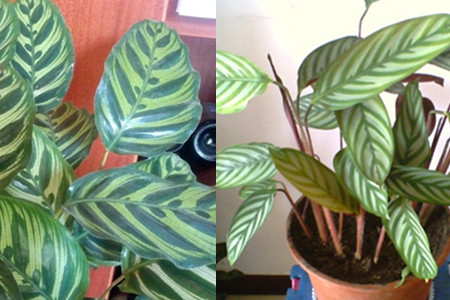
Among the dazzling array of plants on the flower market, one plant stands out in particular. Its leaves are rather large and feel just like leather, and the leaf color is strange too: the upper side is a mix of yellow and green, while the other side is a deep purple, making it very unusual. Many people like to grow one or two pots of this plant at home or in the office, because it is fairly easy to care for, and together with its unique appearance, it is very popular and well liked. It is Calathea roseopicta.
This is a very common plant. Because its price is not very high, it sells very well on the market. However, this plant often runs into one problem: its leaves turn yellow. How should this problem be solved?
1. Move it to a shaded spot
Unlike most plants, this plant does not much like sunlight. On the contrary, if it stays under harsh sunlight for a long time, its leaves easily turn yellow. So as soon as you notice the leaves starting to change color, quickly move the plant to a place without sunlight.
2. Ventilation
Besides sunlight, if the plant is kept in a closed environment, its leaves will also turn yellow, because such an environment is not well ventilated, which makes it very unsuitable for growing this plant. So you should place it somewhere with good airflow; only then will its leaves not turn yellow.
3. Water supply
When you notice the plant's leaves have begun to slowly turn yellow, reflect on whether you have been watering it correctly, because prolonged lack of water will cause the leaves to turn yellow, so you must supply it with enough water.
In short, the problem of yellowing leaves is not something that cannot be solved.
Why Calathea roseopicta Leaves Curl and How to Fix It: What to Do When Calathea roseopicta Leaves Turn Yellow
Curling leaves and yellowing leaves in Calathea roseopicta are caused by certain stages in its growth process and by conflicts between the environment and the plant's growth habits. For a plant to grow well, it needs to be in harmony with its environment. Therefore, we need to look for the cause in the growing environment of Calathea roseopicta.
Why Calathea roseopicta Leaves Curl and How to Fix It
1. Too much light
As everyone knows, Calathea roseopicta can only grow normally in a semi-shaded environment, so normally you only need to place it in a bright spot indoors where it can receive some scattered light to meet its light needs. If the light is too strong, especially if strong light falls directly on the plant, it easily causes leaf curling, and with slightly more severity, scorched edges and yellow leaves appear.
Therefore, during care and management, we must find a place for the plant where it can be shielded from direct sunlight. It is recommended to place it indoors, such as in the living room, the study, or even near a windowsill. In short, it must not be in an environment exposed to direct sunlight.
2. Lack of water
Since Calathea roseopicta is not drought tolerant and has a high water demand, if the potting soil stays on the dry side and the air stays dry for a long time, the plant can easily develop curled leaves due to lack of water. So we need to provide enough water from two aspects, soil moisture and air humidity, to promote healthy growth.
As for the potting soil, it is recommended to simply keep the soil consistently moist, watering promptly and in good time to ensure the plant gets the water it needs; as for air humidity, do this by frequently misting the leaves, and you can also spray water on the ground around the plant to raise the air humidity.
Only when we have done enough work on light and watering will the plant avoid leaf curling, yellowing, and scorched edges caused by improper light or improper watering, so that the plant always keeps growing normally.
What to Do When Calathea roseopicta Leaves Turn Yellow
1. Light as a cause of yellowing leaves in Calathea roseopicta
Calathea roseopicta is a shade-loving plant, and scattered light is best for it. In the care of Calathea roseopicta, direct sunlight must be avoided; do not place it in direct sunlight, because this will cause sunburn, making the leaf color fade, lose its gloss, and gradually turn yellow.
2. Poor ventilation as a cause of yellowing leaves in Calathea roseopicta
Calathea roseopicta loves shade, and it is better to place it in a cool spot with little sunlight, but you cannot keep it for a long time in a poorly ventilated and dark place, as this will also cause its leaves to turn yellow and even drop off.
3. Lack of water as a cause of yellowing leaves in Calathea roseopicta
Lack of water can also cause the leaves of Calathea roseopicta to turn yellow. When it lacks water, the potting soil becomes dry and cannot meet the plant's growth needs. In daily life, you need to control moisture reasonably and water regularly; water as soon as the potting soil looks dry, and when watering, be sure to water thoroughly, keeping the potting soil moist, and err on the side of wet rather than dry.
4. Low temperature as a cause of yellowing leaves in Calathea roseopicta
Calathea roseopicta is not cold tolerant, and in winter the growing temperature must be kept above 12 degrees. When the temperature is too low, it adversely affects the plant's growth and may cause cold damage. Cold damage will cause the leaves of Calathea roseopicta to turn yellow. You need to take measures to help Calathea roseopicta overwinter safely and ensure a suitable growing temperature.
5. Pests and diseases as a cause of yellowing leaves in Calathea roseopicta
Pests and diseases are a major obstacle to plant growth. When Calathea roseopicta is attacked by pests and diseases, all kinds of problems appear. For example, if it develops leaf spot and leaf blight, these are diseases that affect the leaves, causing spots, yellowing, and even dropping of the leaves, and in severe cases harming the whole plant. Medication can be used for treatment.
What common pests and diseases does Calathea roseopicta have?
The common pests and diseases of Calathea roseopicta mainly include southern blight, leaf spot, scale insects, and red spider mites.
The growth habits of Calathea roseopicta
Calathea roseopicta likes a warm, humid, and shaded environment. The suitable growing temperature is 20-30°C. It needs a lot of water, is not drought tolerant, is fairly heat tolerant, and slightly cold tolerant; it can overwinter safely above 5°C. Calathea roseopicta fears frost and likes loose, fertile, moist, and well-drained acidic soil.
Besides being prone to yellowing and curling leaves, pest damage is also a major threat affecting the growth of Calathea roseopicta. So in the daily care of Calathea roseopicta, it is necessary for us to monitor its growth condition; only then can it grow better.
Calathea roseopicta leaves turning yellow
Light as a cause of yellowing leaves in Calathea roseopicta
Calathea roseopicta is a shade-loving plant, and scattered light is best for it. In the care of Calathea roseopicta, direct sunlight must be avoided; do not place it in direct sunlight, because this will cause sunburn, making the leaf color fade, lose its gloss, and gradually turn yellow.
Poor ventilation as a cause of yellowing leaves in Calathea roseopicta
Calathea roseopicta loves shade, and it is better to place it in a cool spot with little sunlight, but you cannot keep it for a long time in a poorly ventilated and dark place, as this will also cause its leaves to turn yellow and even drop off.
Lack of water as a cause of yellowing leaves in Calathea roseopicta
Lack of water can also cause the leaves of Calathea roseopicta to turn yellow. When it lacks water, the potting soil becomes dry and cannot meet the plant's growth needs. In daily life, you need to control moisture reasonably and water regularly; water as soon as the potting soil looks dry, and when watering, be sure to water thoroughly, keeping the potting soil moist, and err on the side of wet rather than dry.
Low temperature as a cause of yellowing leaves in Calathea roseopicta
Calathea roseopicta is not cold tolerant, and in winter the growing temperature must be kept above 12 degrees. When the temperature is too low, it adversely affects the plant's growth and may cause cold damage. Cold damage will cause the leaves of Calathea roseopicta to turn yellow. You need to take measures to help Calathea roseopicta overwinter safely and ensure a suitable growing temperature.
Pests and diseases as a cause of yellowing leaves in Calathea roseopicta
Pests and diseases are a major obstacle to plant growth. When Calathea roseopicta is attacked by pests and diseases, all kinds of problems appear. For example, if it develops leaf spot and leaf blight, these are diseases that affect the leaves, causing spots, yellowing, and even dropping of the leaves, and in severe cases harming the whole plant. Medication can be used for treatment.