How to grow a red sandalwood bonsai? Master a few key points to grow this precious potted plant well
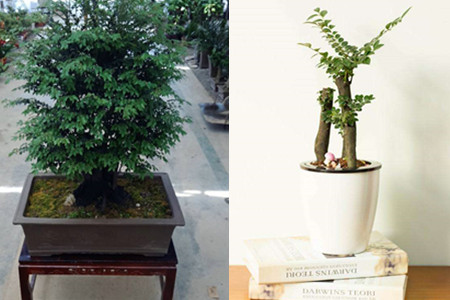
Red sandalwood ranks first among rosewoods, and small-leaf red sandalwood is the finest among red sandalwoods, so it is very valuable. In Buddhist scriptures, small-leaf red sandalwood is called a tree gifted by heaven, with properties of detoxifying, warding off evil and improving feng shui, so this bonsai is not only for ornament. As the saying goes, one inch of red sandalwood is one inch of gold. What techniques are there for growing such a precious plant? Let's go over them in detail below.
1. Temperature requirements.
Small-leaf red sandalwood is a tropical plant from India, adapted to the temperature and climate conditions of Southeast Asia, so it likes sunlight and cannot tolerate low temperatures. The growing temperature for small-leaf red sandalwood is between 20 and 30°C, and below 3°C it is prone to cold damage. In spring, summer and autumn it can all be grown outdoors, but in summer it should be moderately shaded, and in winter it should be kept indoors to avoid low temperatures.
Generally, when people grow bonsai they like to place them in a study or living room, but these spots have no direct sunlight and are not suitable for sun-loving plants. If small-leaf red sandalwood stays in such an environment for a long time, it will grow leggy, with branches getting longer and longer and the shape becoming less attractive, so it should be placed in a spot with plenty of sunlight.
2. How to water.
Small-leaf red sandalwood has relatively high water requirements and is a tropical plant that does not tolerate drought, so it needs watering about every two to three days. There is a technique to watering small-leaf red sandalwood: water thoroughly each time, but be careful that there is no standing water in the pot. Do not water at noon when the sun is direct and the temperature is high, because evaporation caused by high temperature will make the plant wither and die. Small-leaf red sandalwood likes a relatively humid environment, so you can use a spray bottle to spray mist to create a humid environment.
Many friends cannot get the timing and amount of watering right when growing small-leaf red sandalwood bonsai, which causes the plant to lack water. Here is how to deal with it.
1. How to handle the early stage of water shortage.
When you notice the bonsai's branches drooping, it means it lacks water. This state shows the plant is in the early stage of water shortage, which is relatively easy to handle. Just water it once in the morning and once in the evening, watering thoroughly each time.
2. How to handle dried new shoots caused by severe water shortage.
When the water shortage is severe, you will find the leaves of small-leaf red sandalwood half withered and the newly grown tender branches dried out. At this point you should prune off the dried branches, seal the wounds with paint or wax, place the bonsai in a cool place and wait for it to slowly sprout new buds, paying attention to watering during this period.
3. How to handle water shortage that has damaged the trunk.
What should you do when the bonsai has lost water very severely and the trunk has already begun to dry out? You should cut off the dried trunk, seal the wound, and then place the whole bonsai in water to replenish moisture. After the bonsai has absorbed enough water, place it in a cool place to let it recover.
3. How to fertilize.
Small-leaf red sandalwood has a relatively developed root system, and its own parasitic root nodules have a nitrogen-fixing effect, so it does not demand much from the soil and does not need frequent fertilizing. You can dilute plant nutrient solution once a month and water it into the soil with the water.
Because of the special feature of its developed root system, small-leaf red sandalwood bonsai cannot have its potting soil directly replaced with nutrient soil, nor should nutrient fertilizer be buried directly in the soil, as this will damage the roots. Too much nutrient soil and fertilizer can also burn the roots, which is instead harmful.
4. Do not casually change the bonsai's location.
Once your small-leaf red sandalwood is growing well and has adapted to its existing environment, do not move the pot casually, otherwise it will increase the burden on its growth.
The above are the care techniques for small-leaf red sandalwood. A special reminder: because red sandalwood wood is precious, there are many counterfeit goods on the market, so please verify authenticity before buying.
Getting to know the Indian small-leaf red sandalwood bonsai
Small-leaf red sandalwood, also known as chicken-blood red sandalwood, black sandalwood, ebony and green dragon wood. It is mostly produced in tropical and subtropical primeval forests. It is mainly found in Mysore State in India, while the other various types of sandalwood are classified under the rosewood category. Small-leaf sandalwood grows slowly and takes hundreds of years to mature, and the largest red sandalwood is only about 20 cm in diameter. At the end of the Ming Dynasty, red sandalwood in various parts of the South Seas was almost completely logged out, and all the red sandalwood used in the Qing Dynasty was harvested in the Ming Dynasty. This is an important reason why red sandalwood is treasured by the world. Small-leaf red sandalwood is a plant of the genus Pterocarpus in the family Fabaceae, and Indian red sandalwood is the best. The earliest record of red sandalwood is in Cui Bao's Gu Jin Zhu from the Jin Dynasty, where it was called "red sandalwood, produced in Funan, purple in color, also called red sandalwood."Small-leaf sandalwood's wood grain is not obvious. Its color is initially orange-red, and over time it becomes deep purple like lacquer, with growth rings almost invisible. The vessel lines are extremely fine, twisted like silk and like ox hair. In addition, small-leaf red sandalwood is also a precious traditional Chinese medicine. According to the Compendium of Materia Medica, red sandalwood can stop bleeding, relieve pain and regulate qi and blood.)
About red sandalwood care:
Small-leaf red sandalwood is a tropical plant and also has relatively high water requirements. It does not tolerate drought, so it needs watering every two to three days. There is also a technique to watering; it is not just a matter of pouring a basin of water on it. Watering cannot be done at noon when the sun is at its harshest, because this easily causes the plant's moisture to evaporate under high temperature, and with repetition it will cause the plant to wither and die. When watering, water thoroughly, not just wetting the surface.
Small-leaf red sandalwood's own parasitic root nodules have a nitrogen-fixing effect, so it does not need frequent fertilizing. Once every month or two, drip plant nutrient solution into water, mix evenly and water it into the soil. When fertilizing potted plants, do not bury nutrient soil in the soil, especially after the plant has grown stable and its roots have gone deep into the soil. Disturbing the soil over a large area will damage the plant's roots, and burying a large amount of nutrient soil may burn the roots because the soil is too fertile, causing damage to the plant's root system.
Lingnan bonsai prices
Below is a brief introduction to some Lingnan bonsai market price information for reference:
(1) Lingnan-style premium Chinese sweet plum stump bonsai, large living room and courtyard green potted plant, reference price: 48000 yuan/pot.
(2) Small-leaf red sandalwood tree stump bonsai, Lingnan style, reference price: 488 yuan/pot.
(3) Shan Ge Mu precious tree bonsai, Lingnan style, reference price: 1088 yuan/pot.