Reasons for Yellowing and Falling Leaves of Aglaia odorata and Prevention and Treatment Methods
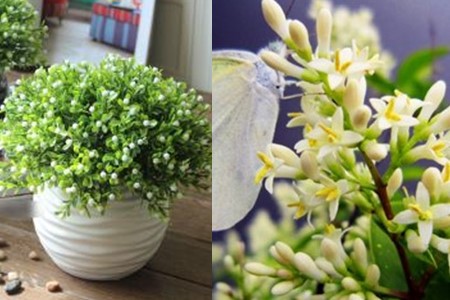
1. Low temperature
The phenomenon of yellowing leaves in Aglaia odorata mostly occurs in winter, and the main reason is that the temperature in winter is too low. Aglaia odorata likes to grow in a warm environment. When overwintering, if the temperature is lower than 5°C, it will suffer cold damage. The initial symptom of cold damage is that its leaves slowly turn yellow and then fall off. In addition, if it is exposed to cold wind, the leaves of Aglaia odorata will turn yellow overnight.
Once Aglaia odorata is exposed to cold wind or suffers cold damage, it is relatively difficult to rescue, and it will affect its flowering the following year. Therefore, when winter begins, attention should be paid to doing a good job of keeping it warm so that Aglaia odorata can grow healthily!
2. Improper watering
Although Aglaia odorata likes moisture, if it is not repotted for a long time, its soil will lose a lot of nutrients and oxygen will also decrease. After watering, the root system of Aglaia odorata will remain in a relatively wet state for a long time, respiration is inhibited, and part of the root system will become necrotic, thus causing the leaves of Aglaia odorata to turn yellow and fall off. At this time, watering Aglaia odorata should be stopped immediately. If the potting soil is still too wet, take the plant out and replant it once.
In addition, in hot seasons, if watering is not timely and the potting soil stays dry for a long time, the leaves of Aglaia odorata will also turn yellow. When this happens, do not water Aglaia odorata thoroughly all at once. Water it gradually and let it have a process of slowly adapting, and only then will it slowly recover its former vitality.
3. Insufficient light
During the growth stage, Aglaia odorata needs sufficient light. If it is kept in a shaded environment for a long time, the nutrients accumulated through photosynthesis will be relatively little, thus causing the leaves of Aglaia odorata to turn yellow and then fall off.
When this happens, immediately place Aglaia odorata in an environment with sufficient sunlight for cultivation, and rotate its direction once every month so that it can receive light evenly. Even if its leaves have turned yellow, they will gradually recover.
4. Soil pH
To grow Aglaia odorata, you need to choose slightly acidic soil. If the soil is alkaline, the leaves of Aglaia odorata will turn yellow and then fall off. In northern regions, most soil is alkaline, so this situation is relatively common. If you want the leaves of Aglaia odorata not to turn yellow, you can try changing the soil used to grow it.
In the north, alum fertilizer water is applied 3 to 5 times each year to reduce the alkalinity of the soil, and the pot is also changed once every year. In the south, the soil is mostly weakly acidic, so river pond mud can be directly chosen for cultivation, and the pot can be changed once every one to two years.
5. Poor ventilation
All plants need good air during growth. If Aglaia odorata grows for a long time in an environment without air circulation, it is very easy for its leaves to turn yellow and fall off. Therefore, usually pay attention to placing Aglaia odorata in an environment with good air for cultivation, and promptly prune away those branches that are too densely grown, ensuring that it has good light and ventilation during the growth period.
6. Do a good job of disease prevention and control
1. Scale insects: when encountering this insect, spray with the corresponding pesticide. If the quantity is relatively small, they can be removed manually by brushing.
2. Sooty mold: this disease is likely to occur in environments with high humidity, high temperature, and poor ventilation, so attention should be paid to this aspect during cultivation.
What Causes Aglaia odorata to Drop Leaves? Care Knowledge for Aglaia odorata
Aglaia odorata is a flowering plant that people love very much. When it blooms, it fills the whole room with fragrance and is deeply loved by people. However, we may find that an Aglaia odorata bought not long ago drops leaves. This not only affects its appearance, but can also cause the Aglaia odorata to die. So, what should we do when Aglaia odorata drops leaves? Below, let us take a look at care knowledge for Aglaia odorata.
1. What causes Aglaia odorata to drop leaves?
1. Watering: excessive watering prevents the root system from breathing, causing suffocation and root rot. Water cannot be conducted to the leaf surface. What appears is that at first the lower leaves curl, dry up, turn brown, and fall off, which then causes the upper green leaves to also fall off within a short time. Long-term water deficiency causes the root system to die. If it is then watered thoroughly, a large number of leaves will fall within a short time, and the plant will die. Watering should strictly follow "water when dry, do not water when not dry, and water thoroughly when watering." Basically, water thoroughly once every 2 days.
2. Fertilizing: Aglaia odorata has certain requirements for fertilizer, especially during the growth period, when sufficient fertilizer is needed. If fertilizer is insufficient, it will also cause the leaves to turn yellow and fall off. Fertilizing should follow the principle of applying thin fertilizer frequently, especially when topdressing begins in spring, and concentrated fertilizer should be avoided. Topdressing should preferably be applied once every 7 to 10 days, and an appropriate amount of superphosphate should also be added to the fertilizer water, which is beneficial to the growth of Aglaia odorata.
3. Light: Aglaia odorata likes light and is generally cultivated under bright scattered light. If the indoor location is relatively dark, it will affect the growth of Aglaia odorata, causing yellowing and leaf drop. Aglaia odorata should be placed indoors in a ventilated place with scattered light. It can be exposed to morning light every day, and moved indoors when the sun is high at noon. When the sun is about to set, let it see the evening sunlight. This process can last for about half a month, giving Aglaia odorata a process of adaptation.
4. Pests and diseases: leaf spot disease caused by infection by fungi and other pathogens easily causes local necrosis of leaves, with yellow spots or patches appearing. In severe cases, the entire leaf withers, yellows, and falls off. After infection by mosaic virus, yellow-green mottled patches appear on the leaves; it may also suffer damage from scale insects, red spiders, and others. Every 15 to 20 days, spray the leaf surface once with a clarified liquid extracted from a mixture of 25 to 30 times dry, pure plant ash and superphosphate, or a 0.1% clarified limewater, for pollution-free control, so as to protect the branches and leaves and prevent damage from various pests and diseases.
2. What to do when Aglaia odorata drops leaves
1. Fertilizing: generally fertilizer should be applied once a month, mainly organic fertilizer and high-efficiency phosphorus-potassium fertilizer, and partial application of nitrogen fertilizer should be strictly avoided. Each time, apply 25 to 30 grams of composted, decomposed, and deodorized peanut cake fertilizer, rapeseed cake fertilizer, or tea seed cake fertilizer per pot, and 15 to 20 grams of potassium dihydrogen phosphate or high-efficiency biological phosphorus-potassium fertilizer, mixed with 2 to 3 kilograms of clear water or composted, decomposed, and deodorized human and livestock manure water, then pour it on. 2. Watering: throughout the year, keep the potting soil in a moist state. Do not let it become dry and crack, but do not let it stay too wet for a long time either, otherwise it will cause root suffocation, root rot, and yellow leaves. Generally, in summer and autumn, water once a day with clear water, and in winter and spring, water once every 2 to 3 days with clear water, so that the water can quickly penetrate into the potting soil and is not suitable to accumulate on the potting soil. At the same time, often spray clear water on the branches and leaves. Especially during periods of high temperature in summer and drought in winter, evenly spray all branches and leaves wet, until water droplets begin to drip down, so as to keep the branches and leaves moist. 3. How to prune Aglaia odorata
Aglaia odorata should be pruned and shaped starting from the seedling stage, keeping a section of main trunk 15 cm to 20 cm high. Do not let the main branches grow in a cluster from the soil surface; instead, prune and branch above the 15 cm high main trunk, so that the plant shape is full. The lower branches of perennial old plants often age and die. Therefore, in the north it is suitable to shorten-prune once every other year during the hot season, prompting adventitious buds on the lower part of the main branches to sprout and grow new side branches, thereby maintaining a well-proportioned tree shape, strong tree vigor, and abundant leaves and flowers.
Finally, when we find that a newly bought Aglaia odorata is dropping leaves, do not panic first. Think about what was improper in the care process. Then, according to the above cultivation methods for Aglaia odorata, rescue your Aglaia odorata and let it become lively again.
The above is the relevant introduction in this article. I believe that after reading it, you also have a simple understanding of this. If needed, you can continue to follow No.1 Home Network to learn more information.
What to do when Aglaia odorata drops leaves? Analysis of the causes of Aglaia odorata leaf drop and countermeasures
Aglaia odorata is an evergreen shrub or small tree; it adapts to warm and humid climate conditions, and adult plants need sufficient sunlight. Its branches and leaves are dense, and the leaf color is verdant and glossy. It blooms multiple times within a year, most abundantly in summer and autumn. When blooming, a delicate fragrance spreads all around, with a scent similar to orchids. The tips of the small branches often have star-shaped rusty small scales; the pinnately compound leaves are alternate, and the flowers are yellow and extremely fragrant.Many flower lovers encounter this problem: Aglaia odorata drops leaves in large numbers. What should be done after this? Today, the editor will introduce to everyone the causes of Aglaia odorata leaf drop and the countermeasures.
1. Watering
Excessive watering prevents the root system from breathing, causing suffocation and root rot. Water cannot be conducted to the leaf surface. What appears is that at first the lower leaves curl, dry up, turn brown, and fall off, which then causes the upper green leaves to also fall off within a short time. Long-term water deficiency causes the root system to die. If it is then watered thoroughly, a large number of leaves will fall within a short time, and the plant will die. Watering should strictly follow "water when dry, do not water when not dry, and water thoroughly when watering." Basically, water thoroughly once every 2 days.
2. Fertilizing
Aglaia odorata has certain requirements for fertilizer, especially during the growth period, when sufficient fertilizer is needed. If fertilizer is insufficient, it will also cause the leaves to turn yellow and fall off. Fertilizing should follow the principle of applying thin fertilizer frequently, especially when topdressing begins in spring, and concentrated fertilizer should be avoided. Topdressing should preferably be applied once every 7 to 10 days, and an appropriate amount of superphosphate should also be added to the fertilizer water, which is beneficial to the growth of Aglaia odorata.
3. Light
Aglaia odorata likes light and is generally cultivated under bright scattered light. If the indoor location is relatively dark, it will affect the growth of Aglaia odorata, causing yellowing and leaf drop. Aglaia odorata should be placed indoors in a ventilated place with scattered light. It can be exposed to morning light every day, and moved indoors when the sun is high at noon. When the sun is about to set, let it see the evening sunlight. This process can last for about half a month, giving Aglaia odorata a process of adaptation.
4. Pests and diseases
Leaf spot disease caused by infection by fungi and other pathogens easily causes local necrosis of leaves, with yellow spots or patches appearing. In severe cases, the entire leaf withers, yellows, and falls off. After infection by mosaic virus, yellow-green mottled patches appear on the leaves; it may also suffer damage from scale insects, red spiders, and others. Every 15 to 20 days, spray the leaf surface once with a clarified liquid extracted from a mixture of 25 to 30 times dry, pure plant ash and superphosphate, or a 0.1% clarified limewater, for pollution-free control, so as to protect the branches and leaves and prevent damage from various pests and diseases.
Regarding the analysis of the causes of Aglaia odorata leaf drop and countermeasures, the editor will introduce it here. Everyone is welcome to continue following Succulent Garden to learn more small tips on flower care.