What causes rose leaves to turn yellow? Diseases and pests are the main causes
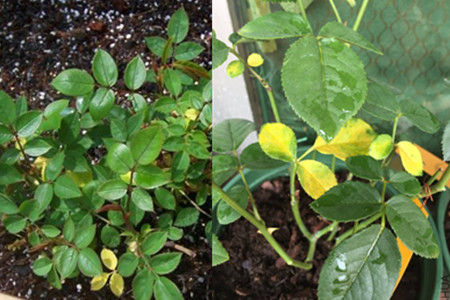
When it comes to roses, friends should be fairly familiar with them, as this plant can be seen in all kinds of places. However, this plant is actually not as easy to keep alive as we imagine. Even plants that have already grown quite large can develop all kinds of problems, and one of the more common ones is its leaves turning yellow. This symptom is very common, so what are the reasons that cause it to appear?
1. Too much water supplied
This is a relatively common reason. Many friends think that letting it come into contact with more water will make it grow more vigorously, but that is actually not the case. This plant only needs a lot of water during cuttings, and once the root system has grown out, it does not need that much water. So, if friends find that their rose has developed this symptom, then they need to reduce the water supply.
2. Pathogenic bacteria and insects causing trouble
If friends find that the plant has developed this symptom around May, then it may be caused by pathogenic bacteria or insects. This is because at this time the weather starts to become hot, and there are more and more rainy days, which makes it very easy for pathogenic bacteria to breed, and those insects will also hatch from eggs.
3. Not applying enough fertilizer in time
If, at the same time the leaves start to turn yellow, the plant's branches also become very thin and listless, then it may be that there is not enough fertilizer. At this time friends need to add some fertilizer to the pot, but it must not be buried in directly. Instead, first dissolve it in water, and then sprinkle it into the pot.
In short, the reasons for the change in leaf color are roughly these three. Friends must usually observe carefully and must not let this symptom spread.
Causes, patterns and control techniques of insect disasters in goji
Goji has high nutritional value and is a very precious traditional Chinese medicinal material. The main diseases of goji include goji root rot, brown sap disease and flower rust disease; the insect pests include goji red gall midge, goji leaf beetle, goji psyllid and goji gall mite, etc. Among the above diseases and pests, goji root rot, psyllid, leaf beetle, gall mite and red gall midge are widespread and prone to breaking out into disasters. Below, the editor will introduce to you the causes, patterns and control techniques of insect disasters in goji.
I. Causes that trigger insect disasters
1. The goji seedlings planted are relatively mixed and of poor quality. Because the goji root system has strong natural sprouting ability, there are many root-sucker seedlings, which have become the main means of propagating goji. Although this kind of seedling can maintain the basic characteristics of the mother plant and bears fruit early, at the same time it easily carries the pathogens of the mother plant. Some seedlings dug from near diseased plants die in the very year they are planted.
2. In order to see benefits early, high-density planting is mostly used. For tree shape cultivation, a multi-trunk natural shrub shape is mostly used. Although this tree shape has higher yield, the branches and trunks are tall and dense, and under farming operations and strong winds it easily causes damage to the bark of trunks and branches, triggering brown sap disease. Overly dense stands cause poor ventilation and light transmission, and the stand forms a high-temperature and high-humidity environment, creating favorable conditions for diseases and pests.
3. Goji cultivation in Jinghe County is relatively concentrated, but farmers operate on a household basis. After diseases and pests occur, there is no unified choice of pesticides, timing of application or methods, and the control period is not concentrated. This causes harmful consequences such as killing natural enemies, producing pesticide damage and increasing the pesticide resistance of the insects.
II. Occurrence patterns and control techniques
1. Goji psyllid
It belongs to Homoptera, Psyllidae, also called pig-mouth honey and jaundice, and is one of the key pests controlled in goji production.
① Occurrence patterns
The goji psyllid overwinters as adults in the tree canopy, under the bark, under fallen leaves and in dry grass. When the temperature rises above 5°C the following year, it begins to emerge from dormancy and cause damage. After emerging, the adults do not lay eggs before the goji sprouts, and only suck the sap of fruit branches to supplement nutrition. They often rest quietly on the sunny side of the lower branches and do not move when it is cold. After the goji sprouts, they begin to lay eggs. After hatching, the nymphs break through the eggshell from the upper end of the egg, crawl along the egg stalk onto the leaves and cause damage. All the nymphs attach to the leaves and suck the leaf sap. After the adults emerge, they continue to lay eggs and cause damage. There are 3-4 generations per year.
② Control techniques
The goji psyllid mainly overwinters under the tree canopy, under fallen leaves and in dry grass. In early March each year, fallen leaves and dry grass in the goji orchard are concentratedly cleared away to reduce the overwintering generation base. During the occurrence period, 1.8% Yilik eucalyptus psyllid 5,000-6,000 times dilution, or 1.8% abamectin 3,000 times dilution, or 28% moth psyllid net emulsifiable concentrate 1,500 times dilution can be used for control.
2. Goji rust mite
① Occurrence patterns
The goji rust mite overwinters as adult mites clustered at the bud eyes of branches. In spring, in early to mid-April, the goji sprouts, and the adult mites begin to emerge from dormancy and migrate to the leaves to cause damage. In late April they lay eggs, and the eggs develop into protogynes, which reproduce as protogynes. Before the rusted leaves fall off, the adult mites and nymph mites transfer to the bud eyes of branches to oversummer. In mid-to-late October, when the temperature drops to about 10°C, the adult mites crawl from the leaf surface to the bud eyes of branches and gather to overwinter.
② Control techniques
In production, taking advantage of the habit of the goji rust mite gathering on fruit branches to overwinter, during the dormant period thinning and pruning diseased and residual branches and short-pruning fruit branches has a clear effect on reducing the overwintering rust mite base. In mid-to-late April, during the emergence period, 50% bromopropylate emulsifiable concentrate 4,000 times dilution or red-white mite rust clear 2,000-2,500 times dilution can be used; in mid-to-late October, before overwintering, 3-5° Baume lime sulfur mixture can be used for control. During the production season, 45%-50% sulfur suspension concentrate 120-150 times dilution, or 20% amitraz 2,000-3,000 times dilution, or pyridaben 2,000-2,500 times dilution can be used for control.
3. Goji gall mite
It belongs to Acariformes, Eriophyidae. The damaged parts appear as black mole-like galls, and the mites mostly live inside the galls. The general control effect is worse than for rust mites, and the losses caused are lighter than those from rust mites.
① Occurrence patterns
The goji gall mite overwinters as mature female adult mites in the overwintering buds, scales and branch crevices of current-year and 2-year-old branches of goji. In mid-to-late April of the following year, when the goji branches unfold leaves, the adult mites migrate from the overwintering sites to the leaves to lay eggs, and after hatching the nymph mites bore into the goji leaves and cause galls. In mid-to-late May, the new shoots enter the rapid growth stage, and the gall mites on the leaves crawl out from the galls and crawl onto the shoots to cause damage. From this time to mid-June is the first peak period of reproduction and damage. In September the second peak period of damage is reached. In mid-to-late October they enter the dormant period.
② Control techniques
The goji gall mite and the goji rust mite both belong to the same family of harmful mites. The control agents, concentrations and timing are basically the same as those for controlling rust mites. The agents used to control rust mites can also control gall mites.
4. Goji red gall midge
The goji red gall midge is a pest that specifically harms goji young buds. The young buds damaged by it lose the ability to bloom and set fruit.
① Occurrence patterns
The adults of the goji red gall midge come out to be active at dusk and at night, and are active before 11 o'clock in the daytime and after 18 o'clock in the afternoon. The adults only lay eggs on young buds (young buds of about 2 mm or less) and do not lay eggs on mature flower buds. After the larvae of the red gall midge mature, when there is rainy weather or taking advantage of the cooler conditions at night, they crawl out of the galls, roll down to the ground surface, and the larvae crawl out from the galls and pupate in the soil under the tree canopy. Rain before the larvae enter the soil, before pupation and before adult emergence is beneficial to their growth and development. The egg stage is about 3-5 days, the larval stage is about 13.4 days, the prepupal stage is about 8.2 days, and the pupal stage is about 2.4 days. One generation is completed in about 26-30 days. In normal years, overwintering adults enter the emergence period from April 10-25. In Jinghe, overwintering adult activity was found as early as April 5. It occurs severely in sandy land and sandy loam land, and occurs relatively lightly in heavy clay soil land.
② Control techniques
Ground control agents: 40% phoxim emulsion, 600 ml per 667 m, or 5% phoxim granules 2.5-3.0 kg per 667 m, or 40% chlorpyrifos 500-600 ml per 667 m, or 50% acephate 500-600 ml per 667 m mixed with 60-100 kg of fine moist soil, sealed for 10-12 sJ,H,-J, then spread in the orchard, spreading more under the tree canopy, and irrigating promptly after spreading. Canopy control: according to the development cycle of the red gall midge, choose the adult egg-laying period for control. The agents include 40% chlorpyrifos 700 times dilution plus 10% imidacloprid 1,500 times dilution, or 40% chlorpyrifos 700 times dilution plus 50% acephate 800 times dilution, or 30% alphate 1,000-1,500 times dilution.
5. Goji leaf beetle
In old production areas it generally occurs intermittently or does not occur. In newly developed goji areas, especially newly developed desert areas, it is a frequent pest. Adults and larvae chew the leaves, and if control is not timely, even the leaves of the whole plant may be eaten bare, seriously affecting plant growth and yield.
① Occurrence patterns
The goji leaf beetle often inhabits wild goji or weeds, and adults fly to cultivated goji trees to chew leaves and tender shoots, laying eggs in a "V" shape on the underside of leaves. Generally after 8-10 days the eggs hatch into larvae and begin to cause large-scale damage.
The goji leaf beetle has 6 generations per year, overwintering as adults in hidden places in the field. Damage is most severe in June-July. In early October, the last generation of adults emerges, and at the end of October they enter overwintering.
② Control techniques
The larvae of the goji leaf beetle have thin body walls and are not tolerant of pesticides and are relatively easy to control. Generally, choosing moderately toxic and low-toxicity chemical pesticides for control during the larval stage gives good results. 40% dimethoate 800-**** times dilution, or 20% fenvalerate 2000-2500 times dilution, or 2.5% decis 3000 times dilution can be used for control, and the results are all very good.
Care precautions for the flame tree
1. Temperature
The flame tree is a tropical tree species. It likes high temperatures and is not cold-tolerant. Only when the winter temperature is not lower than 10°C can it overwinter smoothly.
2. Watering
The flame tree does not have high requirements for soil, except that it must have good drainage, because its roots have rhizobia, which can fix nitrogen and increase soil fertility, but waterlogging will cause the rhizobia to die and affect its growth. Therefore, the amount of watering must be well controlled to ensure there is no waterlogging.
3. Seedling transplanting and field planting
After growing for 1-2 years, seedlings need to be transplanted once, and transplanting is best done in early spring. The spacing between plants is about 60 cm, and only 3-year-old seedlings can be used for field planting. After field planting, the soil needs to be loosened and weeds removed 2-3 times each year, and one topdressing should be applied in each of spring and autumn.
4. Pruning
The trunk of the flame tree will grow new branches and leaves at any time. If allowed to grow naturally, the plant shape will change greatly and it cannot better maintain its vitality, so it needs to be pruned frequently.
Pay attention to and do the above four points well, and you can keep the flame tree forever gorgeous, making everyone who sees it stop for it and marvel at its magnificent beauty! This kind of beauty has made many people around the world develop a deep affection for it, honoring it as a national tree, city tree, city flower or school flower. Next, the editor will list one or two examples for everyone. After reading, you will know that so many people around the world actually like it!
1. Country that honors it as a national tree: the Republic of Madagascar in Africa
2. Regions that honor it as a city tree: Xiamen City in Fujian, Tainan City in Taiwan, China, and Panzhihua City in Sichuan (the flame tree was once the city tree of Panzhihua City in Sichuan, but because the flame tree suffered severe insect disasters for many consecutive years in the mid-to-late 1990s and was cut down in large numbers, its position as city tree was later replaced by the kapok tree)
3. Region that honors it as a city flower: Shantou City in Guangdong
4. Universities that honor it as a school flower: Xiamen University, National Cheng Kung University