When to plant wisteria? A detailed guide to the correct planting method
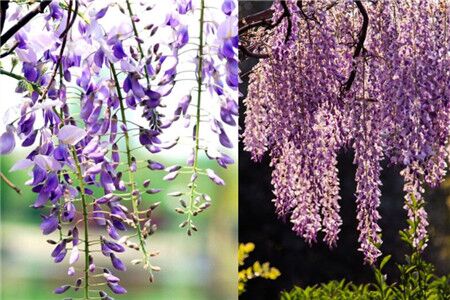
Wisteria is a relatively large climbing plant, usually grown in courtyards or parks, and is rarely grown in pots. You only need to plant it by a wall and it will grow tender green leaves. It also has very good ornamental value, so many people like to grow this plant.
But for beginners, they do not know when it is suitable to plant wisteria, or how to plant it so that it does not turn yellow and wither. So today we will answer these questions for you; gardening friends who want to grow this plant should not miss the useful information coming up.
1. When to plant wisteria
Generally, spring is a relatively suitable time to plant this plant. Every spring, this plant produces light purple flowers, and the whole plant instantly turns into a sea of pink-purple, breathtakingly beautiful.
2. Introduction to wisteria cultivation methods
1. Potting soil preparation
If you want to successfully grow wisteria, you must pay great attention to its potting soil preparation. This plant likes alkaline soil that is loose in texture and highly breathable, and when planting, you should also avoid windy conditions. Try to choose a fully enclosed balcony for this; after preparing the potting soil, grow wisteria by layering or cuttings.
2. Pay attention to temperature regulation
Although wisteria is a plant with very strong vitality and good heat and cold tolerance, it grows relatively fast at around 20 degrees. However, when the temperature is below five degrees, growth stops, and when summer is too hot, the growth rate of this plant also becomes relatively slow. Therefore, in this high-temperature environment, cooling measures should be taken, and it must not be placed under strong light, otherwise it will affect the plant's growth.
3. Fertilizer management
Although this plant is a plant with relatively strong drought tolerance, it also likes moist soil. Watering once a week is enough, and each time it should be watered thoroughly at once, but do not let water accumulate in the flowerpot. Otherwise, it will cause wisteria root rot. Since this plant likes fertile soil relatively much, it should be fertilized once a month, preferably with a compound fertilizer with balanced nutrients, and remember to water after each fertilization.
3. Methods to make wisteria bloom abundantly and brightly
1. When cultivating this plant, it is recommended to choose a mature seedling for potting, then add a small amount of crushed hoof pieces as base fertilizer. Then place the flowerpot in a ventilated environment; this can make the flowers it produces more vivid.
2. This plant blooms in early March each year. At this time, you should water less and fertilize more; this can effectively extend the flowering period. Spent flowers should be cut off to avoid consuming nutrients, and this can also effectively prevent affecting the plant's flowering quality and quantity the following year.
3. The elongated branches and vines should be cut short in time to prevent them from climbing on surrounding objects, and also to avoid the loss of nutrients, so that the flowers bloom more vividly the next year.
4. In daily care, water appropriately and control fertilizer; this can prevent excessive growth of branches and vines. It is also necessary to apply potassium fertilizer and phosphorus fertilizer over the long term.
Through the detailed introduction above, have you mastered the planting method for wisteria?
[Wisteria pictures] What is the flower language of wisteria?
Content summary: Wisteria is recorded in the Fabaceae family. The plant is an ornamental flowering vine with hanging and trailing advantages. Its main use is for viewing flowers, and it is also known as kudzu flower. It is currently mainly distributed in Anhui, Korea, and other regions. This article introduces for you: What is the flower language of wisteria?
[Wisteria pictures]
Morphological characteristics: Wisteria is mostly planted in parks and green belts, and is the best choice for urban landscaping and beautifying the environment. The plant is a tree plant with thick roots and stems, with independent flowering and fruiting periods. The fruit cannot be eaten directly but can be used as medicine. Wisteria inflorescences are mostly terminal and appear drooping. The corolla is purple or cyan, the total inflorescence length is more than 35 cm, and the corolla is basically heart-shaped, often with double-petal characteristics, but the style is slightly short, so the flowers tend to fall easily.
Growth habits: Wisteria is native to China. The plant can grow suitably among shrubs and is suitable for care in semi-shaded environments. It often has cold-tolerant characteristics, and the plant is a light-loving plant. Its main root is slightly deep and it is not easy to wither, so it is not suitable for transplanting. Secondly, wisteria has strong adaptability to the environment and will not easily wither. Under normal circumstances, a single wisteria plant can live for more than a hundred years.
Medicinal value: Wisteria has a detoxifying effect and can also have an anti-diarrheal effect. Wisteria can be harvested directly and can also be used to treat external injuries. Placing dried flowers in a bedroom can have sleep-aiding and insecticidal effects. However, wisteria seeds contain a trace amount of toxin, so they cannot be eaten directly, but the cyanide components contained in wisteria seeds can treat rheumatic bone diseases and can also have a preservative effect.
[The flower language of wisteria]
The flower language of wisteria —— "persistent love, moments of happiness, dying for love, obsession and intoxication, a lifetime of yearning."
Legend has it that long ago, the human world was plagued by a ferocious beast, causing the people to live in misery. This ferocious beast was named Ri. The Flower Fairy in heaven could not bear it, so she descended to the mortal world and locked Ri inside a deep mountain. The Flower Fairy worried that Ri would break out of the mountain, and she could not stay in the mortal world all day, so she ordered her subordinate wisteria to guard Ri in its true form. Thus, the mountain where Ri was imprisoned was covered with wisteria, and the vertically hanging wisteria guarded Ri flawlessly.
Wisteria was the most innocent fairy under the Flower Fairy. During a hundred years of guarding, wisteria unexpectedly developed feelings of attachment to Ri. Later, Ri used the wisteria fairy's love to gain a chance to escape. Wisteria committed a fault, so the Flower Fairy expelled her from the roster of flower fairies and ordered her to capture Ri within a hundred years. After that, wisteria bloomed all over the mortal world, yet Ri's whereabouts were never seen. Until a hundred years later, the wisteria fairy returned to the mountain where Ri had once been imprisoned, and saw a familiar face. It turned out that a hundred years earlier, Ri had already returned to this mountain, wanting to atone to wisteria. In the end, wisteria gave up capturing him and died in her lover's arms.
Summary: The flower language of wisteria is dying for love. Although there can be no happy ending in her whole life, even dying in her lover's arms lets her feel the intensity of love.
The flower language of wisteria; wisteria planting
Wisteria is also called Chinese wisteria and red wisteria. It is a woody vine in the genus Wisteria of the Fabaceae family. It is mainly distributed in the central and southern regions of China, such as Hebei, Shandong, Henan, Jiangsu, Anhui, and other places, and is also distributed in Korea and Japan. Wisteria has dense branches and leaves, large drooping inflorescences, and elegantly colored flowers, mostly blue-purple or light purple. Its vines are long and naturally curved, very easy to shape, and when attached to flower racks, green corridors, rocks, and so on, the decorative effect is very good.
Growing environment:
Wisteria has relatively high requirements for its growing environment. It generally grows in relatively cold places with relatively sufficient sunlight. Because wisteria's main root is relatively deep, it needs to live in fertile soil. Moreover, wisteria has good drought tolerance, so it does not need too much watering when planted. Wisteria is relatively widely distributed in China, and is grown in Henan, Hebei, Shaanxi, and other regions of China.
The flower language of wisteria
1. Intoxicating romance, lingering longing.
2. Persistence toward you, the happiest moment.
3. Obsessive love.
Wisteria planting
1. Sowing and raising seedlings
After collecting seeds, dry and store them. Before sowing the next spring, first soak the seeds for about 12 hours, then sow and raise seedlings in an open-field seedbed.
After the Start of Autumn, thin the seedlings appropriately. They leave the nursery after three years, and when moving seedlings it is best to keep the soil ball. You can also select 1-year-old robust branches in early spring and cut them into sections 15 cm to 20 cm long as cuttings; bundle several dozen into one bundle, place them upside down first in a sheltered, sunny, moist area, cover with 10 cm of soil and firm it, then cover with plastic film to keep warm and moist.
2. Cuttings
In early May, dig them out for cuttings, which have a very high survival rate and produce seedlings relatively quickly. Broken roots cut off when lifting seedlings can also be used for root cutting propagation. Division propagation should be carried out in spring when winter buds begin to sprout; when digging root-sucker seedlings, be sure to dig deeply.
3. Watering
Wisteria consumes a lot of water, but it should still be kept dry rather than wet. If the potting soil is only wet and never dry, it is not conducive to flowering. Watering should follow the principle of not watering when not dry, and watering thoroughly when watering. Especially in August during flower bud differentiation, water should be withheld appropriately. In September, normal watering can be carried out. After leaf fall in late autumn, water less. During the spring and summer growing season, water fully and keep the potting soil moist often. After autumn, control watering to prevent autumn shoots from sprouting, which helps produce more flowers the following year.
4. Fertilizing
Applying thin fertilizer frequently is an important measure for making wisteria bloom abundantly and grow lush leaves. During the growing season, combine with watering and apply a thin cake fertilizer once every half month until fertilization stops in July to August. Continue fertilizing in September, but both frequency and concentration should be appropriately reduced. Before flowering, appropriately increase phosphorus and potassium fertilizer. During the growing season, apply thin cake fertilizer water once every half month; applying phosphorus fertilizer before flowering can make the flowers abundant and the leaves lush, increasing the ornamental effect.