What are the growing habits of mini chrysanthemum bonsai? An appreciation guide
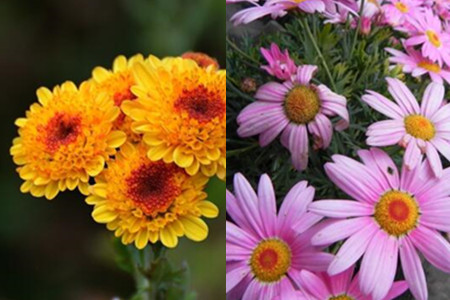
In classical poetry we often see chrysanthemums. In poets' writing, chrysanthemums represent different emotions; usually they are given a rather sorrowful role, and some poets express their own moral integrity by describing chrysanthemums. The chrysanthemums in Tao Yuanming's writing symbolize a hermit, a transcendent and reclusive posture. In the late Tang Dynasty, chrysanthemums were given a new symbolism, compared to resolute fighters, brave and unyielding. Most chrysanthemums still express the poet's noble character.
I. Chrysanthemum as Chinese medicine
Chrysanthemum is not only brightly colored and varied in shape; importantly, it can also be used as medicine and is a Chinese herbal remedy. Its taste is slightly bitter, with a sweet aftertaste in the mouth, and its nature is slightly cold, so women should try not to use it often.
As a medicinal material, chrysanthemum can clear heat and detoxify, and other conditions such as colds, headache and dizziness, and blurred vision can also be treated with chrysanthemum. But chrysanthemum is not suitable for everyone; for example, people with qi deficiency and cold stomach should use it sparingly, and people with diarrhea should not use chrysanthemum.
II. Flowering period
Chrysanthemums generally bloom between September and November. The harvested chrysanthemums are dried naturally in the shade or dried by heat for storage, or made by steaming and then sun-drying; of course, some people also use freshly picked chrysanthemums directly without any processing.
In Anhui, Zhejiang, Henan and other places, flower farmers plant them on a large scale to generate income. When cultivating chrysanthemums, they need to be planted according to their growing habits, so let us look at what characteristics the growing environment of chrysanthemums actually has.
III. Growing habits
Chrysanthemums do not like long-day conditions like other flowers. Although chrysanthemums like sunlight, when the duration of sunlight exposure is relatively short, chrysanthemums will bloom earlier, so try not to plant chrysanthemums in a shady environment. In addition, chrysanthemums have strong drought tolerance, so the frequency of watering should not be too high. If waterlogging occurs, drain it as soon as possible to prevent the roots from rotting.
In addition, chrysanthemums are also quite cold-hardy; even in cold winters their roots and stems underground will not freeze to death.
IV. Ornamental value
Chrysanthemums have high ornamental value. In China's classical poetry, we often see the activity of appreciating chrysanthemums, which has been passed down from ancient times to the present; even now, our country has maintained this cultural tradition, and in various regions every year when chrysanthemums are in full bloom, different chrysanthemum fairs, exhibitions and other chrysanthemum-appreciation activities are held. This not only greatly enriches people's leisure life, but also allows this cultural tradition of appreciating chrysanthemums to continue to be passed down.
V. Bonsai
Mini chrysanthemum bonsai is one of the chrysanthemum types with relatively high ornamental value. It can usually be placed indoors, or beside a computer, to prevent radiation and purify the air; importantly, it beautifies the environment and gives people enjoyment of beauty.
In addition, people have also developed other chrysanthemum products, such as chrysanthemum paste, which can clear heat and detoxify, brighten the eyes and dispel wind; there is also chrysanthemum pillow, which has good effects on dizziness, high blood pressure and insomnia; there are also foods made from chrysanthemum.
VI. Chrysanthemum tea
People with excess internal heat can appropriately drink some chrysanthemum tea to reduce heat and clear heat. But chrysanthemum tea is not suitable for everyone to drink; for example, people with a cold stomach will experience diarrhea after drinking it. Children should try not to drink it; drinking too much can easily cause anemia.
In addition, never drink chrysanthemum tea that has been left overnight, because chrysanthemum will deteriorate after being soaked in water, and not drinking it for a long time can lead to other illnesses. Therefore, only decide whether you can drink chrysanthemum tea after following a doctor's advice.
Balcony garden design methods and effect picture appreciation
InFor you, creating a lush garden in a small home may seem an unimaginable feat, but the balcony garden designs brought to you next prove that even in the smallest space, growing plants and building a balcony garden are feasible.
Balcony garden design methods and effect picture appreciation
——————————————————————————————————————————————
Different balcony types require different plants to achieve a beautiful and fitting design style. For example, using warm-toned plants to decorate a cool-toned balcony can create a striking color contrast and produce a better decorative effect. In addition, the suitable balcony orientation should also be chosen according to the plants' growing habits. On a balcony with good light, it should be decorated with light-loving plants that are ornamental in flower or beautiful in both flower and foliage; while a shaded balcony with poor light is better decorated with shade-tolerant, cool-preferring foliage plants.
The methods of balcony garden design generally include the following forms:
I Flower box type:Flower boxes are generally rectangular, and whether placed or hung, they are more suitable for the shape of the balcony and save occupied space. Place the cultivated potted flowers into the flower box, hang it with hooks on the outer side of the balcony, or lay it flat on the upper edge of the balcony wall. For the flower box type, you can choose some drought-tolerant flowers that like sunlight, have many branches, abundant flowers and a long flowering period, such as geranium, four-season chrysanthemum, dahlia, periwinkle and so on.
ⅡWall-attachedtype:The so-called wall-attached type is to use climbing plants to decorate a vertical wall; it is a form of vertical greening. Place woody vines such as ivy and Chinese trumpet creeper inside and outside the fence to green the fence and nearby walls.
ⅢFlower standtype:On a smaller balcony, in order to expand the planting area, you can use stepped or other forms of pot stands to arrange various potted plants in order of size and height, forming a three-dimensional potted flower arrangement on the balcony; you can also extend the pot stand beyond the balcony to seek space outdoors, thereby increasing the greening area and also beautifying the street view. The planting types should not be too many or too mixed; they should be clearly layered and unified in style. You can choose chrysanthemum, Chinese rose, cyclamen, asparagus fern, coleus and so on.
ⅣVine pottype:Erect vertical poles at the four corners of the balcony and place horizontal poles on top, fixing them to form a trellis; or erect vertical poles at the outer corners of the balcony and tie poles or stretch ropes between the vertical poles to form something like a fence. Guide the branches and leaves of climbing plants such as grapes and melons to the frame to form a shade trellis or shade hedge.
ⅤHangingtype:Hanging cultivation of flowers is an excellent three-dimensional decoration. There are two methods. One is to hang it on the balcony ceiling, using small containers to plant spider plant, crab claw orchid, coleus and so on to beautify the three-dimensional space. The second is to hang small containers on the balcony railing edge, planting vines or spreading plants, so that their branches and leaves hang outside the balcony, beautifying the railing and the street view. For the hanging type, you can choose creeping sedum, small-leaf ivy, nasturtium and so on.
ⅥComprehensivetype:Reasonably matching and comprehensively using the above forms can also achieve a very good beautifying effect, and it is also relatively common in real life.
" Conclusion:The planting amount of a balcony garden should be moderate, and do not create safety hazards. In particular, flowers hung outdoors must be fixed securely to avoid falling and injuring pedestrians. After all, we make balcony gardens to decorate the home and beautify the environment, creating a more comfortable living environment for ourselves, so do not let extreme joy turn to sorrow.
【More plant encyclopedia】
Agave Canna Red spider lily Forget-me-not Dandelion Dendrobium officinale Chinese yew Kapok Osmanthus Begonia Hydroponic plants
Home feng shui plants Bedroom feng shui plants Plum blossom Aloe Jasmine Radiation-proof plants Pennywort Potted plants Bonsai making Drug plants
Mistletoe Indoor flowers Money tree Lucky bamboo Potted plant making Anthurium Mint Living stones Geranium Garden Crab claw orchid Peace lily
Snake plant Kunlun snow chrysanthemum Water lily Flower pot Violet Magnolia Winter jasmine Mimosa Blue enchantress Hydroponic cyclamen Alocasia
Buddha tree Lucky bamboo Peperomia Fragrant wood Chinese rose Serissa Hydrangea Bamboo fern Mosquito repellent plant Rubber tree Podocarpus Fuchsia
Ivy Cymbidium Jade plant Bowl lotus Orange jasmine Marigold String of coins Lily of the valley Osmanthus Tulip Snapdragon Datura
Morning glory Office feng shui plants Bleeding heart vine Solomon's seal Camellia Daisy Beaucarnea Epiphyllum