A detailed guide to night orchid planting methods and division and repotting techniques
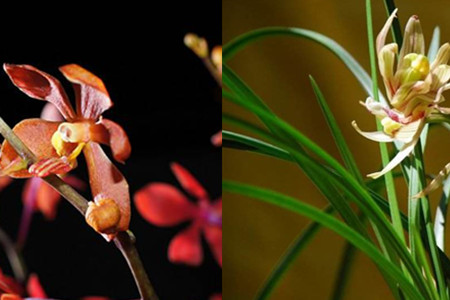
The night orchid is a small shrub that grows in southern regions. It likes a relatively hot and humid environment. Eating the night orchid can clear the liver and brighten the eyes, improving and purifying your body's internal environment. It is not difficult to grow, but you need to pay attention to some details. Below we will introduce it to you from various aspects.
1. Environment
The night orchid does not like to be moved, so once you start sowing it, do not move it again. Keeping the soil moist is very important, as it can provide it with a steady supply of nutrients. However, when watering, you need to wait until the pot is completely dry before watering, otherwise root rot is very likely to occur. Summer is generally the vigorous growth period, and you need to spray water on the leaves frequently.
2. Division and repotting
Because the night orchid grows very quickly, especially in summer when it will fill the entire flowerpot. At this time you need to divide and repot it, but when dividing you must wait until the soil in the pot is dry before starting. Take out the mother plant first, strip off the soil on it, and place the separated roots in the sun to expose them, which is more helpful for growth.
3. Ways to eat it
For many people in southern regions, the night orchid is an ingredient. It tastes sweet and helps reduce internal heat, and it can be eaten with many ingredients. A common dish is cooking oysters with night orchid, adding tofu and simmering them together; the broth is fresh and nutritious. It has a very good effect on restoring children's eyesight.
4. Home growing
If you just want to grow a little for fun, then growing it in a small flowerpot is enough. It is better to place it in a spot on the balcony that does not get direct sun. They like a warmer environment and have relatively poor adaptability to temperature differences. These issues all need attention during the growing process. Friends who like it can try it themselves.
Five major care techniques for growing orchids in pots
Orchids are one of the flowers that flower lovers often grow, and they are very good potted plants. They have long been known as the gentleman among flowers and are much loved by people. So today the editor of Huinong Network will share with you five major care techniques for growing orchids in pots. Flower lovers should hurry and take a look!
Orchids have long been famous in China, with the reputation of being the gentleman among flowers. They win people over with fragrance, have pleasant colors, bloom proudly in the cold, have an elegant posture, and noble character. Since ancient times they have been deeply loved by people and have also become subjects described by literati ancient and modern. At the same time, they are also one of the flower types often grown by flower lovers. Below are five care techniques for growing orchids in pots to share with you!
First, you must master the growth habits of orchids: they like shade and fear direct sunlight; they like moisture and avoid dryness; they like fertility and soil rich in large amounts of humus; they are suited to an environment with air circulation, and it is forbidden to use ordinary mud, soil, or flame stone to grow orchids.
Second, potting technique. First place some tiles, broken bricks, or small stones at the bottom of the pot to block the drainage holes, then place the orchid appropriately in the middle of the pot according to its length. When planting, hold the orchid with your left hand and add soil with your right hand, and shake the flowerpot several times to fill the soil firmly. After planting, water the orchid. The first watering must be thorough, until water leaks from the bottom of the pot. Place it in a cool, ventilated place to rest quietly, and only after about a week can it see sunlight.
Third, fertilizing technique. Orchid fertilizing emphasizes light fertilizer and slow release. Generally, the orchid's acclimatization period after potting is two weeks, and after the acclimatization period has passed you can fertilize appropriately.
Fourth, watering technique. After orchids are planted, they need to be watered thoroughly. After that, each watering should only be done when the soil has dried thoroughly, which is the so-called "see dry, see wet." Water control performance also varies greatly depending on the growing medium. Generally, in hot summer, water once every 3~5 days; in winter, water once every seven days or once every two weeks.
Fifth, lighting technique. Light is an important factor in forming flower buds. Although orchids like coolness, if they are kept in a concealed place year-round, they will also rarely bloom. It is understood that orchids on the shady side of a mountain have long leaves but sparse flowers, while orchids on the sunny side of a mountain have short leaves but many flowers. Therefore, when cultivating orchids you must pay attention to the lighting issue. In spring and summer, it is recommended to place orchids at an indoor east- or south-facing ventilated window, and it is forbidden to expose orchids to strong sunlight.
During the orchid growing process, you must pay attention to lighting techniques, because it is different from other flowers. Although it likes coolness, it also needs light. The above five major care techniques for growing orchids in pots are crucial!
Sharing orchid growing techniques: Have you done these steps like fertilizing and watering correctly?
Recently, quite a few flower lovers have consulted the Huinong Network backend about orchid cultivation issues. The editor summarized them and found that everyone's questions were about the same, so below I am sharing them mainly to communicate with everyone together.
How do you grow orchids? Among China's traditional famous flowers, orchids mainly refer to Cymbidium ensifolium, Cymbidium sinense, Cymbidium kanran, Cymbidium goeringii, and Cymbidium faberi, among others. Although orchids are elegant and delicate, they are not very easy to cultivate. Today we will mainly learn what issues need attention when cultivating orchids.
1. Watering issues
Generally speaking, orchid watering has its particularities. Watering should be poured slowly around the edge of the flowerpot. Water must not be poured on the leaves, and even more so must not be poured on the orchid's leaf core, otherwise it will cause water to accumulate in the orchid's pseudobulb and root system, leading to disease infection and the occurrence of root rot and stem rot. This phenomenon is even more serious when the water quality is not very clean.
Also, try to water around 10 o'clock in the morning. After watering, the water will evaporate quickly, which can avoid accumulated and standing water and reduce the occurrence of disease.
2. Improper fertilizing
Orchid fertilizing is a matter of knowledge. Using concentrated fertilizer or chemical fertilizer often causes root discomfort, lowers the orchid's resistance, and makes orchids extremely susceptible to disease infection. For orchid fertilizing, try to use organic fertilizer, rotted farmyard manure, liquid fertilizer, and so on. However, these fertilizers must be thoroughly rotted to avoid bringing pathogens after use. Reasonable fertilizing will reduce disease and make orchids more robust.
3. Ventilation issues
Orchids like ventilation and air permeability. In addition, the growing medium should be loose so that orchid roots can come into contact with air as much as possible. Only then will the orchid's resistance improve. Especially in the hot and stuffy summer season, when orchids are prone to disease infection, ventilation and air permeability are even more important. It can both lower the temperature and reduce the probability of orchids getting sick.
4. Growing medium issues
In orchid care, the growing medium is very important. It can be said that if the growing medium is chosen correctly, growing orchids becomes relatively simple. Besides being loose and breathable, the growing medium also needs attention to sterilization and disinfection. In particular, pine needles and crushed tree bark may carry some pathogens or insect eggs. Even if rotted, they may not be killed completely, so the growing medium must be disinfected before orchids are potted.
Disinfection can be done by steaming or boiling, soaking in potassium permanganate, or placing it on a concrete surface under strong sunlight, and so on. Once the growing medium is properly treated, disease will naturally decrease.
Overall, cultivating orchids still requires flower farmer friends to be more careful in daily life, learn more professional orchid cultivation experience, or come to Huinong Network to communicate more with other flower farmer friends!