How do you propagate ginkgo seeds? Methods and precautions
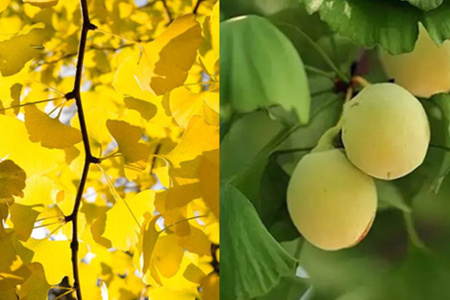
Sowing ginkgo seeds is affected by many factors such as time, location and climate, so the correct method must be mastered. The specific steps are as follows:
First, make a seedbed
The quality of the seedbed directly determines the survival rate of the seeds. Ginkgo likes waterlogging, so the seedbed must be chosen in a place with abundant water sources. Loosen the soil, level it and rake it fine, then dig a small trench about every 25 cm.
Second, sowing
Sow the seeds in the trenches in spots. To promote the development of lateral roots, you can break the outer shell of the seeds beforehand, but be sure not to damage the embryo inside. When covering with soil, do not make it too deep or too shallow. Too deep will make the seeds germinate slowly, while too shallow is not good for the seeds to absorb nutrients.
Third, raising seedlings
Cover the seedbed with a layer of film, which can maintain soil temperature and help the seeds germinate. When the new tender shoots of the seeds penetrate the film, pay attention to pest control and weeding. At this time, weeds and pests in the ground will damage the growth environment of the seedlings and harm the tender shoots, so herbicides and insecticides can be sprayed on the seedlings.
The precautions are as follows:
1. Seed selection
In the past, farmers mostly chose smaller seeds, because before 2000, ginkgo seeds were relatively expensive, and the smaller the seed, the more there were per jin. But now seed prices are not very high, so you must choose relatively large seeds. The seedlings cultivated from this kind of seed are more robust and grow very well.
2. Pay attention to fertilizing
Ginkgo seedlings have a great demand for fertilizer, so sufficient fertilizer must be ensured. May to June is the rapid growth period of the seeds, and at this time nitrogen fertilizer should be applied once as a top dressing. August is the growth period, and potassium fertilizer should be applied once.
I hope everyone can learn the correct method of propagating ginkgo seeds!
Ginkgo seed planting method: pre-sprouting is essential
Every year around November, the roads in some schools turn golden. Do you think workers painted them? No, it is because they are covered with a kind of leaf. At this point, many friends should already be able to guess what this article is about. That's right, it is ginkgo. This plant is still relatively common in our country, but in fact it can also be considered an ancient and rare tree species. Almost all the ones we see are relatively "young" trees.
There are roughly three ways to propagate this tree, and what we are talking about here is propagating it with its seeds. So how exactly should it be done?
1. About seed selection
If you want to get robust plants, you must first select good seeds. When choosing seeds, friends must first ask about the age of the mother tree, because if the tree has not grown long enough, then its seeds will not be very healthy either. In addition, choose those that are relatively plump, because seeds in this state are new stock.
2. Choosing the time
For our country, around Qingming is a good time to plant this plant. Or friends can also observe the ginkgo trees outside. If the trees have already begun to sprout, then they can be planted.
3. Preparing to sprout
Before formally planting them, friends need to first place the seeds on sandy soil and let them sit for a few days. Of course, first spray a little water on the sand. This is pre-sprouting. If this step is not carried out, it will be difficult for this kind of seed to sprout.
4. Spot sowing
Insert the treated seeds one by one into the soil, taking care to expose the sprouts, and wait about two weeks.
Although the whole planting process is not simple, after they are planted they do not need much care.
How do you plant ginkgo saplings? What should be paid attention to?
Ginkgo saplings have a large crown and dense shade and have a cooling effect. They are ideal cultivated tree species for greening, street trees, highways, nurseries, field forest networks, windbreak belts, and the greening of government offices, schools and factories. Below is an introduction to related content about ginkgo saplings.
Planting ginkgo saplings
1. Sowing and raising seedlings
Under seed propagation and natural growth conditions, the trunk is very strong, the crown is tall, and the main branches have few branches; ginkgo tree seeds planted artificially should be collected as large grains, and mother trees around 80 years old are best. The collected seeds should be peeled and dried in the shade. To bear fruit earlier and for convenient management, the trunk can be controlled so it does not grow too tall, while the branches are allowed to spread out in all directions. The trunk height is generally 1.0-1.5 m. A shorter trunk helps accelerate crown growth, helps early fruiting and high yield, and also helps management and harvesting. In the south, autumn sowing can be used, while in the north, spring sowing is preferable. The seedbed should preferably use sandy loam with good water permeability.
2. Propagation stage
To propagate seedlings using root suckers, in February and March, dig out suckering branches with roots on one side at the base from the root-sucker seedlings of robust mature female mother trees and plant them in the nursery. Diameters of 1 cm to 4 cm are all acceptable. Before planting, prepare the land and apply base fertilizer. The depth of planting into the soil must be appropriate, not too deep or too shallow. After transplanting, if it is not excessively dry, there is no need to water. This method makes survival easy. It will bloom and bear fruit in about 10 years. If propagated by dividing suckers from the base of the trunk and then grafted, it can bear fruit in 3-4 years, and the fruiting period can last more than 3000 years.
3. Grafting propagation
Use robust branches from the full fruiting period as scions and graft them onto seedling rootstock using the cleft grafting method. When using grafting propagation, different scions used also have different effects on crown development and yield. When grafting, generally 2-3 scions are grafted onto 1 rootstock. After the scions survive, scaffold branches first grow from the scions. The scaffold branches borne at the top have stronger growth and can form 1-2 main branches. Afterward, branches grow again from these main branches, forming multiple groups of branches expanding outward, and then continue to grow branches, expanding into a crown. With high-trunk grafting, fewer branches grow from the base and there are more branches at the tip, and fruiting is later; with low-trunk grafting, more branches grow from the base, the crown expands quickly, fruiting is early, and yield is also high. Newly grafted ginkgo trees have a relatively large annual growth increment, which can reach more than 1.0 m, and then gradually weaken.
4. Entering the soil and taking root
For cutting propagation, from May to June select current-year soft branches or collect current-year short shoots from fruiting trees and cut them into 10 cm to 15 cm lengths, keep 3 to 4 leaves on top, cut the lower incision into a horseshoe-shaped slant, soak the base in water for 2 hours, then insert them into a vermiculite sand bed, with intermittent water spraying to ensure the leaves do not dry out. They can take root in about one and a half to two months.
5. Growth process
Seedling transplanting. Ginkgo is a deep-rooted plant with a very long growth life. For artificial planting, good conditions must be created for it in terms of terrain, topography, soil quality and climate. Choose loam, yellow pine soil or sandy loam with high and dry terrain, long sunshine hours, sufficient sunlight, deep soil layers, good drainage and loose fertility. Seedling transplanting can be carried out in both spring and autumn each year. Among them, it grows luxuriantly in acidic and neutral loam, grows well, and forms a forest earlier. Ginkgo with a diameter below 5 cm can be planted bare-rooted, while those above 6 cm generally need to be planted with soil. Bare-rooted transplanted seedlings have a recovery period in the same year. Seedlings with soil balls can grow in the same year. After small seedlings are planted in rows, irrigate with water. For planting large trees, it is best to fill the pit with water before planting, and after the water in the pit has seeped away, plant the large tree into the pit and tamp it firm, so that the water in the pit rises back up to moisten the roots.
6. Management of seedlings
6.1 Ginkgo trees like fertilizer, like moisture, and require high aeration. After planting ginkgo, soil and fertilizer-water management need to be strengthened. First, persist in deep digging and loosening the soil once every year, and at least keep the area around the tree disk loose; second, apply more fertilizer, especially more organic fertilizer, such as barnyard manure, decomposed garbage, etc.; third, pay attention to irrigation and drainage. In the dry season, water appropriately, and in the rainy season, promptly drain accumulated water. Deep digging and loosening the soil is generally carried out in autumn and winter. Ginkgo roots develop early, and when the ground temperature rises to 6°C, the root system begins activity. South of the Yangtze River, deep digging is best completed before February. Chemical fertilizers can be applied throughout the year. Organic fertilizer is best applied in September-October by digging open the soil surface and burying it shallowly, or combined with deep digging in winter by digging radial or ring-shaped deep fertilization trenches and burying it.
In ginkgo fruit plantations, the spacing between plants is large, making it most suitable for intercropping crops. Only when intercropping, care must be taken to choose the crops well. Those that absorb too much fertilizer, especially those that can attract serious pests and diseases, or whose root exudates hinder ginkgo growth, are best not planted. Some crops such as corn absorb a lot of fertilizer, but because they are related to the livelihood of local farmers, they can also be intercropped, but when intercropping, more fertilizer must be applied. Practice has proved that the root exudates of plants such as tobacco and walnut are extremely unfavorable to ginkgo growth, while plants such as potato can greatly induce damage by white grubs, so it is better not to plant them. The growth of ginkgo cannot lack organic fertilizer. When soil organic matter is insufficient, serious nematode damage is often induced. Transport in mountainous areas is difficult, and it is hard to apply large amounts of organic fertilizer that needs to be transported, so interplanting green manure in ginkgo forest land is advocated. However, green manure planting should also mainly ensure the normal growth of ginkgo, and green manure should be pressed into the soil at the flowering stage to give full play to its fertilizer effect.
6.2 The annual growth increment of ginkgo trees is relatively small. Under ordinary management conditions, they only flush once a year. When fertility is insufficient, the annual growth increment of branches is often less than 40 cm. The flower buds of ginkgo only form on the short shoot parts commonly known as bell branches. These two basic characteristics determine that ginkgo generally should not be pruned, or should only be lightly pruned. However, because the grafted buds of ginkgo grafted seedlings are often located at the edge of the crown, most grafted plants often have severely lopsided crowns, which will also affect future yield. The way to correct a lopsided crown is to set up supports, properly top (pinch out the growing tip), and at the same time apply more fertilizer. Generally, as long as the terminal bud is cut off, the several lateral buds below it can sprout, and several branches will form in the year of topping or the next year. After planting, ginkgo trees have a relatively long recovery period, and their susceptibility to lopsided crowns is related to insufficient endogenous growth hormones. Ginkgo seedlings that receive more organic fertilizer and develop good root systems basically do not have a recovery period, and lopsided crowns can also be well controlled.
6.3 Artificial pollination of ginkgo trees is a key technique for increasing ginkgo yield steadily. Even in ginkgo fruit plantations that have already been equipped with pollinating male trees, it is best to carry out artificial pollination. There are many ways to do artificial pollination. The most practical method is to mix pollen into a water solution and spray it for pollination. The time to collect male flowers is when the stamens turn yellow. After collecting the male flowers, spread them out to dry in time. After the male flowers shed pollen, the pollen can be screened out, dried with quicklime or the like, and set aside. This kind of pollen can be stored at room temperature for more than 15 days, and if kept dry and stored in a refrigerator, it can be stored for ] year. If it will be used for pollination within 10 days, the pollen does not need to be screened out; just spread it in a cool place. When using it, add 30 kg of water to 1 kg of male flowers, squeeze and knead, wash out the pollen, filter out the male flowers, and spray it on the ginkgo trees as soon as possible.
Precautions for planting ginkgo saplings
Ginkgo trees most fear deep planting. The depth of planting seedlings directly affects future growth. Ginkgo trees are sensitive to soil permeability and fertility, so their root systems are mostly distributed horizontally on the surface of the soil layer, which is convenient both for respiration and for the absorption of nutrients and water. New shoots develop relatively quickly and seedlings grow vigorously. Once a seedling is planted deeply, due to poor permeability, low temperature causes the seedling to develop slowly or even stop. Even if it grows by luck, the leaves are only as big as copper coins, and it cannot grow normally within 2-3 years. If the plot is waterlogged and water accumulates, it will quickly cause the seedling to die. The suitable depth is the same as the original depth.
Pruning requirements for ginkgo saplings
1. Crown pruning must preserve the overall framework of the tree, removing dead branches, split branches and inner canopy branches.
2. Prune the top branches at 75 degrees to prevent dust accumulation and pathogen reproduction.
3. The amount of crown pruning varies according to tree species. It is mainly based on the size of the soil ball, and the amount of pruning is controlled by the root condition of the soil ball.
4. Trim worn roots and clean up rotten roots.
Key points:
When pruning, grasp the principle of "the entire cut surface has no black spots and no rot."
The above is the related content about ginkgo saplings. I hope it can be helpful to everyone!