Can night-blooming jasmine be propagated by cuttings? Learn this trick and you'll benefit for a lifetime
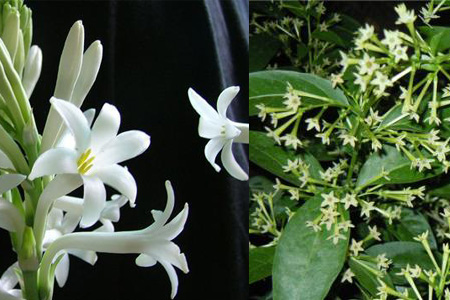
Every plant has its own characteristics. If planted appropriately, they can also add some vitality to the environment and help purify it. Therefore, many people choose to grow some plants at home. On one hand, it cultivates one's interests, and on the other hand, it can effectively decorate the space. It is a case of killing two birds with one stone.
So when growing plants, only by thoroughly remembering the growing methods for certain plants can you better cultivate them. Night-blooming jasmine, as a relatively common flower with a fairly rich fragrance, blooms at night and can also give off waves of aroma, and is deeply loved by people.
If you want to grow some night-blooming jasmine, can you choose the method of growing it by cuttings? Actually, yes. Like most plants, it can be propagated by cuttings. The following practical tips can help you successfully grow night-blooming jasmine.
Although many people know how to cultivate night-blooming jasmine, most friends do not know much about propagating it. Now let a friend who has grown night-blooming jasmine for many years share cutting propagation techniques, so that flower lovers can learn more knowledge.
1. Selecting branches
When selecting branches, choose some that are relatively thick and strong, and also have some buds. Also, do not choose branches with flower buds or relatively long leggy branches, because this will cause the cuttings to have insufficient nutrients and make them less likely to survive.
2. Cutting branches
Before the formal cuttings, cut the branches shorter, about a dozen cm is enough, and it is better to apply rooting powder on each cut, as this will help rooting. After that, remove as many leaves as possible, keeping only the two leaves at the top, and then they can be placed into the soil.
3. Keeping warm
After planting, use a plastic bag to wrap the top of the branches or wrap the entire planting area, as this helps retain temperature and helps the branches survive.
Learn these 4 tricks to easily grow indoor potted plants well!
Because of changes in people's living environments nowadays, many people have started the era of growing indoor potted plants. Keeping two or three plants at home, with green leaves and bright flowers, can not only purify the air and decorate the home environment, but also cultivate character while cutting branches, trimming leaves, and watering. So how exactly can indoor potted plants be grown well? Let me tell you.
First point, choosing soil:
It is said that the foundation determines the superstructure. Likewise, to grow potted plants well, the most basic thing is to choose the right soil below. According to its acidity and alkalinity, soil can be divided into acidic, alkaline, and neutral soil. The soil most suitable for growing flowers is neutral soil, and most plants can grow in neutral soil, but a small number of plants like acidic soil, such as azaleas, jasmine, and gardenias. The least suitable soil for plant growth is alkaline soil; basically no plant can survive in alkaline soil. If you cannot distinguish soil properties and mix your own soil, you can directly go to a flower shop to buy ready-made nutrient soil for planting.
Second point, choosing flowerpot material:
Different plants also have different drainage requirements. Some are drought-tolerant and some are afraid of waterlogging, so you should buy flowerpots of different materials for cultivation according to the different drainage requirements of the plants. Relatively drought-tolerant plants can choose plastic or ceramic pots with better sealing. If it is a plant especially afraid of waterlogging, you must choose containers such as clay pots or ceramic pots with better water permeability. One thing to pay special attention to is that no matter what kind of flowerpot you choose, drainage holes must be left at the bottom.
Third point, when to repot:
If plants are grown well, they will naturally have luxuriant branches and leaves and grow in clusters. At the appropriate time, you should consider repotting. Staying crowded in one pot will only cause them to wither due to insufficient nutrients. So when is the appropriate time? When you find that its root system has grown very expansively, you can consider changing to a larger pot or dividing and transplanting. However, some relatively special plants should be noted and cannot be repotted easily, such as: money tree, bird of paradise, etc.
Fourth point, choosing pot size:
In choosing flowerpot size, many people must hold the attitude that the bigger the flowerpot, the better, thinking that a bigger flowerpot will not only hinder plant growth less, but also reduce the number of repottings and avoid withering from transplanting! But in fact this is a completely wrong idea. Potted plants and ground-planted plants are different. Plants grown in flowerpots must fit just right. Configure containers of the same specification according to their size. Many plants need smaller spaces, and for flowering plants, appropriately constraining the roots makes it easier for them to bloom. Just pay attention to making each repotting only slightly larger.
The above are the four major cultivation tips compiled for flower lovers who want to grow indoor potted plants. I believe that as long as you learn these four tricks, you will surely be successful everywhere. If you flower lovers also have any different cultivation experiences, you are also welcome to share them with us!
Can osmanthus trees be rooted from cuttings? Can osmanthus trees be propagated by cuttings?
Osmanthus trees are not only evergreen all year round, but also full of floral fragrance. Many people like to grow osmanthus trees. So, can osmanthus trees be rooted from cuttings? Can osmanthus trees be propagated by cuttings?
Can osmanthus trees be propagated by cuttings?
Yes.
Cutting time: From early March to mid-April, select 1-year-old spring shoots for cuttings. This is the best cutting time. You can also select semi-mature branches grown in the current year from late June to late August for heel cuttings, but this has high requirements for controlling temperature and humidity.
Osmanthus cutting time and methods
Selection of cutting time and control of temperature. Osmanthus cuttings are best taken in May and June. The suitable rooting temperature for osmanthus is 25°C to 28°C. If the temperature is too low, plastic film should be covered to increase light and raise the seedbed temperature. If the temperature is too high, attention should be paid to shading, and one corner of the plastic film should be lifted for ventilation and cooling or mist cooling.
Cutting substrate and seedbed. The cutting substrate requires loose, breathable, well-drained acidic soil or sandy soil with high humus content, and vermiculite is best. Passageways should be left around the seedbed, and drainage ditches should be opened well. The soil must be disinfected before cutting. Set up a plastic arched shed 45 cm high on the seedbed to retain moisture and prevent rain accumulation. On top of the shed, build another shade shed about 1.6 m high.
Selection and treatment of cuttings. Cuttings should be taken in the morning and evening or on cloudy days. Select semi-lignified branches for cuttings, cut them into 10 cm to 12 cm lengths, cut the lower end close below the node into a horseshoe shape, and keep 2 to 3 leaves at the upper end.
Cutting techniques:
Dip the lower end of the cuttings in ABT rooting powder or soak in 200 ppm to 500 ppm indolebutyric acid for 5 minutes to 10 minutes, insert 2/3 into the soil, with a plant and row spacing of 6×6 cm. After inserting, water thoroughly, then cover with plastic film.
Management after cutting
The soil moisture requirement is preferably around 50%, while the air humidity is best kept above 85%.
In the early stage of cutting, keep the shade degree of the shade shed at around 80%. This not only prevents direct strong light, but also ensures sufficient scattered light, so as to facilitate photosynthesis of leafy cuttings and help rooting.
After 10 days, spray the leaves once with 0.2% potassium dihydrogen phosphate or 0.5% superphosphate and 0.1% urea solution.
After 30 days, they have basically rooted, and the film can be removed and light increased. For rooted young seedlings, attention should be paid to leaf misting and shading on sunny summer days.
To make the young seedlings grow robustly, you can spray the leaves with 0.05% “Yemianbao”; do not fertilize from the root system. By September to October or the spring of the following year, they can be transplanted into pots.