What to Do When Dusty Miller Wilts? Learn the Correct Way to Grow It
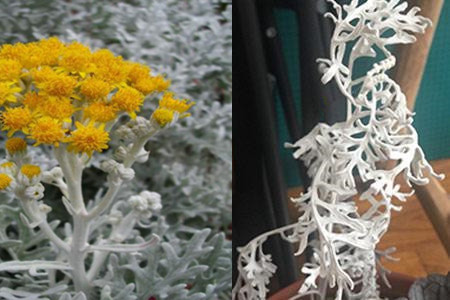
Dusty Miller is also known as Snow Leaf Chrysanthemum, and its leaves are mostly grayish-white or grayish-green. The leaves are covered with a layer of fuzzy down, making them look very beautiful. Its flowers are very small and yellow in color. Compared with its leaves, the leaves are clearly more appealing.
Dusty Miller is a very cold-tolerant flowering plant, so it is suitable both for pot cultivation and for planting in the ground. Although Dusty Miller is not a difficult plant to grow, many flower enthusiasts still encounter problems such as wilting leaves when cultivating it. So how should this plant be grown to prevent leaf wilting?
1. Light requirements
Many flower enthusiasts like to place their plants in a semi-shaded, well-ventilated spot and then never move them. While this approach is not wrong, any plant that goes without light for a long time will develop wilting and yellowing leaves.
I suggest placing Dusty Miller in full light for 2 hours each day when the light is soft. If you do not have that much time to tend it, you can place it there for one hour a day. When the sunlight becomes intense, move it back to a cool, ventilated spot.
2. Watering tips
Dusty Miller does not have very high water requirements, so do not water it every day. During cultivation, you can observe that you should water only when the surface of the potting soil looks dry, and the amount of water should not be too much. If you water too much, water will accumulate in the pot, and water that cannot drain away will cause root rot.
If you really do accidentally overwater and water is floating on the surface of the potting soil, first pour off the standing water on the surface, then use a wooden stick to poke some ventilation holes in the soil so the water can evaporate, and there will be no accumulated water.
3. Be careful not to damage the roots when repotting
When a plant has grown to a certain point, it needs to be repotted. When repotting, be very careful not to damage the roots. If you really cannot manage the operation well, just keep the original potting soil, place it in a new pot, and add some new soil.
What Kind of Plant Is Dusty Miller? Dusty Miller Pictures and Introduction
Chinese name: Dusty Miller
Alternative name: Snow Leaf Chrysanthemum
Latin scientific name: Senecio cineraria
Family and genus: Asteraceae, Senecio
Place of origin and distribution: Southern Europe
Dusty Miller is a perennial herbaceous plant of the genus Senecio in the family Asteraceae. The plant is much branched, generally 50-80 cm tall, and prefers a cool, moist, sunny climate and loose, fertile sandy soil or clay soil rich in organic matter. Its silvery-white leaves look like a white cloud from a distance. When planted together with solid-colored flowers of other colors, the effect is excellent, and it is an important foliage plant for flower beds.
Dusty Miller Senecio cineraria Dusty Miller Illustrated Guide: How to Grow Dusty Miller / How to Propagate Dusty Miller
Dusty Miller Fact SheetDusty Miller Senecio cineraria
Dusty Miller Cultivation Methods and Precautions: An Introduction to Dusty Miller
Dusty Miller is a perennial herbaceous plant of the genus Senecio in the family Asteraceae. The plant is much branched, generally 50-80 cm tall, with leaves that are once or twice pinnately lobed, and both sides are covered with silvery-white down. Its silvery-white leaves look like a white cloud from a distance. When planted together with solid-colored flowers of other colors, the effect is excellent, and it is an important foliage plant for flower beds.
Morphological Characteristics of Dusty Miller
Dusty Miller has strong branching, growing in a clumping habit, with spoon-shaped or pinnately lobed leaves, the whole plant densely covered with white down, and yellow flower heads with single-petal flower form. During the seedling growth period, pinching can be done to promote branching. Nitrogen fertilizer should not be applied in excess, lest the leaves grow too large and the white down becomes sparse, losing ornamental value. The mature leaves of Dusty Miller are spoon-shaped or pinnately lobed, with both sides covered in silvery-white down. The leaves are relatively thin, with lobed edges like a snowflake pattern, and bear relatively long white down. The flower heads are borne singly at the tips of branches, and the flowers are purplish-red. The whole plant bears white down. The plant is much branched, with leaves that are once or twice pinnately lobed, both sides covered with silvery-white down, flower heads borne singly at the tips of branches, flowers small and yellow, flowering from June to September, and seeds beginning to mature successively from July.
Ecological Habits of Dusty Miller
Dusty Miller is native to Southern Europe and is relatively cold-tolerant, able to overwinter in the open field in the Yangtze River basin. It is not tolerant of extreme heat and is prone to dying under high temperature and high humidity. It prefers a cool, moist, sunny climate and loose, fertile sandy loam or clay loam rich in organic matter. The most suitable temperature for growth is 20°C-25°C, and at 25°C its branching ability is strongest.
Distribution Range of Dusty Miller
Dusty Miller is native to Southern Europe and is relatively cold-tolerant, able to overwinter in the open field in southern Hebei and the Yangtze River basin. Suitable regions: East China, South China, Southwest China.
Propagation Method of Dusty Miller: Seed Propagation
Dusty Miller is commonly propagated by seeds. Generally, seeds are sown in open-field seedbeds at the end of August or beginning of September, and they sprout uniformly in about half a month, with slow growth at the seedling stage. When 4 true leaves have grown, transplant into 5-inch pots or into the field, and then plant into pots after the following spring begins. During the growth period, pinching can be used to control its height and increase the spread of the plant. Dusty Miller is a fertilizer-loving plant. One to two weeks after potting, apply diluted manure or spray the leaves with 0.1% urea and monopotassium phosphate, and thereafter apply fertilizer once a week. In cultivation, no pests or diseases have been observed on Dusty Miller. The specific method is as follows: Since it is relatively afraid of heat throughout the entire growing period, and the optimal sowing temperature is 15-20°C, autumn sowing is often carried out after mid-to-late September: sterilize the substrate to be used; the best method is to heat it in a wok, which will scald all pests and diseases to death. Soak the seeds in warm water (at a temperature similar to face-washing water) for 12-24 hours, until the seeds absorb water and swell. For very common seeds that germinate easily, this step can be skipped. For tiny seeds that are difficult to pick up with your hands or other tools, moisten one end of a toothpick with water and stick the seeds one by one onto the surface of the substrate, cover with substrate 1 cm thick, then place the sowing pot into water with a depth of 1/2-2/3 of the pot height, letting the water slowly soak up. For larger seeds that can be picked up with your hands or other tools, place the seeds directly into the substrate and sow them in holes at a spacing of 3 x 3 cm. After sowing, cover with substrate to a thickness of 2-3 times the size of the seeds. After sowing, use a sprayer or a fine-holed watering can to moisten the sowing substrate, and later water again when the potting soil is slightly dry. Still be careful not to water too forcefully, so as not to wash the seeds away.
Management after sowing:
After autumn sowing, when encountering a cold wave and low temperatures, you can wrap the pot with plastic film to help keep it warm and moist. After the seedlings emerge, promptly uncover the film, and let the seedlings receive sunlight before 9:30 every morning or after 3:30 in the afternoon, otherwise the seedlings will grow very weak. After most of the seeds have sprouted, appropriate thinning is needed: pull out the diseased and unhealthy seedlings so that the remaining seedlings have a certain amount of space between them. When most of the seedlings have grown 2 or more leaves, they can be transplanted into pots.
Cutting Propagation
Dusty Miller can also be propagated by cuttings. Cut tender shoots of about 10 cm, remove the two leaves at the base, soak in 250 times diluted Shida rooting nutrient solution for about 30 minutes, insert into a cutting bed mixed with perlite and vermiculite, and carry out full-light misting. A good root system forms in about 20 days. Note that cuttings are not easy to root under high temperature and high humidity. Through comparison, it has been found that cutting seedlings grow less vigorously than seed-sown seedlings, with a smaller spread and shorter plants.
Management after cutting is as follows: Temperature:The optimal temperature for cutting rooting is 18°C-25°C. Below 18°C, rooting of the cuttings is difficult and slow; above 25°C, the cut ends of the cuttings are susceptible to infection by pathogens and rot, and the higher the temperature, the greater the proportion of rot. When low temperatures are encountered after cutting, the main measure for keeping warm is to wrap the pot or container used for cuttings with plastic film. When the temperature is too high after cutting, the main measure for cooling is to shade the cuttings, blocking 50-80% of sunlight, and at the same time mist the cuttings 3-5 times a day. On sunny days with higher temperatures, mist more frequently; on cloudy and rainy days with lower temperatures and higher humidity, mist less frequently or not at all.
Humidity:After cutting, the relative humidity of the air must be maintained at 75-85%. Humidity can be increased by misting the cuttings 1-3 times a day. On sunny days, the higher the temperature, the more frequent the misting; on cloudy and rainy days, the lower the temperature, the less frequent the misting or none at all. However, excessive misting makes the cuttings susceptible to infection by pathogens and rot, because many kinds of pathogens exist in water.
Light:Cutting propagation cannot do without sunlight, but the stronger the light, the higher the temperature inside the cuttings, the more vigorous the transpiration of the cuttings, and the more water consumed, which is not conducive to the survival of the cuttings. Therefore, after cutting, 50-80% of sunlight must be blocked. After the root system has grown, gradually remove the shade net: on sunny days, remove the shade net at 4:00 every afternoon, and cover it again before 9:00 the next morning.
Dusty Miller transplanting: When potting small seedlings, first place coarse-grained substrate or ceramsite 2-3 cm thick at the bottom of the pot as a drainage layer, sprinkle a layer of fully decomposed organic fertilizer on top as base fertilizer, about 1-2 cm thick, then cover with a layer of substrate about 1-2 cm thick, and then place the plant in, so as to separate the fertilizer from the roots and avoid burning the roots. The substrate used for potting can be one of the following. Vegetable garden soil: cinder = 3:1; or garden soil: medium-coarse river sand: sawdust (mushroom residue) = 4:1:2; or one of paddy soil, pond mud, or leaf mold. Or peat + perlite + ceramsite = 2 parts + 2 parts + 1 part; vegetable garden soil + cinder = 3 parts + 1 part; peat + cinder + ceramsite = 2 parts + 2 parts + 1 part; sawdust + vermiculite + medium-coarse river sand = 2 parts + 2 parts + 1 part. After potting, water once thoroughly and place in a slightly shaded environment for one week of care.
When transplanting small seedlings, first dig the planting holes, sprinkle a layer of organic fertilizer at the bottom of the planting holes as base fertilizer, about 4-6 cm thick, then cover with a layer of soil and place the seedlings in, so as to separate the fertilizer from the roots and avoid burning the roots. After placing the seedlings in, backfill the soil to cover the roots, firm the soil with your feet, and water once thoroughly. Before flowering, generally pinch twice to promote the growth of more flowering branches: one to two weeks after potting, or when the seedlings are 6-10 cm tall and have six or more leaves, remove the top shoots and keep the lower 3-4 leaves to promote branching. Three to five weeks after the first pinching, or when the side branches have grown to 6-8 cm long, carry out the second pinching, that is, remove the top shoots of the side branches and keep the 4 leaves below on the side branches. After two pinchings, the plant shape will be more ideal and the number of flowers will also be greater.
Cultivation Techniques for Dusty Miller
For Dusty Miller, cut tender shoots of about 10 cm, remove the two leaves at the base, soak in 250 times diluted Shida rooting nutrient solution for about 30 minutes, insert into a cutting bed mixed with perlite and vermiculite, and carry out full-light misting. A good root system forms in about 20 days. Note that cuttings are not easy to root under high temperature and high humidity. Through comparison, it has been found that cutting seedlings grow less vigorously than seed-sown seedlings, with a smaller spread and shorter plants.
Raising Seedlings
1. Sowing time: sow from late August to early October. For listing at New Year's Day, sow in late July; for listing at Spring Festival, sow in early-to-mid August. Optimal germination temperature 20-2°C.
2. Seedbed: refer to cineraria.
3. Sowing rate: about 4000 seeds per gram, sow 1 gram per square meter, which can raise about 3000 seedlings.
4. Seed-covering depth: 3-4 mm. Seedlings emerge 15-20 days after sowing.
5. Points to note in raising seedlings:
(1) Before sowing in the seedbed or before covering the seeds after sowing, water thoroughly. After sowing, water with a fine mist or water through a shade net;
(2) The emergence time is relatively long, so keep the seedbed moist before emergence;
(3) Before emergence, to retain moisture and lower temperature, you can cover the seedbed with a net for shade. For late-sown seeds, full-light management must be used after emergence; for seeds sown before August, refer to early-sown cineraria for seedbed management.
(4) Seedlings grow slowly, so pay attention to frequent watering and fertilizing. Fertilize 2-3 times at the seedling stage; the fertilizer is urea at a concentration of 0.5-1‰, with one application of 0.5-0.8% 45% high-concentration compound fertilizer or about 20 times diluted cake fertilizer water in between.
Pricking Out of Dusty Miller
Prick out when there are 3-4 true leaves. Use 10 x 8 cm pots, and the pricking-out soil is 2/3 compost soil + 1/3 aged sawdust + 345% compound fertilizer. When pricking out, plant deep so that the cotyledons are level. During pricking out, remove thin, weak seedlings and leggy seedlings. After pricking out, shade with a 40% shade net for 4-5 days, covering early and uncovering late, and use full-light management after the seedlings have recovered (for early-sown ones in July and August, because the temperature is still high after the seedlings recover from pricking out and the light is intense, shade for 10-15 days). Fertilize 3-4 times at the seedling stage; the fertilizer is 0.8-1 45% high-concentration compound fertilizer or urea, or about 15 times diluted cake fertilizer water.
Potting
Generally, pot up after the following spring begins when there are 6-7 leaves, using pots 14-16 cm in diameter. The potting soil is compost soil: decomposed sawdust = 3:1, plus 1 kg/m3 compound fertilizer. The potting depth is slightly over the original root ball. To increase branching, pinch once before and after potting. If used for combination plantings, pull the pots once (pull out one row from every two rows and place it separately) and plant together when there are 8-9 leaves.
Post-planting Management: Watering and Fertilizing
Watering after potting should follow the principle of "water when dry, stop when wet," that is, there must be a process of the potting soil drying out between two waterings. The degree of dryness is indicated by the soil surface turning white. Dusty Miller has a relatively strong drought tolerance, so in winter, considering factors such as controlling plant height, improving cold resistance, and lowering humidity to prevent diseases, watering of Dusty Miller under protected cultivation conditions should generally be moderately on the dry side. But note:
1. Dry and wet are not absolute; one should grasp the "degree." Wet but not soggy, dry but not parched.
2. It should depend on the specific situation. During the vigorous growth period, sufficient fertilizer and water should be guaranteed, but if there is a tendency toward leggy growth, then water and fertilizer should be appropriately controlled. Dusty Miller relatively prefers fertilizer. Two weeks after potting, fertilize about once every 10 days, mainly with nitrogen fertilizer, and apply phosphorus and potassium fertilizer 1-2 times in winter. Use urea and 45% ternary compound fertilizer at a concentration of about 1-1.5‰ (slightly lighter in the early stage, slightly stronger during the vigorous growth period). Or spray the leaves with 0.1% urea and monopotassium phosphate. Since Dusty Miller is a foliage plant, when watering and fertilizing mature plants, be careful not to stain the leaves; water at the spot as much as possible, and do not apply concentrated fertilizer.
Winter Management
Dusty Miller can tolerate -5°C low temperatures at the seedling stage. For commercial potted flower cultivation, in southern regions it can be cultivated in the open field or in a single-layer greenhouse, and in the middle and lower reaches of the Yangtze River it can be cultivated in a single-layer or double-layer greenhouse. In northern regions below -10°C, if cultivated in a greenhouse, three layers of insulation cover are advisable. The first time potted flowers enter the greenhouse or the greenhouse frame is covered with film should be before the lowest temperature in autumn and winter drops to 0°C. Temperature management in protected cultivation. During the day 20—>2°C, and at night 0-1°C is advisable (Dusty Miller grows slowly; when the night temperature is too low, growth is slow, the growth period is prolonged, and cultivation costs increase. The suitable growth temperature of Dusty Miller is slightly higher than that of cineraria, so ventilation should be slightly later and less. For other matters such as cold protection and insulation, please refer to cineraria. Dusty Miller likes light, so sufficient light should be ensured in winter.
Plant Adjustment
When used for flower bed arrangement and edging cultivation, pinch once. During the growth period of potted plants, pinching can be used to control their height and increase the spread of the plant. The plant shape and appearance of high-quality potted flowers are: short and plump, leaves spread out and thick, many strong and compact branches, and beautiful silvery-white leaf color. Attention should be paid to appropriate thin sowing, timely pricking out, timely potting, and timely pulling of pots. When cultivated as combination potted plants, pinching may be omitted.
Pest and Disease Control of Dusty Miller
Aside from occasional damage by underground pests in the seedbed, no pests or diseases have been observed on Dusty Miller.
Dusty Miller Pictures