Detailed Explanation of How to Make a Crabapple Bonsai
1. Choosing a pot:
Crabapple bonsai are commonly made using deep rectangular or oval pots, though square and round pots can also be used; for cascade style, use a deep tall cylinder pot. Zisha (purple clay) pottery pots or glazed pottery pots are preferable, as they have good water permeability and air permeability.
2. Soil:
It is not demanding about soil quality; slightly acidic soil or neutral soil is fine, but loose, fertile, well-drained leaf mold or garden soil is best. When potting, line the bottom of the pot with a layer of sandy soil or vermiculite to aid drainage.
3. Planting:
The soil should be loose, but not overly fertile; overly fertile soil easily causes leggy growth and fewer flowers. Determine the pot size according to the size of the root system; it should not be too deep or too large, and it is best if the roots can spread out comfortably.
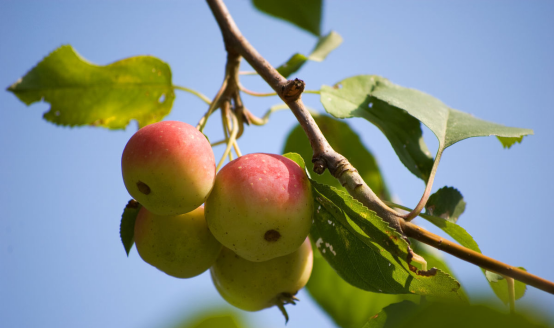
After reading the methods above, you now have a clear understanding of how to make a crabapple bonsai, right! But the above told you how to make it, not how to care for it. If you have already grown a beautiful crabapple bonsai but it withers because of poor care, that would be a shame. Below, let us take a look at how crabapple bonsai are cared for!
Fruit tree bonsai pictures, fruit tree bonsai making techniques and care
✿ Related reading recommendations
✿ Guava pictures
✿ Dendrobium pictures
✿ Chinese rose pictures
✿ Crabapple flower meaning (◕‿◕✿) For flower bonsai and plant cultivation, please follow the Meilele Flower Bonsai section!
.....
Fruit tree bonsai refers to the art of planting fruit trees in a tiny pot, and through artistic processing, displaying the rustic and changeable character of the fruit tree trunk, the coiled and twisted exposed roots, and the large, brightly colored fruit. It is an artwork with both ornamental value and economic value. Today, the editor will briefly introduce the making techniques and care of fruit tree bonsai, and take everyone to enjoy some fruit tree bonsai pictures.
.....
Fruit tree bonsai must be guaranteed to bear fruit and be worth viewing, and for a fruit tree to bear fruit it must be able to form flower buds. Trees that grow too vigorously or too weakly do not easily form flower buds, so the tree's vigor must be controlled at just the right level, neither too strong nor too weak. Dwarfing technology is one of the main measures for achieving physiological balance, and of course there are also management measures such as soil, fertilizer, and water.
.....
.....
Taking advantage of the irreversibility of the developmental stage of trees, flower-bearing branch groups are used as scions to promote early fruiting while also causing dwarfing. The fruiting branch groups are selected from mature fruit trees. After flowering the previous year, healthy and beautifully shaped fruiting branches are chosen, and the overly dense new shoots, diseased and weak branches, crossing branches, and parallel branches on the fruiting branches are pruned away and cultivated into a scalene triangle shape. The following spring they are grafted onto well-potted rootstock, and they can flower, fruit, and take shape that same year or the next.
.....
.....
We all know that fruit trees are very tall. If dwarfing treatment is not carried out, the bonsai will appear extremely tall and inconvenient to place. Therefore, fruit tree bonsai must be dwarfed. In order to obtain extremely dwarf fruit trees, making full use of the dwarfing ability of dwarf rootstocks of various tree species so that the fruit trees are controlled and form dwarf fruit trees is one of the most effective methods. Dwarf rootstocks can make grafted seedlings bear fruit earlier, and bearing fruit earlier can in turn inhibit the growth of the tree body and reduce the tree's construction.
.....
.....
If a bonsai is to be beautiful, one must learn to prune and shape it, and the same goes for fruit tree bonsai. Pruning is an auxiliary means of dwarfing fruit trees. Pruning is mainly to control tree height and stabilize tree shape, with the focus on pruning during the growing season. Generally, the pruning method is to suppress the top and support the bottom, leaving branches unpruned to reduce the nutrients consumed in building the tree body and increase the accumulation of organic matter in the lower part of the tree, which is beneficial to flower bud differentiation and fruit growth.
.....
.....
1. Light: Northern fruit tree bonsai are mostly light-loving tree species, and during the growing season they require ample light. For home care, place them mostly on a balcony or in a bright spot below a window.
2. Watering: Fruit tree bonsai need more water than flowering plants, especially in hot seasons. Pay attention to "water when dry, stop when wet" and water as soon as needed, 1—2 times a day.
3. Fertilizing: The "flower fertilizer" sold in flower shops is fine, applied once every 7-10 days, "thinly and frequently."
4. Pruning and shaping: According to personal preference, shaping, pulling, and coiling are all fine. Pruning: It is best to cut when flower buds are recognized, that is, when the flower buds first appear. Cut evenly below the flowers, leaving the head and shape.
5. Pests and diseases: Because this nursery's pest and disease control management system is strict, after entering the home there is also no source of infection, so generally you can care for it with peace of mind. For borers and red spider mites, you can mash garlic and chives, soak them in 5-10 times their volume of water, and then spray.
6. Placement: Place outdoors in a wind-sheltered, sunny spot, and wrap the pot tightly with plastic film. That is enough. If there is open ground, you can dig a pit, bury the pot completely with soil, and water it thoroughly.
.....
However, traditional bonsai art places excessive emphasis on the tree body being vigorous and ancient, often using heavy pruning and heavy shaping techniques, so that completing a single bonsai work often wastes more than ten years. But fruit tree bonsai are comparatively convenient, so they are increasingly favored by many ordinary households. Today the editor's introduction to the making and care of fruit tree bonsai ends here. Thank you all for reading.
Fruit Tree Bonsai Making Techniques and Care
Fruit tree bonsai is the product of combining fruit tree cultivation techniques with traditional bonsai art, integrating flower appreciation, fruit viewing, and scenery viewing into one, so that beauty of form and beauty of abundance are displayed at the same time. In spring the flowering branches are delicate and gorgeous, splendid as brocade; in summer they are full of vitality, with crisp, drip-worthy fruit growing from small to large and changing day by day; in golden autumn the abundant fruit is a riot of color.
Making and care management:
Choose a healthy fruit tree and keep a few relatively strong branches. Cut off the relatively thin and small ones. Then use lead wire to shape it and create the appearance you want. It is actually that simple, and afterward you just need to pay attention to management!
1. Choose the best grafting time
Fruit tree bonsai grafting includes early spring grafting, summer grafting, and autumn grafting. Early spring grafting is carried out before the fruit tree bonsai buds sprout; summer grafting is carried out after the scion buds mature; autumn grafting is carried out in late summer and early autumn. For grafting to improve fruit tree bonsai varieties, except for fruit tree bonsai such as grapes that must be grafted with green shoots and therefore must choose summer grafting, generally fruit trees can all choose early spring grafting. For fruit trees whose buds have early-maturing characteristics, that is, fruit trees with the trait of sending out branches multiple times in one year, autumn grafting can be chosen, but attention must be paid to protecting the young branches from cold over winter. Generally, choosing early spring grafting for improvement of fruit tree bonsai is more conducive to young branch growth and crown formation.
2. Pruning branches and retaining rootstock
Pruning branches and retaining rootstock means cutting back the fruit tree bonsai that needs grafting improvement, removing most of the original branches of the fruit tree bonsai, retaining branches suitable for grafting (which can also be called rootstock branches), and cutting them into short stubs of appropriate length. During the operation, the following points should be noted:
1. Remove the upper and keep the lower, reduce wound surface. Try to prune away branches at the upper part or the far end, and retain branches at the lower part and near the main trunk as grafting rootstock, and reduce wounds made directly on the main trunk and rootstock stubs, while preventing the rootstock stubs from peeling and splitting.
2. Pay attention to the orientation of the retained stubs. Retain stubs according to the tree and according to environmental conditions, while also making them easy to work with. If the orientation of the main branch is not ideal, a side branch or a strong auxiliary branch can be used instead for the retained rootstock. In short, lower the height and contract the crown.
3. The number and length of retained stubs depend on the original tree shape and the age of the tree. Generally, the lower main branches should be retained as rootstock. For taller tree shapes, it is advisable to retain the first and second layers of main branches from bottom to top and the retracted portion of the main trunk. The length of retained stubs should be longer at the lower part, with the cut end 30-50 cm from the main trunk; at the upper part it should be shorter, 25-35 cm from the main trunk. For trees within 5 years of age, retain 3-5 stubs; for trees around 10 years of age, retain about 10 stubs. For vining fruit trees, retain 1-2 rootstock stubs per main vine. If the original crown is large, more stubs should be retained; if the original crown is small, fewer stubs should be retained.
3. Variety selection and scion collection
1. Variety selection. For grafting improvement of fruit tree bonsai, it is advisable to choose varieties suited to the local climate conditions, with good market demand for the fruit, and with strong grafting compatibility with the fruit tree bonsai to be improved, and to achieve a reasonable combination of different maturity periods, different flavors, different colors, different fruit shapes, as well as fresh-eating, storage, and processing varieties.
2. Scion collection. The scions should be selected from healthy, pest-free, one-year-old branches with plump buds growing upright. For early spring grafting, the terminal buds can be fully used for branch grafting, and flower buds should be removed. For summer and autumn grafting improvement, when collecting scions pay attention to the degree of bud maturation. Darker branch color and dark green, enlarged leaves indicate that the axillary buds are relatively well matured.
4. Grafting methods
1. Cleft grafting. This method is suitable for early spring branch grafting of rootstock stubs with a diameter under 3 cm and for summer grafting of grapes. The cleft opening on the rootstock stub is 3-5 cm long. The "wedge head" cut on the insertion part of the scion is 2-3 cm long and is required to be flat and smooth, with the two slanted faces of equal length or slightly different. When inserting, the bark layer on one side of the scion must align with the bark layer of the rootstock stub; the insertion depth of the scion is based on aligning one cut face's blade edge with the cut of the rootstock stub, and 2-3 buds are retained on the scion. After insertion, the binding must be tight; you can first wrap it closed with plastic tape and then tie it tightly with fine string, or after securing the main parts, apply grafting wax.
2. Bark grafting. There are two methods: branch insertion grafting and single-bud insertion grafting. In branch insertion grafting, the "wedge head" cutting method for the graft branch is the same as for cleft grafting; the difference is that the "wedge head" is short and steep, with the longer slant about 2 cm and the shorter slant 1 cm. When inserting, the longer slant faces the xylem of the rootstock stub. The method for cutting a single bud for single-bud insertion grafting is: cut diagonally upward 1 cm below the bud, cutting together with the xylem up to above the bud, then make one horizontal cut above the bud and remove the single bud. The common way to open the rootstock for bark grafting is a "t"-shaped opening. For branch insertion grafting, the rootstock opening method also includes the "one dot and one horizontal" style, as well as the method of directly making one vertical cut at the cut end of the rootstock stub to open it. After insertion, bind as in cleft grafting; for single-bud grafting, the bud eye must be left exposed.
3. Summer bark grafting. The bud cutting method for summer bark grafting is the same as for single-bud insertion grafting. After the bud is cut off, the bud piece needs to be peeled off and the xylem removed. When peeling the bud, prevent "pulling the core." For grafting peach, pear, and apple trees, the bud can be grafted with xylem after cutting. The rootstock openings for bark grafting include "h" shape, "t" shape, and so on. When grafting, make sure the bud piece fits the rootstock flatly and tightly, and prevent the bud piece from curling. The binding method is the same as for single-bud insertion. In addition, in summer, patch budding, whistle grafting, and other methods can also be used.
4. Cut care. Following the order of grafting, both the rootstock cuts and the upper ends of the graft branches must be wrapped closed with plastic tape or coated with grafting wax. In case of drought, the main trunk and large branches can be whitewashed with limewater to protect the tree body's moisture and increase the success rate of grafting improvement.
5. Management after grafting
1. Check and regraft in time. 15-25 days after early spring grafting, 7 days after summer grafting, and 10 days after autumn grafting, the survival rate can be checked. If the scion or grafted bud turns black or brown, it indicates the grafting was unsuccessful. If the survival rate is too low, regrafting can be carried out in time.
2. Apply sufficient fertilizer and water enough to accelerate graft branch growth. After grafting fruit tree bonsai, apply farmyard manure 5-25 kg and diammonium phosphate 0.50-2.50 kg by burying, as appropriate to the tree size. Use a ring-shaped or star-shaped fertilizing method, with trenches 20-40 cm deep, and combine with root pruning to thin out some senescent lateral roots. After fertilizing, water thoroughly and keep the root zone moist. Fertilizing can also be done in advance, that is, for spring grafting improvement fertilize in the previous autumn, and for summer grafting fertilize in early spring.
3. Strengthen the care of young branches of fruit tree bonsai to prevent them from being broken by strong winds. When the graft branches begin to grow after grafting, slightly loosen the wrapping, but do not fully loosen it. When the young branches grow to 10 cm long, take several wooden sticks or crop straws, fix half on the main trunk or main branches and surround the young branches with the other half, and wrap with fine string to protect the young branches. After the young branches are securely fixed, use a small knife to cut through the wrapping from grafting all at once to facilitate their growth.
4. Remove rootstock suckers in time to reduce competition for nutrients with the graft branches. However, fruit trees facing regrafting should be treated differently: one situation is that grafting in the previous season was unsuccessful and regrafting is needed in the next season, in which case the rootstock suckers should be allowed to grow; another situation is that summer grafting was unsuccessful and regrafting would have too great an impact on the fruit tree root system, in which case regrafting should be abandoned and the rootstock buds allowed to grow.
5. Pruning of graft branches. For overly vigorous graft branches, "pinch the top" at an appropriate height, which can promote the sprouting and growth of secondary branches; for densely growing vigorous branches and competing branches, use methods such as bending branches and pulling and tying to fill gaps, and do not use or use less of the pruning methods of heading back and thinning out.
Pruning Techniques for Fruit Tree Bonsai
Pruning of fruit tree bonsai should grasp the principles of the "five looks" and "three sparse, three dense." "Five looks." Look at tree age: For young trees, in order to increase the amount of branches and leaves, expand the crown, and form a good structure as early as possible, winter pruning should be carried out in November-December. For vigorous trees of fruit-bearing age, winter pruning time can be appropriately postponed until early spring sprouting. For weak trees in full fruit period, in order to promote their vegetative growth and quickly restore a healthy tree vigor, the winter pruning task should be completed before the end of December.
For vigorous trees in full fruit period, in order to weaken their tree vigor and form more flower buds, winter pruning can be carried out in January-February; look at the strength of the tree vigor: the degree of pruning must be grasped from both the whole and the parts, and overall the tree vigor must be kept balanced. The crown should be full and compact, with clear hierarchy of primary and secondary, dense on the plane, and the upper-layer scaffold branches clearly shorter than the lower-layer scaffold branches, with subordinate branches giving way to dominant branches, and the growth vigor of scaffold branches at the same layer being approximately consistent. As long as the goals of firm and compact framework, ventilation and light transmission, and early fruiting and high yield can be achieved, it can be organized and guided according to its original tree shape and tree vigor. Do not overemphasize shaping, especially for young trees, as this often leads to their inability to fruit early and bear early;
Look at the appearance of the branches:
① Fruit tree bonsai that is strong at the top and weak at the bottom: cut back the strong upper branches evenly at the flowers, change to a weaker leader, or even saw off the strong upper part; for the weak lower branches, heavily head back the main branch tips from the base at a plump bud.
② Fruit tree bonsai whose basal main branches differ in growth vigor: cut the strong main branches evenly at the flowers, and heavily head back the thin, weak main branches at the plump bud at the top.
③ Fruit tree bonsai with no side branches or inner canopy branches to speak of: choose the best upright branch and pull it with string to a reasonable position, and thin out the overly dense ones.
④ Fruit tree bonsai with no tree shape to speak of: saw off some obviously redundant large branches, open up the distance between layers, select scaffold branches for key cultivation, plan for the long term, and use methods such as "pulling, propping, pressing" to make the tree structure tend as much as possible toward reasonableness. If there are very few or no flower buds, there should be more leaving branches unpruned, more thinning, and less heading back;
Look at the pruning response:
If the one-year-old branches on the 3-year-old branch section have a large number of medium and short branches that are thick and strong, with plump buds, and whose growth length is significantly less than that of the extension branch tip, and some leaf cluster branches are also produced, it indicates that the pruning amount in previous years was appropriate and the same can continue to be used that year. If the length of the one-year-old branches on the 3-year-old branch section is similar to or exceeds that of the extension branch, it indicates that the pruning amount in previous years was too heavy and should be appropriately lightened that year. If the 3-year-old branch section does not send out medium and short branches and only bears some leaf cluster branches with very small leaves, it indicates that the pruning amount in previous years was too light and should be appropriately heavier that year; look at the number of flower buds: fine work must be done locally to give flower bud branches and leaf bud branches an appropriate ratio, generally 1:2-3.
"Three sparse, three dense" means: large branches sparse, small branches dense; outer branches sparse, inner canopy branches dense; upper branches sparse, lower branches dense.
"One big, one small" means: lower part big, upper part small.
Handling of branch groups and small branches of fruit tree bonsai. Fruiting branch groups should be promptly retracted, rejuvenated, and renewed to maintain a healthy fruiting potential. For other branches, new branch groups are formed through treatment. Vigorous trees and vigorous branches should be left unpruned more and cut less, and retracted after fruiting becomes weak. For branches left unpruned for too long, they should be promptly retracted and rejuvenated and cultivated into fruiting branch groups. For back branches, they should not all be thinned out; they should also be used according to the situation. Young trees have strong vigor, and back branches easily grow vigorously; methods such as multiple pinching during summer pruning, pulling branches, and bending branches can be used to control them, turning the useless into the useful; trees in full fruit period have stabilized vigor, and back branches do not easily grow vigorously, so they can be kept or removed according to space and position; for old trees after the full fruit period, back branches should all be used in order to renew tree vigor and prolong the fruiting years.
Methods for thinning branches of fruit tree bonsai:
First, do not remove the small and not the large. That is, when thinning branches, first consider removing large branches, and then consider removing small branches, to prevent the whole plant from becoming "bare sticks."
Second, for trees with too many large branches, do not thin out too many at once; it can be done year by year, in batches, and no more than two at a time.
Third, do not thin out two opposite large branches at the same time, causing opposing wounds, so as to avoid weakening the upper tree vigor.
Fourth, the wounds must be disinfected and protected. They can be disinfected with 2% copper sulfate solution or lime sulfur mixture stock solution, and coated with paraffin or anti-rust paint, to prevent the invasion of pathogens and the evaporation of moisture from the tree body.
Disinfection of pruning tools. Tools often accidentally come into contact with diseased scars. At this time, they must be promptly disinfected with 3-5 degrees Baume lime sulfur mixture or 50-times thiophanate solution, to prevent the spread of pathogens.
About the care of fruit tree bonsai
Fruit tree bonsai is simple and easy to learn. As long as you follow the methods below, you can learn how to take care of it and make it bloom every year and bear fruit every year, with beautiful scenery accompanying you for as long as several decades.
1. Key points of fruit tree bonsai care techniques
1. Watering: Fruit tree bonsai need more water. The pot soil should be "dry when dry, wet when wet," that is, when the pot soil dries and turns white, water thoroughly again. If watering is not timely or there is no watering for several days, causing the root system to be in a water-deficient state for too long, the leaves will wilt or even dry up. If for a long time you water before the pot soil dries, and the interval between waterings is too short, the pores of the pot soil become filled with water and a large amount of air is expelled from the soil, thereby affecting root respiration, which will make root growth difficult and may even cause the roots to turn brown and rot. In summer and autumn, watering time should avoid the high-temperature midday period. When the weather is cold, watering time should be at noon on a sunny day. Fruit trees are not very strict about water quality; clean fresh water without salt or alkali is best. You can also use water from washing rice or vegetables or water changed out after raising fish for watering.
2. Topdressing: Fruit tree bonsai have strong adaptability to fertilizers. General organic fertilizers, inorganic fertilizers, and the "flower fertilizer" sold in flower shops can all be used, but fully decomposed organic liquid fertilizer is best. Commonly used ones include cake fertilizer such as sesame paste residue and animal hooves and horns. Note that they must be soaked and decomposed, and diluted more than 50 times before pouring in. Inorganic chemical fertilizers should be mixed with multiple elements such as nitrogen, phosphorus, and potassium, first dissolved in water, and then poured onto the pot soil or sprayed on the leaves, but the concentration should not exceed 5‰. The flower fertilizer sold in flower shops is both clean and hygienic, with many brands, and can be used according to its instructions. During the growing season, apply organic liquid fertilizer 1-2 times a month. In this way, the fruit tree bonsai can have large and brightly colored fruit and maintain vigorous growth the next year.
3. Light: Fruit tree bonsai like light. During the growing season they should be placed in the open or on a balcony in a bright spot. If placed indoors during the viewing period, it is best to place them in a spacious hall, below a window, or another ventilated and bright spot. July-August is the peak period of flower bud differentiation for most fruit tree species. During this period, sufficient light is beneficial to flower bud formation.
2. Management characteristics of various tree species:
1. Apple bonsai (pear, crabapple, and sand pear can refer to apple)
1) Pruning: Winter pruning should be carried out in January-February (before sprouting). First, correctly identify the flower buds. Most apple flower buds are borne at the tips of healthy medium and short branches. The buds are plump, with tightly wrapped scales. Vegetative branches are often relatively thick and long, and their terminal and lateral buds are all leaf buds. If they are too dense or too long and affect the tree shape, they can be cut flat from the base; if there is space around them, leave 1-2 cm and cut flat, and short branches will sprout that year to form flower buds. Among apples, Otome (a small-fruited apple variety), Donghongguo among crabapples, and others can form clusters of axillary flower buds, and the buds on the middle and upper parts of their healthy branches are often all axillary flower buds. For pruning of axillary flower buds, more than 1/2 of the flower quantity should be cut away, so that the density is appropriate and the tree shape is full.
2) Summer pruning: Pinching, pulling branches, and from May to July, pinch the fruit-bearing secondary shoots (shoots growing from the base of the fruit stalk) after leaving 4 leaves, to reduce nutrient competition and benefit fruit development. All upright new shoots should be pinched 1-2 times. For upright perennial or current-year branches, pull them to a flat, slanting state; the greater the horizontal angle pulled, the more conducive to flower formation.
3) Pollination: Apples and pears have low self-fruitfulness and high cross-pollination fruit set, that is, mutual pollination between different varieties of the same tree species (for example: Red Fuji with Yellow Banana, Xue pear with Ya pear). Artificial pollination can be carried out during the flowering period. When the flowers open, use a clean brush from 8-10 a.m. to dot-pollinate flowers of different varieties with each other. If there is only a single variety, you can contact this base, or before flowering, purchase dried fresh pollen from the specialty store set up by this base.
4) Thinning flowers and fruit, so that nutrients are supplied in a concentrated way, can lay a good foundation for fruiting. For trees with many flowers, thin the inflorescences. Each inflorescence can open 5-6 flowers. Before flowering at the bud stage, keep 2 flowers per inflorescence and remove the rest. After flowering, poorly pollinated young fruit will drop, and the remaining young fruit will gradually swell; due to nutrient competition, some young fruit will still drop. The time until early June is all normal phenomenon. After mid-June there is no more fruit drop, and then fruit setting can be carried out. According to the size of the crown diameter, for example, a fruit tree with a crown diameter of about 40 cm should keep about 10 fruit, 1 fruit per inflorescence. For small-fruited fruit trees such as Otome, sand pear, and crabapple, keep about 25 fruit at 40 cm, about 3 fruit per inflorescence.
2. Hawthorn bonsai: Hawthorn is self-fruitful and does not need artificial pollination. Hawthorn inflorescences are borne at 1-3 bud positions at the top of branches. During winter pruning, do not thin branches; simply shorten overly long branches to keep the tree shape compact. In May, when vigorous upright new shoots grow to 20 cm, pinch them after leaving 4-6 leaves; earlier is better than later. In addition, spraying urea at 3 parts per 100,000 during the flowering period can increase the fruit set rate.
3. Peach bonsai (plum and apricot can refer to peach): Peaches include both flower-viewing and fruit-viewing types. Flower-viewing peach types have gorgeous petals, mostly double-petaled, and do not set fruit or the fruit is small and inedible; fruit-viewing peach types have pale flowers, single petals, and strong ornamental and edible value. This base has all fruit-viewing fruit trees. Peaches have a very large flower quantity, with a large number of lateral buds growing in strings. During winter pruning, cut away 1/2-1/3 and cut off overly long strong branches. Select 3-5 branches at the lower part of the crown, remove the flower buds, and reserve them as preparatory branches for fruiting the next year. The upper fruiting branches are cut off after fruiting to keep the tree shape compact. Peaches are self-fruitful; if different peach varieties are combined for mutual pollination, their fruit set rate can be made even higher.
4. Grape bonsai
1) Pruning: Grape pruning should be carried out after leaf fall, preferably from mid-October to early November. Most of the buds at the middle and base of healthy one-year-old branches are flower buds. Cut and leave 4 buds at the lower part, depending on how strong it is; for relatively weak branches, cut and leave 2-3 buds at the base. Grapes must be pruned in winter, otherwise the flower buds cannot sprout or nutrients cannot be supplied in a concentrated way to the flower buds, and good fruit will not be produced. The main reasons are two: first, there is no reasonable pruning or no pruning; second, nutrient supply is insufficient and the plant is too weak. Courtyard grapes are basically the same as this.
2) Bud removal: This can be carried out in spring after the buds begin to move. Of the double buds or triple buds sprouting on the fruiting mother branch, remove the weak buds, that is, select 1 strong bud per node and remove the rest.
3) Pinching: Pinching can turn the nutrients of vegetative growth toward reproductive growth, which is conducive to concentrated nutrient supply to the fruit. Generally before flowering, pinch after leaving 4 leaves above the inflorescence. After pinching, it will continue to sprout and can be pinched repeatedly. Its tendrils should be removed as early as possible to avoid consuming nutrients.
4) Thinning fruit clusters: Each fruiting branch can retain only 1 fruit cluster, and excess ones should be thinned out early. Before flowering, part of the flower cluster should also be pinched off so that nutrients are supplied in a concentrated way. Only in this way can a good foundation be laid for producing good fruit.
5. Persimmon bonsai: It is self-fruitful. Persimmons often produce 1-2 strong vegetative branches in the current year. During winter pruning, they can be shortened to keep the tree shape compact. Persimmon flower buds are borne at 1-3 lateral bud positions at the top of strong branches in the middle of the persimmon crown, and they can be left unpruned. After fruiting branches grow in spring, large-fruited varieties keep one fruit per branch, and small-fruited varieties keep 2-3 fruit per branch, and the rest should be thinned early.
3. Repotting fruit tree bonsai
Repotting can be done once every 3 years, and the original pot or a slightly larger pot can be used. After fruit trees grow in the pot for several decades, a thick root mat will form close to the bottom and walls of the pot. When repotting, remove the net-like root mat. In this way, the distance for the roots to transport nutrients to the tree body is shortened. If repotting during the growing season, too many roots must not be damaged; simply place the whole root ball into the new pot.
4. Overwintering fruit tree bonsai: Their characteristics are generally that they bloom in spring, the fruit gradually enlarges in summer, and ripens in autumn. For late-maturing varieties such as apple, pear, and persimmon, after ripening in autumn, the fruit can remain on the tree until around February of the following year. If placed indoors for viewing in winter and during the Spring Festival, note that the ambient temperature where they are placed should not be too high. Apple, pear, and hawthorn can withstand low temperatures of -20°C without freezing. It is best to create an environment of -10°C-10°C for them to overwinter. For peach, grape, persimmon, jujube, and others, -5°C-10°C is best. If placed outdoors to overwinter, the pot can be wrapped with newspaper or plastic bags and placed in a wind-sheltered, sunny spot, and check the pot soil's dryness and moisture once a month. 5. Pests and diseases of fruit tree bonsai: Because the bonsai cultivation base strictly controls fruit tree pests and diseases, after they are distributed to urban users, there is no infection source around them, so the possibility of pests and diseases occurring is extremely small. If they occur, they can be sprayed and scrubbed with laundry detergent water.