How to care for Peperomia caperata 'Rosso'? Care methods introduced
Water
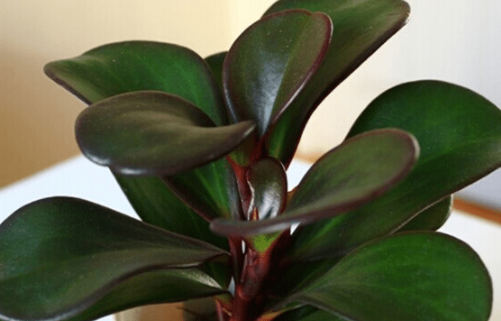
Peperomia caperata 'Rosso' likes a humid environment. May to September is the growing season. During the growing season, water more frequently. In hot weather, spray or sprinkle water on the leaves to maintain higher air humidity and keep the leaf patterns clear and the foliage emerald green.
Soil
It requires loose, fertile and well-drained soil, which can be mixed from river sand, mud surface material and leaf mold.
Temperature
It likes warmth. The optimal growing temperature is around 25°C, and the overwintering temperature should not be lower than 10°C.
Light
It dislikes direct sunlight and is best grown in partial shade. In summer, pay attention to shading and place it where it will not be exposed to direct sunlight, receiving only diffused light.
The above is an introduction to the question of how to care for Peperomia caperata 'Rosso'. Below, let us take a look together at whether Peperomia caperata 'Rosso' is toxic and whether it can be kept in the bedroom.
How to care for Peperomia caperata 'Rosso' in pots: Cultivation methods and precautions for Peperomia caperata 'Rosso'
Peperomia caperata 'Rosso' is a very small and lovely plant. There are many varieties of Peperomia caperata 'Rosso', and the differences among them mainly come from changes in leaf vein patterns. So identifying them is very simple. Their cultivation methods also share strong similarities, so mastering one cultivation technique allows you to master the growing methods for the entire broad category of plants.
How to care for Peperomia caperata 'Rosso' in pots
It likes a warm, humid, partially shaded environment. The optimal growing temperature is around 25°C, and the minimum should not be lower than 10°C. It is not tolerant of high temperatures. It requires relatively high air humidity and dislikes direct sunlight. It likes loose, fertile, well-drained moist soil.
Cultivation methods and precautions for Peperomia caperata 'Rosso'
1. Water requirements of Peperomia caperata 'Rosso'
Peperomia caperata 'Rosso' likes a humid environment. May to September is the growing season. During the growing season, water more frequently. In hot weather, spray or sprinkle water on the leaves to maintain higher air humidity and keep the leaf patterns clear and the foliage emerald green.
2. Fertilizer requirements of Peperomia caperata 'Rosso'
Apply fertilizer once a month until overwintering.
3. Soil requirements of Peperomia caperata 'Rosso'
It requires loose, fertile and well-drained soil, which can be mixed from river sand, mud surface material and leaf mold.
4. Temperature requirements of Peperomia caperata 'Rosso'
It likes warmth. The optimal growing temperature is around 25°C, and the overwintering temperature should not be lower than 10°C.
5. Light requirements of Peperomia caperata 'Rosso'
It dislikes direct sunlight and is best grown in partial shade. In summer, pay attention to shading and place it where it will not be exposed to direct sunlight, receiving only diffused light.
Varieties of Peperomia caperata 'Rosso'
1. Watermelon Peperomia
Also known as watermelon skin, native to Brazil. Leaves grow from the roots, and the plant height is about 20-30 cm. The leaves grow from near the substrate and are obovate. The leaves are thick and glossy, semi-leathery to the touch, green on the surface but red on the underside. On the green leaf surface there are silvery-white band-like markings, much like watermelon skin. Therefore, it is called watermelon Peperomia.
2. Peperomia caperata
Also known as four-angled Peperomia. It grows as a small clump, with heart-shaped, much-wrinkled leaves. The underside of the leaves is grayish-green, while the surface is dark brownish-green. On closer inspection, the leaves have a velvety sheen. When it blooms, it produces a spadix. The flower stalk is very short, and the plant height is only 20 cm.
3. Peperomia obtusifolia variegata
Also known as variegated Peperomia or cream-striped Peperomia, native to Brazil. It is a trailing herbaceous plant with tea-brown, fleshy stems. The leaves are broadly ovate, green, with yellow variegated markings.
4. Peperomia magnoliifolia
Native to the West Indies. Upright plant form, 20-30 cm tall. Slow-growing. Leaves are long obovate, thick, fleshy and stiff, with entire or irregularly shallow-lobed margins. The leaf color is deep green and glossy, with red edges along the leaf margin.
5. Peperomia obtusifolia
Native to Venezuela. Upright plant, about 30 cm tall. Single leaves alternate, elliptical or obovate. The leaf tip is bluntly rounded, and the leaf base gradually narrows, finally becoming wedge-shaped. The leaf surface is thick and stiff, smooth and glossy. Both stems and petioles are fleshy, thick and round. The petioles are relatively short, and rooting is easy. The internodes are relatively short, and roots also form very easily at the internodes.
6. Peperomia obtusifolia 'Variegata'
Similar to Peperomia obtusifolia, differing only in leaf color. Its leaves are deep green but scattered with irregular light green to cream-yellow patches of varying sizes; or on leaves mainly yellow-green, deep green patches or spots are scattered.
Uses of Peperomia caperata 'Rosso'
1. Decorative applications
Peperomia caperata 'Rosso', because of its short stature, is mostly used as a potted decorative plant. Because of its bright gloss and natural green color, it has received widespread welcome and affection from flower lovers.
Peperomia caperata 'Rosso' is commonly cultivated in white plastic pots or white porcelain pots. The boundary between white and green colors is separated, but when viewed as a whole, it becomes even more harmonious and beautiful.
People often place Peperomia caperata 'Rosso' on tea tables, decorative cabinets, curio shelves and office desks, where it looks fresh and natural, very beautiful. Or they let its branches trail and hang down to form a long waterfall, then hang it in front of indoor windows, in bathrooms, or on railings, where it is very fresh and elegant.
2. Purification applications
Peperomia caperata 'Rosso' has a certain purifying effect on harmful gases such as formaldehyde, xylene and secondhand smoke.
3. Landscape uses
Because of its attractive plant form, Peperomia caperata 'Rosso' is also often used as landscape decoration, such as in flower borders, flower beds and flower strips.
4. Traditional Chinese medicine uses
Dispels wind and dampness, relieves cough and phlegm, invigorates blood and relieves pain.
Internally used for dysmenorrhea, rheumatic muscle and bone pain, whooping cough, asthma, pulmonary abscess, tuberculosis, bronchitis, infantile malnutrition, etc.
Externally used to treat bruises, fractures, etc.
Besides its adorable appearance, Peperomia caperata 'Rosso' is also much loved for its uses. In addition to the ornamental, purifying and landscape functions common to plants, it also has certain medicinal value and can exert its effects on some minor everyday ailments.
Does Peperomia caperata 'Rosso' bloom? Can Peperomia caperata 'Rosso' be grown hydroponically?
Peperomia caperata 'Rosso' is currently distributed in many places in China and is a relatively common plant. The main ornamental value of Peperomia caperata 'Rosso' lies in its leaves, so people often overlook its flowers. Many people even think it is a plant that does not bloom, and some think it is not suitable for hydroponics. So what is the truth?
Does Peperomia caperata 'Rosso' bloom?
Peperomia caperata 'Rosso' does bloom. The spadix is solitary, terminal and axillary, 2-4.5 cm long; the peduncle is sparsely hairy or nearly hairless, and the rachis is densely hairy; the bracts are nearly round, short-stalked and peltate; the anthers are nearly elliptical, and the filaments are short; the ovary is ovate, borne in the depressions of the rachis, and the stigma is terminal, nearly head-shaped and covered with short soft hairs. The berry is nearly ovate, nearly 1 mm long, with a pointed tip. The flowering period is February to April and September to December.
Can Peperomia caperata 'Rosso' be grown hydroponically?
Peperomia caperata 'Rosso' can be grown hydroponically. Peperomia caperata 'Rosso' prefers a warm, humid, partially shaded growing environment, and its growth has relatively high water requirements, so it does not reject water culture. Therefore, Peperomia caperata 'Rosso' can be grown in water.
Hydroponic method for Peperomia caperata 'Rosso'
1. Placement of the hydroponic space. When growing hydroponically, it can be placed in bedrooms, rooms, courtyards, offices and other places. Placed in these places, hydroponic growing not only beautifies the space but also purifies the air, removes pollution, absorbs formaldehyde, protects against radiation, etc., creating a comfortable and excellent environment for you.
2. First, take the Peperomia caperata 'Rosso' out of the pot, taking care not to damage the roots, then carefully wash the soil off the roots, and soak them in disinfectant for about 1-2 hours.
3. After soaking, take it out, rinse it clean with clear water, and let it dry until the water evaporates.
4. Then it can be placed in a container for hydroponics. Be careful to immerse only 1/3 of the roots in the water. Place it in a ventilated environment with light.
5. Note that the water should be changed every one or two days, and water of the same quality should be used. Wait for roots to gradually form. After roots grow, add an appropriate amount of hydroponic nutrient solution to promote normal growth. The hydroponic Peperomia caperata 'Rosso' should be kept in a warm, humid, partially shaded environment, and care should be taken to avoid direct strong light.
How to propagate Peperomia caperata 'Rosso'
1. Division method. First, if conditions allow, in a greenhouse with temperature control equipment, division propagation can be carried out almost all year round. For the potting soil for division, we can prepare it ourselves by mixing prepared leaf mold and peat soil with some perlite and sand, adding an appropriate amount of base fertilizer, and keeping the medium fertile. At the same time, note that the soil must be loose and breathable and not prone to waterlogging. Then comes the care during the growing season. During the growing season, it is best to apply a topdressing once every half month. Use water that has been left to settle in a water tank for 1-2 days for watering, and reduce watering in winter. Temperature changes directly affect leaf color, and the suitable temperature is 15-20°C. Peperomia caperata 'Rosso' is afraid of heat. In the intense summer heat, it can be placed under a shade shed and sprayed with water to cool it down. In addition, excessive heat and moisture can cause stems and leaves to turn black and rot, affecting normal growth, so water control should be appropriate when watering, neither too much nor too little. In winter, place it in a well-lit spot, and in summer avoid direct sunlight.
2. Leaf cutting propagation. Peperomia caperata 'Rosso' can also be propagated by leaf cuttings. From May to June, leaf cutting propagation can be used. In addition, the cutting cannot be just a single leaf; it needs to have a petiole of about 1 cm. Cut off the leaf with a knife, let it dry, then insert it obliquely into a prepared sand bed or substrate, inserting it to 1/3 of the leaf. River sand can be used as the substrate. Keep the substrate moist and maintain air humidity, and it will take root in about 10-15 days.
Peperomia caperata 'Rosso' not only blooms, but its flowers are also very beautiful. When cultivating Peperomia caperata 'Rosso', it can be grown in soil or in water, and its hydroponic method is also very simple. Before cultivating it, be sure to disinfect the containers, and then pay attention to the purity of the water so that it is not contaminated.