How to grow French marigold? Learn the correct cultivation methods
Light
French marigold is a light-loving plant and needs plenty of sunshine when grown. Generally, in spring and autumn the sunlight meets its needs, but note that in the hot summer you should avoid direct sunlight and provide shading at midday. However, do not shade it excessively, otherwise the plant will become leggy and its ornamental value will be affected.
Temperature
Basically, French marigold grows well between 10°C and 30°C. A few points to note: in winter the temperature should stay above 5°C so that cold damage is unlikely; before flowering, the temperature is best kept between 12°C and 15°C; in daily care, the temperature is best kept at 20°C or below.
Water and fertilizer
Water and fertilizer are very important for French marigold. When watering, make sure the soil was dry beforehand, then water thoroughly, but be careful not to let it get too dry. Fertilizer is usually applied once every 7-10 days, but in the low-temperature winter season fertilization should be reduced. Generally, some base fertilizer should be applied at planting time, and if the soil fertility is insufficient, additional topdressing is needed.
The above is an introduction to how to grow foliage French marigold. Now let us look at what else needs attention with French marigold.
How to grow French marigold: cultivation methods and precautions
French marigold is a herbaceous plant introduced into China from abroad. It is grown for its flowers, which are most commonly orange-yellow, and the flowering period is in summer each year. Many people like to grow it now, but before growing it you need to master some cultivation techniques in advance, otherwise the French marigold you grow may not thrive.
How to grow French marigold
1. French marigold likes sunny places, and the suitable growing temperature is around 20°C. When growing it, make sure to provide enough light hours to encourage flowering.
2. French marigold is fairly cold-resistant. When the air temperature is not lower than 6°C, it will not be killed by frost, so temperature does not need special attention.
3. When watering French marigold, be careful that waterlogging does not occur. Water thoroughly each time, and just keep the soil moist but on the dry side. Do not let it get too wet, otherwise the growth of French marigold will be affected.
4. When growing French marigold, you can add an appropriate amount of compound fertilizer to the soil. Later, if you find during growth that the fertilizer is insufficient, just add more.
5. French marigold is relatively easy to grow and does not have many pests or diseases. Only at the seedling stage may moth larvae chew on the leaf surface; when found, deal with it promptly by spraying pesticide.
6. French marigold is propagated by seeds. Each flower produces many seeds after maturing. Collect them well and plant them in the soil next spring, and French marigold will grow.
Cultivation methods for French marigold
1. Light. French marigold is a light-loving plant and needs plenty of sunshine when grown. Generally, in spring and autumn the sunlight meets its needs, but note that in the hot summer you should avoid direct sunlight and provide shading at midday. However, do not shade it excessively.
2. Temperature. Basically, French marigold grows well between 10°C——30°C. A few points to note: in winter the temperature should stay above 5°C so that cold damage is unlikely; before flowering, the temperature is best kept between 12°C——15°C; in daily care, the temperature is best kept at 20°C or below.
3. Water and fertilizer: Water and fertilizer are very important for French marigold. When watering, make sure the soil was dry beforehand, then water thoroughly, but be careful not to let it get too dry. Fertilizer is usually applied once every 7——10 days, but in the low-temperature winter season fertilization should be reduced. Generally, some base fertilizer should be applied at planting time, and if the soil fertility is insufficient, additional topdressing is needed.
Precautions for growing French marigold
1. Potting up. Generally, French marigold seedlings need to be potted up when they have grown 2——3 leaves. When potting up, you can use a flowerpot with a diameter between 10——15cm. After potting up, it basically does not need repotting again.
2. Pests and diseases. The common disease of French marigold is root rot, which can be prevented and controlled by drenching the roots with thiophanate-methyl. The main pest is red spider mite. Propagation. French marigold is generally propagated by sowing and cuttings. Sowing is done between November——March. Cutting propagation can be done between June——August.
How to control the flowering period of French marigold
1. French marigold flowering is controlled by adjusting the sowing date. The simplest way to regulate the flowering period of French marigold is by controlling the sowing date and cutting time: calculate when you want the flowers, then decide when to sow and take cuttings. If you choose seed propagation, after sowing in April in spring, it generally flowers in 70-80 days. If you need it to flower earlier, you can place it in a greenhouse, and it can flower before May.
2. French marigold flowering is controlled by controlling sunlight. French marigold has extremely strong adaptability. It starts flowering one after another from May 1 and does not finish until October 1, so you can also choose to sow in summer. In addition, French marigold is a short-day flower, and shorter daylight conditions favor flowering, so shortening daylight when it is still a seedling can make it flower earlier.
The cultivation methods for French marigold are actually not difficult. Generally, you can start from its growth habits, and when growing it you must pay attention to issues such as light, fertilizer and water. During cultivation, you can also use some techniques to control its flowering period. The above has a detailed introduction, so everyone can pay more attention to it.
How to grow French marigold? Planting methods and precautions for French marigold
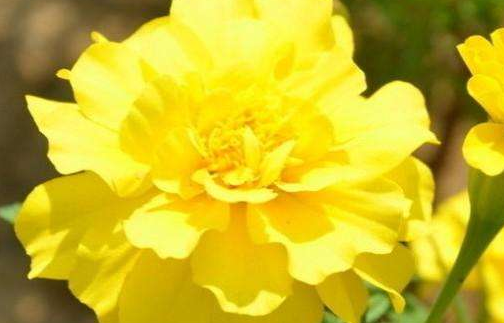
Image: French marigold planting
[Common questions] How to grow French marigold? Planting methods and precautions for French marigold
[Expert answer]
Soil: French marigold does not have very high soil requirements. As long as the soil's air permeability and drainage performance are ensured, it is fine.
Light: French marigold loves sunlight. During its growing period, its sunlight needs must be met. With sufficient light, its shape will be more beautiful and its flowers will be more vivid. But in summer, some shading measures can be taken for French marigold to prevent the sunlight from scorching the leaves.
Temperature: When French marigold is potted up, the temperature for seedlings can drop from 22°C to 18°C, and after a few weeks it can drop to 15°C. The temperature before and after flowering is generally suitable at 12-14°C. Its suitable growing temperature is within 10-30°C, and in winter the temperature must not be lower than 5°C, otherwise French marigold may suffer frost damage.
Watering: It does not have great demands regarding watering. As long as the soil becomes dry, you can water it, and you can water it thoroughly.
Fertilizing: During the growing period of French marigold, it is enough to apply some water-soluble fertilizer appropriately, because when preparing the soil for French marigold, some artificial medium fertilizer can be added as base fertilizer. Therefore, during its growing period, water-soluble fertilizer can be applied once every 7-10 days, and in winter fertilization can be reduced.
[Editor's comments] French marigold likes sunlight and can also bloom in a semi-shaded environment. It has certain requirements for soil, light, water, fertilizer, etc. The editor of First Agricultural Economics has introduced the specifics above, hoping this article is helpful to you. For more related materials, such as"The difference between French marigold and marigold", "Planting methods and precautions for French marigold", "Main problems in French marigold seedling raising", "Prevention and control of common pests and diseases of French marigold"etc., please follow the relevant columns or special topics of First Agricultural Economics.