Planting Methods and Technical Points for Sago Palm
1. Soil selection
Sago palm likes fertile, loose soil with good drainage, so never use clay soil when planting. Leaf mold, sandy loam, or potting soil is recommended.
2. Temperature requirements
Sago palm likes a high-temperature environment, but at the same time requires ventilation. Therefore, when growing it in the north, it can be moved outdoors in early April, and by November it needs to be moved indoors. The indoor temperature should be kept at around 10°C, and must not fall below 0°C.
3. Light requirements
The sago palm, which likes high temperatures, also likes sunny, warm places, but it must not be exposed to scorching sun in summer. It can be placed in a well-lit spot for growing all year round.
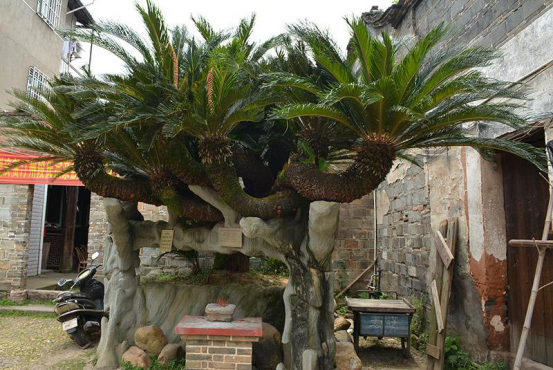
Have you found that growing sago palm is actually quite simple! You often hear about sago palm blooming, but do you know what a blooming sago palm looks like? Why not start growing a sago palm now!
An Introduction to How to Grow Sago Palm: What Uses Does Sago Palm Have?
Nowadays sago palms can be seen in the courtyards of many homes, so how should sago palm be grown to be more suitable for its growth? Let's take a look together!
Sago palm, also known as cycad, phoenix-tail tree, or fire-avoiding banana, is evergreen all year round and native to the tropics. It is the most primitive of existing seed plants, known as a "living fossil," and is also a globally key-protected endangered plant. Sago palm grows slowly, producing one new whorl of leaves from the top of the stem each year, and it rarely blooms, hence the saying "a thousand-year sago palm blooms."
Sago palm is an evergreen woody plant; the trunk is cylindrical, with prominent leaf-scar traces, and the whole plant is umbrella-shaped. The leaves cluster at the top of the stem and are large pinnate compound leaves, reaching 2-3 m in length, composed of dozens to over a hundred pairs of slender leaflets; the leaflets are linear, rolled inward when young, and straight and rigid when mature, dark green and glossy. The flowers are terminal, with male and female flowers on separate plants; the male cone is cylindrical and yellow; the female cone is head-shaped and flattened-spherical, densely covered with brown fuzz. The seeds are obovate, slightly flattened, and brownish-red. The flowering period is June-July, and the seeds mature in October.
Plants in the same genus also include: Cycas rumphii, also called thorn-leaf cycad, with pinnate leaves 1.2-1.5 m long, 80-120 pairs of leaflets, and short thorns on both sides of the leaf rachis; the seeds are dark orange when mature, produced in Guangdong, Guangxi, Fujian and other provinces and regions; Cycas szechuanensis, extremely similar to cycad, with larger, leathery, slightly curved pinnate leaves, produced in Mount Emei and Leshan in Sichuan and Nanping in Fujian.
How to Grow Sago Palm
1. Soil: Potted sago palm is suited to slightly acidic sandy soil with good drainage, loose and fertile.
2. Temperature: Sago palm likes warmth. In summer, when temperatures are high, it should be misted appropriately to cool it down, and in winter the indoor temperature should be kept at around 10°C. Because sago palm grows relatively slowly, in summer it should be kept away from scorching sun, otherwise it easily causes scorched leaves and yellowing leaves. Sago palm has strong cold resistance, but when the winter temperature is 0°C it should be moved indoors or to a warm place to overwinter.
3. Light: Sago palm cannot be placed indoors for too long, because it likes light. Although lack of light will not kill it, it will make its new leaves sparse, thin and weak, and lose their green color. Therefore, sago palm needs to be placed in a sunny spot in all four seasons when grown, especially in spring and autumn when it grows new leaves, it should be kept in direct sunlight for care, and only after the new leaves have grown mature should it be moved indoors for display.
4. Watering: Sago palm is relatively drought-tolerant and likes dry conditions rather than wet ones, so generally it can be watered after the soil dries. If watered too much, it easily rots the roots and damages the leaves. Generally, in winter water once about every 10 days, in spring and autumn water once every 3-5 days, and in summer water once in the morning and once in the evening. Watering should follow the principle of watering when dry and stopping when wet; long-term water accumulation and overly wet potting soil will cause yellow leaves and root rot.
5. Fertilizing: During the growing season of sago palm, apply supplemental fertilizer frequently, mainly nitrogen and potassium fertilizers, with decomposed cake fertilizer water being best. Fertilizing should be done lightly and frequently, and never too concentrated. To promote deep green and glossy leaf color, an appropriate amount of ferrous sulfate solution can be added to the fertilizer. When fertilizing, be sure to apply more vanadium fertilizer water; you can also put some rusty iron in the soil, or buy special sago palm fertilizer from a flower market, which can make the leaves deep green and glossy and improve their ornamental value.
6. Pruning: Sago palm produces new leaves once or twice every year. When growing sago palm as a bonsai, for a beautiful shape, the old leaves from previous years and withered yellow leaves should be cut off, and overly dense or overly long leaves should also be pruned as appropriate to keep the tree shape symmetrical.
The Uses of Sago Palm
The uses of sago palm: 1. Ornamental
The cycad has an elegant, antique tree shape, with a thick, sturdy trunk as hard as iron; its pinnate leaves are smooth and glossy, evergreen all year round. It is a precious ornamental tree species with relatively high ornamental value.
The uses of sago palm: 2. Decorating the home
In the south, sago palm is mostly planted in front of courtyards, beside steps, and in lawns, while in the north it is grown as a large potted plant, arranged in courtyards, corridors and halls. With its graceful plant shape, sago palm used to decorate and accent the home gives people a feeling of closeness to nature and gives the home a sense of comfort.
The uses of sago palm: 3. Purifying the air
Sago palm is also relatively beneficial for purifying and improving the air, with effects in absorbing toxic and harmful gases such as sulfur dioxide, nitrogen peroxide, benzene, fluorine, mercury vapor, and lead vapor.
The uses of sago palm: 4. Medicinal use
The roots, flowers, and seeds of sago palm can all be used as medicine. The leaves can astringe and stop bleeding, relieve toxicity and pain, and are used for various kinds of bleeding, gastritis, gastric ulcers, high blood pressure, neuralgia, amenorrhea, and cancer; the flowers can regulate qi and relieve pain, tonify the kidneys and secure essence, and are used for stomach pain, spermatorrhea, leukorrhea, and dysmenorrhea; the seeds can calm the liver and lower blood pressure, and are used for high blood pressure; the roots can dispel wind and activate collaterals, and tonify the kidneys, and are used for pulmonary tuberculosis with hemoptysis, kidney-deficiency toothache, low back pain, leukorrhea, rheumatic joint numbness and pain, and traumatic injuries.
The uses of sago palm: 5. Edible use
The pith of the cycad trunk contains starch and is edible. Some ethnic minorities in Xishuangbanna gather its young leaves as a vegetable; it can also be used as a raw material for brewing wine and can increase the liquor yield.
The above is the relevant introduction in this article. I believe that after reading it you have also gained a simple understanding of this. If needed, you can continue to follow No.1 Home Network to learn more information.
Propagation Methods and Key Planting Points for Sago Palm
Sago palm, also called cycad, is an ornamental plant. What are the several propagation methods for sago palm, and what are the key planting points for sago palm? Below, the editor has compiled relevant information on sago palm for everyone, hoping it will be helpful to you.
Seed propagation
Carried out in May-June. Because the seeds are large and have thick coats, they should be sown in pots indoors. Cover with soil to a depth of 2 cm-3 cm, and at a high temperature of 30°C-33°C they can germinate in 2 weeks.
On large cycads, suckers can sprout from the stem base portion below the soil layer, 3-4 at a time; if fertilizer and water are sufficient and growth is good, more than 10 suckers can grow at once. After breaking them off from the parent plant and planting them separately, a new plant can be grown.
Stem burial propagation
This uses the stem of an old cycad stump dug from mountain forests, cut with a sharp knife into thick slices 10 cm-15 cm, shallowly buried in moist plain sandy soil, and kept under light shade for care, always maintaining a moisture content of about 60%. After half a year, suckers can sprout from around the stem sections, and the old stem gradually shrinks. Afterward, separate the suckers and move them into potting soil for planting.
Key planting points for sago palm
Under normal conditions, sago palm can produce 2-3 rounds of new leaves each spring. If a plant is found not to produce new shoots for two or three years or to have yellowing and drying leaves, check promptly whether the root system is rotten, take measures in time, control moisture, and cover the top to make it sprout new leaves; after a period of time it can recover and continue growing.
The above is the relevant information on sago palm that I have introduced for everyone. To learn more information, please continue to follow Succulent Garden, and we will provide you with more information.