How to grow Hypoestes phyllostachya (polka dot plant)? Detailed guide to care methods and precautions
Soil
The polka dot plant has somewhat high requirements for soil. It likes loose, breathable, well-drained, deep, fertile, humus-rich, slightly acidic soil. For this kind of soil, we can gather raw materials ourselves to mix it, or buy special soil for polka dot plants at a flower shop.
Temperature
The polka dot plant likes to grow in a warm environment. Its most suitable growing temperature is 15-18°C. In winter, when the temperature is too low and the plant's cold tolerance is very poor, attention must be paid to keeping the plant warm, and the temperature around the plant should be kept above 12°C. Otherwise, the plant may suffer frost damage to its leaves or roots. In summer, when the temperature is too high, attention must be paid to cooling the plant; you can provide some shade and place it in a well-ventilated spot.
Water
The polka dot plant likes a moist growing environment, so during its growing period, attention must be paid to maintaining the moisture level of the potting soil, and the plant should be watered frequently. In summer, when the temperature is too high, increase the frequency of watering, and at the same time spray water on the leaves to increase air humidity.
Light
The polka dot plant likes a warm, humid, semi-shaded environment. It likes light, but requires partial shade or partial light. Appropriately increasing direct light can make the leaves more glossy.
The above is an introduction to the question of how to grow the polka dot plant. Next, let's look at what else should be noted when growing the polka dot plant.
Precautions for the polka dot plant
Replacing the potting soil
When transplanting the polka dot plant, the soil in the new flowerpot should have some of the original soil from the old flowerpot added to it, with half old soil and half new soil in the pot. This is best at this time, as it can prevent the plant from dying due to being unable to adapt to the new environment.
After reading this article, you'll find that the polka dot plant is not hard to grow! As long as you care for it carefully, it can grow very vigorously!
The growth habits of the polka dot plant and its propagation methods
The polka dot plant, also called Hypoestes phyllostachya, is a plant whose emerald green leaves are covered with little red dots. If you are used to green leaves, this style of foliage is still quite distinctive. So, would you like to know what cultivation techniques there are for the polka dot plant? Do you want to grow it well? Today, we will next get to know this plant, the polka dot plant.
Other names for the polka dot plant
Hypoestes phyllostachya, pink splash, polka dot plant, freckle face, polka dot plant, red-spotted carp, little raindrops.
Morphological characteristics of the polka dot plant
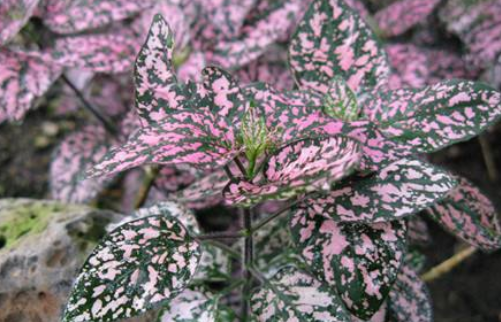
The polka dot plant is a perennial evergreen herbaceous plant native to Madagascar. The plant height is about 70 cm, and potted seedlings are 20-30 cm tall. The leaves are opposite and entire, with olive-green leaf surfaces covered with pink or white spots.
The polka dot plant has several cultivars such as "Pink Frost", "Red Frost", "Rose Red Frost" and "White Frost", each with a distinct and elegant style and highly distinctive features. It can bloom in spring, with small, inconspicuous light purple small spike flowers.
Growth habits of the polka dot plant
The polka dot plant likes a warm, humid and semi-shaded environment. It likes light, with partial shade or partial light. Appropriately increasing direct light can also enhance leaf color.
It is not cold-tolerant. The suitable temperature is 15-18°C, and the overwintering temperature needs to be above 12°C. It is suitable for loose, slightly acidic, deep, fertile, water-permeable, humus-rich fertile soil.
Propagation methods of the polka dot plant
The suitable period for sowing is spring and autumn. The suitable germination temperature is about 20-24°C, and germination occurs after about 5-10 days. The suitable growing temperature is about 15-25°C.
Cuttings have a high survival rate. Cut off the terminal buds or branches, with 2-3 nodes per section, and insert them into the soil, keeping them moist. During the cutting period, spray with Superthrive diluted 1000 times once every ten days to promote rooting, and roots can form after about 3-4 weeks. When placed indoors, it should be put in a place with sufficient light, and the overwintering temperature should be above 12°C.
The above is the knowledge about herbaceous plants that I have learned today. I hope fellow flower lovers will find this article helpful after reading it. If you want to know more about herbaceous flowers, please continue to follow our Succulent Garden, and we will provide you with more related content as soon as possible!