How to grow Kochia scoparia? Cultivation methods and precautions for Kochia scoparia
Soil
Kochia scoparia does not have very high requirements for soil. It likes loose, breathable, fertile sandy soil with good drainage, but it is also tolerant of poor and thin soil, and can also tolerate alkaline soil. It is a relatively easy plant to grow.
Light
Kochia scoparia likes sunlight very much, but its shade tolerance is also very strong, so it should not be exposed to excessive sunlight, nor should it be grown only in a dark environment, as this may very likely cause the plant to become leggy.
Temperature
Kochia scoparia likes to grow in a warm environment very much, and its cold tolerance is very poor. Also note that during the seed germination period, the temperature must be well maintained, and a temperature between 10-20°C is best at this time.
Water and fertilizer management
Kochia scoparia is relatively simple in terms of water and fertilizer management. Generally, the plant needs a one-time sufficient application of base fertilizer when planting, and should be watered once, and this watering should soak the soil thoroughly.
After planting, Kochia scoparia needs additional fertilizer applied 2-3 times per year, though of course it can also be left unfertilized. As for watering, although Kochia scoparia can tolerate drought, a certain amount of water should still be supplied to keep the soil moist so that Kochia scoparia grows well. During the growing period, water Kochia scoparia once every 7-10 days. Let the soil dry and then become moist, and avoid waterlogging.
The above is an introduction to the question of how to grow Kochia scoparia. Now let us look at the precautions for Kochia scoparia!
Kochia scoparia Kochia scoparia illustrated guide: how to grow Kochia scoparia / how to propagate Kochia scoparia
Kochia scoparia profileKochia scoparia Kochia scoparia
Cultivation methods and precautions for Kochia scoparia Introduction to Kochia scoparia
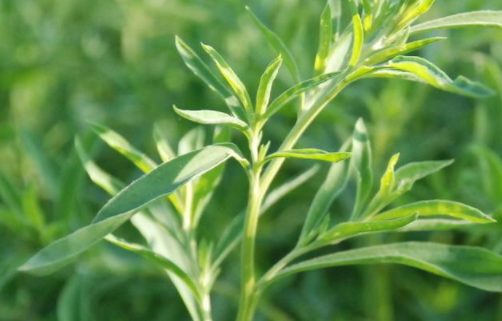
Kochia scoparia, an annual erect herbaceous flowering plant, plant height 50-100 cm, plant shape ovate, obovate or elliptic, with many dense branches, with short soft hairs, and the base of the stem semi-lignified. Likes sunlight, likes warmth, not cold tolerant. It is mainly widely cultivated in China.
Distribution area of Kochia scoparia
Distributed in Asia, Europe and most areas of mainland China, growing in areas from 50 m to 3,200 m above sea level, generally growing by roadsides, field edges and wasteland.
Landscape uses of Kochia scoparia
Used to arrange flower hedges, flower borders, or several plants planted in groups in the center of a flower bed, and can be pruned into various geometric shapes for arrangement. Potted Kochia scoparia can be used to accent and decorate halls, rooms, conference venues, etc. Landscape cultivation mainly uses its variety var. culta: plant shape short and small, leaves fine and soft, tender green, turning red-purple in autumn.
Ecological habits of Kochia scoparia
Likes sunlight, likes warmth, not cold tolerant, extremely tolerant of heat, tolerant of salt and alkali, tolerant of drought, tolerant of poor soil. It has no strict requirements for soil. It very easily self-seeds and reproduces.
Propagation methods of Kochia scoparia
Propagation by sowing, spring sowing, direct sowing is preferable. In early April, sow the seeds in an open-air seedbed, and they germinate quickly and uniformly. After thinning, plant at a spacing of 50 cm.
Medicinal dietary or medicinal value of Kochia scoparia
The medical information and health dietary information on Huahua.com are for reference only and cannot be used as a basis for diagnosis or medical treatment. Any health issues should be consulted with professional medical personnel, and treatment of any disease should follow a doctor's advice.
Ultimate flower-protecting mission: to love yourself, start from reality and strictly follow a doctor's advice. Toward illness, do not be careless, do not delay, do not give up hope, face it bravely, use love to warm the silent world, and use your heart to care for the flower field within.
The seedlings and tender stems and leaves of edible Kochia scoparia can be stir-fried or used as filling, and can also be blanched and dried into dried vegetables for storage, then soaked in water when eaten. But old stems and leaves become hard in texture and have more fiber. The mature fruit is used as medicine, called "Kochia fruit", cold in nature and sweet-bitter in taste, with the functions of clearing heat and draining dampness, and promoting urination, mainly treating skin damp sores, eczema itching, dribbling urination, athlete's foot and edema, etc. Its stems and branches are edible, and when fully mature can be used as brooms, hence it is also called "broom grass".
Kochia scoparia pictures
Does Kochia scoparia bloom?
Does Kochia scoparia bloom?
Many people grow Kochia scoparia, yet always see it as lush green, so does Kochia scoparia actually bloom or not? Kochia scoparia does bloom, only the flowers of Kochia scoparia are very small and not obvious at all, so sometimes when Kochia scoparia blooms, if you do not observe carefully, it is not easy to notice.
Flowering period of Kochia scoparia
Kochia scoparia blooms mainly from June to September, and the flowering period lasts for a period of time. It is worth noting that if Kochia scoparia is wild, its flowering period is from July to August; if Kochia scoparia is artificially cultivated, the flowering period is from June to August. After the flowering period, it produces fruit, and the fruiting period is from August to October.
The flowers of Kochia scoparia are small, with spike-like inflorescences, and the flowers are red-brown, with little ornamental value. After flowering, it produces small oblate fruits, and the fruits can be used as medicine.
During the flowering period of Kochia scoparia, because a large amount of nutrients is needed to sustain flowering, fertilizer is required. Apply some fertilizer before the flowering period to give Kochia scoparia sufficient nutrients, and when flowering, some potassium fertilizer and phosphorus fertilizer can be applied along with it to ensure balanced elements. Note that weeds should be removed to prevent weeds from competing with Kochia scoparia for nutrients and affecting the growth of Kochia scoparia.
Appreciation of Kochia scoparia flowering pictures
Kochia scoparia produces small red-brown flowers. The flowers look small, and their shape is also very ordinary, giving people the impression that there is nothing special about them. Moreover, if you do not observe carefully, you may not even be able to see the small flowers of Kochia scoparia.
From this point of view, the flowers of Kochia scoparia are indeed very easy for people to overlook. Compared with these flowers, people probably prefer its leaves.
In fact, the greatest role of the flowers of Kochia scoparia is probably to produce seeds, and they themselves have no ornamental value.
Although one cannot enjoy large and gorgeous flowers, Kochia scoparia like this still looks quite good overall.