Can narcissus be grown in water? A detailed guide to hydroponic growing methods
1. Narcissus can be grown in pots or in water
Most households grow it in water. The water-growing method for narcissus is as follows: first buy a few narcissus bulbs, remove the outer skin, soil and protective roots, then use a small knife to peel off 3-4 layers of outer skin from the upper part of the bulb so that the flower buds between them are exposed. Be careful not to damage the flower buds when peeling.
Then soak the bulb in clear water overnight. The next day, wipe away the mucus flowing from the cut, then place it upright in a shallow narcissus bowl, adding water until one third of the bulb is submerged. Quartz sand, pebbles and the like can be used in the bowl to hold the bulb in place.
2. Light duration must be sufficient
During the water-growing period, narcissus especially needs plenty of light, generally more than 10 hours of light. During the day it should be placed in a sunny spot, and at night it can be placed under a lamp.
This prevents the stems and leaves of the narcissus from growing leggy, making the leaves short, broad, thick and sturdy with a deep green color and fragrant blooms. Water-grown narcissus generally does not need fertilizing. If conditions allow, applying a little quick-acting phosphorus fertilizer during the flowering period can make the flowers bloom better.
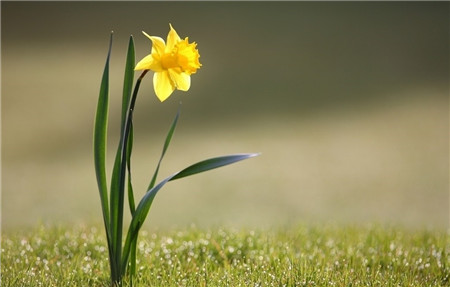
How to grow narcissus in water: cultivation methods for hydroponic narcissus
There are many ways to grow narcissus, and one of them is growing it in water. How do you grow narcissus in water? Below we tell you the cultivation methods for hydroponic narcissus.
Cultivation methods for hydroponic narcissus:
For hydroponic narcissus in winter, temperature, light and water supply are the three key factors determining whether the narcissus can bloom. Narcissus growth requires plenty of sunlight; a suitable temperature of 12°C-15°C; and clean water.
Before growing it in water, first peel off the dried brown scale leaves on the outer layer of the bulb, remove the protective root soil and the brown decayed roots at the base (be careful not to bruise the white new roots), wash the surface clean, and stand it upright in a shallow bowl without drainage holes, fixing it on all sides with small stones so it does not tip over. Add clear water up to 2/3 of the bulb. Just after potting, change the water once a day with sun-warmed tap water; before flowering, you can change to once every 2-3 days.
Control the flowering time. Under conditions of sufficient light and clean water supply, when the indoor temperature is 12°C-15°C, narcissus takes about 40 days from soaking to flowering; at a room temperature of about 18°C, about 30 days; at a room temperature of 20°C, only 25 days to bloom; therefore you can determine the soaking date of the narcissus bulbs according to your needs, so as to enjoy the fragrant, beautiful narcissus flowers at the right time.
Growing narcissus requires no flower fertilizer at all; clear water alone is enough. To make the narcissus grow strong, it should be taken to the balcony to sunbathe during the day. If you want to delay the flowering period, you can lower the water temperature, or pour out all the water in the bowl in the evening and add clear water again the next morning. In addition, if full flower buds are not visible 10 days before the holiday, you can speed up flowering by warming the water; the water temperature should be close to body temperature.
Care methods for hydroponic narcissus:
During the day the narcissus bowl should be placed in a spot with plenty of sunlight; at night move it indoors and pour out the water in the bowl to control leggy leaf growth. At night it can be placed under a lamp. This prevents the stems and leaves of the narcissus from growing leggy, making the leaves short, broad, thick and sturdy with a deep green color and fragrant blooms.
The next morning add clear water again, and be careful not to change the orientation of the bulb.
Just after potting, the water for narcissus can be changed once a day, then once every 2-3 days, and once a week after the flower buds have formed. Narcissus grows well at 10-15°C, blooms in about 45 days, and the flowering period can last more than a month.
Water-growing methods for narcissus
Spring Festival is coming soon, and many friends may have already started growing narcissus bulbs. How can you grow narcissus well?
The key to soaking and growing narcissus lies in mastering water, temperature and light. First soak the carved narcissus bulb in water for one or two days, wash off the mucus from the cuts, then move it into a porcelain bowl, place small stones or sand around it to fix it in place, add water and plant it, but do not use too many small stones; being able to hold it in place is enough. Change the water once every 1-2 days; to avoid damaging the roots, generally use the flushing method to change the water, washing away the impurities in the bowl. After the flower bulb is soaked, it is suitable for growing at 15-20°C. At 15°C, it takes 28 days to bloom. If it is 24°C, it takes only 20 days to bloom. In Guangzhou, from placing the narcissus in water to full bloom takes about 21 to 25 days. If Spring Festival 2002 falls 8 days before the Start of Spring, the temperature may be relatively low, and it is expected that the narcissus will take 26 or 27 days to bloom. So the time to plant narcissus should be January 15 or 16. If planted in soil, growth is slower, so it should be 4 or 5 days earlier. For a qitou narcissus, if by January 28 the flower buds appear in the center of the leaf axils, it indicates that it may bloom in time for the festival. If the flower buds only emerge by February 4.
Corresponding technical measures:
First, put it in the sun to bake during the day, and place it under an incandescent light bulb at night to extend the light duration, or place it beside a stove.
Second, pour warm water below 40°C into the bowl twice a day, morning and evening, to promote its growth. If the narcissus is planted too early or the weather is relatively warm, then after watering it every day, pour out the water in the bowl, leaving only a little to nourish the roots, or add ice cubes and place it in a cool spot to inhibit its growth.
Admiring the narcissus flowers is certainly a pleasure, but the roots below the bulb should not be neglected either. Use a large bamboo tube, fill it with water, and place the narcissus bulb on top, letting the roots go straight down into the tube. When they have grown to a certain length, gently pull out the narcissus bulb together with the roots, then transfer it to a transparent glass container, fix it with small bamboo sticks, and then pour in clear water. In this way, above are green leaves and fragrant flowers, and below are roots like jade pillars, crystal clear and snow white, offering a different kind of charm.
Narcissus needs plenty of sunlight. With daily sunbaking, the leaves are short and the flowers high, and the leaves are emerald green; with insufficient sunlight, the leaves are tall and the flowers short, the leaf color is yellowish and it easily falls over. Water-grown narcissus does not need fertilizing; too much fertilizer will rot the roots.