How to grow ginger lily in pots? A detailed guide to cultivation methods
1. Temperature
Ginger lily is a subtropical plant that loves high temperatures and high humidity, so growing it in pots has relatively high temperature requirements. Generally speaking, the indoor temperature in winter must reach above 10°C.
2. Soil
Ginger lily loves moisture, but it also needs well-draining soil, otherwise the roots rot easily. At the same time, the soil must contain enough nutrients to support the growth of the ginger lily.
3. Water
Ginger lily is a plant that is very intolerant of cold, so the soil must be kept moist at all times. Especially in summer, you must not only keep the soil moist but also spray water on the leaves.
4. Fertilizing
When planting ginger lily, you should apply a base fertilizer; you can choose biological bacterial fertilizer or phosphate fertilizer. About every 10 days, apply a top dressing once to ensure the supply of nutrients. Secondly, on rainy days, spray foliar fertilizer on the leaves.
5. Pest and disease control
Potted ginger lilies are prone to leaf virus disease and anthracnose. Spraying the leaves with a 600-800 times dilution of 3.95% Bingdubike can control them.
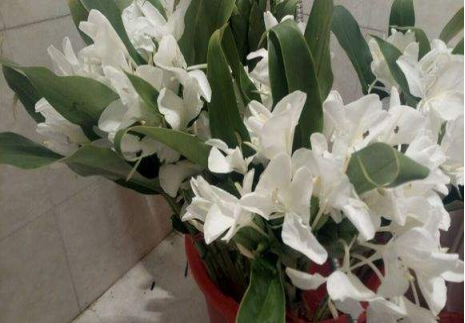
How to grow ginger lily in pots: cultivation methods and precautions
As everyone's living standards improve, people like to grow some flowers and plants in their spare time to decorate their rooms, and at the same time it can also cultivate the mind. Ginger lily is a relatively common flower, generally seen more often outdoors, but ginger lily is so beautiful that many people want to grow it as a potted plant indoors. So how should ginger lily be cared for as a potted plant?
How to grow ginger lily in pots
Ginger lily originated in Indonesia, and a large amount of wild ginger grows in the plateau regions of western China. It likes high temperatures, high humidity, and semi-shaded environments, and is averse to drought and frost. It prefers loose, fertile, slightly acidic soil rich in humus. It is generally grown in the ground, but can also be grown in pots. The optimum growth temperature is 18-28°C, and the aboveground parts die off in winter. During the peak growth season, apply decomposed barnyard manure and liquid fertilizer 2-3 times. To make up for nutrient consumption, ensure the robust growth of the stem tubers. After frost, the stems and leaves gradually wither, so they should be cut off and soil mounded up to leave the plants in the ground over winter. It is mainly propagated by root division, often carried out in spring. Cut the underground rhizomes apart, and each section needs to have 1-2 terminal buds, then plant them separately in pots. After planting, there is no need to water immediately; simply keep the potting soil moist, and water again after the rhizomes sprout new shoots.
Ginger lily cultivation methods
Ginger lily is a freshwater herbaceous plant. Its flowers are not only fresh and beautiful, but also have a light, elegant fragrance. It is a natural air freshener and also a plant with great ornamental value. Ginger lily prefers a high-temperature, high-humidity growing environment, is not cold-tolerant, and fears freezing.
1. Temperature and soil
Because ginger lily itself prefers high temperatures and high humidity, the temperature of the growing environment must be ensured. Generally, the winter temperature only needs to be kept above 10°C. As for soil, ginger lily requires loose, well-draining, fertile sandy soil to ensure the nutrients needed for its growth.
2. Water
Ginger lily is a plant that is not drought-tolerant, so during the dry, hot summer, a moist environment must be maintained, the soil must be kept moist, and water must also be sprayed on the leaves frequently to keep the leaves humid.
3. Fertilizing
When planting ginger lily, a base fertilizer should be applied. At this time, you can choose fertilizers such as biological bacterial fertilizer, organic fertilizer, and phosphate fertilizer as the base fertilizer, and apply them into the pot; when it enters the growth period, top dressing should be done appropriately, generally once about every 10 days, and foliar fertilizer should also be sprayed on the leaves frequently on rainy days.
Precautions for growing ginger lily
1. First is the winter temperature. In winter, be careful to keep the temperature above 10°C to avoid frost damage. Usually, high temperature and high humidity should also be maintained.
2. Second is sunlight. Ginger lily prefers warmth, so during the growth period sufficient light can be maintained to allow the ginger lily to grow better.
3. Fertilizing precautions. Pay attention to the timing and frequency of fertilizing. During the growth period, it is generally enough to fertilize once every 10 days.
Is ginger lily suitable for growing indoors?
Ginger lily is a flower distributed in southern and southwestern China. It is also known as wild ginger lily and butterfly ginger, and is 1-2 m tall. Its flowers are mostly white. As medicine has some toxicity, and after all it is a medicinal plant, this flower contains certain toxic components.
In an ordinary household, it does not hinder us from appreciating it, but there will always be some people who are allergic to its flower toxin and experience symptoms such as dizziness and nausea. Its fresh, elegant flowers are fragrant and fill the nose. It likes to grow in high-temperature, shaded environments, and prefers acidic sandy soil. When winter comes and the temperature drops, the parts above ground wither, while the underground parts go dormant to overwinter.
Its fragrance fills the surroundings, so it is very suitable to buy a bunch and put it indoors. As long as there are no allergic symptoms, it can be grown for a long time. Its faint, light fragrance is truly refreshing. It can absorb harmful dust and chemical gases in the air, filter the air, and make the indoors cleaner and fresher. The petals of ginger lily contain certain volatile essential oils, which can be boiled with water into a tea to help us resist wind-cold.
As mentioned above, in our lives there are actually thousands upon thousands of beautiful flowers. Although some flowers have many benefits when grown in a room, some flowers are not suitable for growing indoors, so everyone should pay attention too!
Ginger lily cultivation methods and the uses of ginger lily
Ginger lily has a fresh fragrance. Potted plants can be used for viewing, and when placed indoors they can serve as a natural air freshener. Ginger lily is the national flower of Cuba and Nicaragua. So how do you grow ginger lily? Next, Xiao Qi will share the cultivation methods for ginger lily.
I. Cultivation methods for ginger lily
1. Growth habits: Ginger lily by nature relatively prefers high-temperature, high-humidity environments, and is not cold-tolerant.
2. Propagation methods: Ginger lily propagation methods are divided into sexual reproduction and asexual reproduction, and division propagation can also be chosen. The temperature for propagating ginger lily only needs to be in areas where it can overwinter safely outdoors. If division propagation is used, planting can generally be carried out in February or March of the same year.
3. Temperature: Ginger lily loves to survive in high-temperature and high-humidity environments. Generally, only when the winter temperature is kept above 10°C can it survive well.
4. Soil: For ginger lily, you can choose loose, well-draining, fertile sandy soil.
5. Water: Ginger lily is not drought-tolerant, so in summer sufficient humidity in the air must be maintained, and at the same time the soil must be kept in a moist state.
6. Sunlight: Ginger lily relatively prefers sunlight. During its growth period, sufficient light duration can be maintained so that the ginger lily can grow better.
7. Fertilizing: When planting ginger lily, sufficient base fertilizer is needed. Generally, fertilizers such as organic fertilizer, biological bacterial fertilizer, and phosphate fertilizer can be chosen as the base fertilizer. When it enters the growth period, top dressing can be done appropriately, generally once every 10 days, until the flower buds are about to bloom. At the same time, foliar fertilizer can be sprayed on cloudy days or in the evening.
II. Uses of ginger lily
1. Ornamental use: The flower color of ginger lily is white, and it is very fragrant. It can be used as a potted plant or cut flower, and can also be planted in courtyards. When ginger lily blooms, it looks like a group of beautiful butterflies dancing gracefully. When there are no flowers, its leaves are also lush and full of green, with extremely high ornamental value.
2. Air purification use: Ginger lily itself is a green plant, and when it carries out photosynthesis, it can effectively absorb harmful substances in the air. And when it blooms, its flowers are fragrant and mellow, and can effectively purify indoor air, earning it the title of a natural air freshener.
3. Medicinal value: The rhizomes and fruits of ginger lily can both be used as medicine. Its medicinal nature is very mild, and it has effects such as strengthening the stomach, warming the meridians and relieving pain, dispelling wind and dispersing cold, and dispersing cold. Its rhizome mainly treats wind-cold exterior syndrome, externally contracted headache, rheumatic pain, traumatic injury, wind-warm arthralgia, body pain, and cold pain in the epigastrium and abdomen. Its fruit is pungent in taste and warm in nature, and has effects such as harmonizing the middle and strengthening the stomach, releasing the exterior and inducing sweating, warming the middle and dispersing cold, and relieving pain. In Taiwanese folk tradition, it is said that the rhizome of ginger lily has effects such as dispersing cold, dispelling wind, treating headache, and treating traumatic injury, while the flower can treat insomnia.
Of course, although ginger lily has high medicinal value, pregnant women and those with blood deficiency, qi stagnation, and blood stasis should use it with caution. At the same time, ordinary people should use it according to a doctor's prescription and must not arbitrarily adjust the dosage, so as to avoid causing physical discomfort.
The above isginger lily cultivation methodsand an introduction to the uses of ginger lily. We hope it is helpful to everyone.