What is the best time to take cuttings of petunias?
1. Spring and autumn are suitable for cuttings
Generally speaking, the time for taking petunia cuttings falls roughly into two periods: spring and autumn. Spring cuttings are taken from March to May, while autumn cuttings are concentrated between July and September. Spring cuttings give the best results, because spring is the season when petunia stems and leaves grow most vigorously, and the plant secretes more leaf sap and auxin internally, so after the cutting is taken, its cells divide more rapidly, allowing the cuttings to root quickly.
2. Summer and winter are not suitable for cuttings
The optimal temperature for petunia cuttings is 15°C to 25°C. When the growing temperature is below 8°C or above 30°C, it is unfavorable for petunias to root. Therefore, whether in the cold winter or the hot, humid summer, the survival rate of petunia cuttings is relatively low, so it is not recommended to take cuttings in summer or winter.
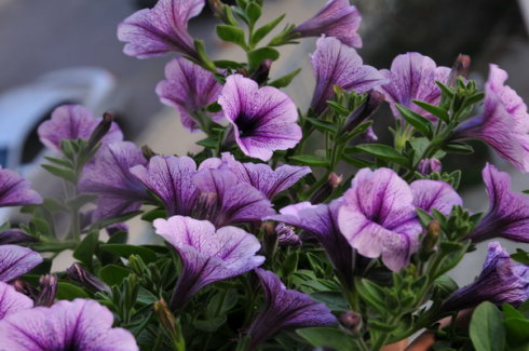
Once you choose the right time for petunia cuttings, it is actually very simple, and the success rate of rooting can be greatly improved. Besides propagation by cuttings, what other propagation methods does the petunia offer to those who love it?
Can petunias be grown from cuttings? Petunia cutting propagation techniques
Petunia belongs to the Solanaceae family, Petunia genus, also known as Petunia. It is a perennial herb, often grown as an annual or biennial, 20-45 cm tall; the stems grow prostrate and are covered with sticky soft hairs. Many flower lovers ask me whether petunias can be grown from cuttings. I tell flower lovers that the answer is definitely yes, and petunia cuttings also root fairly easily. As long as you pay attention to the cutting season and choose ideal branches, the survival rate of petunia cuttings is generally very high. Below, I will introduce the cutting propagation techniques for petunias.
Petunia cutting propagation techniques
1. Selection and preparation of cutting branches
Choose vigorous branches (old branches do not root easily). Cut the stem just below a node, let the wound dry, remove all flower buds and fruits from the cutting, and remove 2/3 of the leaves.
2. Selection of cutting medium
The ideal choice is a coarse-structured medium such as coarse sand or perlite, because such a medium has good water permeability and favors rooting. Of course, other media can also be used (remember to firm the soil). For example, you can mix 1 part decomposed cow manure, 1 part sawdust and 2 parts soil evenly to make a nursery bed or fill pots; you can also mix plain sandy soil and peat soil in equal parts, or use aged potting soil for cuttings. When taking cuttings in pots, the pot should not be too large; a diameter of 15 to 20 cm is enough.
3. Selection of cuttings
It is best to collect cuttings in the early morning before the sun comes up, when the branches have a high water content, which favors rooting. When collecting cuttings, cut vigorous, pest-free branches from below the node base, about 10 cm long, with a flat cut. Leave 2 to 3 leaves on the upper part of the cutting; if the leaves are too large, half a leaf can be cut off.
4. Cutting season
Generally speaking, the survival rate of petunia cuttings in spring and autumn is higher than in summer. Cuttings taken in early spring and autumn have a high survival rate, while the survival rate is low in the hot midsummer season, which should be avoided.
5. Cutting method
Insert the cuttings into the nursery bed or flower pot to a depth of 2 to 3 cm, with a plant spacing of 6 cm and a row spacing of 4 to 6 cm, so that the leaves spread out naturally. For cuttings taken in a greenhouse in early spring, place them in a spot with scattered light. Keep the temperature at 18°C to 20°C and the light duration at no less than 12 hours; roots will form in about 15 days. For outdoor cuttings in autumn, pay attention to shading, and it is best to cover them with plastic film. Build an arched shed 1 m wide, 0.5 m high and as long as needed depending on the number of cuttings. After petunias planted in the ground have rooted, they can be potted and moved to a greenhouse for care.
6. Precautions for cuttings
Cuttings can be placed in a spot with scattered light. During the cutting process, a temperature of 18°C-20°C is best, and attention should be paid to keeping moisture; roots generally form in about 2 weeks. 18°C-20°C is best, and attention should be paid to keeping moisture; roots generally form in about 2 weeks.
The above is the article on whether petunias can be grown from cuttings and petunia cutting propagation techniques. Petunias like a warm environment with plenty of sunshine, are not tolerant of frost, and are afraid of waterlogging. Their suitable growing temperature is 13-18°C; in winter the temperature should be 4-10°C, and if it falls below 4°C, the plant stops growing. In summer they can withstand high temperatures above 35°C. During the peak growth period in summer, they need sufficient water; especially in the hot summer season, they should be watered in the morning and evening to keep the potting soil moist.
Petunia flower picture collection: petunia cutting methods (illustrated)
The petunia is a plant introduced to our country from abroad and is now widely cultivated in our country. Because of its high ornamental value, it is deeply loved by consumers. People like to grow it, but when growing it, they need to have a certain understanding of its cultivation techniques to ensure its growth.
Petunia cutting methods (illustrated)
Cutting substrate. Use a commercially sold potting soil, leaf mold and sandy mixed soil, adding a little perlite to maintain water permeability.
Cutting flower pot. Generally, the flower pot chosen should not be too large; a pot with a diameter of 15-20 cm is enough.
Cutting branches. Generally, do not choose old branches, as they do not root easily. Choose vigorous, pest-free branches, cut the stem just below a node, about 10 cm long, let the wound dry, remove all flower buds and fruits from the cutting, and remove 2/3 of the leaves.
Cutting temperature. The best temperature for the cutting medium is 18-20°C; pay attention to keeping moisture. Pour the substrate into the flower pot and make holes with scissors, chopsticks or a bamboo stick. The small holes should be 2-3 cm deep and 6 cm apart.
Insert the cutting into the prepared small hole, then firm the soil around it.
After everything is done, water thoroughly, then cover with plastic wrap. For indoor cuttings, place the cuttings in a spot with scattered sunlight. Remember not to uncover the plastic wrap.
In 15-20 days the cuttings will have rooted. If there is no wilting or rotting, that indicates the cuttings have survived. After 30 days they can be transplanted into pots. Petunias recover relatively slowly after transplanting, so when potting them up, take care to keep as much soil around the roots as possible.
Selection of the time for petunia cuttings and the reasons
Petunia cuttings root fairly easily. The time generally chosen for cuttings is spring and autumn, when the survival rate of cuttings is high. In spring and autumn the temperature is suitable and the air is dry, and constant temperature and high water levels can be achieved through human intervention; taking cuttings at this time can increase the survival rate through artificial effort.
Growth habits of the petunia
1. Sunlight and temperature. The petunia is native to South America and is a long-day plant. It prefers a warm environment, but it is fairly adaptable to temperature. Its suitable growing temperature is 13-18°C, and the range of temperatures it can tolerate is roughly -2°C to 35°C, but if the temperature falls below 4°C, the plant will stop growing.
2. Water and soil. The petunia needs a sufficient water supply throughout its entire growth process, especially in the hot summer, when the potting soil should be kept moist in both the morning and the evening. In outdoor environments, be careful to guard against the harm of waterlogging, especially during the plum rain season, when water control needs even more attention. Excess water causes leggy stems and leaves, and long-term water accumulation can even cause root rot, and in the worst case the whole plant wilts and dies. In terms of soil choice, petunias should preferably use fertile, loose, well-drained, slightly acidic sandy soil.
Petunia care
1. After planting out, with reasonable care, the petunia seedlings will grow day by day and eventually become a beautiful flower ball! Shape the perfect flower ball by pruning, pinching and tipping the petunia. For early fertilization, nitrogen fertilizer is best; later, more phosphorus fertilizer can be used to make the seedlings stronger and bloom better. In summer care of petunias, note: when the temperature is too high, spray more water to maintain soil moisture. In winter, make sure petunias receive plenty of sunlight (temperature above 5°C); petunias have a certain ability to resist low temperatures.
2. Water less; it is recommended to water at noon when the sunshine is plentiful, and do not use too much water; just enough for the seedlings and flowers to drink their fill! Methods and precautions for managing the petunia flowering period. Petunias generally bloom in early spring in March, when it first turns warm. If the flower shape in the early stage is not attractive enough, it can be cut off. When many flower heads emerge at once, they can be kept and left to bloom. During the flowering period, scientific fertilization should also be carried out, and it is still recommended to fertilize on a 10-12 day cycle. Sufficient sunlight greatly improves the quantity and quality of blooming; if sunlight is lacking, nutritional deficiencies are likely——leaves turn yellow and soft, and the flower color is dull and on the small side.
The cutting method for petunias is fairly simple. Before taking cuttings, you need to do the preparatory work, and all tools need to be sterilized. Then choose a suitable time to take the cuttings. After cutting, you also need to strengthen care and management so that they can survive well.